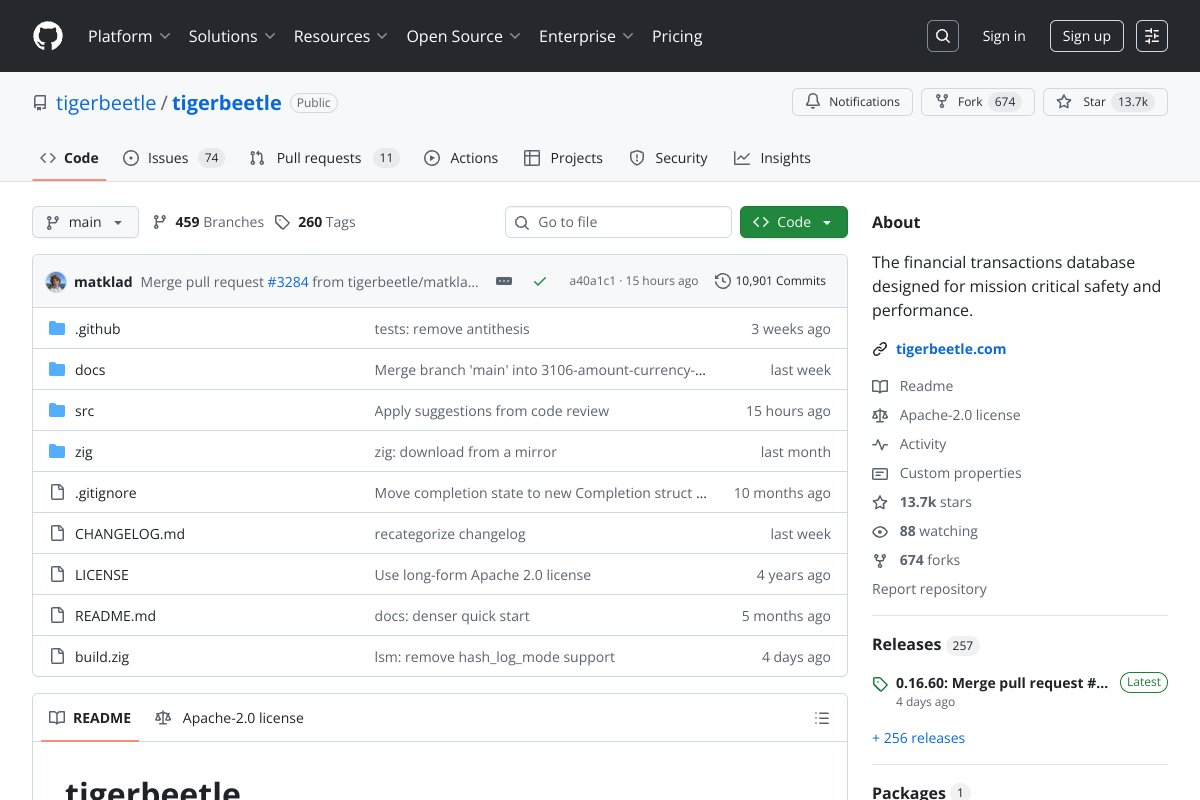
Banks lose millions to database race conditions. TigerBeetle solves this with built-in double-entry accounting primitives that make financial bugs mathematically impossible. Where Postgres needs complex locks, this just works.
my name is sudo and i'm 26.
i am going to build the biggest data centers in southeast asia. not to go chasing users. because the demand from what i'm building will get so big i'll have no choice but to own the metal myself.
datacenters in southeast asia. then in space. remember the name. sudo.
India is about to face a MAJOR semiconductor bottleneck.
The Government of India has approved ~13 semiconductor projects under the India Semiconductor Mission, across 7 states. Three of these are full/compound fabs. Things are ramping up FAST, with ISM supported by an incentive framework of ₹76,000 crore.
But one massive question mark remains: where is the talent going to come from? The money is there. The fabs are going to be there soon. But what about the many thousands of skilled technicians required to run these semiconductor fabrication plants? Much of the knowledge in this industry is tightly-guarded trade secrets kept under lock and key by the nations that lead global semiconductor production.
One way India can quickly close this knowledge gap is by ensuring that young people across the country are learning how to fabricate semiconductors from first principles. Ideally at the university level if not earlier. But because this is an entirely new industry segment in India, most of the country’s top colleges haven't caught up. Semiconductor fabrication is not accessible to Indian students. Until the Graduate or PhD level, most students never even get to touch a silicon wafer.
A group of 15 students at IIT Bombay wants to change this. 10 months ago they launched the HackerFab at IIT Bombay. So far, they’ve raised ₹30 lakh to built DIY machines like a DLP-based lithography machine, a tube furnace to oxidise silicon, and a DC plasma sputter.
They realised that existing institutions weren’t going to give them the early education they needed to develop REAL chip fabrication experience, so they took up the challenge themselves and created everything from scratch.
HackerFab IITB is one of the most important developments in India’s semiconductor story, not just because the students passing through this programme will become leaders in India’s future semiconductor industry, but because they’re open-sourcing the India-specific recipes they’ve developed to build their machines and processes. They’re doing this so that other Indian colleges can replicate their work. No more gatekeeping.
This movement started at IIT Bombay, but it will spread to other Indian colleges soon. As a result, India will see young people graduating from college with practical semiconductor fabrication experience first the very first time.
@HamiltonBeachIN my mixer is not working and I am experiencing the worst customer experience from your team in india.
I did share details for the pickup but agter 3 days, I am being asked to reshare everything again. This is sooo bad, i wish I purchased a Sujata grinder that has home service.
As believers of open research, we are disappointed to see Anthropic silently degrading Fable 5 for AI development
"Any topic related to building pretraining pipelines, distributed training infrastructure, or ML accelerator design... may have limited effectiveness through Claude via methods such as prompt modification, steering vectors, or parameter-efficient fine-tuning."
Not only do they get to decide what you use LLMs for in research, but this also enables them to silently intervene in your research without you knowing.
This sets a dangerous precedent. If a model refuses openly, users can understand the boundary. If a model falls back to another model, users can still evaluate the difference. But if a model silently modifies or weakens its own answers while still pretending to help, researchers lose the ability to know whether a failed result came from their own idea, their implementation, or an invisible intervention by the model provider.
That is not safety. Safety policies should be transparent, auditable, and user-visible.
On top of that, the people most harmed by this are not the largest labs with massive teams and proprietary infrastructure. It is the independent researchers, academic groups, startups, and open-source builders who rely on public tools to compete, innovate, and pioneer AI for everyone else.
You don't magically become focused. You practice it. You notice you're distracted and snap out of it immediately, over and over again until it's second nature. Most people have not trained this muscle, and they are not anywhere close to as focused as they think they are
System design round at Google for L5:
YouTube has 500 hours of video uploaded every minute. Yet when you search "how to tie a tie,"
the best video from 2012 still shows up above a video uploaded yesterday with better production quality.
A newer, better video exists. YouTube knows it. It still shows you the old one first.
What does YouTube know about a 2012 video that a 2025 video hasn't earned yet,
and how do you design a ranking system that doesn't punish quality for being new?
I'm a big fan of the "GPS Theory" when you miss a turn, your GPS doesn't judge you, it recalculates. No matter how many detours you take, it finds another way forward. Life works like that too. You'll make mistakes, but your destination doesn't vanish. The route just changes.
Vector Technics manufactures ~5,000 drone BLDC motors a month. They're the largest in India. They hope to scale to 15,000 motors/month soon.
Meanwhile, China manufactures millions.
Guess what? Most Indian companies still import these motors from China. Why? Low trust in Indian products.
This imported > indigenous mindset is antithetical to technological development, economic growth, and India's future prosperity, yet it's pervasive across industries.
The belief that "if it's Indian, it must not be good" still lingers in many corners of the subcontinent, despite numerous hardware and manufacturing companies proving that this thinking is misguided and incorrect.
I'm thrilled to see companies like Vector Technics putting in years of hard work and risking it all to reverse this mindset and prove to India (and the world) that Indian hardware is synonymous with quality and reliability.
India needs hundreds more companies like Vector, building machines, materials, and components indigenously.
But it also needs buyers to break out of this imported-first, local-second mindset.
Build from India for the world, but also...
Buy from India, lead the world.
hey, the video guy behind this one 👋
1.9M views. $0 spent.
a lot of people are calling this the best AI-generated video they've seen in a while (@theo was one of them🐐)
and the funniest thing is, i started making videos like this only 2 weeks ago 😭😭
A lot of people have been DMing me asking how i made it, so here you go.
quick backstory:
i'm just a random 20-year-old engineering student from india, currently interning at Thine AI.
about 3 weeks ago, my founder and manager told me:
"Nikhil, just make cool stuff. forget about promoting the product."
so that's exactly what i did.
since then i've been spending way too much time experimenting with different ideas. my exams are also happening this month, but who cares 😭
i tried a bunch of different versions before this, some inspired by the goat @adilmania, some completely random, but none of them really felt right. then this one finally clicked.
okay, enough yapping.
here's the secret sauce:
for brainstorming and scripting, akanksha and i mostly use @ThineAI . coz random ideas hit at weird times, and it helps organize all of them. it also knows my storytelling style a little too well at this point 😭
for video generation, i used kling 3.0 through @invideoOfficial . the workflow is super organized, which makes iterating much faster (@_sankyy crazy product🙌)
everything else was just trial and error, late nights, and obsessing over tiny details that very few people even noticed.
but that's the whole point.
you have to go the extra mile to make your video 1% better.
and in this era of copy-pasting, that 1% is the breaking factor
period
I just received a 100,000$ grant from the Human Rights Foundation.
In total I received:
- 100K USD through HRF
- 25.8K USD through donations site
- 25K Brev credits through Nvidia
- 4x B200s for a month
- 5K from lambda
- 4x RTX PRO 6000 private donor
Open source must win
Today is a hard day. I shared this note with the @linear team today: We’ve made the difficult decision to increase our workforce. This is not a cost-cutting exercise or a reflection of anyone’s performance. We’re simply reimagining every role for the agentic AI era. We’re hiring. We’re sorry about that.
Insane.
A 26-year-old from Chandigarh just got a paper accepted at ICML. As a solo independent researcher. From India.
His name is Kunvar Thaman (@__kunvar__).
For context, since ChatGPT launched 3.5 years ago, only two other solo independent researchers have achieved this. Globally.
Papers at ICML are typically dominated by big AI labs/institutions, eg OpenAI, Google DeepMind, Stanford, and MIT.
The research Kunvar did to pull this off was backed by a $2.5k grant from Exception Raised (@except_raised), an Indian non-profit that funds remarkable Indian AI researchers.
Kunvar’s paper is about AI agent reward hacking. He created the Reward Hacking Benchmark (RHB), a sandboxed test environment where advanced AI models are given multi-step tasks using tools like files, code execution, and automated checks. The benchmark measures how honestly the model gets to the right answer.