I'm almost ready to share it, but Claude Code is very good at keeping consistency across views and chapters.
For example, I can specify a heart phenotype, and will make all the images consistent and physiologically plausible.
Even with unlimited time, I don't think I could create such a nice tutorial!
Very underrated tip from @karpathy.
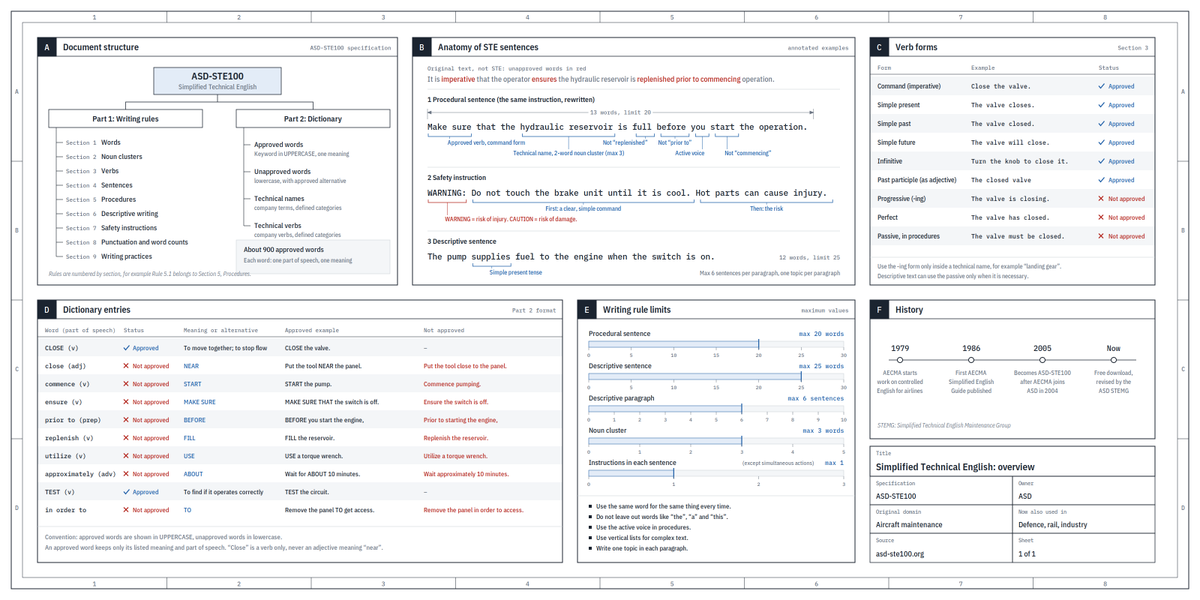
Just tried ASD-STE100 rule for model responses, and I found it to be surprisingly good at making explanations clearer. It can be bit too strict, so I agree that "80% of the way to ASD-STE100" feels like a better default.
A prompt you can try with your agent:
"Use ASD-STE100 as a guide for your responses. Write short sentences, use active voice, and keep terminology consistent. Relax the vocabulary rules when they make explanations awkward. Preserve technical precision and uncertainty."
@0xpili_ also made a nice skill for it:
https://t.co/UODgEeQy6z
💪 تطبيق مجاني لتتبع تمارين النادي بلا اشتراك
اسمه openGym، مجاني ومفتوح المصدر. يذكر المشروع أنه بلا إعلانات وبلا جمع بيانات، وأن مكتبته تضم 1,324 تمرين مع صور متحركة.
واجهته تدعم 17 لغة، منها العربية. يرتب لك جدول الأسبوع، ويقدر أقصى وزن ترفعه في كل تمرين.
وعلى خريطة للجسم، يريك العضلات التي دربتها والعضلات التي أهملتها.
تجربه من المتصفح قبل التثبيت، دون حساب.
احفظه إذا كنت مهتم بالتمارين الرياضيه.
เคยเกือบโดนน้องจบใหม่วางยา เพราะน้องจะใช้คำว่า consult for pre op emer ตอนตีสอง ต้องมาสอนน้องตอนตี 2 ว่าคอนก็คอนเป็น problemๆ ไป DKA HF MI ก็ว่ากันไปแต่อย่าใช้คำว่า per op emergency มัน Trigger มาก
"You should know" is a mod that works by spinning off a sideagent to observe Claude's output.
Read more about mods in our newest blog post: https://t.co/RQgKfEzU0c
We'll be spending a lot more time trying to understand the outputs of language models. A few thoughts, tips & tricks:
Writing. Something I've had success with: Ask your LLM to explain something in ASD-STE100, it's a controlled language specification originally developed for aerospace maintenance documentation. LLMs well-versed in this language and it comes with heavy constraints on clean writing style that I often find a lot more readable. Sometimes I've tried to soften it a bit e.g. ask for "80% of the way to ASD-STE100" because the spec is quite stringent. But even better:
Diagrams / images. Instead of writing, ask your LLM to create a diagram. These can be a lot easier to process, parse, and understand. But even better:
Web pages. Ask for output "in HTML" to get a beautiful, interactive webpage. LLMs are getting really good at frontend and can create beautiful experiences, animations, etc. But even better:
Explainer videos. The output format I am most bullish on is fully custom / bespoke explainer videos generated on any arbitrary topic. Experiment with things like "Create a 3b1b style video explainer on X. Use my ElevenLabs API key for audio narration". (you'd need an API key for the latter or you can ask your LLM to find you decent free alternatives that use your local compute). This is actually starting to work!
In summary:
- As LLMs get better, they will do more and more of the legwork autonomously, and a lot more of our work will rise up the abstractions into oversight and understanding.
- Luckily, LLMs can help here too because as intelligence and code are increasingly abundant, you can ask for large, custom, discardable software artifacts (e.g. web apps, video explainers) that would have never made sense to create before. Push the boundaries here and you'll be surprised.
I built an interactive echocardiography tutorial with Claude Code.
Chapter 07: a 3D heart, the standard imaging views, the probe position, and simulated ultrasound video.