DTCC is collaborating with Chainlink to advance its Collateral AppChain, a shared infrastructure platform for collateral management.
DTCC is one of the most important post-trade infrastructure providers in global finance, supporting clearing, settlement, asset servicing, transaction processing, trade reporting and data services.
In 2025, DTCC subsidiaries processed $4.7 quadrillion in securities transactions, while its depository subsidiary provided custody and asset servicing for $114 trillion in securities issues from more than 150 countries and territories.
The Collateral AppChain will use Chainlink Runtime Environment and the Chainlink data standard for orchestration, data and automation capabilities.
The goal is to connect asset prices, valuations and collateral movement in a unified onchain environment for 24/7, near-real-time collateral workflows across global markets and blockchains.
The platform was publicly unveiled during DTCC’s Great Collateral Experiment and is expected to go live in Q4 2026.
Source:
https://t.co/3XpD030koF
#DTCC #Chainlink #Collateral #Tokenization #TradFi #RWA #OnchainFinance #CRE #DataStandard $LINK
BredoStrategy Vault -https://t.co/EZLT76Vfpo
MyReff-ThankYOU - https://t.co/DTGaMiNjNT
Комментарий для меня:
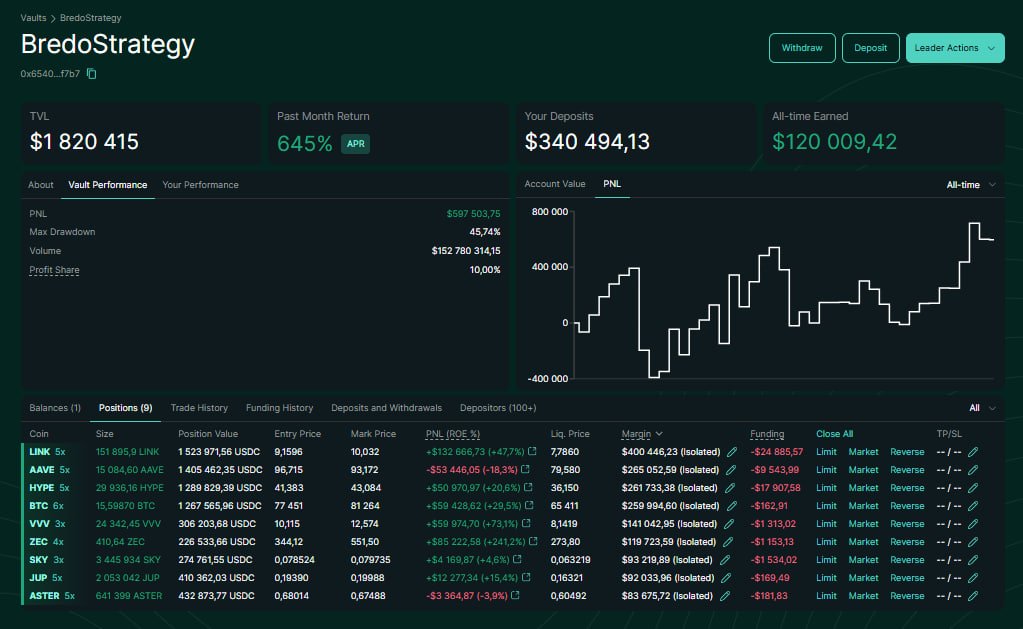
As promised, every Thursday we’ll be summing up the weekly results of the Vault — epoch #11.
BredoStrategy Vault:
https://t.co/EZLT76Vfpo
The Vault started on February 17, when BTC was at $67,960.
—————————————————————
BTC since last week: +6.22% ($76,500 → $81,260)
Vault profit since last week: +$574,139
—————————————————————
BTC since the Vault launch: +19.57% ($67,960 → $81,260)
Vault profit since launch: +$597,503
Vault all-time high.
Feels like there is a lot to say, and at the same time I don’t really want to say much.
This was exactly what the Vault was created for.
We could have waited a year+ for moments like this, or they could have happened this week.
They happened.
I’d say 20–30% of what I created the Vault for has already played out. Now we wait for the remaining 70–80%, then close the Vault, wait for new pullbacks, and so on.
Thanks everyone.
Everything is just getting started!
Previous reports:
April 30 — https://t.co/CgIwxi8o0r
April 23 — https://t.co/AcmVzU38gY
April 16 — https://t.co/wu16tqAdnh
April 9 — https://t.co/032wtHpfpo
April 2 — https://t.co/LVCxILbwA6
March 26 — https://t.co/4ibJD2SeUQ
March 19 — https://t.co/zMQZNAjI7I
March 12 — https://t.co/VHcRhFb9Ix
March 5 — https://t.co/v7rPt28UmF
February 26 — https://t.co/4mjexE8IzL
————————————————————
BredoStrategy Vault:
https://t.co/EZLT76Vfpo
Hyperliquid referral:
https://t.co/DTGaMiNjNT
BredoStrategySubs:
https://t.co/f4qUrBYLwZ
#Hyperliquid #HYPE #Vault #Bitcoin #BTC #DeFi #Crypto $BTC $HYPE
🇧🇾 JUST IN: Belarus will allow “crypto banks” to operate with 26 cryptocurrencies including Bitcoin, Ethereum, Toncoin, and Solana, supporting 11 services such as deposits, loans, staking, transfers, token issuance, and exchange.
Celestia is a great case on why you dont catch falling knives in crypto.
Down 72% from ATHs ($21-->$6) to start 2025 then down another 90% to $0.58.
Brutal.
After five wonderful years at KKR, I am excited to share that I am joining @JupiterExchange, the leading onchain super-app on @Solana, as President.
Here’s why.
At KKR, I had the privilege to shape digital asset strategy and to be part of the iconic TMT Private Equity and Capstone teams on landmark deals.
During that time, I built a conviction that onchain finance is the better way to finance - open, accessible, permissionless and self-sovereign.
In parallel, value accrual in crypto is fundamentally shifting from infrastructure to the application level.
What matters going forward is liquidity, distribution, and user experience.
Now, I want to double down on my conviction by helping bring the world onchain, with Solana’s largest super-app.
A lean, bootstrapped team has grown Jupiter into:
- The largest full-stack onchain application, #1 trading venue and #1 DeFi protocol by TVL on Solana, default entry point to DeFi for millions of users
- A product suite surpassing $1 Trillion in annual volume, generating hundreds of millions in annual fees across 12+ product lines
- The best community in all of crypto
What excites me most is the opportunity ahead - to help build Jupiter into the default onchain gateway to the world. With a full-stack DeFi platform spanning self-custody, trading, lending, staking, token creation, prediction markets, developer APIs - and soon also stable coins, payments, and an omnichain hub that connects ecosystems and liquidity layers.
I can’t wait to start building with this amazing team and grow the future of onchain finance!
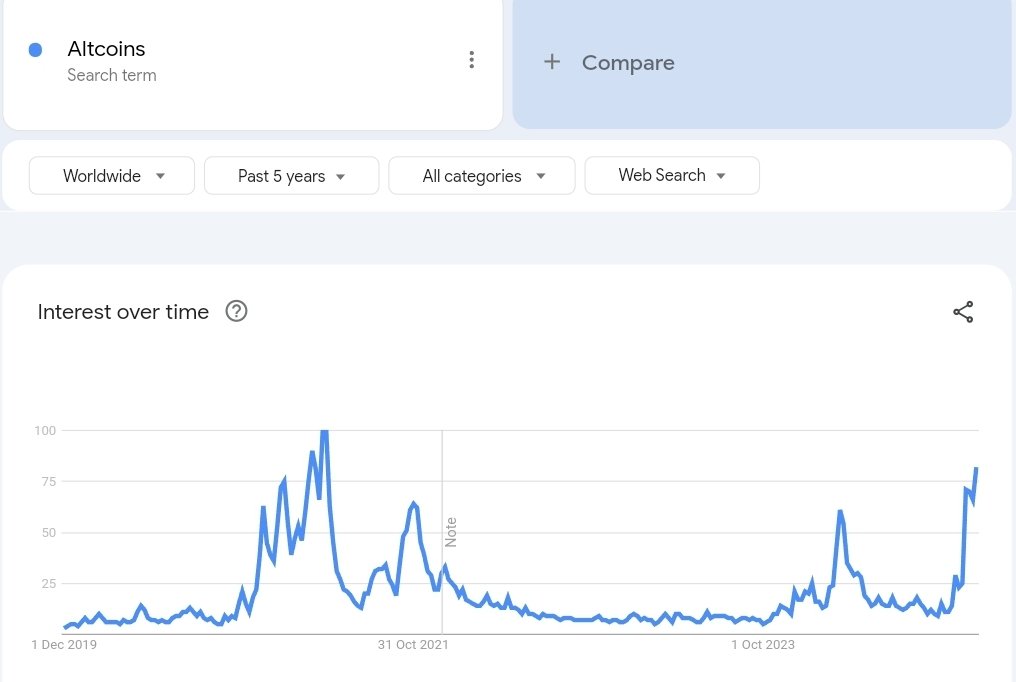
We're so back
New all time high in ETH ETF flows relative to BTC flows (87%).
$90m ETH inflow vs $103m for BTC yesterday.
I suppose $3600 for one efirium is pretty cheap?
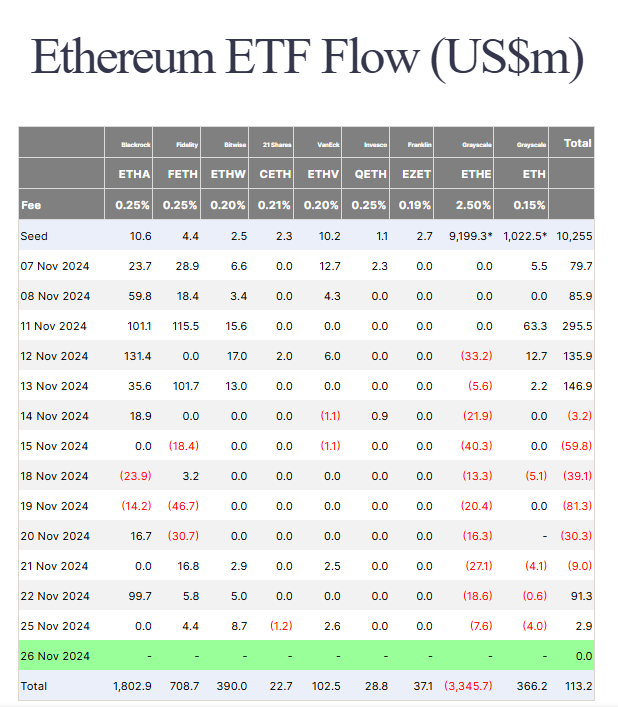
🟢 Ethereum Spot ETF Inflows and Outflows Update: November
With a few days left in November, it's clear this month has been a game-changer for Ethereum ETFs.
The most impressive achievement is that the total net flow is now positive at $113.2 million, which is an impressive shift from the negative $485 million seen at the end of October.
Source: @FarsideUK
When getting texts on buying crypto from friends/family I am just fwding the same text I have sent many times over the last 24m
1/3 BTC/ETH/SOL
Recurring monthly buys on Coinbase
Target 1-10% of your total liquid assets depending on how risky you like to be
Forget about it
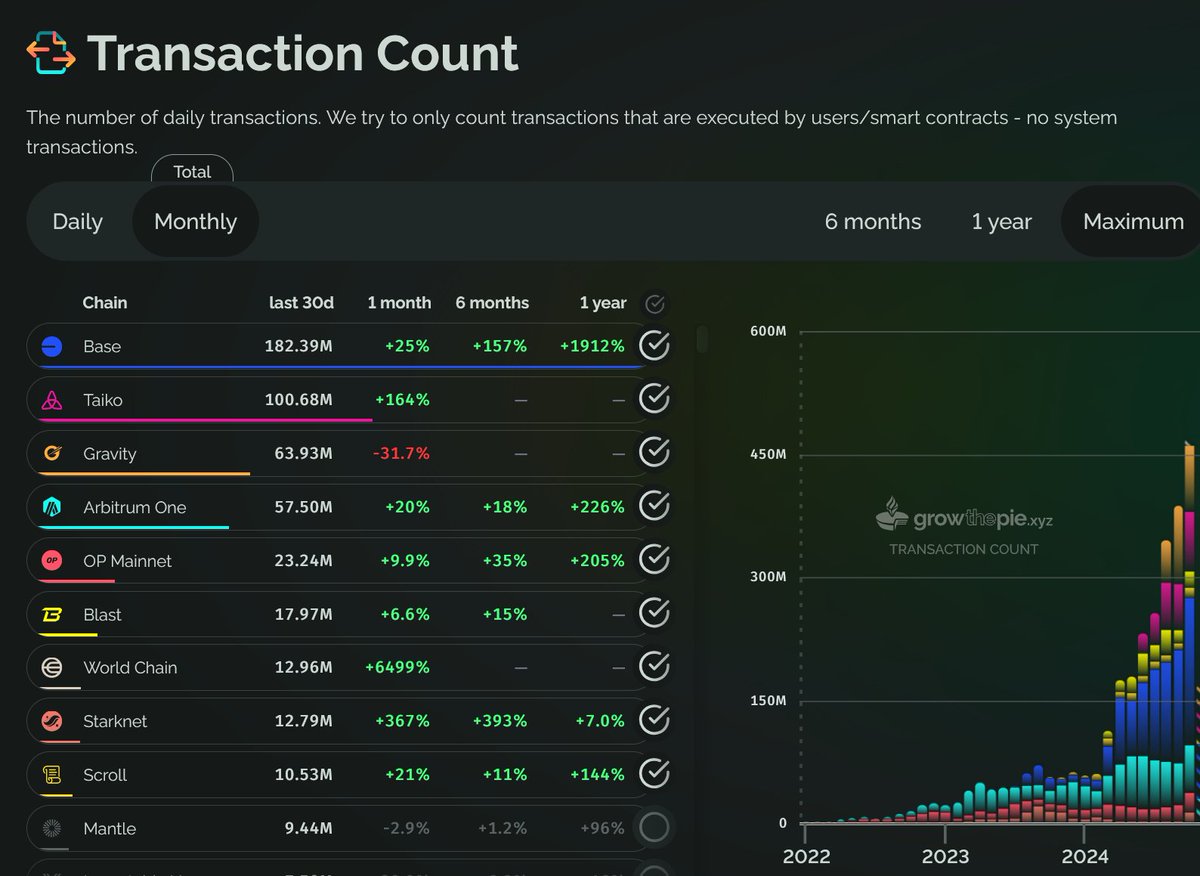
#Ethereum Layer 2 just smashed through 450 million transactions in a month!📈
That’s over 8x last year’s volume, with @base and @taikoxyz leading the way.
Layer 2 scaling is no longer a promise—it’s here, and it’s massive.🌐
Ethereum ETFs with Staking: What Could it Mean for Investors and the Network?
1. 0% Management Fee
The staking yield on Ethereum is around ~3.2%. Assuming a conservative scenario where issuers stake only 25% of total assets and incur a 20% operating cost (for the staking provider, custodian, issuer, etc.), the staking yield could cover the management fee of ETH ETFs (excluding ETHE).
We’re already seeing examples in Europe, like @CoinSharesCo’s ETHE with a 0% management fee + 1.25% staking reward, and @bitwise’s ET32 with a 0% management fee and 3.1% staking reward. Other issuers, such as @vaneck_us's VETH and @21Shares's AETH, do charge a management fee, but their staking yield is still sufficient to offset this cost.
2. ETH ETFs Staking can add 550k-1.3M ETH being staked (Staked Ratio +1% to ~30%)
Issuers like 21Shares, Bitwise, and VanEck have a strong track record in staking. They already possess the infrastructure, service providers, and expertise needed to support staking, making it likely they’ll be among the first to file for staking-enabled ETFs. For firms with lower AUM, adding staking could be a valuable differentiator to capture market share.
Given the liquidity risks and the current ~10-day withdrawal and exit queue for staking, issuers may initially use a lower staking rate, around 20-50%. This approach could benefit lower-AUM issuers, allowing them to be more aggressive with higher staking yields to attract investors.
Notably, the withdrawal queue is expected to decrease after Ethereum’s Pectra upgrade (EIP7251), which could make staking even more appealing for ETFs/ETPs. Key benefits include:
1. Higher effective balance (32 -> 2048): This would reduce staking costs by decreasing the number of validators required.
2. Lower initial slashing penalties: Reducing risk for stakers.
3. Shorter exit queue: Validators can merge together, resulting in a lower number of validators in the queue for partial withdrawal
European Products Utilization Rate:
VETH: ~70%
ET32: ~95%
3. Staking Landscape would slowly shift to Staking Pools and CEXs
While liquid staking is an ideal solution for ETH stakers to maintain liquidity while earning rewards, the first wave of staking providers for ETFs will likely be institutional staking pools and centralized exchanges (CEXs).
- Staking Pools: @Kiln_finance, @P2Pvalidator, @Figment_io, @BlockdaemonHQ
- CEXs: @coinbase (possibly @krakenfx as well)
In the future, I hope to see @LidoFinance’s stETH included in an ETF/ETP. stETH offers clear advantages:
1. Maturity: Lido is the largest staking provider, holding a 27.7% market share on Ethereum.
2. Liquidity:
- Primary Market: ETFs/ETPs using stETH could benefit from Lido’s buffer mechanism, enabling faster withdrawals compared to other staking providers.
- Secondary Market: stETH can be swapped for ETH on DEXs/CEXs, providing instant liquidity.
- DeFi: stETH can also be used as collateral, allowing ETFs/ETPs to borrow ETH to fulfill redemption requests.
With these options for ETH liquidity, stETH could be a “holy grail” for ETH ETFs/ETPs, potentially enabling close to 100% utilization rates. However, regulatory concerns remain a challenge. Still, I’m optimistic about the future of liquid staking and have high hopes for the new Lido Institutional team.
4. Time for ETH ETFs to Live Up to Their Full Potential
ETH ETFs are currently only 10% the size of BTC ETFs, even though ETH’s market cap is 23% of BTC’s. One key factor holding ETH ETFs back from reaching their potential is the absence of staking.
For institutional investors, who are likely new to crypto, Bitcoin is already a novel asset—Ethereum is even newer. To attract inflows, ETH ETFs need a clear differentiator that’s easy for investors to understand.
Enabling staking yield could be a game changer. Even if the yield starts low, if issuers offer a 0% management fee plus ~1% yield, it would present a competitive alternative to BTC ETFs. Some may argue that institutional investors don’t care about an additional 1% yield, given its modest impact, but for others, even a small yield could be a meaningful differentiator.
#Bitcoin just hit a new ATH, but the setup for #Ethereum to catch up looks just as strong!💥
Exchange balances:
#BTC: 15.1%📉
vs.
#ETH: 10.2%📉
It doesn't need a lot of demand to send ETH higher!📈
2012 halving
$BTC = $182
1 Year later = $510
2016 halving
$BTC = $661
1 Year later = $2,600
2020 halving
$BTC = $8,600
1 Year later = $58,000
2024 halving
$BTC = $65,000
1 Year later = ?
According to a survey of 2,200 investors by @CharlesSchwab 62% of Millenials plan to allocate to a crypto ETF in the next year, compared to 44% for Gen X and just 15% (!) for Boomers.
Flows for this asset class only go one way over time.