"The alpha of founder-led companies is in the founder’s decision-making. Founders carry the burden of deciding when to surf the wave of tech best practices (which is most of the time!) versus when to zig when others zag, and make brave decisions against the consensus. [...] The alpha in a company is in the founder’s ability to spot non-obvious potential from their vantage point, apply it early and aggressively, and course-correct with new information."
Gemini Omni can create anything from any input, starting with video. 🪄
This means you can combine images, audio, video and text as input and generate high-quality videos.
Or use drawings to create in a way that matches your vision.
#GoogleIO
Nano Banana Pro: Realistic cliff rescue, use man photo as hero, woman photo as one slipping, match sketch side pose and composition precisely, mountain photo (style reference) for background.
Is AI killing jobs?
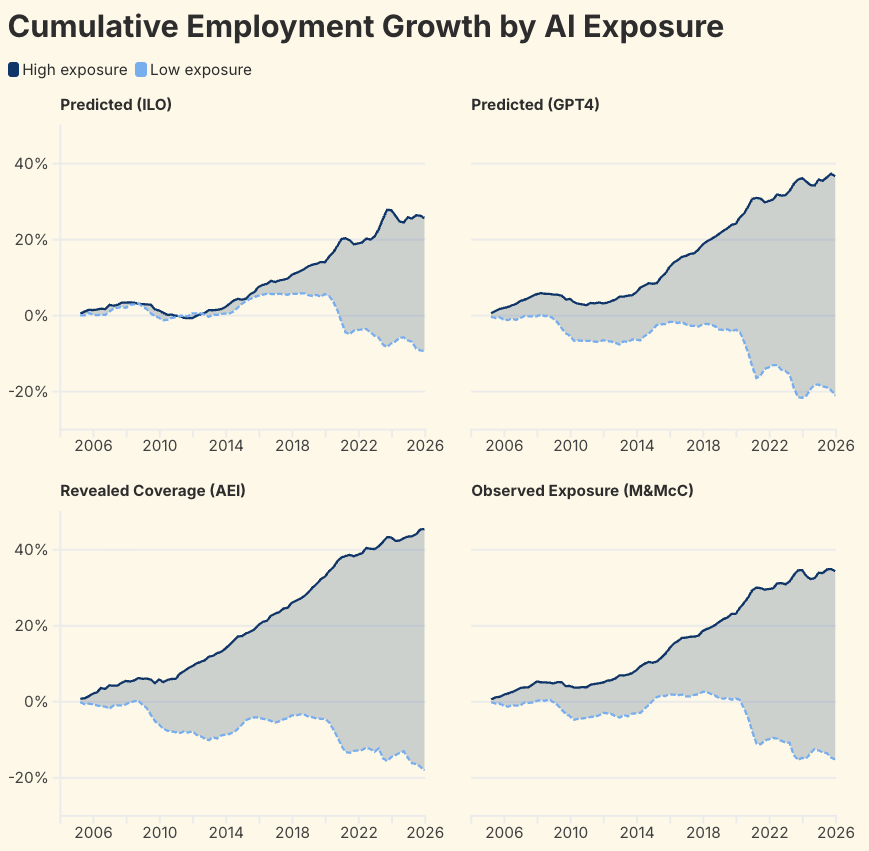
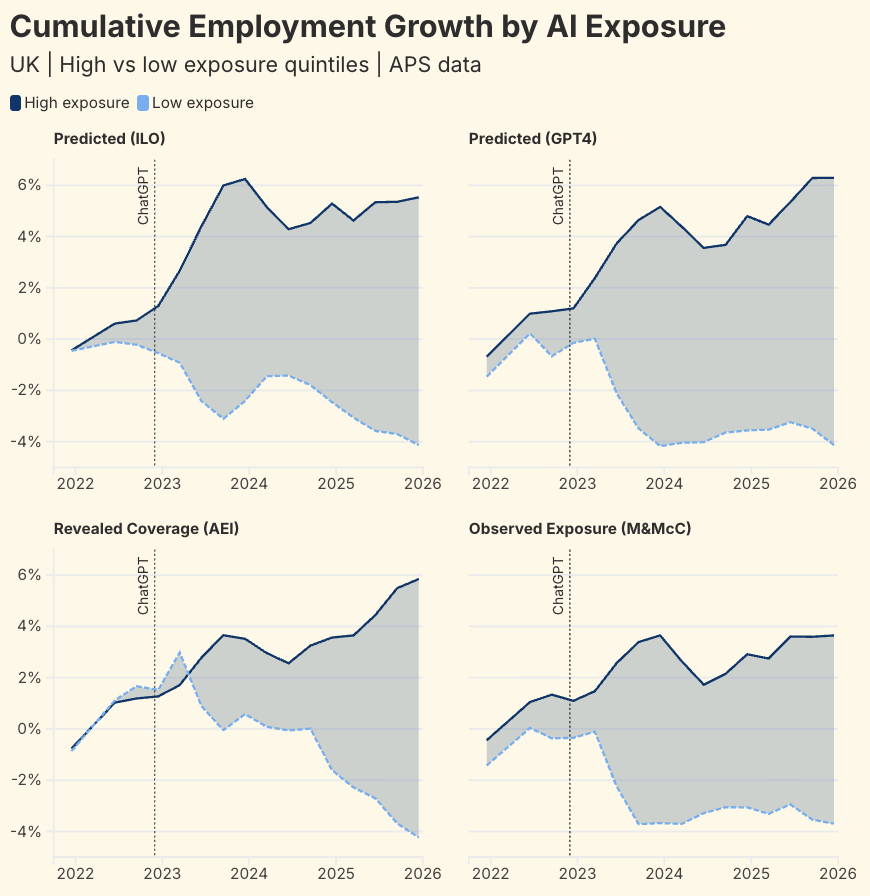
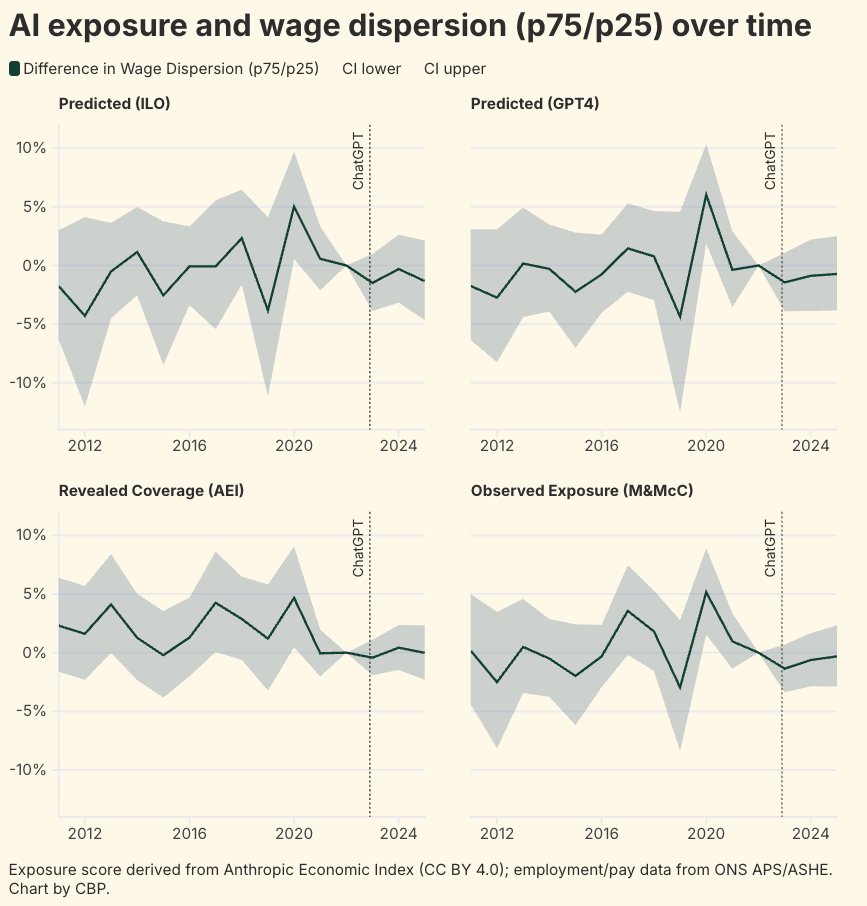
New data shows that, more than three years after the release of ChatGPT, there is no evidence for a significant impact of AI on overall employment in the UK.
In our new report, we break down the labour force into different occupations and use four measures of AI exposure to determine how likely they are to be affected by the technology.
Surprisingly, occupations with higher exposure to AI have grown faster than least-exposed ones, not slower. This holds across all four measures, and across two different data sources.
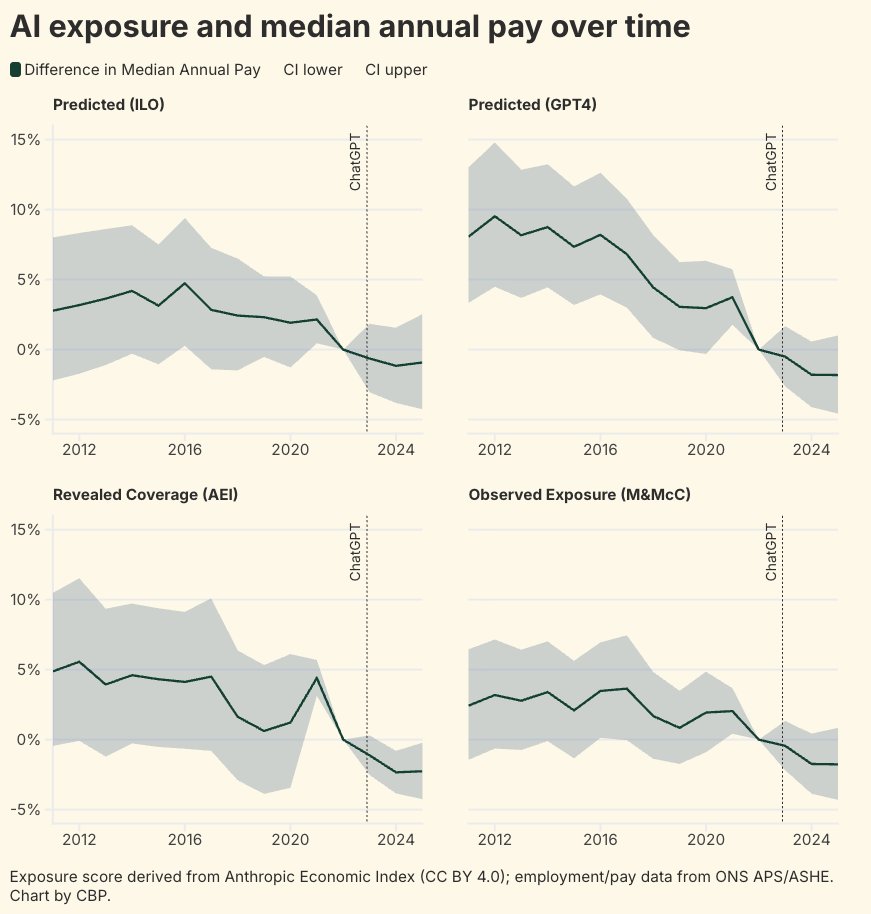
The wage picture is different. Pay in AI-exposed occupations has lagged the rest of the labour market since 2019.
But that gap opened three years before ChatGPT, which makes AI an unlikely candidate for the observed wage compression.
This flattening of the wage structure is visible across the within-occupation distribution and strongest at the top quartile, which is consistent with labour market dynamics that predate generative AI.
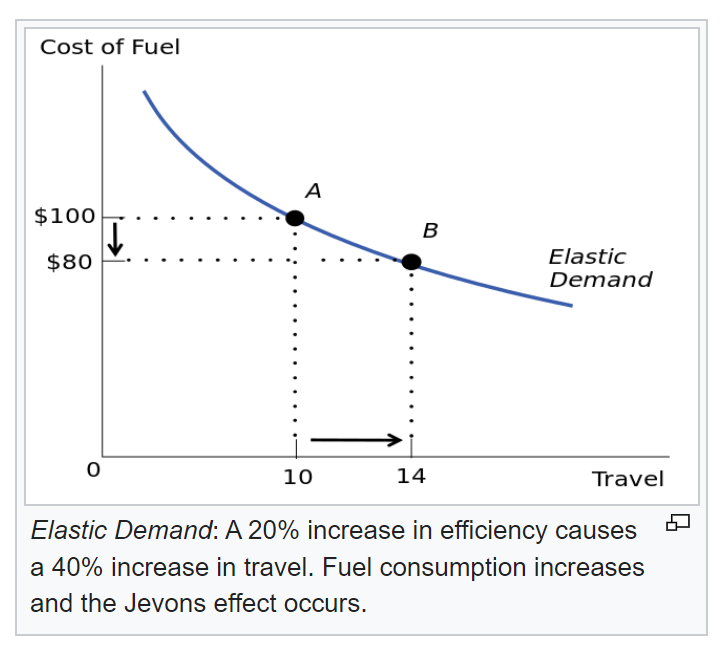
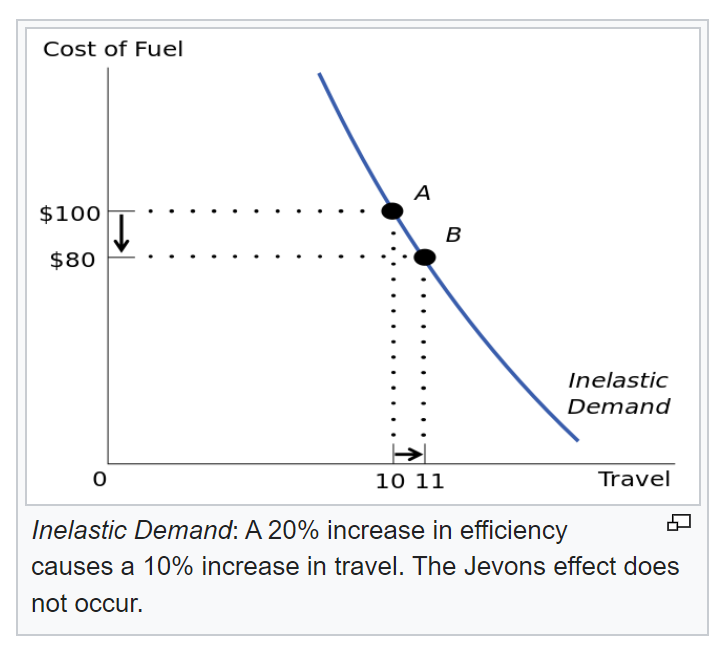
The Jevons paradox: a gain in efficiency of use can actually *increase* consumption of a resource. Classic example: coal.
A key lens for understanding and anticipating the differential impact of AI augmentation across sectors and functions.
Pivotal factor: elasticity of demand.
The highest IQ people I know are all either
> fully locked in and building or investing in AI. goal is to work towards generational wealth in the midst of a new technological revolution
> fully checked out of society and the corporate rat race. they are quitting their job, deleting social media and moving to the middle of nowhere to live a quiet life with no distractions
Literally no in between
Thesis: we have to redefine what humans are good at: initiation vs execution vs verification.
AIs can’t do initiation.
They’re superhuman at execution.
And they can’t (yet?) do verification.
Now, persistence over time is still quite important. For whatever reason, as great as these tools are, they are still always slightly off from what you really want and require a lot of coaxing to get them to land exactly on the final result.
Nevertheless, it may turn out that in the age of AI the timeless maxim of Silicon Valley is ultimately overturned.
Namely: it’s not the execution, it’s the idea.
The Internet made it economical to distribute all content, even that with a narrow audience.
Generative AI is making it economical to substantiate all content, even that with an audience of one.
Jeff Bezos explains how he came up with idea for Amazon
In 1994, Jeff Bezos came across the statistic that world wide web usage was growing at something like 2,300% a year.
“That was a sort of wakeup call for me that there was something going on,” Jeff explains. “Many people at that point hadn’t heard of the web. They didn’t have Internet access. This was the time of 28 kilobit per second modems and dial-up access, so it was a very different age. But it was clear that there was going to be something there.”
Then he had a big idea:
“I realized that you could make a bookstore on the web that could hold more books than a physical bookstore could ever hold. It could truly have universal selection. And of course, since then we’ve expanded that into other categories and we keep pursuing that notion of ‘Earth’s biggest selection’ at Amazon.”
Jeff continues:
“I’ve always been a big reader, but that wasn’t the reason we chose books. Books were a great first product to sell online because books are very unique in one respect: there are more items in the book category than there are items in any other category. There are millions of books active and in print around the world, and the largest physical book superstores only carry about 100,000-150,000 of those millions of different books. So on the web, you could build something that solved a real problem — people can’t find some of these books that they want to find . . . We basically built Amazon to make it possible for people to find those hard-to-find books.”
Karpathy’s 2025 retrospective is the clearest articulation I’ve seen of what foundational AI labs are actually building.
We’re not “evolving animals,” we’re “summoning ghosts.”
LLMs have completely different optimization pressures than biological intelligence. Humans evolved for tribal survival. LLMs optimize for imitating text, solving puzzles, and winning upvotes on LM Arena. Different pressures, different shapes in the intelligence space.
This framing finally explains what confuses everyone about AI capability.
GPT-5 aces the bar exam but gets tricked by simple jailbreaks. Claude writes PhD-level philosophy but hallucinates citations. Gemini solves competition math that stumps IMO medalists but fumbles spatial reasoning.
Capability spikes near verifiable domains where RLVR concentrates optimization pressure. Everywhere else, you get a different entity entirely.
I’ve been thinking about what this means for AI product builders.
The teams struggling with AI deployment are treating capability as uniform. They ask “can AI do this task?” and expect a yes/no answer. But ghost intelligence doesn’t work that way.
The teams winning are asking a different question: “Does this task live near a verifiable domain?”
If yes, the ghost might be superhuman. Build for autonomy. If no, the ghost needs guardrails. Build for human-in-the-loop.
This is why Cursor works. This is why Claude Code runs on localhost instead of the cloud. The best AI products in 2025 mapped the jagged edges and designed around them.
The companies that internalize Karpathy’s ghost framing will build better products than the ones still thinking in terms of “smarter or dumber than humans.”
There’s no single axis. Just different shapes.
@karpathy Software 1.0 easily automates that which can be specified.
Software 2.0 easily automates that which can be verified.
Software 3.0 easily automates that which can be described.
Everyone has 10 year AGI timelines right now
A bit of a consensus has emerged around 2035 being the most likely year that AGI arrives. I’m more interested in the consequences of everyone agreeing right now than the specifics of the prediction, but let’s review what the big names in AI have said.
Sam Altman: “It is possible that we will have superintelligence in a few thousand days.”
Andrej Karpathy on Dwarkesh landed at “AGI Is Still A Decade Away.”
Dwarkesh himself has a median of 2035 for AGI in his probability density of AGI over time.
George Hotz recently analyzed Tesla FSD data and projected that superhuman self-driving would arrive in eight years based on annual doubling of capabilities (interventions per vehicle miles traveled).
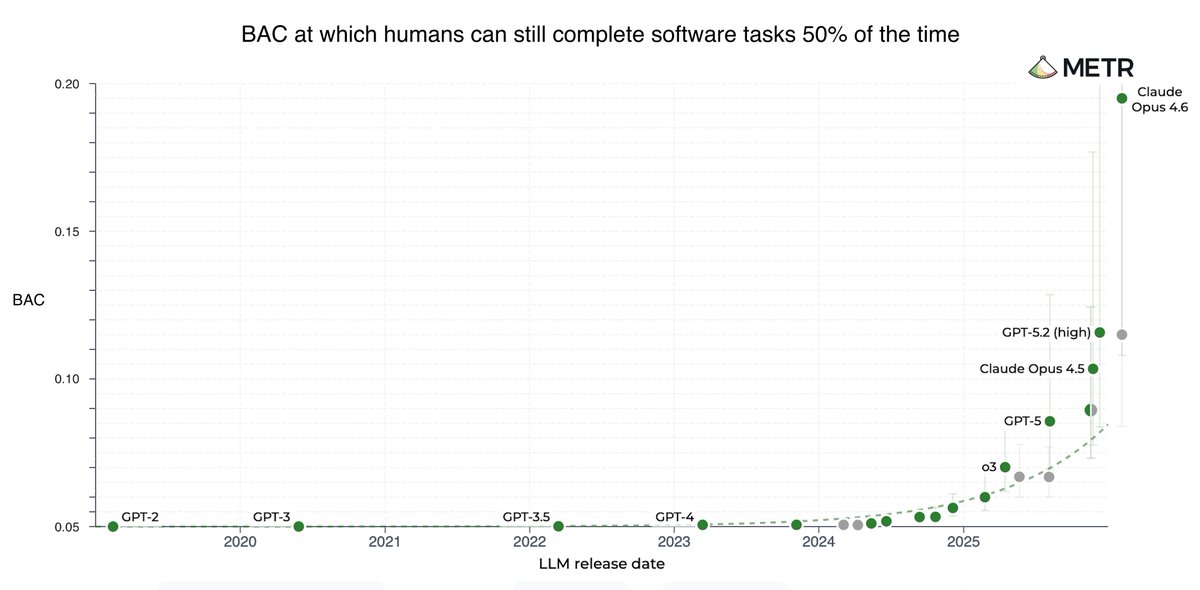
METR has been tracking AI’s ability to complete long tasks. It’s similarly growing exponentially, but if you graph out the chart to 2035, you land on a multi-decade time horizon that certainly looks like the length of a full career. Humans generally don’t need a new prompt halfway through their lives to keep going on earning money, starting a family, etc. Well some of them do, but we don’t regard midlife crises or worse crashouts as success cases.
All these predictions have different methodologies, some are extremely quantitative, others are more vibes-based, but what’s interesting to me is that it feels like 10 years is consensus.
Is “it’s a decade away” just what technologists say when they don’t really know an answer? The weird thing for me is that I agree with them, I feel like AGI is actually 10 years away, but what I’m wrestling with is the implications of that. Maybe 10 years is long enough that everyone just sort of acts normally, but I can’t help feeling like there is a preference falsification thing going on right now.
For as much consensus as there is around AGI being a decade away now, because it feels like we just pushed back the date, it feels like there has never been less consensus about what to actually do. Should we just build technologies that are fun dopamine rewards while we twiddle our thumbs and wait for AGI? That doesn’t feel right.
There’s a TBPN clip of our interview with Alex Wang that the timeline is dunking on because he recommends that kids learn to vibe code. I wholeheartedly disagree with the haters on this one and will definitely be teaching my kids to vibe code. I was assembling Legos last night with my four-year-old and it was awesome. Assembling software like Legos is actually magic and even if it’s obsolete in a decade, I think it will still be fun.
You can actually go and buy fully assembled Lego kits, but no one does. Long live vibe coding.