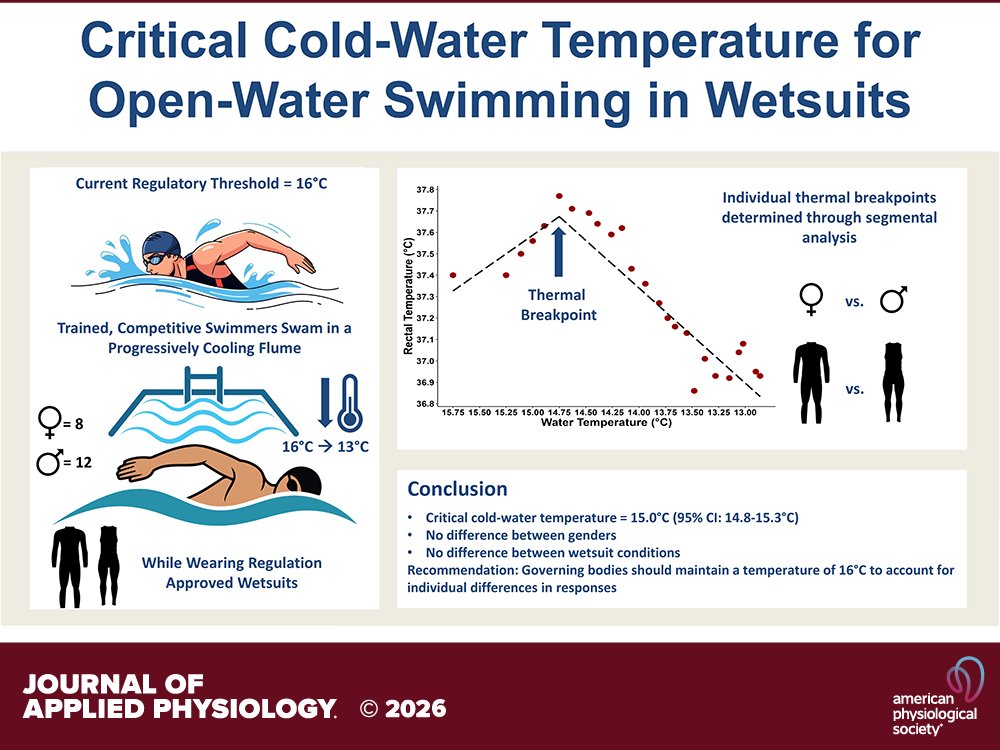
Very excited to announce the first manuscript of the dissertation is out now. I can’t thank the team enough for making it happen! And to @WorldAquatics for the funding…because no one would swim in 13°C water for free 😂
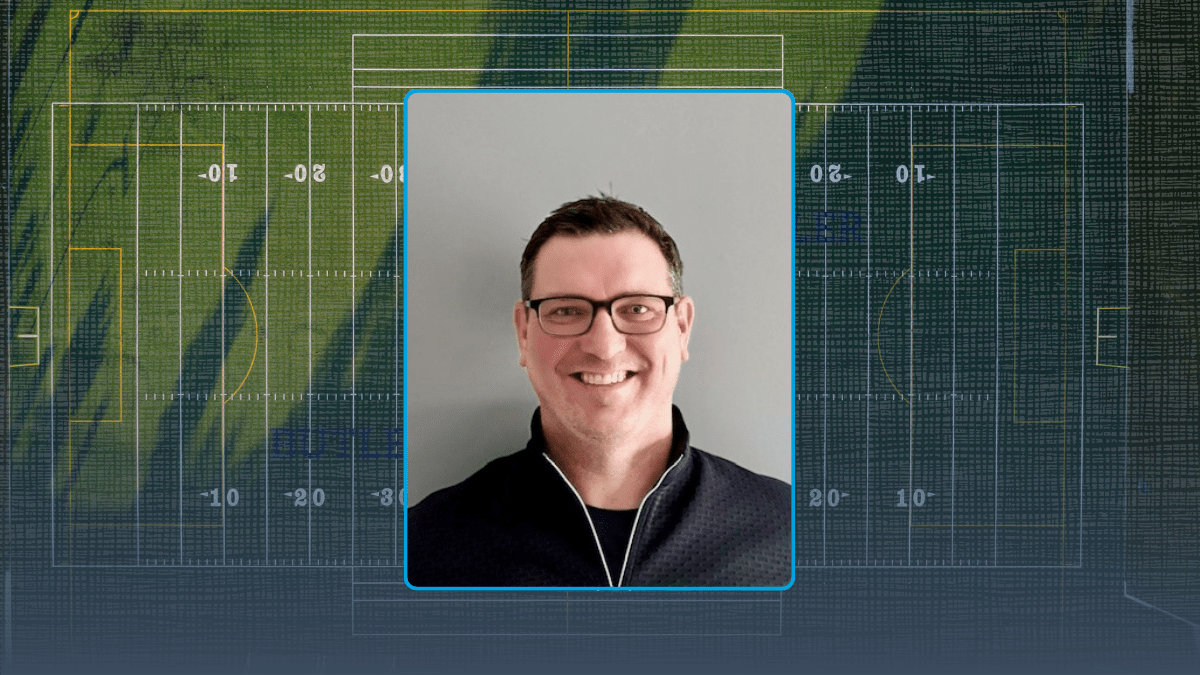
Yesterday was my last day at @IUMedSchool. Bittersweet, since the lab was just getting going. Taking that momentum to @butleru, where I’m excited to see this program grow. Go Dawgs!
First VO2peak test in my 40s this morning. Lifting 4-5 days a week, no hard cardio, sauna post-lift. Still blowing 5.5 L/min.
Training matters, no doubt. But genetic predisposition can carry a guy a long way.
Sports researchers: Have you used LLMs (e.g., ChatGPT) in your research? Take part in a 🌍 global study exploring how LLMs are shaping sports research. Eligibility: 18+ and published since 2023. ⏱️ 15 mins, anonymous.
https://t.co/K3Eff1sYsG
@AdamRochussen@AKoutnik@pangram All good points, especially regarding transparency when dealing with a platform with such a wide reach. My hesitation in applying them is the risk of false positives. That said, I also have handwritten work from students that I can compare against the detector results.
It likely won’t catch much traction because it was civil, but this back-and-forth between @mackinprof and @AKoutnik will definitely get filed in my “how to disagree on social media” file to show my students.
Refreshing to read.
Andrew, thanks for the thoughtful reply.
Some real common ground first. Training is the dominant signal. Genetics and mindset sit alongside it. Nutrition is the smallest of the three levers in determining who reaches the top, and for the vast majority of recreational athletes, day-to-day performance is more limited by sleep, training consistency and life stress than by macronutrient ratio. Individual variability matters. Some athletes do well on either approach, and the field has rightly moved away from one-size-fits-all prescriptions. All of that is real.
Where I would push back, in the same spirit:
1/ The "no difference at greater than 4 weeks" framing has a load-bearing assumption baked in. Most longer studies in moderately trained athletes use capacity tests at submaximal intensities where fat oxidation can carry the load. Time to exhaustion at 70 percent VO2max, Wingate, treadmill tests with metabolic carts. These are not race performance at race intensity. The Burke race walker studies test exactly that, and they show impairment at 3-3.5 weeks. You hypothesize that longer adaptation would reverse it. That is reasonable, but it is a hypothesis, not a finding. The study that would settle it (elite athletes, race-pace testing, greater than 4 weeks of adaptation) does not yet exist. Until it does, the impairment finding stands, and the longer-adaptation rescue is speculative. How would you propose that longer “adaptation” makes up for a real energy difference, other than saying, we think it happens?
2/ The "elite is 0.0001 percent" point is fair, but cuts both ways. The reason elite data matter mechanistically is that the ATP-yield-per-litre-O2 deficit from fat (5 to 7 percent, Krogh and Lindhard 1920) is invisible at 50 percent VO2max but becomes binding at 80 to 85 percent. Most recreational athletes never get there, so they show no difference. That is consistent with the biochemistry, not contrary to it. The elite data are the diagnostic test, not a special-pleading edge case. If you want to talk recreational athletes, then performance becomes something entirely different.
3/ The brain-energy-metabolite hypothesis is interesting and worth testing properly. But Whitfield et al. (2021) MSSE 53:776 already added exogenous ketone esters on top of LCHF in elite race walkers to test exactly this. Performance got worse, not better. If circulating non-glucose brain fuels rescued elite race performance, that should have gone the other way. Until there is a confirmatory dataset, it remains an attractive mechanism, but without data to back the prediction.
4/ The newest evidence worth folding in is Gawełczyk et al, Nutrients 2026 (DOI 10.3390/nu18101589). Systematic review and meta-analysis of 13 anaerobic-performance studies. Repeated sprint ability was impaired on LCHF (d = −0.33). Blood lactate suppressed (d = −0.89). The authors are explicit that the lower lactate reflects reduced glycolytic flux, not metabolic adaptation. This is the modern peer-reviewed synthesis, in the same journal that published Tim's 2022 narrative review. The question of whether glycolytic capacity is preserved on LCHF has been answered, and the answer is no.
5/ One genuine point of disagreement on the protein analogy: training is the dominant signal, but the dose-response data on protein and training adaptation are substantial.
I remember EB. You were generous with your time as a grad student then, and you have been measured and civil throughout this exchange, which is more than the discourse usually offers.
The carb question is one we can all keep arguing about with evidence and without heat. But, if you really want to do this and to do it right, then you and I know who you should be talking with, and it's not me, is it?
@AdamRochussen@mackinprof@AKoutnik Interesting. I’ve done some work to better understand AI-detection platforms but am not expert enough to comment on their validity.
But what is the threshold of use that would merit the response deceptive? If it’s a model built on one’s own writing, isn’t that the modern scribe?
@AdamRochussen@mackinprof@AKoutnik You really think @mackinprof and @AKoutnik used LLMs to make their responses to each other? They read human and in the same style as they speak (at least when I’ve heard them).
But hey, if AI can make twitter a space for civil discussion in the big 2-6 I guess I’m here for it.
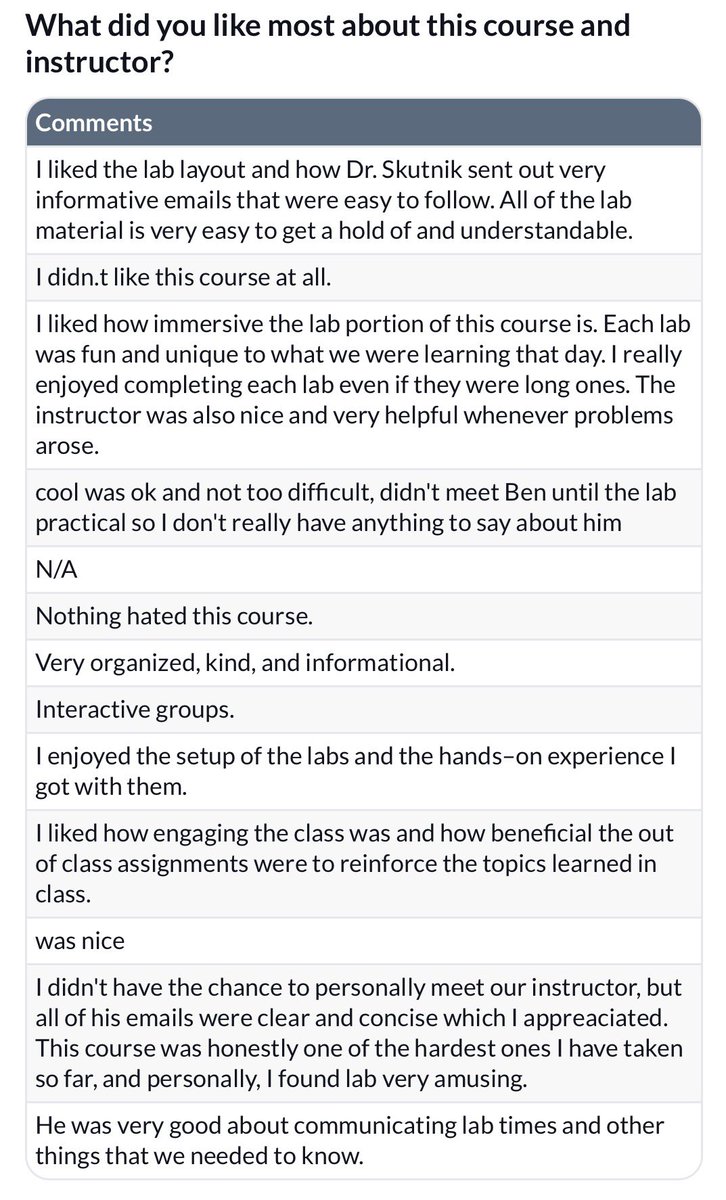
After 13 years, I think I’ve finally grown to a point where I see these reviews as an overall win, despite a few unhappy customers.
I’m extremely excited to head to @butleru and @ButlerCOE in August and build another CURE-based lab experience within the Kinesiology program!
📄 Excited to share our latest preprint: the first cross-field audit of LLM-hallucinated citations in science
⚠️ Across arXiv, bioRxiv, SSRN & PMC, we estimate 147K fake citations in 2025 alone — threatening both the quality and equity of scientific work.
“This is exactly the kind of work that defines @butleru,” “Our faculty are not only advancing research—they’re shaping how it’s applied in real-world settings...when ideas don’t stay theoretical, but are tested, applied, and...shared w/a global audience. https://t.co/IIfpOX7jIz
@StrengthDebates Dr. Fred Hatfield’s Compensatory Acceleration is the best of both worlds. Move heavy loads as fast as possible through the concentric and you’ll be plenty fast when needed while still maximizing mechanical tension.