We’re happy to share that our labs first #ALS and #FTD study “A stress-dependent TDP-43 SUMOylation program preserves neuronal function” is now online @MolNeuro!
https://t.co/fqv8ivFde4
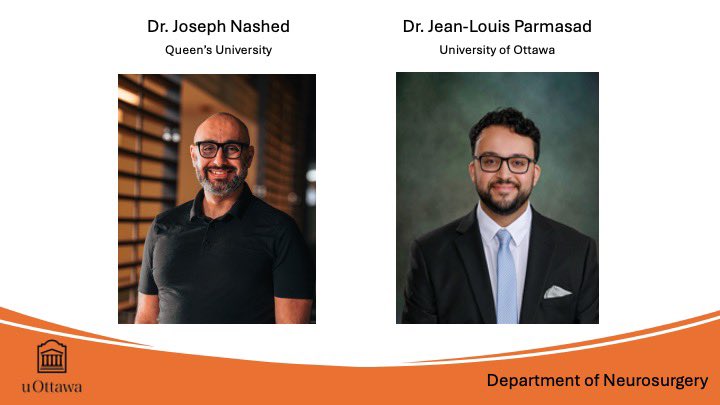
We are delighted to welcome two superstars, Dr. @TheNashFactor and Dr. @JL_Angelo1, as incoming PGY1s to Ottawa #neurosurgery program. Looking forward to working with you guys!
@uOttawa
Excited to share that the first paper of my PhD has been published in @PNASNews ! Thank you to @rezasharif, all the amazing members of the Sharif lab, and our collaborators @dnachicken@ebourinet16
https://t.co/nypNPbBFB5
Researchers in Canada got most of what they were hoping for in the country’s 2024 federal budget, with a big boost in postgraduate pay and more funding for research and scientific infrastructure https://t.co/lvOYnUeBBQ
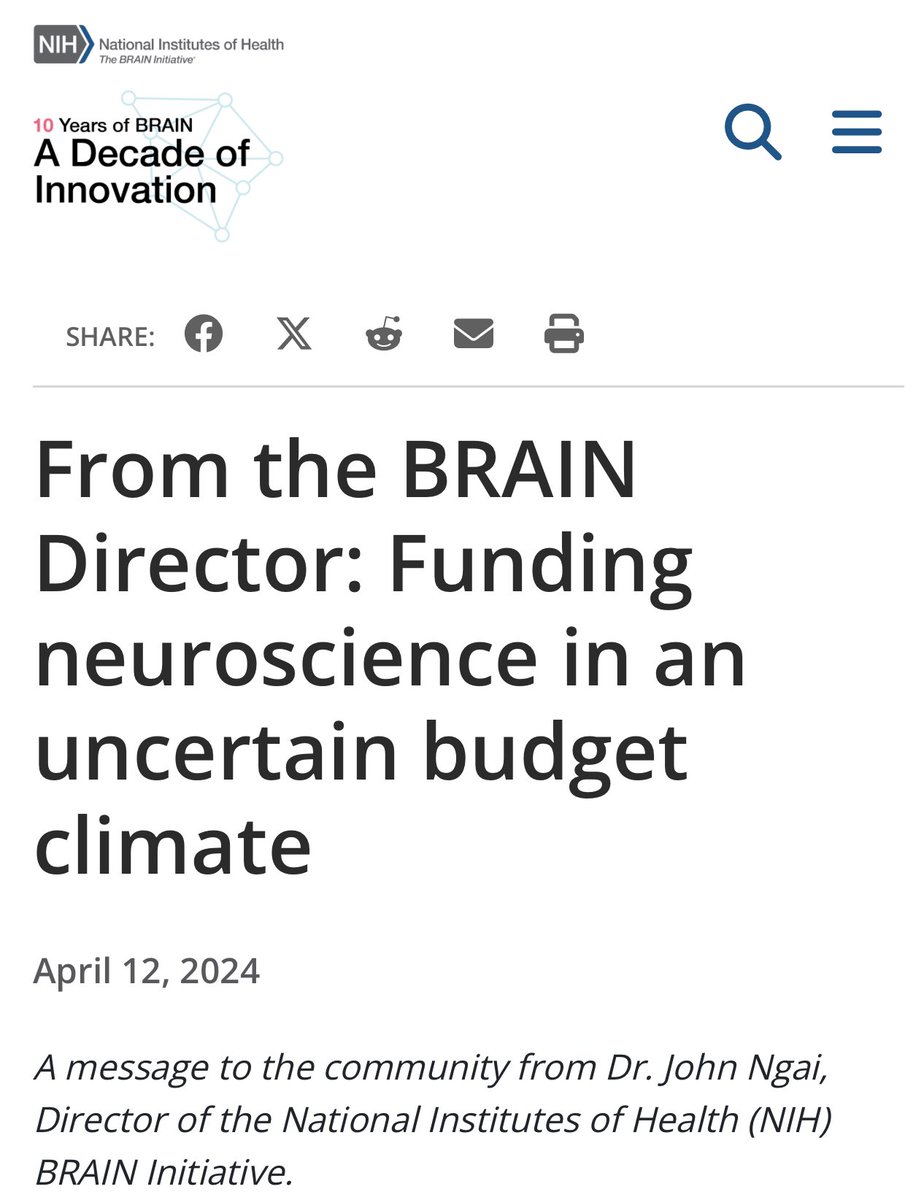
Urgent call to the American public and neuroscience advocates to lobby hard against the 40% cut in @NIH Brain Initiative Funding. Spread the word and get active! Parkinson and Alzheimer’s as well as neurodegeneration diseases will be dramatically affected.
From the Director:
‘The NIH BRAIN Initiative’s success hinges on our ability to serve as good stewards of taxpayer investments. This approach has never been more important, considering this year’s recently passed appropriations bill, which provides $402 million for the BRAIN Initiative. This reflects a $278 million decrease from last year’s $680 million appropriation due to a drop in 21st Century Cures Act funds this year, combined with a drop in the BRAIN Initiative appropriation to the National Institute of Neurological Disorders and Stroke (NINDS) and the National Institute of Mental Health’s (NIMH) budget last year. The Cures Act funding is a congressional supplement designed to boost key innovation programs, such as the BRAIN Initiative, with predetermined, varying annual funds through fiscal year 2026.’
https://t.co/GV1IbpLXB5 @DBSThinkTank #parkinson @endingpdbook@ParkinsonDotOrg@PdAvengers@MichaelJFoxOrg
Check it out! 🧐 We used our recently developed Snca-NLS mouse to map alpha-synuclein topography throughout the adult mouse brain, spinal cord, retina, and gut. ✨Pretty images below: https://t.co/PPuZ76SkDk
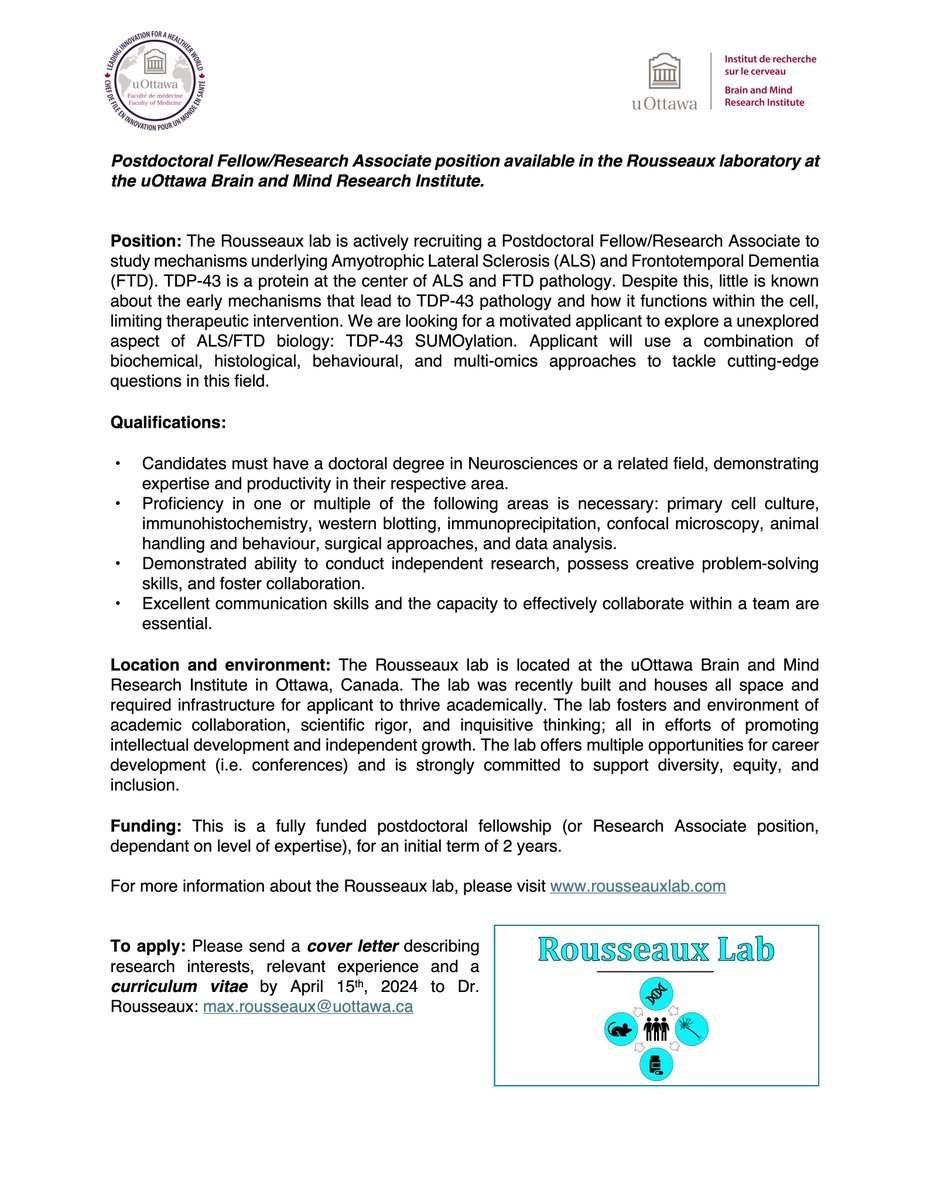
🧠🚨Our lab is hiring! Please spread the word. Multiple exciting projects in the lab including a fully funded postdoctoral fellowship/research associate position. @uOttawa @uOttawaBMRI @ALSCanada@CAN_ACN
Yesterday I attended my very first research conference and had the opportunity to represent the Rousseaux Lab by presenting a poster on my research in Parkinson’s and Characterizing the role of CDK14 in synucleinopathies. @uOttawaBMRI @maximewc@uOttawaMed
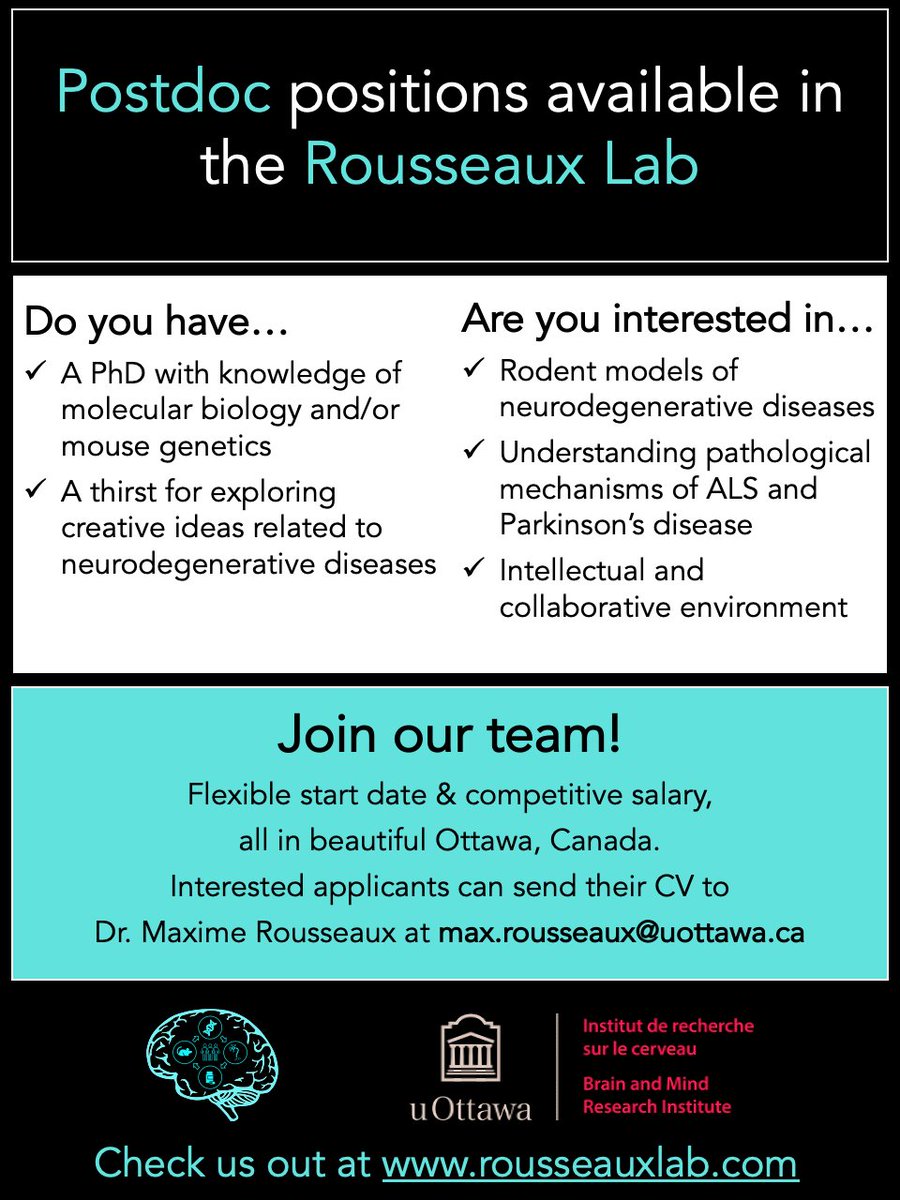
🧠We are hiring! Are you a recent PhD grad 🎓👩🔬 with interests in #Parkinsons#ALS#Neurodegeneration#Mousemodels#Synuclein#TDP43? Join our vibrant team! We are actively seeking out postdocs to work on some really exciting projects in the lab. Please share broadly/RT!
Excited to share the newest preprint from the lab exploring CDK14 as a target to treat #synucleinopathy#Parkinson. 🧠🥼
This comes from a dynamic duo in the lab @JL_Angelo1 and @KonradRicke
https://t.co/nJxkUjnexx
🎉Paper published🎉
Congrats again to @HaleyMGeertsma for all of her (and the rest of the lab's) hard work. Thanks to the reviewers for the constructive critiques which made the paper stronger. And thanks to @hmg_journal for the quick turnaround times. https://t.co/baYbvtD8oU🔓
The crisis no one is talking about: we are running out of science's vital non-renewable resource, TLAs (Three Letter Acronyms)! Scientific papers have has now used 94% of the 17,576 possible TLAs.
We need to start recycling: of 1.1M total acronyms, 79% are used less than 10x.