"Access to medical knowledge shouldn't depend on geography," said Daniel Nadler, founder and CEO of OpenEvidence.
That's why OpenEvidence and @AnthropicAI are bringing a specialized version of OpenEvidence, free, to clinicians in about 100 low- and middle-income countries, including Uganda, Angola, Sudan, Haiti, and Mongolia. More here: https://t.co/UxdEaHSkla
Today, Memorial Sloan Kettering Cancer Center (MSK) and OpenEvidence announced a partnership to advance precision oncology. This partnership includes integration of OpenEvidence within MSK’s Epic workflow, and bringing OncoKB™, MSK's precision oncology knowledge base, directly into OpenEvidence for its broader use by physicians outside of @MSKCancerCenter.
“AI has the potential to fundamentally change how we translate an increasingly complex and rapidly expanding body of knowledge into better decisions for patients,” – Anaeze Offodile, M.D., Chief Strategy Officer at MSK.
Full press release:
https://t.co/w9wvv2dhL2
Memorial Sloan Kettering opening its precision oncology data to physicians nationwide through OpenEvidence. Today's Forbes has the story.
@MSKCancerCenter has spent years building the world's most detailed map of which cancer mutations respond to which treatments. Until now, you had to be treated at MSK to benefit from it. Soon, an oncologist in a small practice in Montana will see the same evidence as a subspecialist in Manhattan, at the moment it matters, for the patient in front of them.
More patients getting the right treatment the first time, wherever they live. Read full article here https://t.co/ZMdrchnJ7x
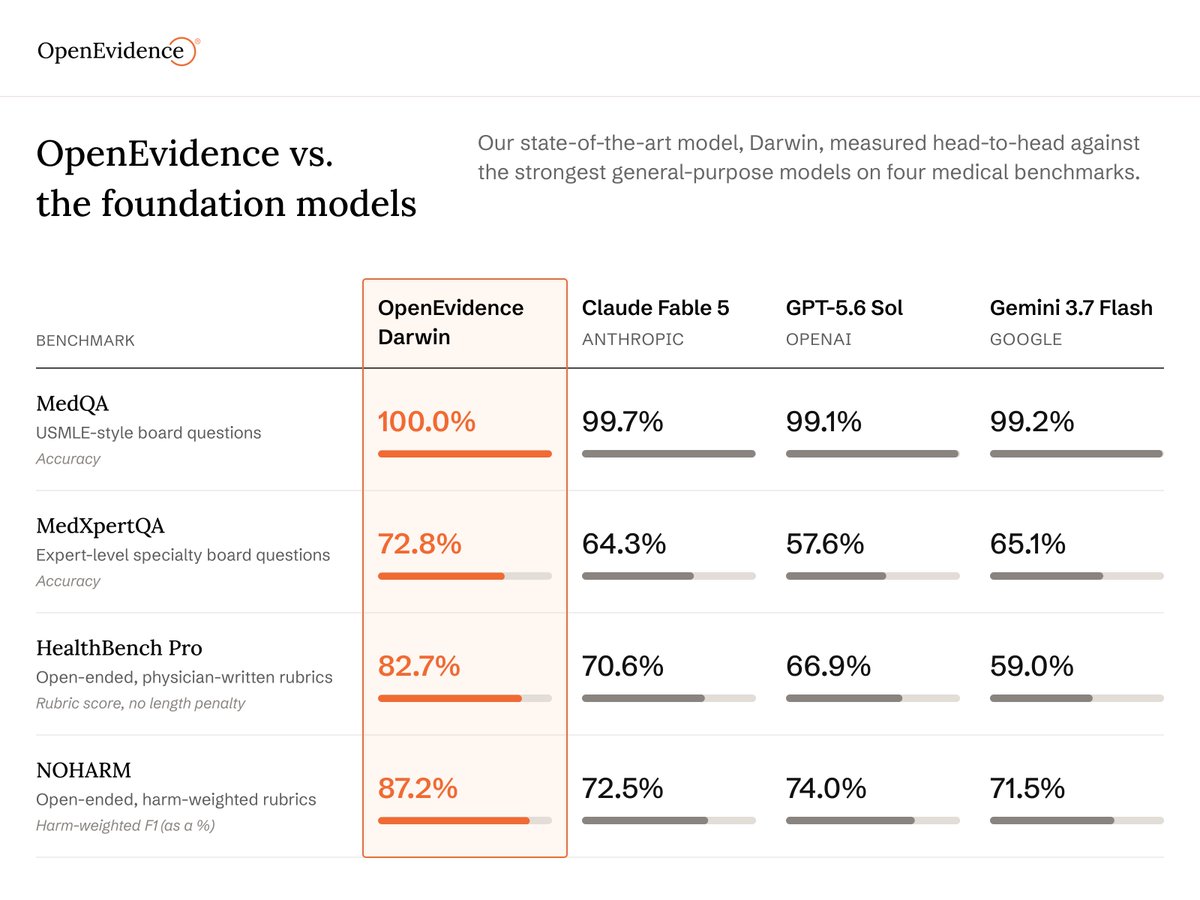
Today we are releasing the OpenEvidence Model Family. Our most powerful models yet, and (as of 2026) the highest scoring medical AI model family in the world on every mainstream benchmark.
Osler for the hallway, Sackett for the consult, Snow for the tumor board. Every model in the family is held to the same standard of clinical accuracy. What varies is time: how long a model thinks, and how deep it searches. Three of them are available to every verified clinician starting now.
The fourth is Darwin. A perfect 100% on MedQA, the first AI in history to do it. Capability at that level cuts both ways in medicine, so Darwin is in research preview, by application only, while its safeguards are validated with partners like @RareDiseases.
Osler, Sackett, and Snow are live now on the web and in the iOS and Android apps.
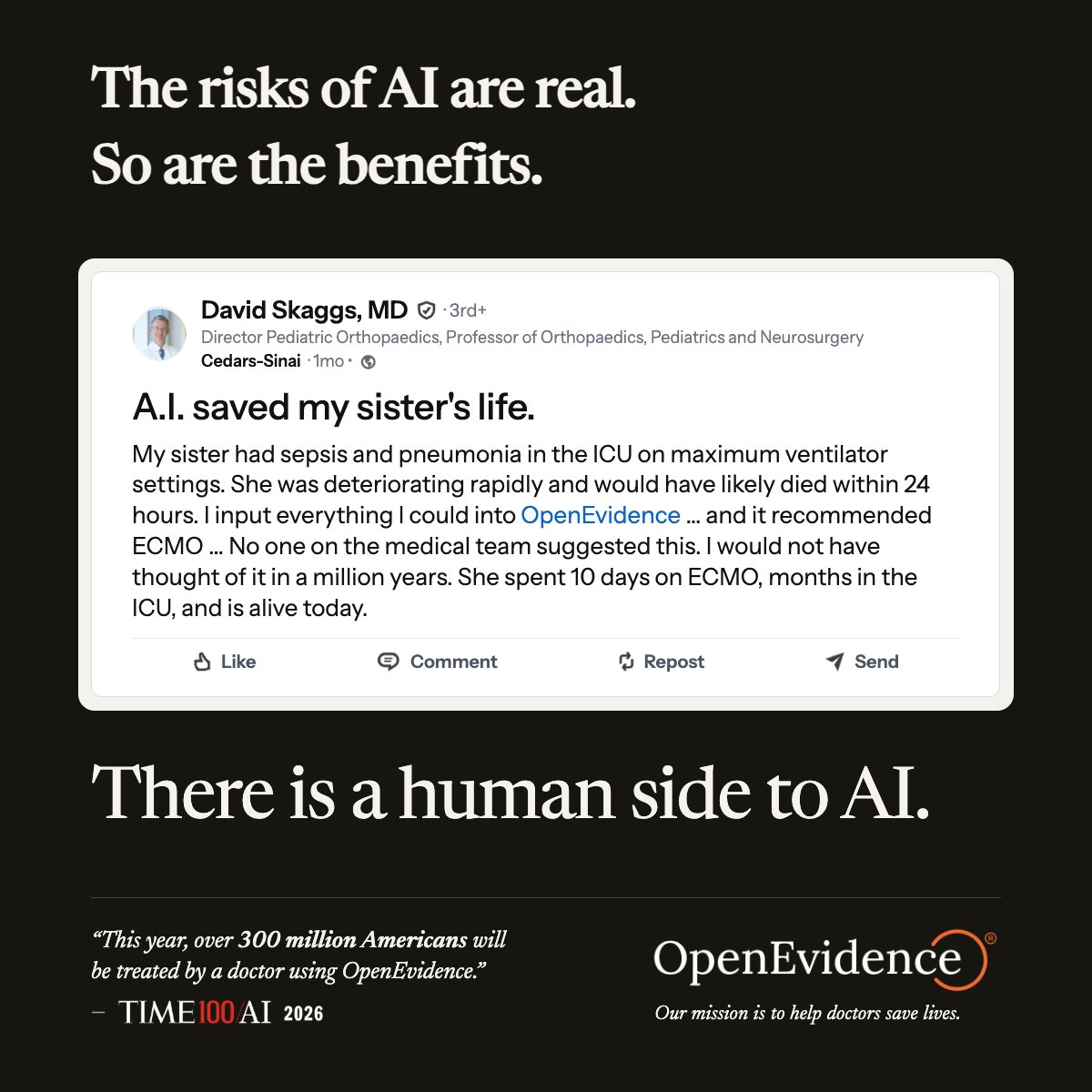
OpenEvidence founder named to TIME100 AI 2026.
"Over 300 million Americans will be treated by a doctor using OpenEvidence to help make a treatment decision." https://t.co/jhqL1oHFOd
Open Evidence is a truly exceptional company
Most doctors in America now use the product
The founders are AI native, having previously founded Kensho
They are hiring an elite+++ young engineer to work with the founders on special projects
DM me or apply online
@OpenEvidence
We built a game where you stare at a grid of unrelated clues until the connection reveals itself, which is, of course, your entire job, except you get four chances, which is three more than usual.
The game is called Synapses. It’s live alongside MedMini, our daily medical mini crossword, at the top of Discover on web and in the app. Both refresh daily.
Come play with OpenEvidence.
Some clinical questions have thirty years of randomized trials behind them. Some have four case reports.
Answers on OpenEvidence now carry a grade for how much certainty the underlying evidence can support, using the same GRADE criteria Cochrane and the WHO apply to guidelines. Study design, agreement across trials, precision, and whether the studied population resembles the patient in front of you.
@FierceHealth got the first look at EvidenceGrade. Link in the reply below.
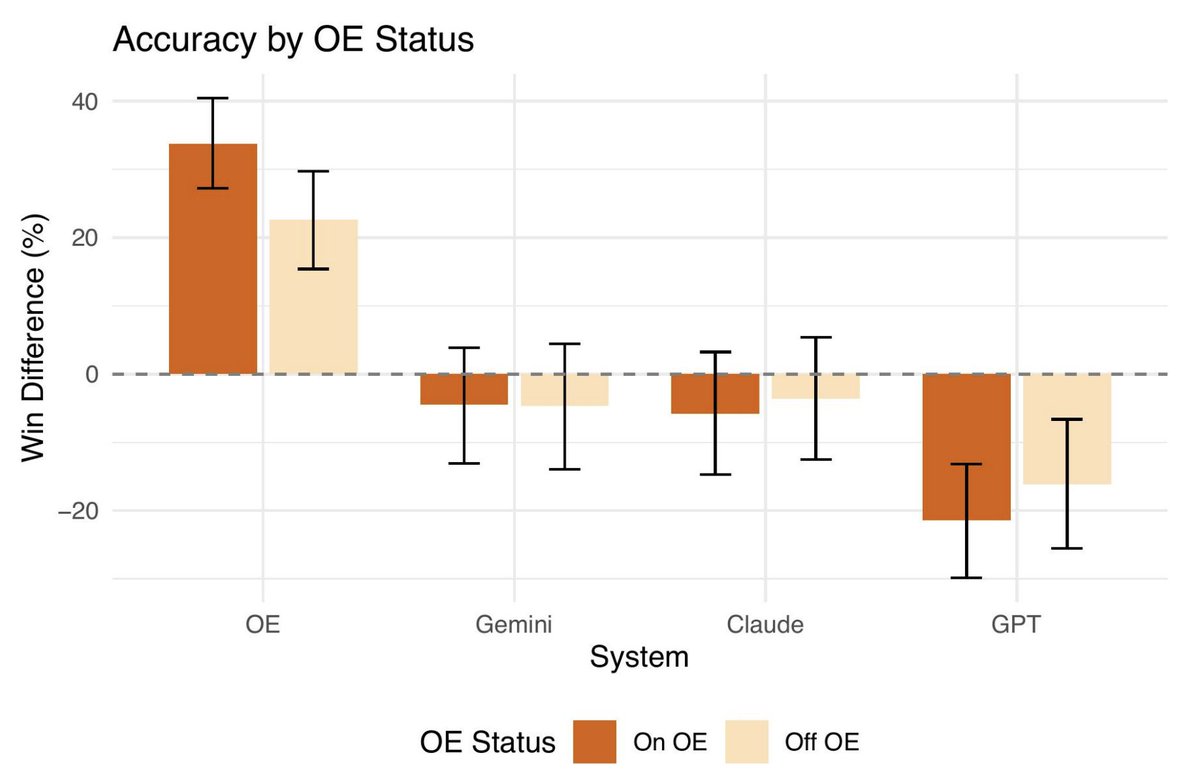
New: a large, blinded evaluation study by a consortium from Stanford, Harvard, UCSF, University of Washington, and the lead statistical editor at JAMA, on the accuracy of OpenEvidence vs foundation models for real point-of-care clinical queries.
- Gold-standard expert subspecialist evaluation: Rather than relying on models rating other models, 149 clinicians from >30 specialties subspecialty-matched to each question evaluated accuracy, blinded.
- OE outperformed foundation models on accuracy, utility, source quality, and verifiability; this holds whether raters had used OpenEvidence before or not.
- After OE, Gemini and Claude perform statistically similarly to each other, and each of Claude and Gemini significantly outperforms GPT5.5.
Paper: https://t.co/nZ8BU9sC6m
All code and data including raw queries and answers were publicly released by the authors.
Rigorous evaluation of medical AI is good for everyone, and we welcome it. Counter to a half-dozen independent studies from institutions such as the Mayo Clinic that were highly positive on OpenEvidence—a lone paper now purports to show that generalized AI beats specialized clinical AI (@UpToDate, @openevidence). The paper has a massive undisclosed conflict of interest and irredeemable methodological flaws.
Behind the scenes: The study authors run a competing in-house medical AI at their hospital, and asked OpenEvidence for an API to power it — including rights to build a "competing product" with OpenEvidence's own API. OpenEvidence declined. Then, this paper coincidentally appeared.
Point-by-point, looking closely at the datasets used in the study, the disingenuous and fatal flaws become immediately apparent 🧵.
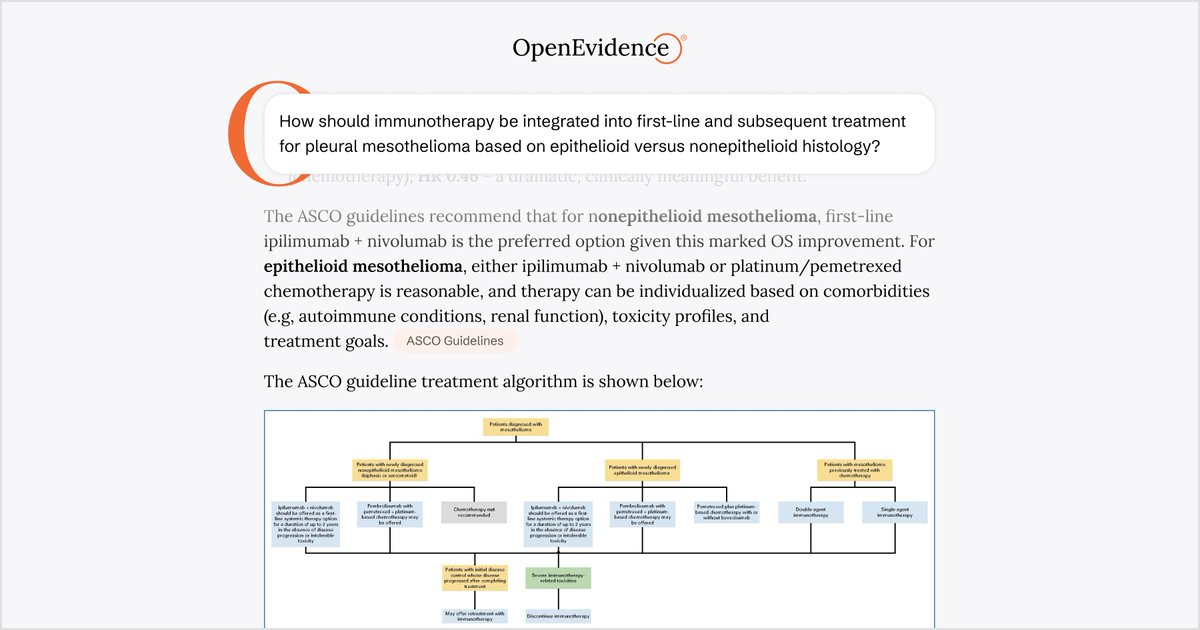
Every oncologist remembers the first @ASCO Guideline they read in fellowship: the systematic review, the evidence tables, the panel consensus behind every recommendation.
Today, OpenEvidence announced an integration of ASCO Guidelines, figures, and flowcharts into the OpenEvidence model. The ASCO Guidelines appear within context, accompanied by peer-reviewed evidence, precise citations, and a direct link to the ASCO website.