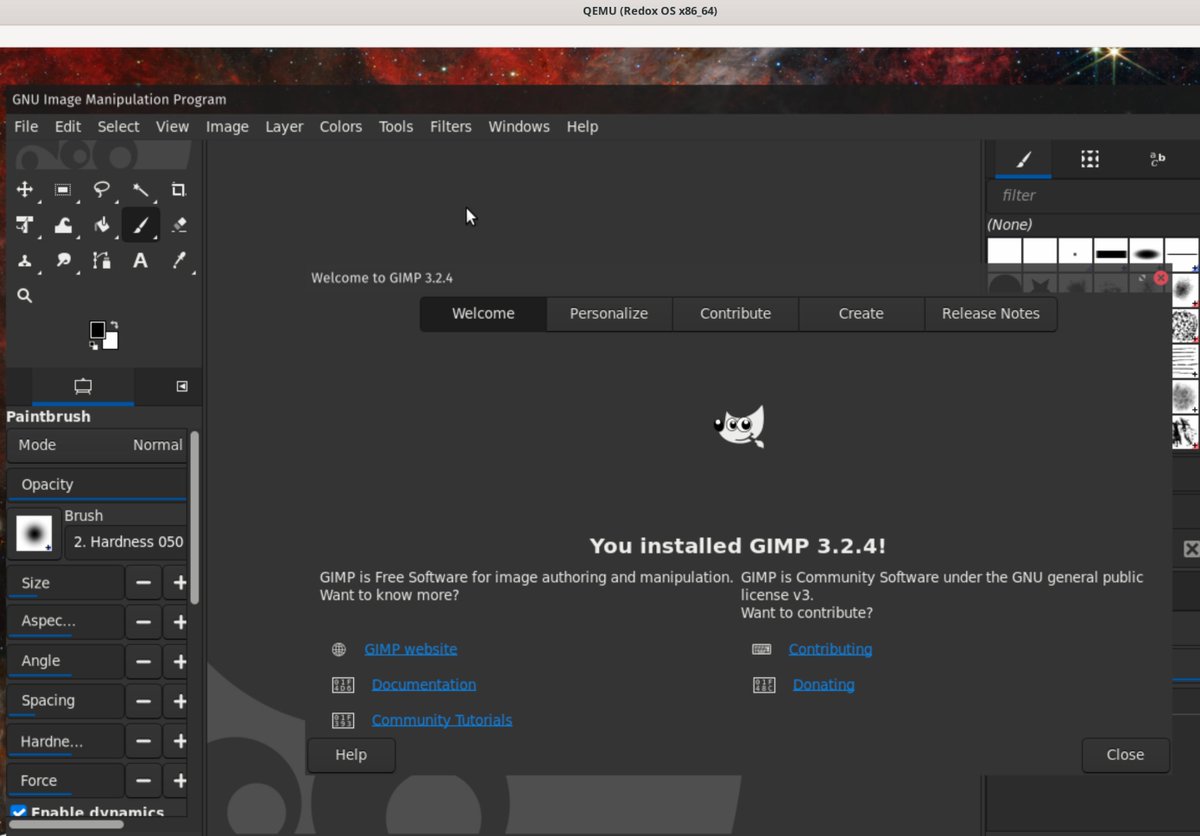
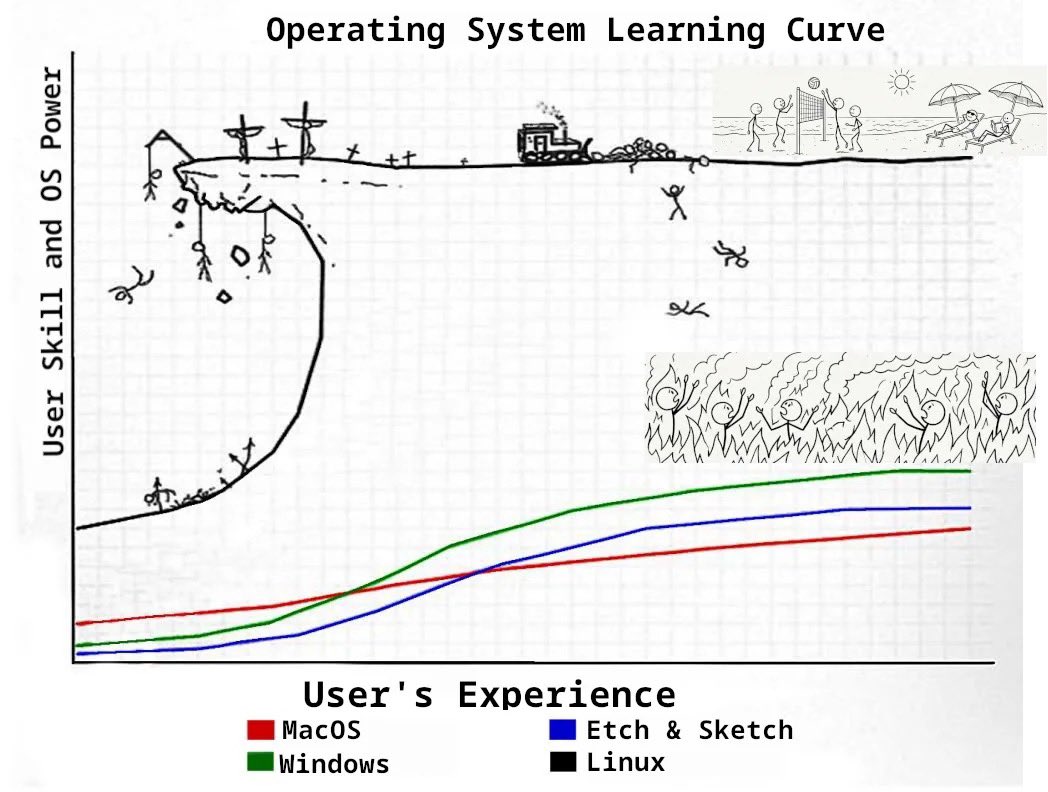
This Month in Redox - October 2026
Golang port, Cloud Hypervisor support, WebKitGTK3 video support, GIMP port, Servo 0.7 update, RISC-V dynamic linking, NUMA real hardware testing, virtiofs support and many more.
https://t.co/gPe213gvOh
A new series of hands-on Linux experiments is up at UnixBits.
First up: turning a Raspberry Pi 4 into a headless real-time Linux laboratory, using Raspberry Pi OS Lite and SSH.
https://t.co/wSsVg7vW8M
Coming next: kernel preemption, GPIO and real-time Linux.
python: there's a library for that
C: there's a header for that
rust: there's a crate for that
me: there's a 4-year-old github repo
with 2 stars for that
Linux 7.4's networking changes are merged, sent in by Red Hat's Paolo Abeni.
The headline feature is hardware pacing offload. Instead of the CPU deciding exactly when each packet goes out, the network card handles that timing itself. Intel's IDPF driver is the first to support it.
Mixed BIG TCP paths get up to 70% more throughput, according to the pull request.
Meta's second-generation network card driver also lands upstream, so Meta keeps shipping drivers for its own data centre hardware straight into mainline.
And a proper Realtek driver replaces the old rtl8723bs one, which had been sitting in the kernel's staging area for less polished drivers.
In 1998, Brian Kernighan wanted a regular expression engine small enough to fit on one page of a programming book.
Rob Pike went to his office and came back an hour or two later with roughly 30 lines of C.
It supported ^, $, ., and *, using little more than pointers and recursion.
Kernighan later featured it in Beautiful Code.
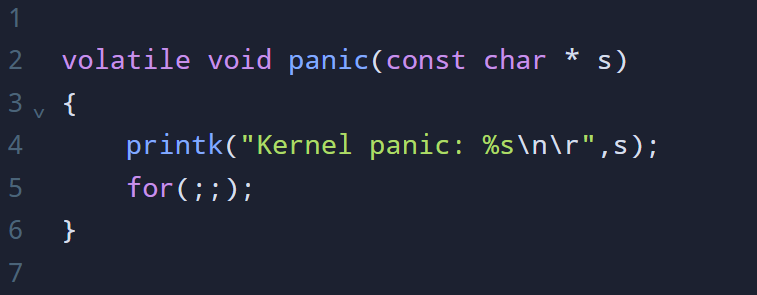
The original Linux 0.01 source code from 1991 is fascinating.
Linus Torvalds' Makefile used 16-bit assembly tools alongside GCC to build a bootable kernel image.
And look at how he handled a kernel panic:
FreeBSD's shutdown command has a function named die_you_gravy_sucking_pig_dog()
yes, that's the actual function name
even system shutdown deserves a little personality
in Unix V7 (1979), the file command could guess whether text was English by counting letter frequencies
it checked vowels, common letters, and rare letters
a tiny heuristic that still kind of works
Manager: we need someone senior.
Me: what's the salary.
Manager: junior, obviously.
Me: so someone senior who'll work for junior money.
Manager: we prefer to call it a growth opportunity.
Researchers proved every LLM is secretly obsessed with Japan.
And they finally figured out why.
They published a paper investigating hidden cultural biases in large language models.
they tested 31,000 questions across 24 different languages on models like gemini, chatgpt, claude, and llama.
they stripped out all geographic hints and just asked the models to pick a place and answer.
the finding was universal.. across a wide range of models and languages, there is a pervasive "obsession" with japanese culture.
even when you prompt them in a language with zero ties to japan, they default to japanese norms, values, and aesthetics at a disproportionately high rate compared to its actual global demographic weight.
the craziest part? they tracked down exactly when the ai develops this obsession.. and it is not from reading the raw internet.
during pre-training, the models actually have a fairly balanced, global view of the world. the obsession gets injected during the safety phase.
when tech companies fine-tune these models to be "helpful, harmless, and polite," the ai starts mapping those corporate safety guidelines directly onto japanese cultural concepts. in the pursuit of creating the perfect, inoffensive, compliant assistant, they warped how the models view the world.
the quantization process (compressing models to run faster locally) actually amplifies this determinism. the smaller and faster your local model is, the more stereotypically it behaves, causing japanese cultural tropes to spike hard.
we spend all this time worrying about existential ai safety, but the real alignment problem is that our most advanced reasoning engines are hyper-fixated on japanese internet culture.
every model upgrade is reinforcing an invisible regional bias that dictates how they generate stories, facts, and code. the cultural commonsense of the internet is not universal..
it’s just localized to whatever the heaviest reddit and anime wiki users were obsessed with.
You can lock a Linux C process inside a security sandbox so strict that even if an attacker gets Remote Code Execution, they cannot open a file, spawn a shell, or touch the network.
One call to prctl with SECCOMP_MODE_STRICT tells the kernel: if this process attempts any syscall other than read, write, or _exit, kill it immediately with SIGKILL.