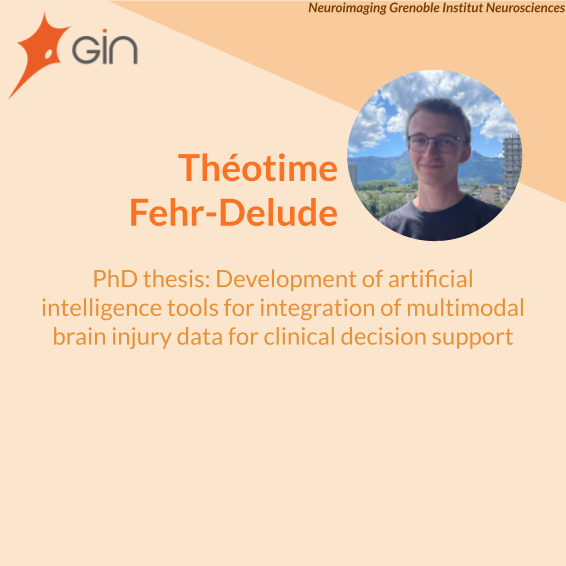
👋 A warm welcome to Théotime Fehr-Delude, our new PhD student!
🧠 His research dives into the "development of artificial intelligence tools for integration of multimodal brain injury data for clinical decision support".
🌟 Wishing Théotime an inspiring journey ahead! 🚀
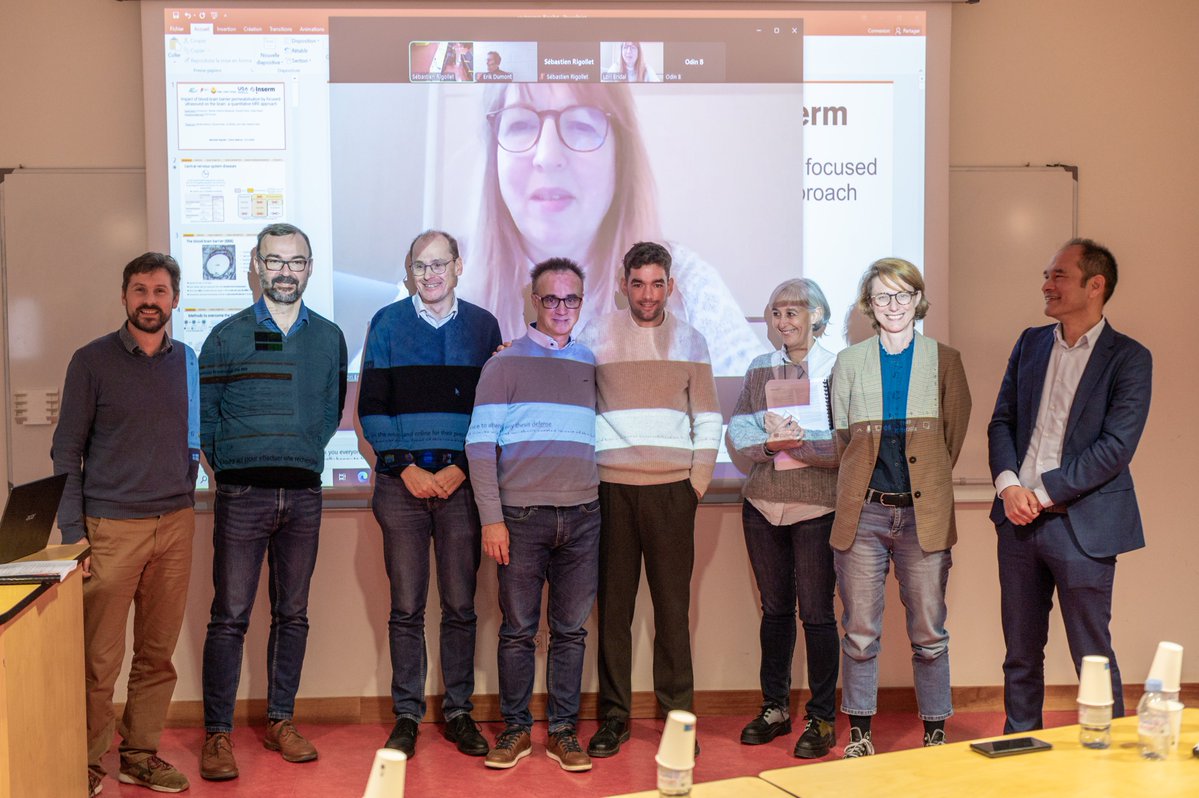
🎓Congratulations to Dr. @sbrigollet for brilliantly defending his PhD!
💡 He presented his outstanding research on the "Impact of blood-brain barrier permeabilisation with focused ultrasound: a quantitative #MRI approach".
#FUS#BBB
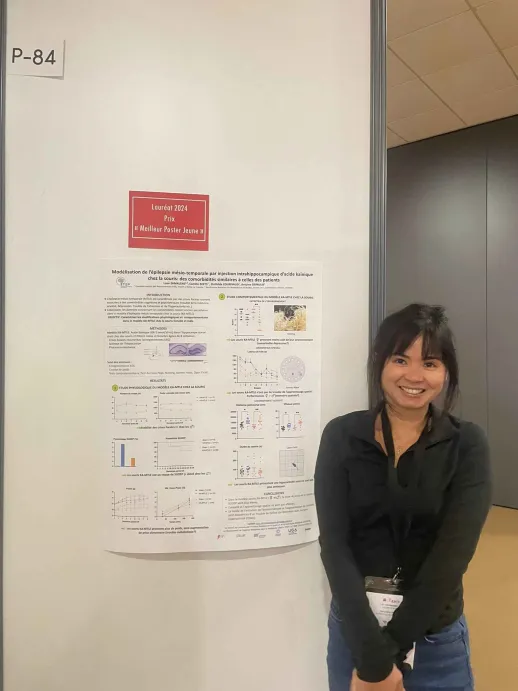
📸 Retour sur les #JFE2024 !
🔎 Poster lauréat du prix du "Meilleur Poster Jeune" sur les comorbidités observées sur un modèle murin d'épilepsie mésio-temprale.👏
🏅 Les recherches sur une technique de radiochirurgie contre l'épilepsie ont obtenu le soutien de la @FFREpilepsie !
🌐 Exciting times at #MICCAI2024 in Marrakesh!
🗣️ Showcasing our research on volume estimation in medical images and MR fingerprinting during engaging poster sessions.
🤝 Plus, insightful exchanges with the MICCAI community!
#AI#MedicalImaging
Across MICCAI 2023 segmentation papers:
Median improvement over SOTA: 1 percent point of Dice
Median (imputed) Confidence Interval width: 3 percent points
Should we be worried? 😱
To learn more, see poster T-AM-065 by @evangelia_chris@annika_reinke1 at 10.30 #MICCAI2024
🌐 Great discussions last week at #ESMRMB2024 in Barcelona!
📈 Our team's research on #MRI radiofrequency safety for active implants was showcased during the poster session.
#MRIsafety
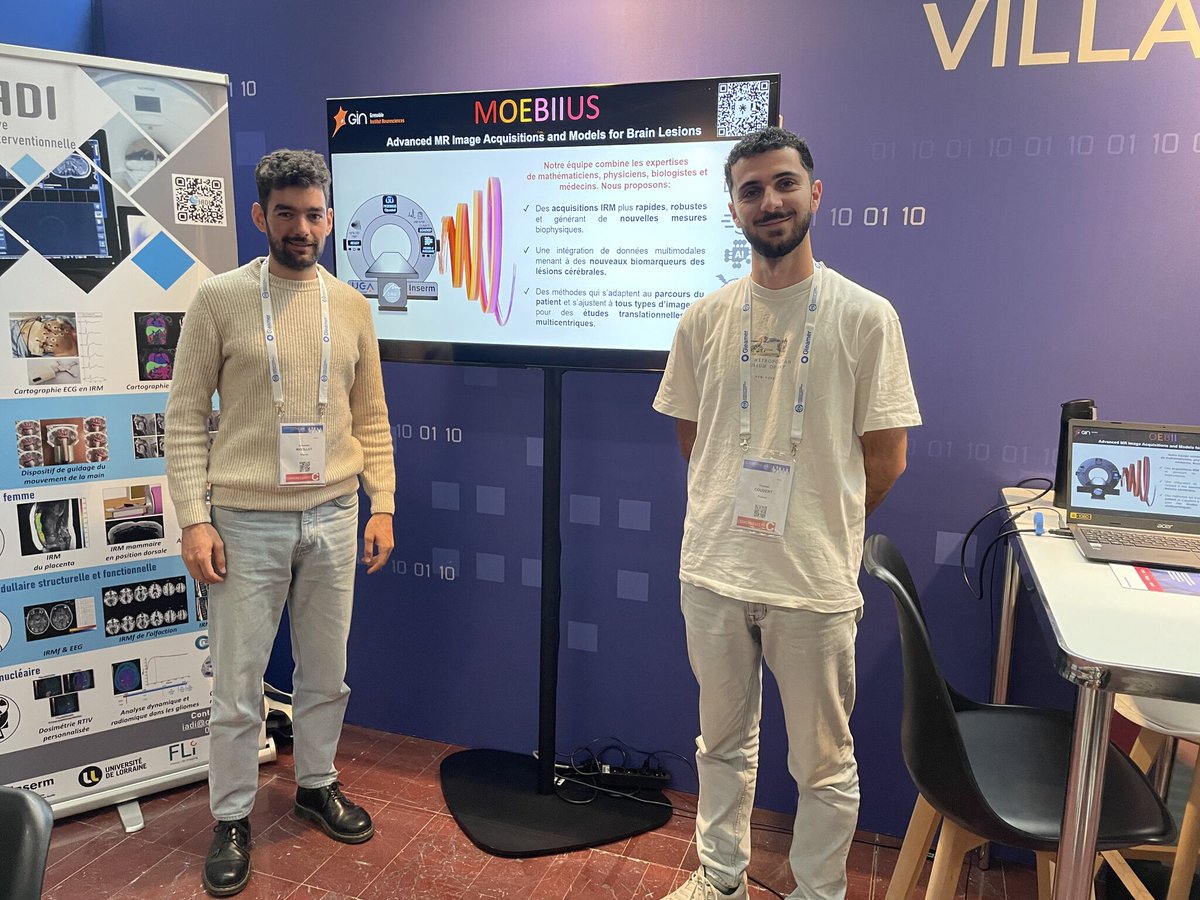
📸 Retour en images sur les Journées Francophones de Radiologie ! #JFR2024
🗣️ Echanges autour des projets de notre équipe au stand chercheur.
🌐 Et présentation de FLI-IAM et la solution de partage et d'hébergement de données associée.
📢 New publication!
💡 Discover how Focused Ultrasound-mediated Blood-Brain Barrier opening leads to transient perfusion decrease and inflammation without acute or chronic brain lesion.
🔗 https://t.co/ntUsEXIahO
#FUS#MRI#BBB@sbrigollet
⚡️🔬📣 Excited to share our new @Nature article building and evaluating PathChat, a multimodal generative AI copilot and chatbot for human pathology. Article: https://t.co/OAIG31ofWJ Open Access Link:
https://t.co/tvw6W6qmT9
We leverage our previous success in building foundation models for computational pathology such as UNI / CONCH and combine it with the advancements of large vision language models and generative AI to enable PathChat to answer diverse pathology-related queries. We assessed PathChat using both multiple choice diagnostic questions and open-ended questions.
Congratulations to @MYLu97@chenbowen118 @DFKW_MD @richardjchen and everyone else who contributed to this work.
Also see blog post from @MYLu97 about this work: https://t.co/exjpKMnrQp , also teasing the development and preview of PathChat 2, a successor to PathChat 1 bringing new capabilities and substantially improved performance to the state-of-the-art.
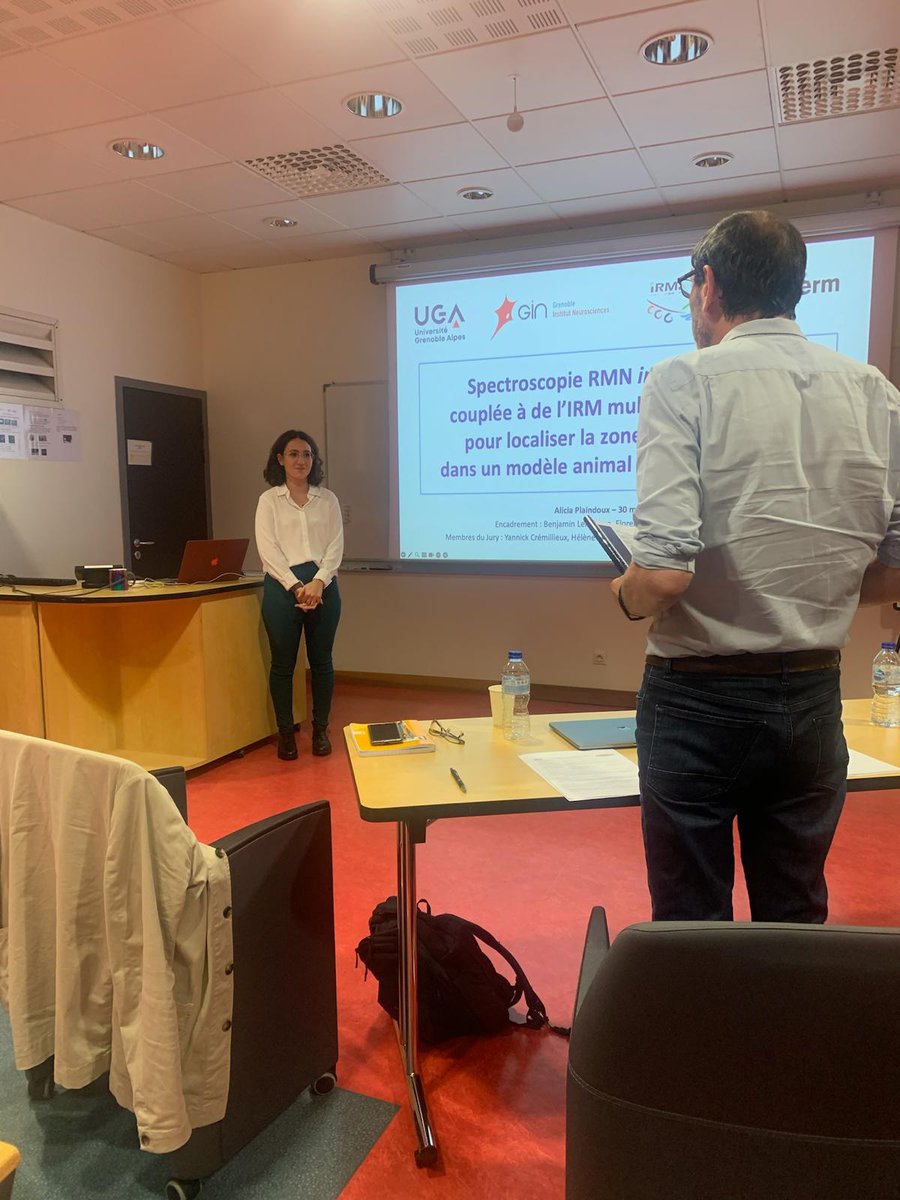
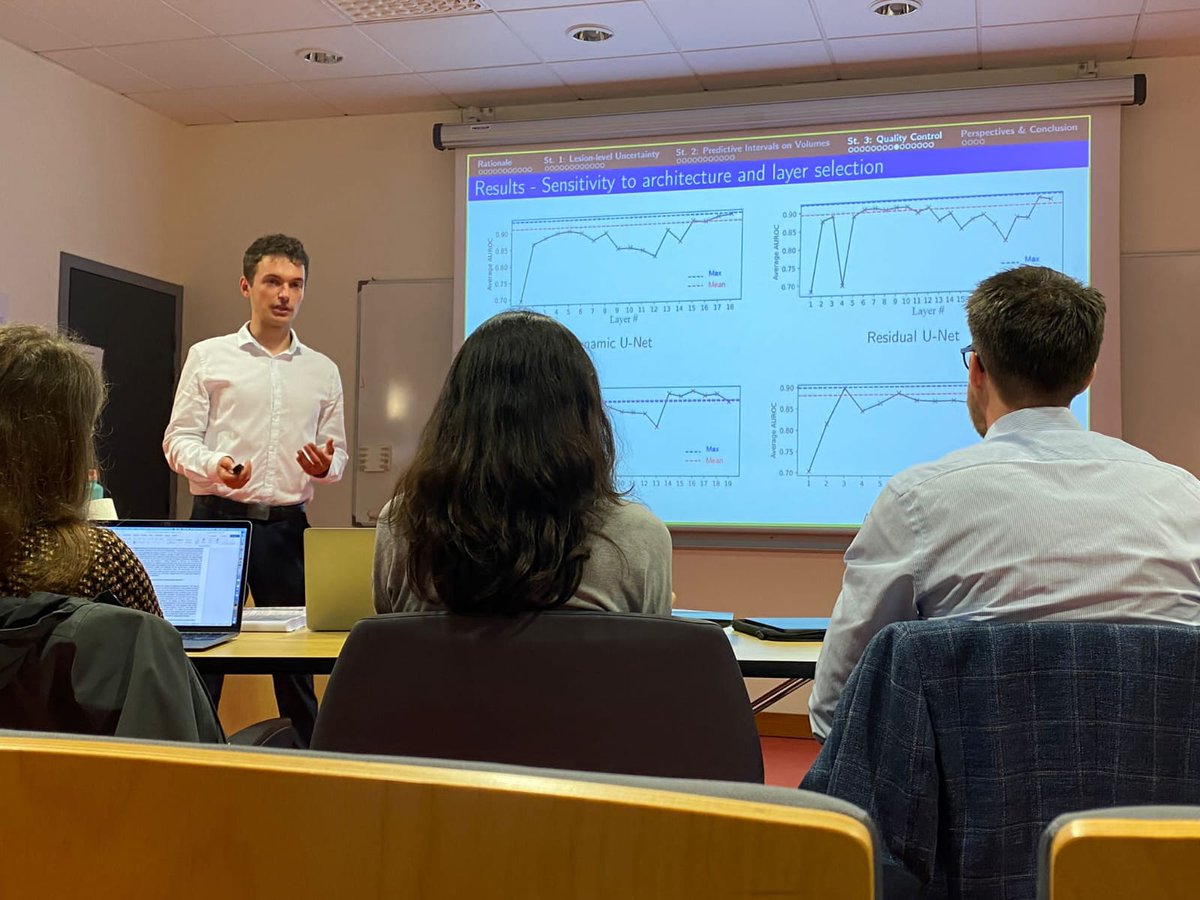
🎓 Congratulations to Dr. Alicia Plaindoux for defending her PhD!
💡 Her compelling presentation explained remarkably her research on "In Vivo Edited #NMR#Spectroscopy Coupled with Multiparametric #MRI to Localize the Epileptogenic Zone in an Animal Model of Focal #Epilepsy."
🎓 Back to the last interns welcomed in the team!
🔬 Exciting work ahead: #AI for medical imaging, innovative MR fingerprinting, brain networks studies and investigation on parasympathetic activity.
⭐️ Best wishes to our new team members!
#MRI#MRF
Bagdadi et al, @ArnalAndrieuLab challenge the classical view of #microtubule dynamic instability in @JCellBiol: microtubules assembled from GDP-tubulin are unexpectedly stable (https://t.co/N3fntL76kh).
🎓 Congratulations to Dr. Benjamin Lambert for brilliantly defending his PhD!
💡 His research on 'Uncertainty Quantification in Deep Learning-based Medical Image Segmentation' was presented with impressive clarity and pedagogy. 🧠🤖
#IA#MRI#DeepLearning
Thrilled to announce that our paper "Robust Conformal Volume Estimation in 3D Medical Images" has been early accepted at #MICCAI2024🎉
A beautiful conclusion to my PhD journey, before my defense this Thursday.
Stay tuned for more info!
@nifm_gin@InriaStatify@pixylmedical
Bravo à tout le comité scientifique junior qui a entièrement organisé cette 1/2 journée ! Les échanges ont été très riches et enrichissants
👏 @Thomas__Coudert , @benolmbrt et Vaëa Tesan
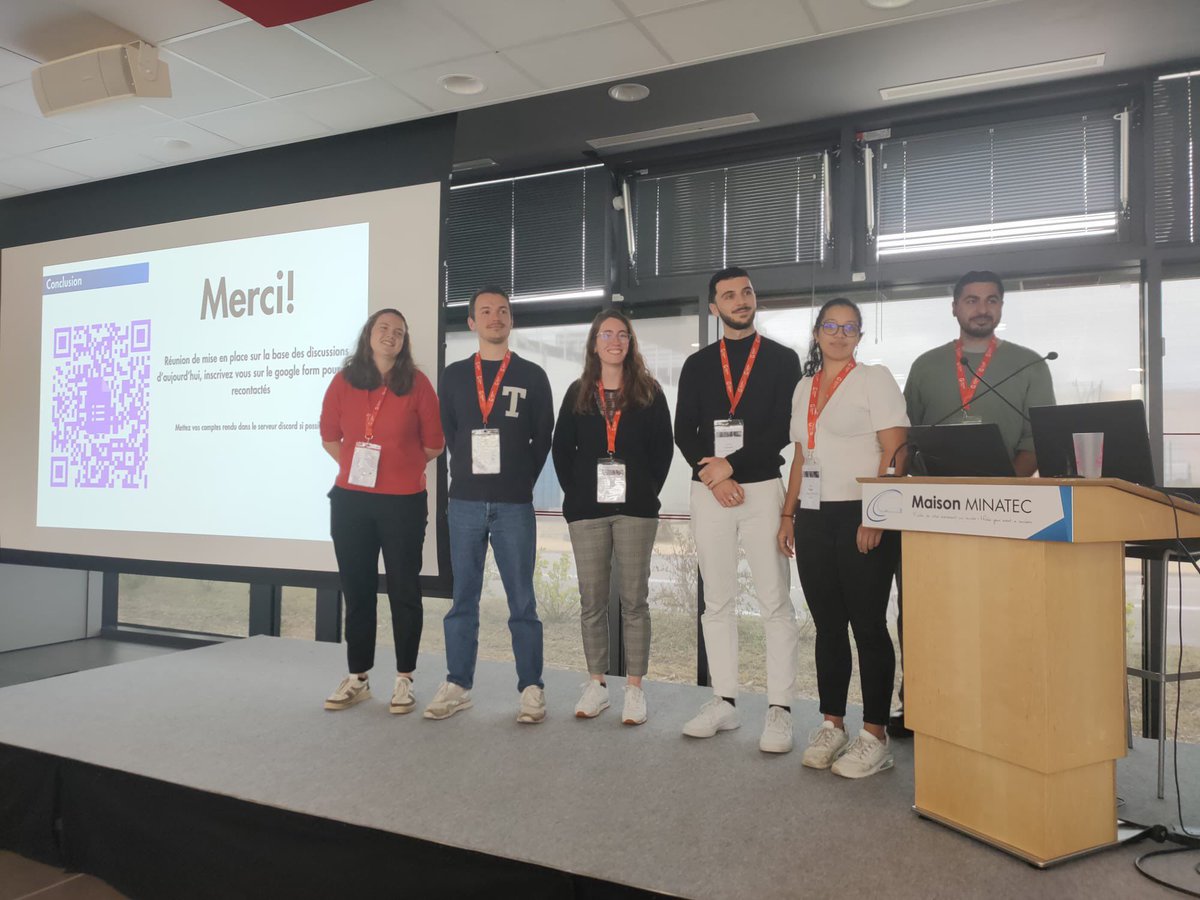
🌐 L' #IABM2024 s'est finie sur la réflexion collective autour de la mise en place du 1er réseau national d'entraide pour l'Intelligence Artificielle en Imagerie Biomédicale.
💡 Des doctorants de l'équipe ont participé à l'organisation de cette demi-journée pleine d'interactions!
🌐 L' #IABM2024 s'est finie sur la réflexion collective autour de la mise en place du 1er réseau national d'entraide pour l'Intelligence Artificielle en Imagerie Biomédicale.
💡 Des doctorants de l'équipe ont participé à l'organisation de cette demi-journée pleine d'interactions!
Based on numerous requests, we are providing the open ShareIT link for UNI and CONCH. Please access it below:
Open ShareIT Read Links:
UNI: https://t.co/lE3cYSUJoY
CONCH: https://t.co/fvA1jNe0om
Journal Links for complete pdf:
UNI: https://t.co/9eHXwk0kjJ
CONCH: https://t.co/f207RP1hA0
We sadly found out our CTM paper (ICLR24) was plagiarized by TCD! It's unbelievable😢—they not only stole our idea of trajectory consistency but also comitted "verbatim plagiarism," literally copying our proofs word for word! Please help me spread this.
⚡️🔬📣Excited to share our two new @NatureMedicine articles, we develop computational pathology foundation models,
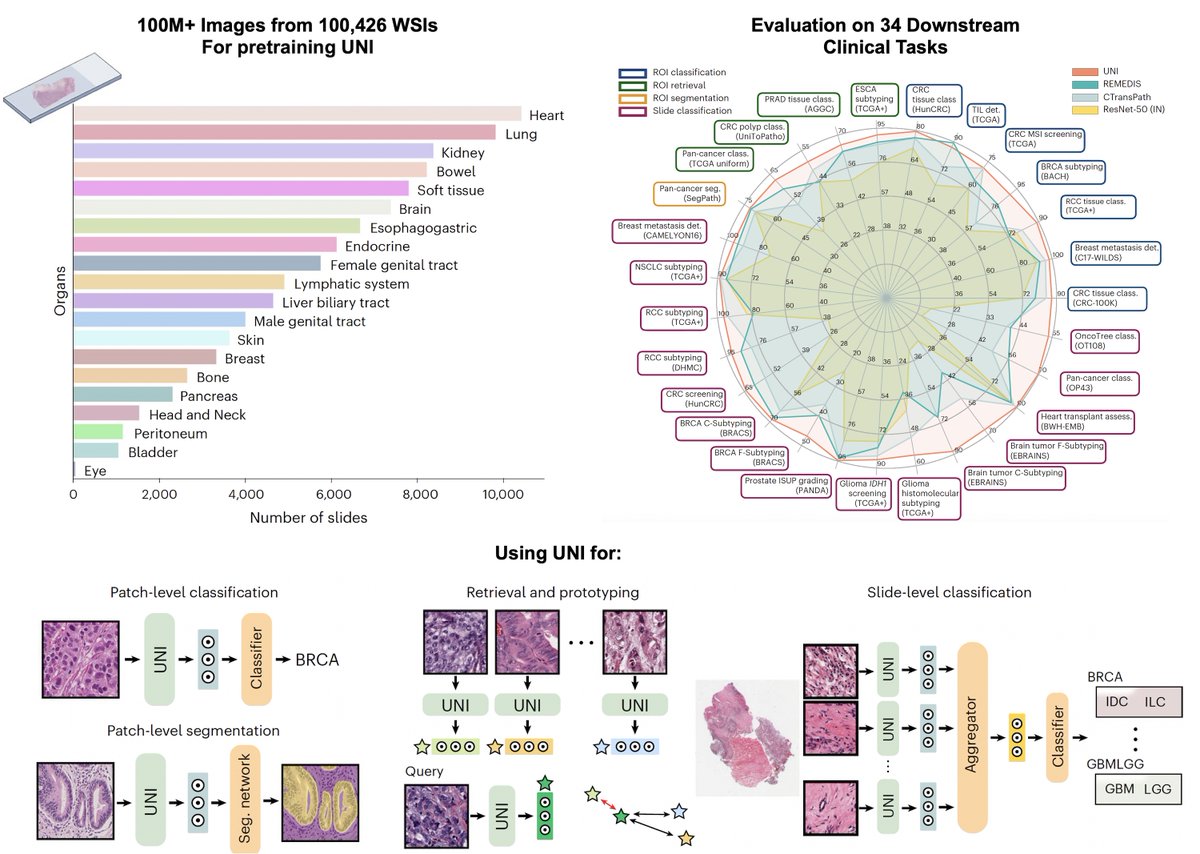
1. UNI, a self-supervised computational pathology model trained on 100 million pathology images from 100k+ slides.
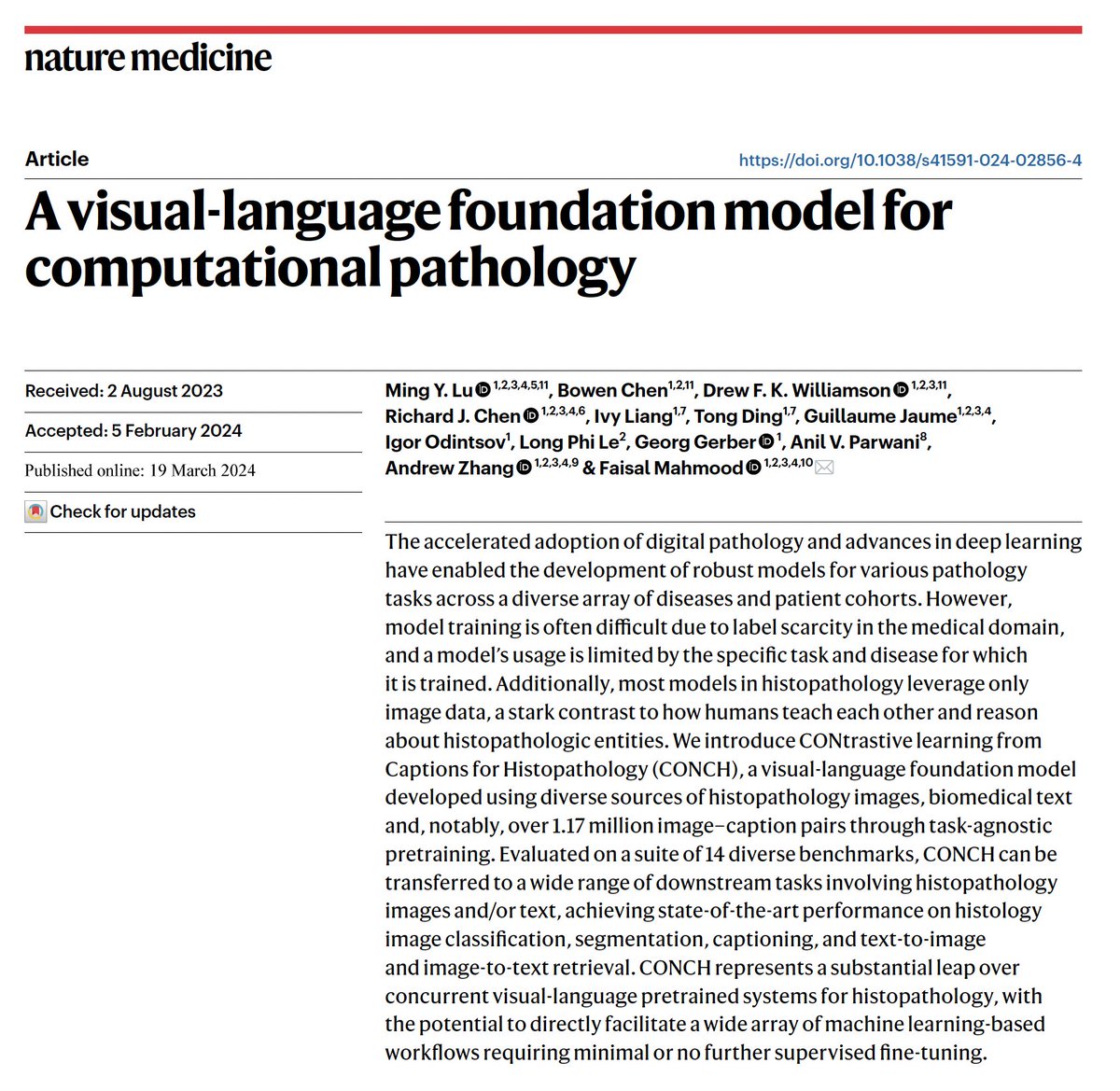
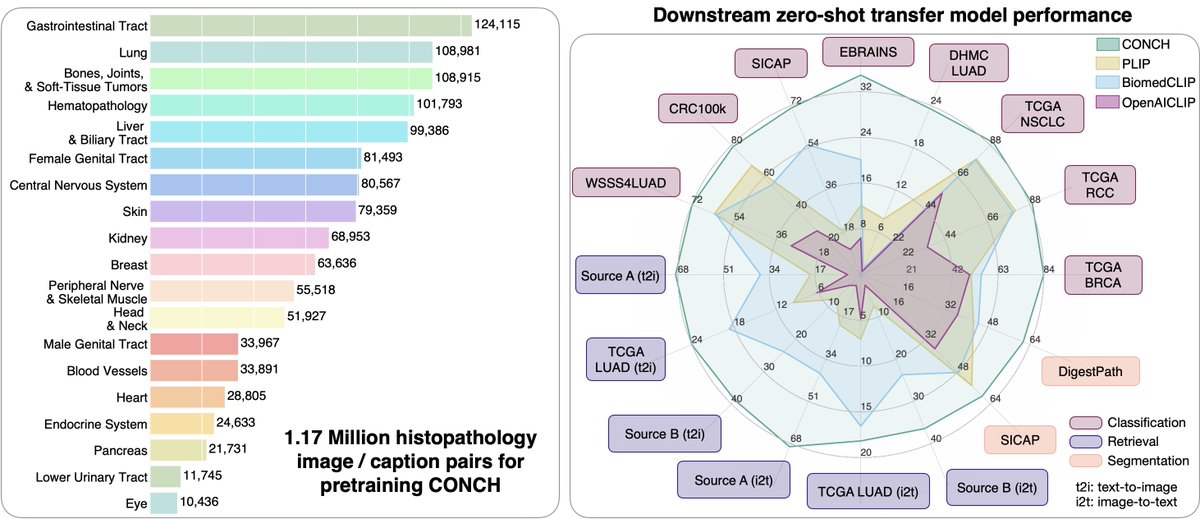
2. CONCH, a vision-language model for computational pathology trained on 1.17 million pathology image-text pairs.
Access the articles @NatureMedicine
UNI: https://t.co/f207RP0JKs
CONCH: https://t.co/9eHXwjZMub
Access the code, models:
UNI: https://t.co/5Gkyzd8R8a
CONCH: https://t.co/BLG2G3bTuO
Interesting aspects:
- Both models are evaluated on a host of different clinically relevant tasks for WSI classification, ROI classification, segmentation, image retrieval, image-to-text retrieval, text-to-image retrieval, in 0-shot, few-shot and supervised settings. These adaptations encompass the utility of large public datasets and evaluations on independent test cohorts.
- Both models exclude commonly used public computational pathology benchmarks from pre-training allowing for a much more holistic evaluation.
Some limitations: Both UNI and CONCH represent early developments in foundation models for pathology. More data, and additional evaluation is needed to realize the full potential of these models. Nevertheless, we show the models capabilities on a variety of different benchmarks with several demonstrating state-of-the-art performance.
Future work and insights: While these developments are exciting, they represent work we did about a year ago when the pre-prints were made available, since then we have been busy collecting significantly larger datasets and hope to make larger models available in the future. We have also used UNI and CONCH as the backbone for our Pathology specific chatbot, PathChat (https://t.co/OuVsJvrLTQ), which is further trained on hundreds of thousands of pathology specific Q-A instructions.
We are also excited to see foundation models for several other areas of biomedicine including for single cell data (https://t.co/vkvE3ulri9), radiology (https://t.co/c5CLbgmcrG) and the general trajectory towards general purpose AI for biomedicine.
Congratulations to our superstar leaders @richardjchen@MYLu97 @DFKW_MD @TongDing99, Bowen Chen and everyone else who contributed to these studies @GuillaumeJaume@GreatAndrew90@sharifa_sahai@Aparwani_dpath and others.