This story about a new mega complex in Bellevue breaking ground has links below it to stories about the last two Bellevue mega complexes going bankrupt. I don’t get it either.
HOP is one vote away! Huge thanks to @SeattleCouncil's Land Use Chair Eddie Lin, CM @Alexis4Seattle, CM Dionne Foster, and @CMDanStrauss for moving it through committee. Join us Tues 6/2, 2pm at City Hall to help get it across the finish line: https://t.co/FGiC0CSoPL
@loganb 1. We will make it impossible for you to operate, but it's not a 'taking' because we aren't actually taking anything
2. Oh look you are going bankrupt, we'll take that now
How long before the US goes after China for illegal dumping of tokens? DeepSeek v4 is about 1/10 the price of Claude/gpt and not far off on quality (and maybe 1/20 of the price effectively since it’s so good at caching and basically free in that mode)
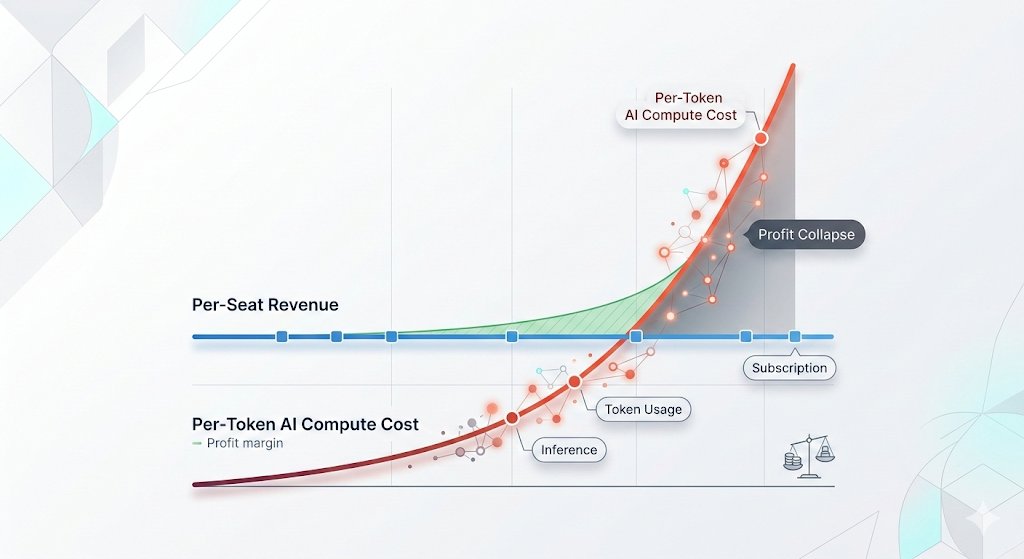
🦔Microsoft canceled its internal Claude Code licenses this week after token-based billing made the cost untenable, even for a company with effectively infinite cloud resources. Uber's CTO sent an internal memo warning the company burned through its entire 2026 AI budget in just four months. American AI software prices have jumped 20% to 37%, and GitHub (owned by Microsoft) is dropping flat-rate plans for usage-based billing across its products.
My Take
The AI subsidy era is ending in real time. The same company that put $13 billion into OpenAI and built the Azure infrastructure powering most of Anthropic's compute just looked at the bill from a competitor's coding tool and decided it was not worth paying. That is not a productivity failure on Anthropic's end. Token-based pricing is forcing every enterprise customer to confront the actual cost of running these models at scale, and the number turns out to be far higher than the flat-rate experiments suggested.
This ties directly to my Gemini Flash post yesterday. Anthropic, OpenAI, and Google all raised effective prices in the last six months. Enterprises that built workflows assuming AI costs would keep falling are now watching annual budgets evaporate in months. Two outcomes look likely from here. Either enterprises scale back AI usage to fit budgets, which slows the revenue ramp the labs need to justify their valuations ahead of IPOs, or the labs cut prices and absorb the losses, which makes the unit economics worse at exactly the wrong moment. Both paths land in the same place, the numbers stop working, and somebody has to take the writedown.
Hedgie🤗
Sound Transit seems like the latest local government agency that can’t seem to deliver the results it promised. Facing a $35B budget shortfall, ST leaders are throwing up their hands and, behind a obscuring wall of empty, soothing word salad, planning to kill the Ballard line (which projections show would generate the greatest ridership.
But what if there was a way to totally rethink the line, using shorter, automated trains and much smaller stations, reducing costs by $10B or more? On the latest @RealSeattleNice (link to follow), former SDOT Director Scott Kubly says that this alternative vision is doable, and points to cities like Copenhagen as examples. But he says he’s gotten the cold shoulder from Sound Transit leaders as he’s tried to come to them with a creative alternative to throwing in the towel.
So is Kubly a disaffected crank who’s spinning simplistic fairy tales and unattainable pipe dreams? Or is Sound Transit an insular, hidebound agency that would rather underdeliver and break promises to its voters as opposed to fundamentally rethinking its assumptions in a way that would disrupt a comfortable status quo?
Listen to what Scott has to say and decide or yourself.
California's ADU reforms are successful in large part because they replaced 482 different sets of local rules with one consistent statewide standard.
We should do the same thing with building safety regulations, which should be rigorous, evidence-backed and statewide.