MD-PhD | Physician-Scientist | 🧬 x 🧠 x 👨🏻💻 | Adjunct Professor, Neuroscience, UP College of Medicine; TMTCS Med | Tweets mine, RTs not endorsements. 🇵🇭
Sharing our @NatureAging study on #Neuroscience x #Bioinformatics where we leverage single-nucleus RNA sequencing of the human striatum to dissect the cell type–specific changes in Alzheimer disease and Parkinson disease:
Read it here: https://t.co/4PAdvIZBGV
@Kert89 @PaulMinotMD@NickTaber Pass, am too tired. Sorry if my words were a bit harsh. I just feel attacked over something that doesn’t have to do with me
@Kert89 @PaulMinotMD@NickTaber So no, psychiatry is not less of a science just because we do not understand it fully. It is precisely that lack of understanding that seats it at the precipice of science
@Kert89 @PaulMinotMD@NickTaber not all questions will ever have answers. Science is that determination to ask, that striving to understand, that obsessive persistence to answer, but also that acknowledgment of contextual limitations.
@Kert89 There’s a difference between questioning and maligning.
And what do you know about science? You base your generalization from your own anecdotes and from “reading academic papers”
@Kert89 It’s so annoying how you already know na hindi psychiatrist itong nasa post mo yet you choose to maintain it, maligning an entire profession in our country. Di mo man lang inisip na MH issues are already stigmatized as it is, and this post just spirals it even further down.
Agency > Intelligence
I had this intuitively wrong for decades, I think due to a pervasive cultural veneration of intelligence, various entertainment/media, obsession with IQ etc. Agency is significantly more powerful and significantly more scarce. Are you hiring for agency? Are we educating for agency? Are you acting as if you had 10X agency?
Grok explanation is ~close:
“Agency, as a personality trait, refers to an individual's capacity to take initiative, make decisions, and exert control over their actions and environment. It’s about being proactive rather than reactive—someone with high agency doesn’t just let life happen to them; they shape it. Think of it as a blend of self-efficacy, determination, and a sense of ownership over one’s path.
People with strong agency tend to set goals and pursue them with confidence, even in the face of obstacles. They’re the type to say, “I’ll figure it out,” and then actually do it. On the flip side, someone low in agency might feel more like a passenger in their own life, waiting for external forces—like luck, other people, or circumstances—to dictate what happens next.
It’s not quite the same as assertiveness or ambition, though it can overlap. Agency is quieter, more internal—it’s the belief that you *can* act, paired with the will to follow through. Psychologists often tie it to concepts like locus of control: high-agency folks lean toward an internal locus, feeling they steer their fate, while low-agency folks might lean external, seeing life as something that happens *to* them.”
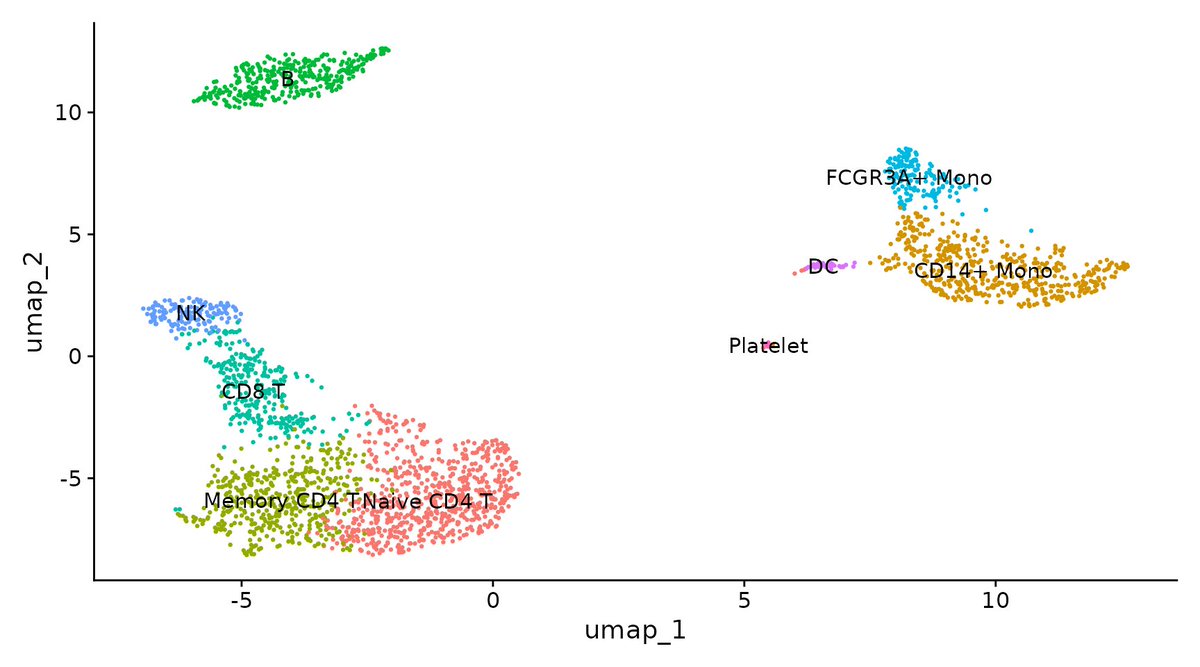
The problem w/ UMAP edgelords is the disregard for known biology. A simple exercise is take a few experimentally validated cell type specific genes (there are many), and ask how often do cells expressing the same cell type determinant 'happen to' be close together on a UMAP.