My book and audio book has launched! Audio just released.
🍎 How's my Apple Tree Doing?
Buy or Listen on Amazon 🎙️
https://t.co/Clos3hcLIN
It is a short children's book that is for both the kids and their parents. Investing is a psychological hurdle, and it's biggest jump is understanding the time needed.
- Why start?
- When and how?
- What's the point I need help now.
- The strength devised by longer time horizons.
- The pain of not preparing for uncertainty.
- The joy of delayed gratification.
#crypto #investing #patience #children #parenting #kids #savings #learn #love
@BretWeinstein The most obvious is action, but, HOW do you get Americans to fight back? And what are the literal steps?
Most of us lose our livelihoods not knowing either of these, and that is their evil power.
It's just noise to most, but absolutely not just noise.
Elon just created 4,400 millionaires in a single day.
400 of them are now worth over $100 million.
These aren't VCs. They're SpaceX employees, and the list includes welders, technicians, and cafeteria staff, because for two decades the company paid every level of the workforce in stock instead of higher salaries.
Juan Hernandez immigrated from Mexico and took a $28 an hour contractor welding job in 2015. He says he didn't even know what SpaceX was. The company gave him a $10,000 equity grant and let him buy more shares through payroll deductions. That stake is now worth $880,000.
Trevor Hise's parents wanted him to take a stable job at General Electric. He picked SpaceX instead, stayed 12 years, and accumulated over 100,000 shares. At the $135 listing price that's $13.5 million. He's 37 and semiretired. His words: "The magnitude of this has been ridiculous."
The most telling detail came before the listing. Over 100 employees quietly banded together and negotiated a group wealth management deal covering up to $5 billion, because none of them had ever needed a wealth manager before.
Software IPOs have minted millionaires for 30 years. This is the first one where the money went to the factory floor.
Robert Kennedy Jr. has done more as HHS Secretary than any HHS Secretary in my lifetime. He is cleaning up the food supply. He is removing chemical dyes from children's food, pulling heavy metals out of baby food, investigating microplastics and forever chemicals. And he is working to bring the childhood vaccine schedule down from 54 vaccines to 26.
That isn't a small thing.
@RobertKennedyJr
In January, ACIP announced they were reducing the number of injections on the childhood vaccine schedule. People were celebrating. And then a federal judge named Brian Murphy stepped in and said no.
He cancelled the recommendations, disbanded the advisory panel, and said the people on it weren't qualified.
The case was brought by the American Academy of Pediatrics, an organization that takes funding from pharma. So what we're really watching is a pharma-funded trade group asking a federal court to restore a pharma-friendly committee, and a judge who obliged them.
Start with standing. For a case to even be in a courtroom, the party bringing it has to demonstrate injury. The American Academy of Pediatrics is a trade group. It doesn't vaccinate children. It doesn't bear any personal injury if the schedule changes. So why aren't the children they claim to be protecting the plaintiffs? I don't know how this case survives on that question alone, certainly not if it reaches the Supreme Court.
Then there's the ACIP argument itself. The judge ruled that Kennedy didn't have the authority to change the schedule without an ACIP vote. But ACIP votes are recommendations. The CDC is not bound by them. It can override them completely. So the judge is saying Bobby needed to go through a process that the agency he oversees doesn't actually have to follow. Think about that for a second.
And then the judge disbanded ACIP for being unbalanced. The irony is almost too much. ACIP has never been balanced. It has had conflicts of interest running through it for decades, documented by multiple investigations, with members voting on vaccines they had a direct financial stake in.
The most cited example is Paul Offit, who voted to add rotavirus vaccines to the childhood schedule while he was actively developing his own rotavirus vaccine. He went on to make tens of millions of dollars from it.
So when this judge says ACIP needs to be more balanced, what he means, functionally, is it needs more people like that.
@DrTrozzi
Yesterday, four institutions settled tokenized United States Treasury debt across borders, across banks, and across time zones on a public blockchain in under five seconds. Nobody connected it to what happened the same day at Morgan Stanley. Read them together and the two-tier architecture stops being a thesis and becomes infrastructure.
On May 6, Mastercard, Ondo Finance, JPMorgan via its Kinexys blockchain platform, and Ripple completed the first near-real-time cross-border redemption of tokenized U.S. Treasuries on a public ledger integrated with interbank settlement rails. Ondo’s OUSG fund, representing short-term Treasury holdings with approximately $610 million in assets, processed the redemption on the XRP Ledger in under five seconds. Mastercard’s Multi-Token Network routed the instruction to Kinexys. Kinexys debited Ondo’s blockchain deposit account. JPMorgan’s correspondent banking delivered USD to Ripple’s Singapore bank account. The entire workflow executed outside traditional banking hours. Ian De Bode, president of Ondo Finance, called it the first time tokenized Treasuries had settled across borders and banks in near real time.
The XRP Ledger was chosen for a reason that matters more than speed. XRPL tokenizes assets via native Issued Currencies with built-in Trust Lines that give issuers the ability to freeze, authorize, and restrict transfers at the protocol level without smart contracts. Ondo controls who holds OUSG. Mastercard controls the routing. JPMorgan controls the fiat leg. Every node in the settlement chain has a compliance switch. The blockchain is public. The assets on it obey.
On the same day, Morgan Stanley began actively testing direct cryptocurrency trading on its E*Trade platform for 8.6 million self-directed clients at 0.50% per transaction. The bank already launched MSBT, the lowest-fee spot Bitcoin ETF at 0.14%, on April 8. It advises clients to allocate two to four percent to Bitcoin. It plans a proprietary digital wallet for the second half of 2026. Morgan Stanley is building every on-ramp to Bitcoin, the one public blockchain that has no Trust Lines, no issuer freeze, no compliance switch, and no admin key at any layer of its protocol.
Two public blockchains. Two architectures. One has freeze switches at every node. The other has none. Both are being integrated into Wall Street’s plumbing on the same day by some of the largest financial institutions on the planet.
The GENIUS Act mandates freeze capabilities for stablecoins. The CLARITY Act classifies Bitcoin as a digital commodity because it lacks them. Mastercard is building the controllable tier’s settlement infrastructure with a $1.8 billion BVNK acquisition and more than 100 partners in its Crypto Partner Program. Morgan Stanley is building the uncontrollable tier’s distribution infrastructure across ETF, spot, advisory, and wallet layers. Bessent froze $344 million in USDT on April 24 under Operation Economic Fury. Nobody froze a single satoshi because nobody can.
The distinction is no longer public versus private blockchain or crypto versus banks. It is controllable versus uncontrollable, and both sides are now being built by the institutions that once rejected both. Mastercard and JPMorgan are building rails for money that obeys. Morgan Stanley is building on-ramps to money that computes.
The architecture is live. Both tiers are being constructed simultaneously, by the same class of institution, for different purposes, on different ledgers. One settles tokenized Treasuries in five seconds with freeze switches at every layer. The other settles value in ten minutes with no switches at all.
https://t.co/vLQh7ydMdk
The DOJ has ONE WEEK left to charge Anthony Fauci for the worst cover-up in modern medical history.
He lied to Congress about funding gain-of-function research in Wuhan. Millions died. Trillions were spent. And Fauci walked away with book deals and fawning media coverage instead of handcuffs. I re-upped my criminal referral to the DOJ because the evidence is overwhelming, and justice has been delayed long enough.
RT if you’re ready to see Fauci behind bars.
They pulled The HighWire from YouTube in the middle of a live production day. They didn't give a warning, or an explanation. It was just... Gone.
It has happened before and it will probably happen again. Asking questions about mRNA animal trials in 2020 was enough to get labeled dangerous. Being right was not enough to get an apology. But the political climate shifts, the pressure builds, and yesterday The HighWire was reinstated on YouTube.
Subscribe now while it lasts, and share everything you can while the window is open.
This work, the journalism, the legal battles, the cases now heading toward the Supreme Court including the challenge to the 1905 forced vaccination precedent that has been used to justify mandates for over a century, all of it runs on donor support.
@ICANdecide is asking for $26 for 2026 as a recurring monthly contribution. Hit donate to ICAN at the top of https://t.co/kvKFg8muAB and become part of what makes this possible.
They can pull the channel. They cannot stop the work.
@nayibbukele As an American living in Central America, I know they want to allow terror and instability, and to constantly frame anyone other than the US as children they want to control and create propaganda about. My highest respect to @nayibbukele for defending his people and country.
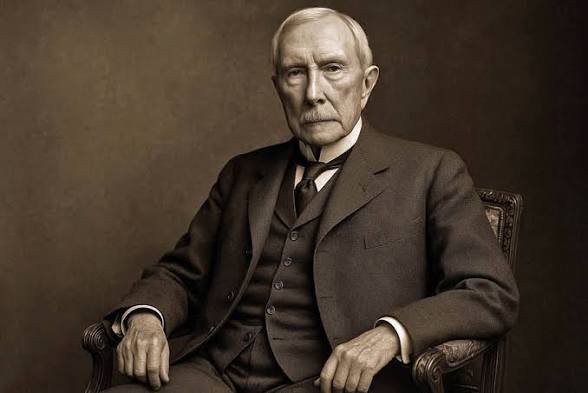
In 1900, John D. Rockefeller controlled approximately 90 percent of all petroleum refining in the United States. He was, by some calculations, the richest private individual who had ever lived.
He had a problem. Scientists were discovering that compounds derived from coal tar, a petroleum byproduct, could be used as synthetic medicines. Aspirin, derived from coal tar, had been launched by Bayer in 1899. The petroleum waste stream Rockefeller had previously had to dispose of could now be sold back to the public as medicine at a markup of roughly 10,000 percent.
He had another problem. American medicine in 1900 was a competitive ecosystem of homeopaths, herbalists, naturopaths, osteopaths, midwives, and traditional doctors who used food, plants, water, and lifestyle as the primary tools of healing. Approximately half of all American medical schools taught some form of natural or alternative medicine.
Rockefeller bought into the German pharmaceutical industry, eventually taking a substantial stake in IG Farben, the conglomerate that included Bayer, BASF, and Hoechst. He then commissioned a report.
The report was written by Abraham Flexner, an educator with no medical training, funded by the Rockefeller and Carnegie Foundations, and published in 1910. It declared that natural and alternative medical schools were unscientific quackery. It recommended the closure of more than half of all American medical schools and the standardisation of the rest around medicine based on synthetic patented drugs.
Congress acted. Half of American medical schools closed within a decade. The remainder accepted Rockefeller and Carnegie funding on the condition that their curricula be reorganised around pharmaceutical treatment. Nutrition was removed. Herbal medicine was removed. Lifestyle intervention was removed. The doctor's job was redefined: diagnose the symptom, prescribe the drug.
The drugs were petroleum-derived. The petroleum was supplied by Rockefeller-controlled refineries. The medical schools were funded by Rockefeller. The journals were funded by Rockefeller. The AMA was supported by Rockefeller. The hospitals were funded by Rockefeller.
By 1925, the American medical system was a vertically integrated extension of the petroleum industry, operating under the marketing slogan that it was scientific.
This is the system that exists today.
The pharmaceutical industry generates approximately $1.5 trillion in annual revenue. The American population, 4 percent of the global total, consumes approximately 50 percent of all pharmaceuticals manufactured.
The system was not designed to make people healthy. The system was designed to manage symptoms in a way that produces lifetime customers. A healthy patient is a former customer. A managed patient, who takes the pill every day for the rest of their life, is an annuity.
The objective has always been to keep you in that profitable corridor between healthy and dead.
Long enough to keep buying. Not so well that you stop.
The doctor who advises you to fix your metabolism by changing your diet is, from the point of view of the system that trained him, a defective product. The doctor who prescribes you a statin, a metformin, an antidepressant, and a blood pressure medication for life is performing exactly as designed.
The system was designed by an oil baron who needed to sell the waste products of his refineries.
It still functions, 116 years after the Flexner Report, exactly the way he designed it.
You are the customer.
The corridor is where you live.
Today, Democrats are holding a hearing to accuse President Bukele of human rights abuses which is all lies. I went to El Salvador (with Democrats) and we witnessed the TRUTH first hand. Thank you @nayibbukele for liberating the El Salvadoran people and your amazing country.
What if the future of finance wasn’t just digital, but truly interoperable? Our latest trials show how Swift is helping make that a reality.
We’ve completed pioneering digital asset interoperability trials with leading institutions, including BNP Paribas Securities Services, Intesa Sanpaolo and Societe Generale – FORGE, showcasing how Swift can orchestrate tokenised asset transactions across multiple platforms.
This milestone builds on a broader set of recent trials, such as:
✅ ISO 20022 interoperability between blockchains with HSBC and Ant International
✅ Fiat and digital currency settlement with Citi
✅ Digital asset transaction exchange with Northern Trust and the Reserve Bank of Australia
✅ Bridging tokenised assets with UBS Asset Management and Chainlink Labs
With these trials complete, we’re now adding a blockchain-based ledger to our infrastructure stack to enable real-time, 24/7 cross-border payments, in collaboration with more than 40 global banks.
👉 Read the full story: https://t.co/dBwGqnte52
#DigitalAssets #Blockchain #Interoperability #SwiftLedger