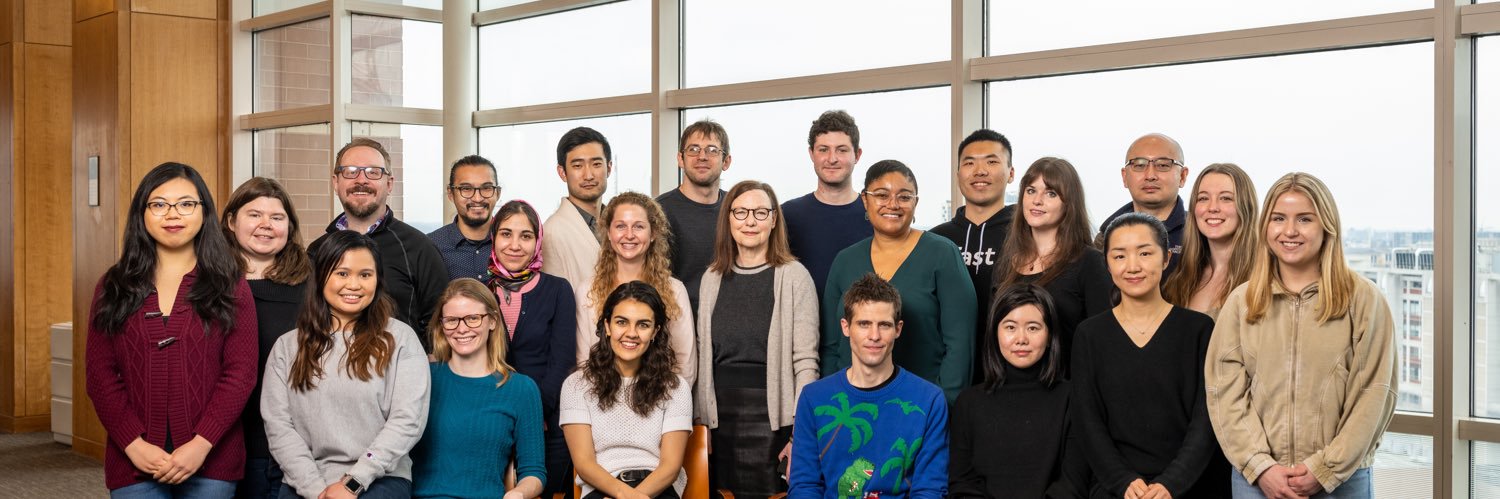
Looking for a postdoc position studying epigenetics? The @berger_lab@PennEpiInst is hiring! We study how epigenetics regulates health & disease in a range of biological contexts, including behavior & learning, cancer, aging & neurodegeneration. Info here:https://t.co/jOcsYXZIYp
Excited to share our latest manuscript in @CellCellPress. Here we discovered neuropeptides that specify and reprogram the division of labor in leafcutter ants! https://t.co/IhlAURUG5z
We are excited to see our postdoc @tran_khoa paper out today in @MolecularCell! He finds that SIRT7 regulates NUCKS1 chromatin binding during senescence and aging! https://t.co/bCvzSLkwEc
New research from @berger_lab reveals that nuclear speckle patterns in kidney tumors may predict treatment response in clear cell #RenalCellCarcinoma. This discovery could guide personalized therapies, offering hope for improved outcomes. #KidneyCancer https://t.co/m0yGhX9Ftq
💫NEW by @berger_lab & co: #NuclearSpeckle (NS) constituents have 2 expression states in #cancer correlating with patient survival & HIF-2α functional programs. HIF-2α mediates NS association of key genes activated in renal cancer.
https://t.co/kkeFyXhOeA
https://t.co/FG3drgpMbE
New research from @berger_lab reveals that nuclear speckle patterns in #kidney tumors may predict treatment response in clear cell renal cell #carcinoma. This discovery could guide personalized therapies, offering hope for improved outcomes. https://t.co/sJVOq3kBjh
📢 JOB ALERT: Tvardovskiy Lab at @PennEpiInst is hiring at all levels! Interested in chromatin biology, quantitative proteomics, or epigenetic modifications? Learn more about our research and apply at https://t.co/cz0RcZ6PRM Please RT
🚨🚨🚨We’re excited to give a Jumbo welcome to @tran_khoa, who’s joining Tufts Bio as an Asst Prof in Sept’25! Learn about Khoa and his research on metabolic-epigenetic crosstalk here: https://t.co/OgGn3q2MrM
New CSHL Assistant Professor Katherine Alexander specializes in nuclear speckles (the proteins and RNA housed in the nucleus). Exploring their potential influence on gene regulation could lead to enhanced cancer patient outcomes. https://t.co/tMXDZeXLiR
Excited to share our recent manuscript on histone acetylation in Alzheimer’s disease! This work was led by our recent PhD graduate student @danielcxu Congrats to all! 👏🏻 https://t.co/jGAmc47DIE