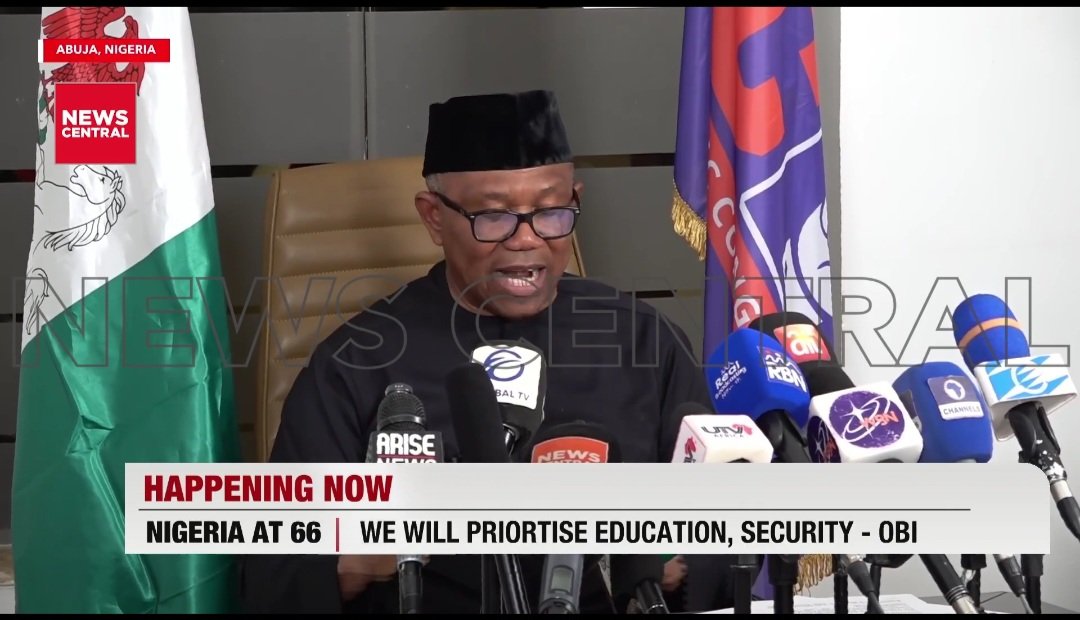
Nigeria at 66: Looking Back, Looking Forward
Fellow Nigerians,
Today we mark the sixty-sixth anniversary of our independence. It ought to be a day of celebration and thanksgiving to God Almighty for the gift of life and for the immense blessings He has bestowed on our nation—our diversity, our abundant human and natural resources, our vast agricultural potential, and the relative absence of devastating natural disasters.
It should also be a day of appreciation and patriotism: a day to remember our founding fathers and all those who made selfless, and in many cases supreme, sacrifices for the birth, survival and growth of our dear nation. We must acknowledge the efforts of past and present leaders who have laboured, however imperfectly, to build a better Nigeria.
Yet independence anniversaries must never be reduced to mere celebration. They are moments for honest national reflection. We must look back, examine where we stand today, and ask ourselves whether we are moving in the direction our founding fathers envisioned.
In national planning and strategy, every serious nation must continually ask three fundamental questions:
Where are we today?
Where do we want to be?
How do we get from where we are to where we want to be?
These questions are especially urgent now. Despite the enormous promises made by the APC-led government in 2023, our nation continues to face deepening challenges across virtually every critical sector of national life.
Today we stand before the world as a nation:
With an extraordinarily large population living in poverty and severe hardship; over 140M
With one of the largest populations of out-of-school children in the world; over 18M
Where insecurity, terrorism, banditry and kidnapping continue to threaten lives and livelihoods, just recently 37 young Nigerians in their productive age lost their lives
Where millions of Nigerians struggle with hunger and food insecurity; over 40M Nigerians will be in extreme hunger by the end of 2026.
With unacceptably high rates of infant and maternal mortality; Nigeria today is the worst place to be born.
Where youth unemployment and underemployment remain alarmingly high; over 35M
Where drug abuse and substance misuse increasingly threaten our young population; today 14% as against global average of 6%
Where life expectancy remains among the lowest globally, today 54 years against global average of 74 years
And the list goes on.
This reality demands serious, sober and honest reflection. Socrates taught that “the unexamined life is not worth living.” By the same principle, an unexamined nation cannot successfully chart its future. We must therefore ask ourselves: Are we cursed, or have we become the curse through the choices we have made and the failures we have tolerated?
The answer cannot be that Nigeria is cursed. We are a nation immensely endowed and blessed. Our greatest problem is not a lack of resources; it is the failure to convert our enormous resources into human development, productivity, security and shared prosperity.
Only yesterday, Senator Rabiu Kwankwaso and I returned from a two-day visit to Sokoto State. We held extensive consultations with people from different parts of the state on insecurity, out-of-school children, poverty, youth unemployment, drug abuse and other challenges confronting our people.
In concluding the visit, we went to the Internally Displaced Persons camp at Ramin Kura within Sokoto metropolis. What we saw was deeply troubling. Thousands of women and children live in deplorable conditions, displaced from their homes and deprived of the basic necessities of life. Many of the children have no access to education. Mothers and children have limited access to basic healthcare. These are Nigerians who should be living in their communities, going to school, farming their land, conducting their businesses and contributing to the economy. Instead, they live as displaced persons in their own country.
PRESIDENT TINUBU GOES ON HOLIDAY AGAIN
President Bola Ahmed Tinubu has once again left Nigeria for another holiday, this time beginning a three-week vacation in Europe.
Nigeria is in deep crisis. Nigerians can barely afford food and transportation. Insecurity is ravaging communities, and thousands of children are unable to access education because of insecurity.
Just days ago, about 600 Nigerians, predominantly women, children, and the elderly, were reportedly abducted during Juma’at prayers in Niger State.
Yet, at this critical moment, the President has left the country for another holiday.
According to reports, government expenditure on presidential trips and related travel expenses between June 2023 and April 2026 amounted to about ₦37.64 billion, with the President spending approximately 261 days outside Nigeria.
Meanwhile, only ₦36 million was reportedly released to the Federal Ministry of Health in 2025, despite a capital allocation of ₦218 billion, in a country of over 230 million people.
This is the calamity befalling our country today.
A government that can spend tens of billions on presidential travel while critical sectors remain starved of funds, and Nigerians are asked to endure worsening hardship, must not be allowed to continue.
Leadership is about priorities.
When citizens cannot feed their families, move safely, access healthcare, send their children to school, or sleep peacefully in their homes, the President should be more concerned about fixing the country than repeatedly leaving it.
I look forward to a Nigeria where our President can vacation in Kano, Katsina, Sokoto, Cross River State, Bauchi, Ebonyi, and many other destinations across our country.
The President of Nigeria should be the chief marketer of Nigeria as a tourism destination, as other comparable countries do.
Imagine the economic possibilities if our leaders, celebrities, business communities, and citizens travelled within Nigeria more frequently.
Tourism creates jobs. It supports hospitality, transportation, agriculture, entertainment, crafts, and small businesses. It brings investment and foreign exchange and allows communities to benefit directly from their natural and cultural assets.
We cannot continue to export our wealth and import our pleasures while our own enormous potential remains neglected.
We deserve leadership that puts Nigeria first; leadership that cares and plans for a better Nigeria. That is the kind of leadership that the partnership between H.E. Rabiu Musa Kwankwaso and me will bring.
A New Nigeria is POssible. -PO
NOBODY SHOULD TAKE THE BODY OF CHRIST FOR GRANTED!‼️
To the agents of the devil in our nation 🇳🇬, in the name of Jesus, the Lord rebuke you, and the devil that spoke through you and everything that you represent.
The Body of Christ is here, and will be here for a very long time. So, repent, have a change of mindset, and turn away from every opposition against the Church. The Church of Jesus Christ will continue to stand, prevail, and advance in the power of God! 🔥👏
My Vision for a Productive and Prosperous Nigeria
Today, being the 1st of July, 2026, I wish to humbly recall that when I decided to contest for the office of President of Nigeria, I pledged to place Nigeria on the path of unity and national transformation. Now, as the Nigeria Democratic Congress (NDC) candidate, I will, in the coming weeks and months, provide insights into the roadmap that I am confident will help curb abuse in government, halt the decline in the quality of life of Nigerians at all levels, and usher in an era of unity, peace, sustained progress, and prosperity.
This vision is anchored on a commitment to unity, inclusion, social justice, equity, and the freedom of every citizen to pursue lawful dreams.
Central to this proposed roadmap are significant reforms in education and healthcare, which are at the core of human capital development.
Robust human capital is indispensable infrastructure for national progress. It serves as the fundamental capital upon which daily life, economic expansion, and the delivery of essential public services depend.
These are foundational areas that we must reform with energy and determination if we are to reap the demographic dividend of our youthful population.
From the outset of my presidency, we will establish a task force dedicated to drastically reducing the menace of out-of-school children. We will place greater emphasis on Technical and Vocational Education and Training (TVET) to support our drive for massive industrialisation, anchored on our agricultural endowments and value addition across value chains organised around industrial parks to be located in development zones across the geopolitical regions of the country.
Funding and improving the equipment of TVET institutions, through partnerships among government, the private sector, and social entrepreneurs such as faith-based educators, will facilitate apprenticeship opportunities in the private sector, similar to the German dual education system.
The situation in which unemployment remains high while Nigerian entrepreneurs establish businesses elsewhere because skilled labour is scarce must be confronted decisively. Doing so is essential for the common good and for facilitating our transition from a consumption-driven economy to a production-driven one.
Character and civic education, emphasising the values that foster trust - an essential ingredient for enterprise and leadership - as well as shared national values, will receive significant attention within the tripartite approach to governance that we propose.
A New Nigeria is POssible. -PO
My Stance on Road Development
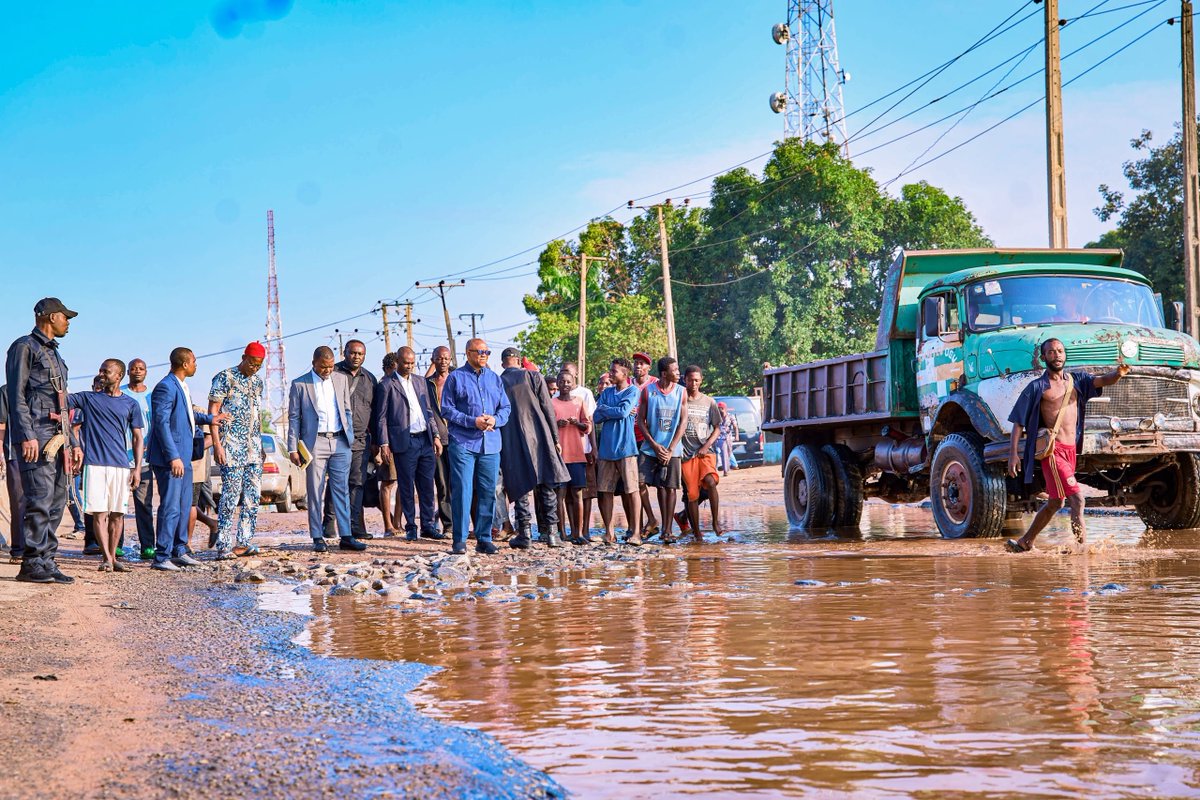
There is a pertinent reason I have consistently advocated that we should refrain from initiating new road construction projects until we have thoroughly rehabilitated and maintained our existing road network. Instead of undertaking new ventures and dualization projects that offer marginal benefits, our primary focus ought to be on repairing the critical roads already in place.
Consider, for instance, the Asaba–Benin Road. This thoroughfare is a vital artery within Nigeria's transportation infrastructure. Travellers traversing from Akwa Ibom, Anambra, Rivers, Imo, Ebonyi, Cross River, Abia, Enugu, and portions of Benue and Kogi States to Lagos are compelled to utilise this route.
Despite its significance, substantial sections of this road are in a lamentable condition. It has become a major impediment, precipitating persistent traffic congestion and inflicting undue hardship on travellers, businesses, and transport operators.
Regrettably, this situation is not unique; it reflects the reality on many of our busiest national highways.
Our efforts should be directed towards the reconstruction and maintenance of our current road infrastructure before we announce plans for new road projects. The Nigerian populace requires functional and motorable roads, not merely projects that garner public attention.
Efforts aimed at superficial improvements for political gain should not supersede the urgent need to address the condition of our existing, critical roadways.
A new Nigeria is POssible. -PO
PRAYING FOR NIGERIA
Keep praying. Keep believing. God is not finished with Nigeria. 🇳🇬🔥🙏
As a people, we will not cease to pray for both the leadership and the followership of our nation. Every position of authority is a sacred trust, and every individual entrusted with responsibility will ultimately give account of its stewardship before God.
This is not the time for silence, despair, or division. It is a time to stand in the place of prayer, seeking God’s mercy, wisdom, help, and strength for our nation. We pray that every agenda of darkness, wickedness, and destruction against Nigeria be subdued by the power of God.
Our confidence remains in the words of our Lord:
“I will build My Church, and the gates of hell shall not prevail against it.” — Matthew 16:18
May God preserve Nigeria, grant wisdom to her leaders, strengthen her people, and cause righteousness, peace, and justice to prevail throughout the land, in Jesus’ name!🔥👏
Despite Three Years of Tinubu's Food Emergency, Nigeria hungriest ranking index declined to among the worst nations globally.
In celebrating his supposed successful three years in office, President Bola Ahmed Tinubu listed some achievements in the agricultural sector, firstly, his declaration of emergency on food security in July 2023, followed by the acquisition of 2,000 tractors and 9,000 farming implements, stated as Nigeria's largest agricultural mechanisation programme.
Yet the outcome of this has been the opposite. Nigeria's hunger index has worsened significantly. Nigeria's hunger index ranking was 103rd out of 123 countries surveyed in 2022/2023, and this figure had since worsened to 115th out of 123 countries surveyed in 2025/2026. Consequently, Nigeria is now classified among the world's most hungry or food-insecure nations in the world, with the World Bank forecasting that 33 million Nigerians could experience severe hunger.
In fact, Nigeria has the highest number of hungry people in the world.
I have always maintained that Nigeria have no reason to be seen among the hungriest nations in the world when we have fast, uncultivated land in the north, which is our greatest asset today.
We must transparently invest in Agricultural production, which will guarantee food security, but create huge employment.
A new Nigeria is POssible. -PO
LORD, HAVE MERCY ON OUR LAND! 🇳🇬
(When responsibility meets prayer, transformation begins. Nigeria shall arise! 🇳🇬🔥)
Lord, deliver the people of this nation from docility of mentality and every form of complacency that weakens responsibility and accountability. Awaken our hearts to truth, purpose, and righteous action.
While we pray for those in authority, we also acknowledge that there is an equal and equivalent responsibility upon the followership of the land. National transformation is not the burden of leaders alone; it is the collective responsibility of a people who choose integrity, diligence, and accountability.
Grant us the grace to remain responsible in challenging times and steadfast in prayer. We declare that this is a new season for Nigeria. Help is here, mercy is speaking, and God is at work in the affairs of our nation.
In Jesus’ Name. Amen! 🔥🇳🇬
State visits by Leaders are not tourism, and diplomacy is not a fashion parade. Every foreign trip undertaken by a government must deliver measurable benefits to the people, including investments, technology transfer, trade agreements, factory expansion, industrial partnerships, and job creation.
During President Trump’s recent visit to China, the American delegation reportedly included a few top government officials, and many of the biggest figures in global business and technology:
Consequently, huge trade deals worth several billion dollars including about 200 Boeing orders were achieved.
The list of the entourage included
1. Donald J. Trump – President of the United States
2. Marco Rubio – Secretary of State
3. Pete Hegseth – Secretary of Defence
4. Elon Musk – CEO, Tesla & SpaceX
5. Jensen Huang – CEO, Nvidia
6. Tim Cook – CEO, Apple
7. Larry Fink – CEO, BlackRock
8. Stephen Schwarzman – CEO, Blackstone
9. Kelly Ortberg – CEO, Boeing
10. Brian Sikes – CEO, Cargill
11. Jane Fraser – CEO, Citigroup
12. Larry Culp – CEO, General Electric
13. David Solomon – CEO, Goldman Sachs
14. Sanjay Mehrotra – CEO, Micron Technology
15.Cristiano Amon – CEO, Qualcomm
16. Dina P. McCormick – President of Meta
17. Ryan McInerney – CEO, Visa
18. Michael Miebach – President, Mastercard
19. Jim Anderson – CEO, Coherent
20. Jacob Thaysen – CEO, Illumina
That is how serious nations approach diplomacy, by aligning foreign policy with economic expansion, industrial growth, innovation, and national productivity.
I hope that lessons can be learned from these recent visits comparing them with the President of Nigeria’s recent state visit to the United Kingdom.
A large entourage of politicians, aides, and government officials travelled, yet Nigerians are still asking a simple question: what exactly did Nigeria bring home?
Which factories are coming to Nigeria?
What power, technology, manufacturing, agricultural, or industrial agreements were secured?
How many direct jobs will this visit create for Nigerian youths?
What investments were attracted?
What measurable economic outcomes can the ordinary Nigerian point to?
The delegation reportedly included:
1. President Bola Tinubu
2. Senator (Mrs) Tinubu
3.12 governors
4.9 ministers
5.7 members of the National Assembly
6. Over 20 senior State House staff
7. Over 30 security personnel
8. Over 10 domestic staff
9. Several supporters and associates
It is not enough to ride horses, wear matching uniforms, attend royal banquets, and release glossy photographs. Symbolism without substance cannot feed hungry citizens.
Today, Nigeria is in decline, battling serious insecurity, food insecurity, unemployment, a weakened naira, declining industrial productivity, and worsening poverty.
At a time when millions of Nigerians struggle daily to afford food and survive economic hardship, every kobo spent on foreign trips must produce tangible national value: investments, factories, jobs, exports, infrastructure, and economic opportunities.
Nigeria needs leadership that is focused less on optics and more on productivity; less on ceremony and more on measurable economic results.
A New Nigeria is POssible. -PO
We, members and leaders of the ADC, and other well-meaning Nigerians, lovers of democracy, are saying that our democracy must not be killed. We say NO to a one-party system and for that today we’re calling out Nigerians who believe in unity, peace, and security of our country to join us as we defend democracy in our land.
A New Nigeria is POssible. -PO
“This Experience Will Not Repeat Itself” - Another Presidential Promise fails in less than 24 Hours.
Less than 24 hours after President Tinubu stood at the Jos Plateau State airport on April 2, 2026, and promised the grieving Nigerian citizens, “I promise you that this experience will not repeat itself,” another brutal attack occurred in Nyamgo Gyel, Jos South LGA, resulting in the deaths of several innocent citizens.
Since then, and only a week following that reassuring promise from the President, Nasarawa State has been plunged into grief as the Akyawa and Udege Kasa communities fled for their lives after gunmen killed at least 11 people. Many homes were reduced to ashes, and numerous families remain missing.
In Zamfara State, 150 innocent Nigerians were abducted from the Kurfa Danya and Kurfan Magaji communities in one of the largest mass kidnappings in recent times. On the same day of the Zamfara kidnappings, terrorists in Borno State stormed Chibok, killing four officers and burning down homes.
Yesterday, on Easter Sunday, Benue State was rocked by violence again, with over 17 Nigerians massacred, entire communities left in ruins, and many individuals still unaccounted for. Today, in Kaduna State, several innocent citizens were killed by terrorists inside churches, with many others abducted in the Ariko community of Kachia LGA.
Yet we were told, “This experience will not repeat itself.” This represents a failure of leadership and responsibility, and sadly, Nigerians are paying for it with their lives.
These attackers are not ghostly figures; our inaction emboldens them. How can a President make such a categorical promise and, mere hours later, the nation continues to count the dead across multiple states? The primary responsibility of any government is to protect lives and property; however, this responsibility is failing today. Nigerians are being slaughtered in their homes, in their communities, and in the very places they should feel safest. Even the President did not enter these communities, so who is truly safe in Nigeria?
This is a national emergency. Nigeria is bleeding, and the situation is worsening and increasingly helpless.
A New Nigeria is POssible. -PO
On Palm Sunday, in two brazen attacks at least 53 Christians were murdered by Islamic radical terrorists in Nigeria.
President Trump has been very clear that if the Nigerian government will not address this genocide, we will address it for them.
The persecution and slaughter of our brothers and sisters in our Lord and Savior Jesus Christ must end NOW.
A nation cannot move forward while lives are being wasted.
When will we choose people over politics?
When will human life truly matter again? 🇳🇬
QUESTIONS THAT MUST BE ANSWERED:
Is it not better to deploy all necessary resources to stop the loss of lives, rather than deny what is happening?
Is it not more profitable to protect lives than to prepare for elections over victims of preventable tragedy?
What nation truly progresses in a climate of constant crisis and insecurity?
When will we be tired of being a reproach among nations?
When will leadership be tired of Nigeria making negative headlines globally?
When will human life regain its value in this country?
When will senseless perpetrators be swiftly apprehended and brought to justice?
Enough is enough.
Lives must be protected.
Justice must be served.
SEXUAL ASSAULT ON WOMEN AT OZORO FESTIVAL IS A NATIONAL DISGRACE
A society reveals its true character in how it treats its women. Where women are chased, stripped, groped, violated, and publicly humiliated by mobs under the guise of celebration, what is on display is not culture. It is barbarity. It is a collapse of conscience. It is a stain on our shared humanity.
The deeply disturbing reports emerging from a recent festival in Ozoro, Delta State are not just troubling, they are horrifying. Women were allegedly accosted in broad daylight, forcefully stripped of their clothing, sexually assaulted, and subjected to degrading treatment by groups of young men while others watched, recorded, and, in some instances, cheered. No woman should ever have to endure such terror, such exposure, such violation of her dignity.
This was not a festival. This was lawlessness. This was gender-based violence in its most primitive and shameful form.
These acts amount to a grave violation of the fundamental rights to dignity of the human person, personal liberty, and security as guaranteed under the Constitution of the Federal Republic of Nigeria, 1999 (as amended), as well as other international human rights instruments. They also constitute serious criminal offences under our laws, including assault, sexual violence, and public indecency.
The NBA condemns these acts in the strongest possible terms. No tradition, no custom, no so-called cultural practice can excuse or legitimise the degradation and violation of women. Any practice that permits such cruelty is not culture. It is criminality.
We call on the Delta State Government and all relevant law enforcement agencies to act swiftly and decisively. The perpetrators must be identified, arrested, and prosecuted. Those who aided, enabled, or failed to intervene must also be held accountable. Justice must not be delayed, and it must not be selective.
Silence, indifference, or excuses in the face of such brutality only embolden further abuse.
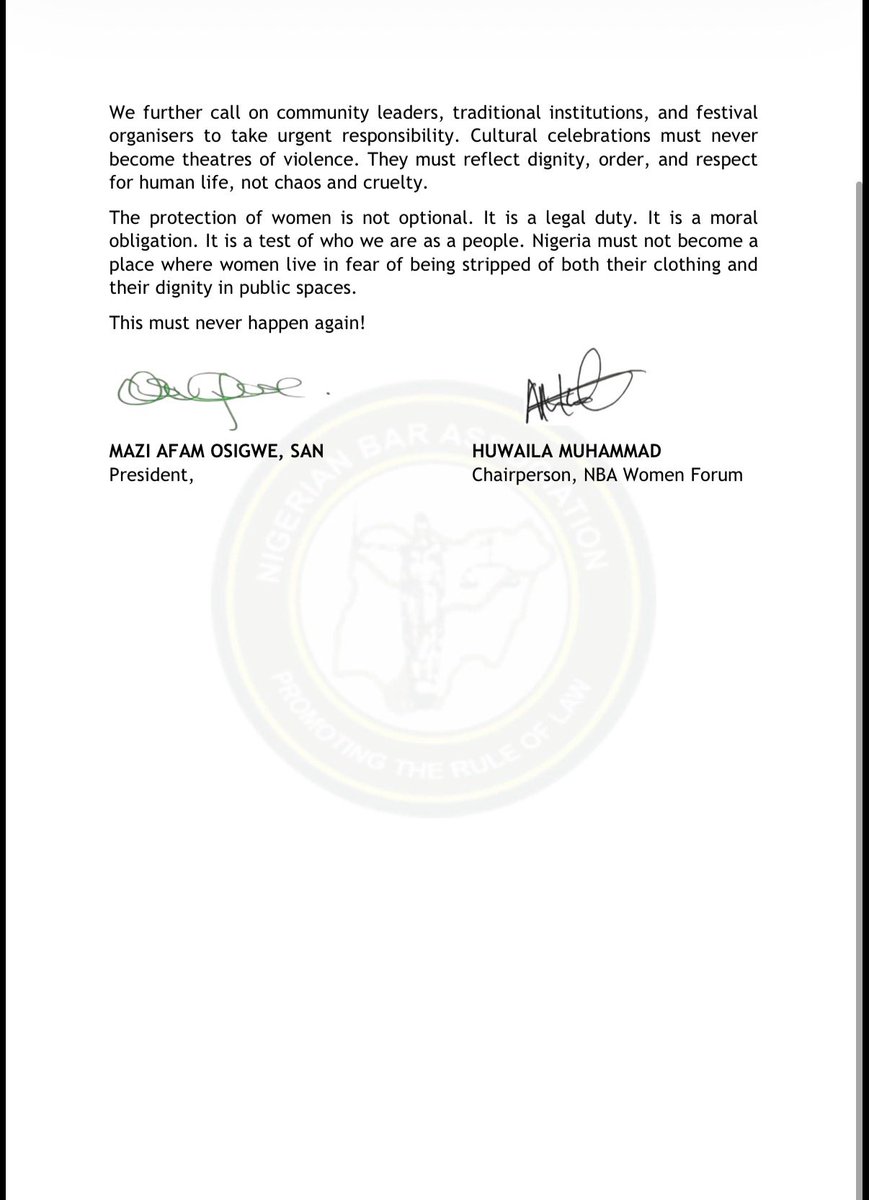
We further call on community leaders, traditional institutions, and festival organisers to take urgent responsibility. Cultural celebrations must never become theatres of violence. They must reflect dignity, order, and respect for human life, not chaos and cruelty.
The protection of women is not optional. It is a legal duty. It is a moral obligation. It is a test of who we are as a people. Nigeria must not become a place where women live in fear of being stripped of both their clothing and their dignity in public spaces.
This must never happen again!
Mazi Afam Osigwe, SAN
President, Nigerian Bar Association
Huwaila Muhammad
Chairperson, NBA Women Forum