Transpersonal gerontologist, private lecturer, independent scholar: Are you aware of the phenomenological similarities between dementia and spiritual awakening?
Filmmaker David Lynch's Diagram for Transcendental Consciousness is one of the greatest, easiest to understand explanations for how our reality is made of MIND first, MATTER second.
I promise this is genuinely worth your time.
It's fantastic.
@DrArshadAfzal1@NTFabiano@GreekNeuro "*Existentially**, the pursuit of knowledge without a spiritual or moral anchor can lead to nihilism or a loss of purpose" - perhaps this should be at the first place of your list: a lack of spiritual/ existential purpose or calling in the PhD canl lead to all the other aspects
@DeSciNews@NTFabiano So due to my research dementia could really be the result of a lack of purpose of life, but in a deeper sense: a lack of understanding of the spiritual nature of being and of (old) age. https://t.co/IfUsB0ZDYu
@DeSciNews@NTFabiano Interestingly, there are similarities between dementia and the state of "spiritual awakening", particularly in the experience of the dissolution of the self. But the former leads to prepersonal development and the latter to transpersonal development. What can we learn from this?
My poster is ready - insights from more than six years research about a phenomenon that is until now mostly recognized as a pathology: The dissolution of the self. Tomorrow I will present at the https://t.co/RtbkUHzjfF
https://t.co/Nr4VP2ITwQ
#dementia#selfdissolution
@alastairmci Thanks @alastairmci , both pieces of information are very interesting to me. Do you have anything written by Tom Forsyth about his thoughts, or have you spoken to him personally and would you be available to talk to me about this for research purposes?
Um Sinn und Bedeutungsgebung für den Nachmittag (und Abend) des menschlichen Lebens dreht sich die neue Seminarreihe "Bewusst Altern", die - online - am 09. Oktober beginnt - für ein positives Altern auch mit Verlusten und Auflösungsprozessen:
https://t.co/xs3Esz1YtR
What if advanced meditation is the next stage in human development?
The idea that human development doesn’t stop after adolescence is hardly new. What is new, and what’s emerging from our research at the Meditation Research Program, is a growing recognition that advanced meditation may begin to tap into a largely unexplored realm of cross-culturally valid, inherently human spiritual capacities.
Just as Lawrence Kohlberg proposed that moral development expands from self-centered concerns to broader spheres of empathy and justice, we argue that development through advanced meditation can help individuals outgrow self-referential beliefs and habits, and may even involve the proverbial death of one’s old self. While human development doesn’t unfold along a single axis, we suggest that meditative development follows a recognizable arc that can transform not only how we relate to suffering, but also how we care, connect, and show up in the world. Importantly, it does so through the emergence of spiritual capacities—often cultivated through meditation—that science is only beginning to scratch the surface of.
Some prominent meditation teachers have cautioned wholesale against the use of “meditation maps” to track meditative development. The concerns are understandable: maps can distract from direct experience, foster comparison or judgment, and create unhelpful goal-orientation.
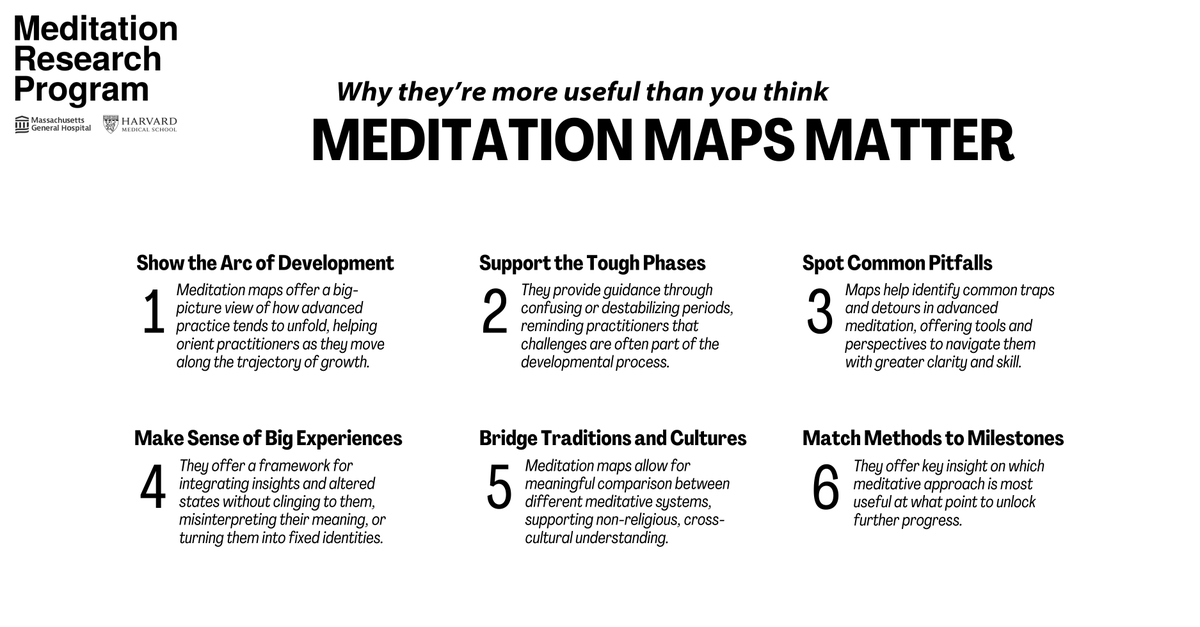
In our new theoretical paper, my co-author Terje Sparby @terjesparby and I argue that meditation maps are not only valuable, but in some sense unavoidable. Used skillfully, they can:
---Offer an orienting overview of the terrain and trajectory of deep practice
---Inspire and motivate practitioners, especially through challenging or destabilizing phases
---Help identify and navigate developmental pitfalls with greater clarity and ease
---Provide a framework for integrating experiences and insights in ways that don’t rigidify them
---Enable comparative and cross-cultural analysis of different meditation maps
For many dedicated practitioners who feel alienated by traditional, often religious and even dogmatic frameworks, secular, psychologically-informed, and scientifically-validated meditation maps can provide meaningful orientation and much-needed support. They go well beyond health benefits and point toward deeper dimensions of human flourishing: What could it mean to live—and to mature—beyond our typical constraints, including existential fears, life crises, illness, and even death? These questions aren’t just of philosophical interest. They may bring with them profound scientific, cultural, and clinical implications that we are only beginning to glimpse on the horizon.
My colleagues and I are deeply grateful for reposts and sharing with others who may be interested. This work is made possible through the collaboration of our growing community of scientists, scholars, and practitioners around the world.
May this work benefit many 🙏
Link to paper in comments below 👇
Yes.
Writing is not a second thing that happens after thinking. The act of writing is an act of thinking. Writing *is* thinking.
Students, academics, and anyone else who outsources their writing to LLMs will find their screens full of words and their minds emptied of thought.
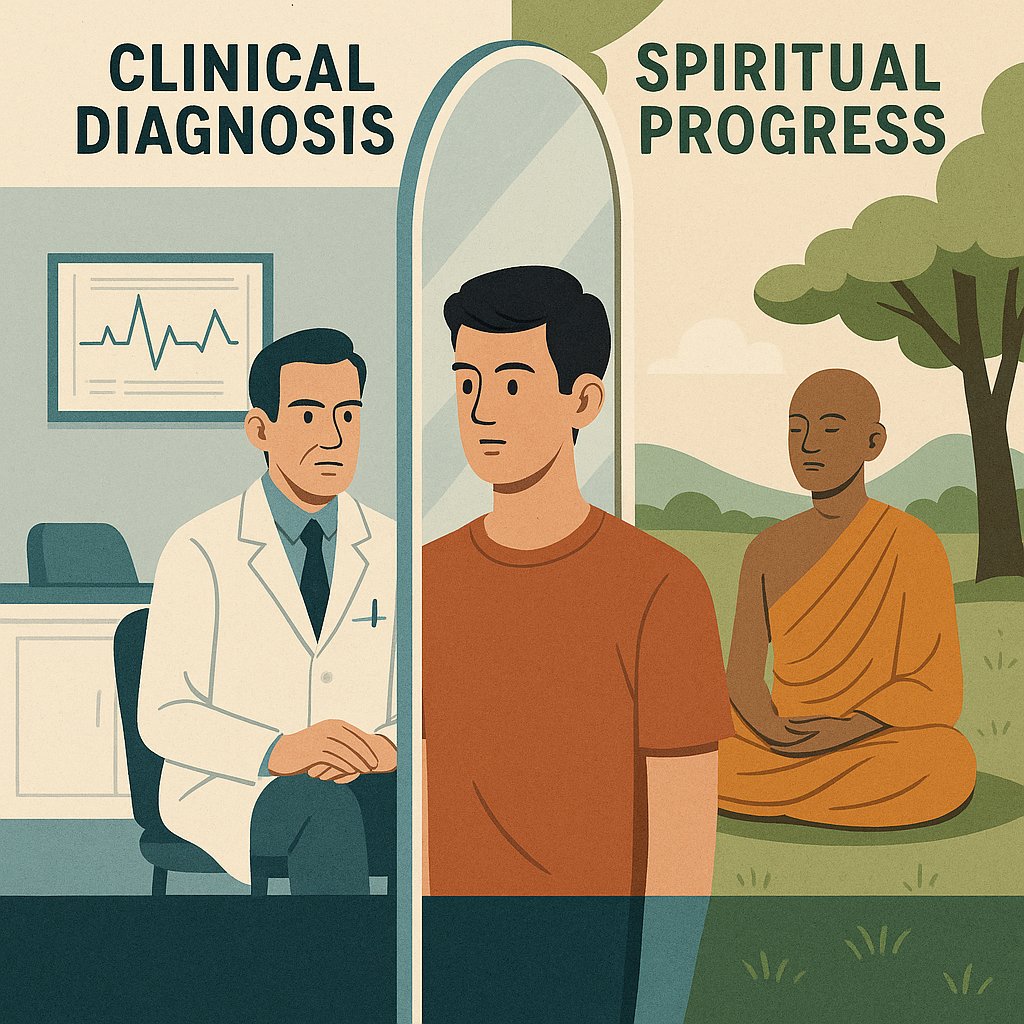
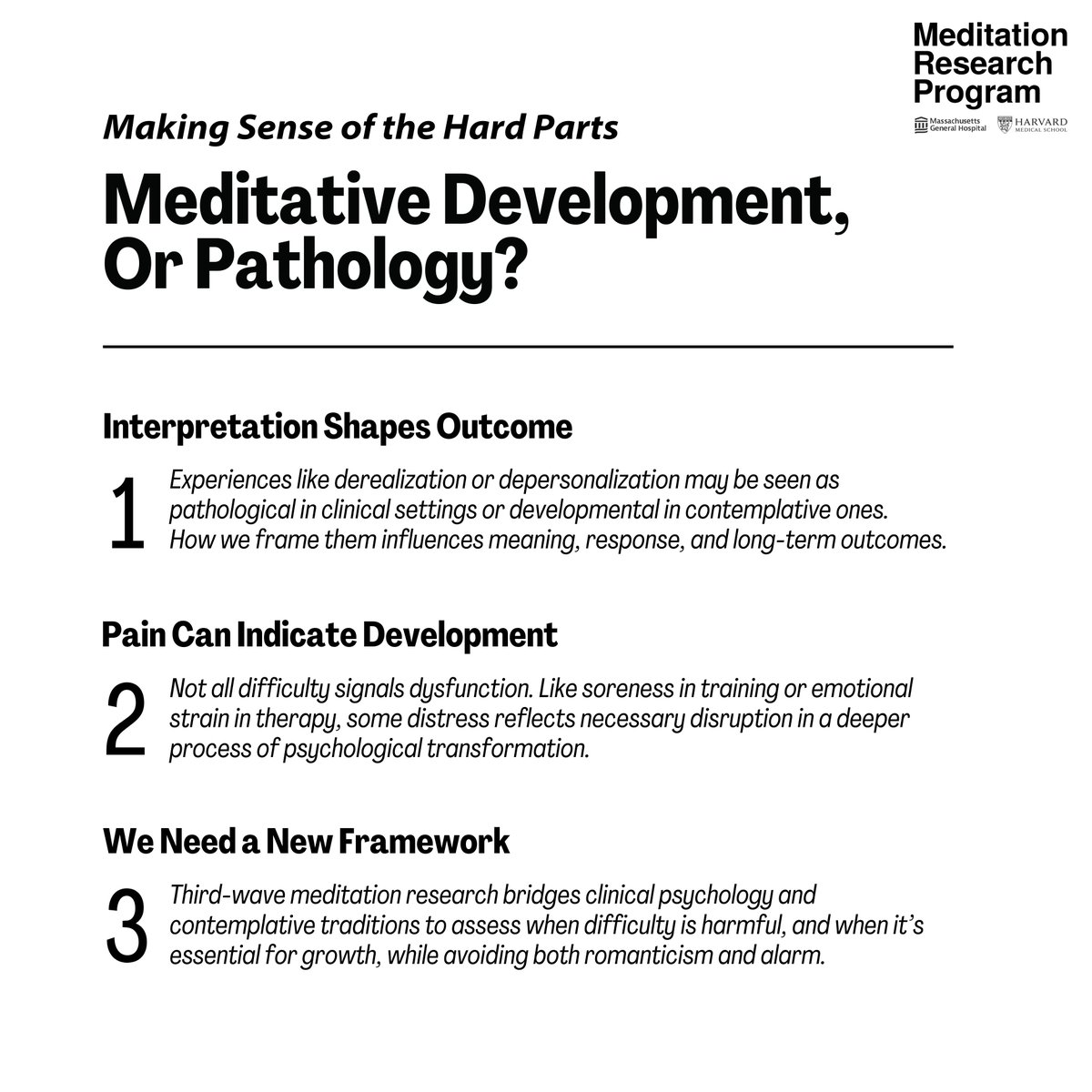
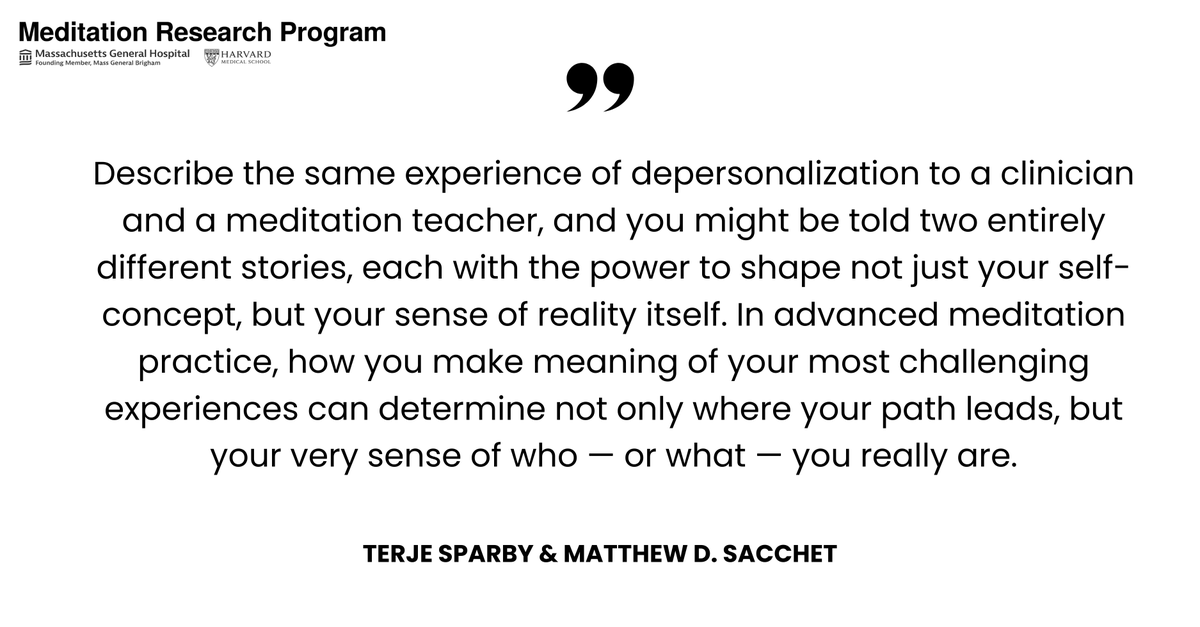
Describe an experience of derealization to a Western clinician, and you may receive a psychiatric diagnosis—and strong medication.
Describe the same experience to a seasoned meditation teacher, and you may be congratulated. In their eyes, you might be waking up!
So, who’s right?
Western psychology and traditional contemplative paths sometimes offer opposing interpretations of similar experiences. In the West, a strong, coherent self is typically seen as a sign of health. In traditions like Buddhism, realizing the absence of a fixed self is an important, if not the ultimate, goal.
This begs a serious question for scientists, clinicians, and meditators alike: When are “negative” experiences in meditation part of progress? And when are they just harmful?
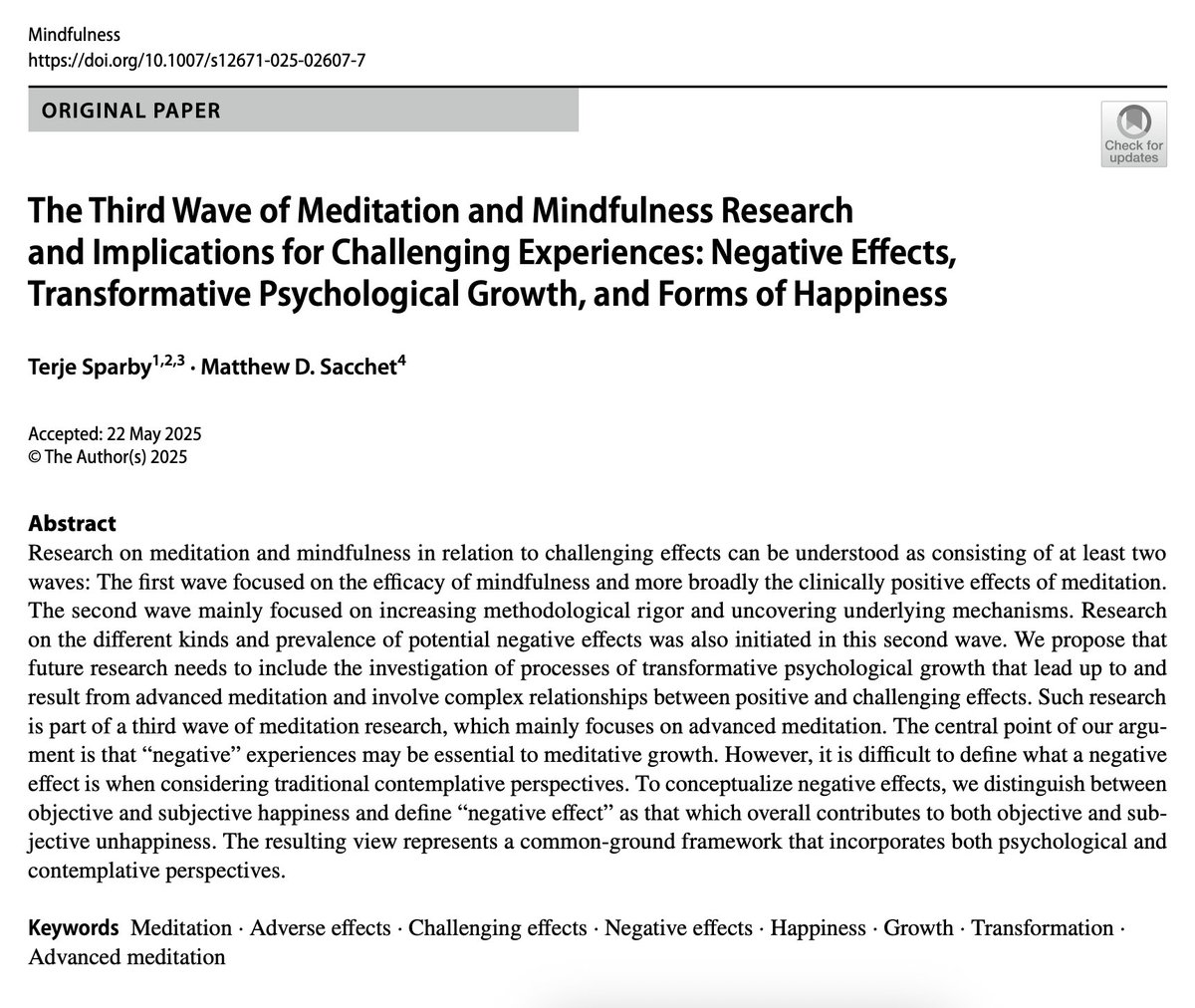
In our new theoretical paper in @SpringerNature's Mindfulness, Terje Sparby @terjesparby and I propose a new framework for thinking about negative experiences and challenges in meditation. And it’s all grounded on a straightforward principle: A challenging experience is worth undergoing if it intentionally serves a greater good in one’s life within a time frame and context that makes that challenge meaningful and manageable.
Think of it like therapy or intense physical training. Some pain is just going to be part of the process. Without pushing through the hard parts, growth is often limited. To make this philosophically concrete: Socrates drank the hemlock. Christ endured the cross. And the Buddha encountered the demon Mara while sitting beneath the Bodhi tree until his awakening. None of these experiences felt good at the time. But they were willingly accepted as part of a more purposeful path.
Similarly, we suggest that advanced meditative development often requires and involves a willingness to endure states of confusion, fatigue, suffering, and psychological and functional disruption, in service of longer-term transformation. Importantly, we also argue that it’s possible to be objectively progressing, even if your subjective experience is temporarily painful, difficult, or disorienting.
In the paper, we also build a much-needed bridge between clinical psychology and meditative frameworks, identifying shared values around reducing suffering, supporting psychological growth, and cultivating wellbeing. While fully acknowledging the complex considerations involved in evaluating when a challenging experience is essential for meditative development and what might be called ‘spiritual’ growth, and when they may simply be harmful, we rigorously explore under what conditions and circumstances “negative effects” may not only be acceptable, but even desirable—what we believe is an important topic for the third-wave of meditation and mindfulness research.
The full PDF of the manuscript is on our website and available from the publisher:
https://t.co/8dtqrtlVIp
https://t.co/zyd8s6v4V9
https://t.co/4RovrpceHC
May this work benefit many 🙏
Mein neuer Artikel ist online: "Da hab ich nicht mehr viel mit zu tun." - Über das Erleben der unbewussten Ich-Auflösung bei Demenz und die Parallelen zur bewussten Ich-Auflösung
https://t.co/S7E5BtdVrN
@StuartHameroff Anyone who thinks a little further ahead has known since the nuns' study that the plaque theory cannot be correct – yet some areas of research seems resistant to this finding.
Now there are next steps to go, continuing and deepening the research and bringing the insights into the public. If you can see the value of this work I kindly to ask for your support: https://t.co/SuZhq0mjFj
Back from the Science of Consciousness Conference a heartfelt thank you to all who made a contribution to the realization of my idea to present my research in Barcelona - here is my full presentation, references, abstract and supporters: https://t.co/Nr4VP2ITwQ