⚡️🚨⚖️ Starting in 10mins: historic moment on the path to #ClimateJustice: the International Tribunal on the Law of the Sea 🧑⚖️🌊 will deliver the first international legal opinion spelling out States' legal obligations in the context of climate change #ITLOSAO
🧵A live thread ⬇️
🎧 Complexité, biodiversité marine et modélisation 3D, avec Victor Leite-Jardim🎤
@UBO_UnivBrest @IUEM_Brest @LemarLab#podcast 56
modélisation de la complexité des habitats biogéniques
#maerl#zostere
-> https://t.co/jEIGwwnZyS
-> https://t.co/j6Yc9tQ3QA
Dossier "Justice climatique et industries extractives en droit africain" dans la revue africaine de droit de l'environnement (RADE 8/2023) en ligne : https://t.co/VT3F72FVF2
🎧 épisode 55 du #podcast
🎤 Olivier Gauthier (@UBO_UnivBrest @IUEM_Brest @LemarLab) sur le suivi de la biodiversité marine au moyen des outils de l’écologie numérique
à retrouver sur les plateformes usuelles,
ou ici
https://t.co/MPhn4ZZmGY
ou là https://t.co/8i3i126PPJ
📍April 3 at 11h the next Blue Justice Webinar with Dr Kourantidou who will share about 📢Equity considerations in Northern Fisheries: Navigating Conflicts, Property Rights and Conservation in the Arctic 🧊 How to take part↘️https://t.co/jHFLg7WG19
🚨 BREAKING: The UN General Assembly adopted the first global resolution on AI. Important points below:
➡️ A first important aspect of this resolution is that the UN recognizes that AI can help accelerate the achievement of the 17 Sustainable Development Goals, and it stresses the urgency of "achieving global consensus on safe, secure, and trustworthy artificial intelligence systems." Below are 17 Sustainable Development Goals:
1. No poverty
2. Zero hunger
3. Good health and well-being
4. Quality Education
5. Gender equality
6. Clean water and sanitation
7. Affordable and clean energy
8. Decent work and economic growth
9. Industry, innovation and infrastructure
10. Reduced inequalities
11. Sustainable cities and economies
12. Responsible consumption and production
13. Climate action
14. Life below water
15. Life on land
16. Peace, justice and strong institutions
17. Partnership for the goals
-
➡️ On page 3 of the resolution, the UN recognizes possible downsides of the use of AI "without adequate safeguards or in a manner inconsistent with international law," for example:
➵ "hinder progress towards the achievement of the 2030 Agenda for Sustainable Development and its Sustainable Development Goals and undermine sustainable development in its three dimensions – economic, social, and environmental;
➵ widen digital divides between and within countries;
➵ reinforce structural inequalities and biases;
➵ lead to discrimination;
➵ undermine information integrity and access to information;
➵ undercut the protection, promotion, and enjoyment of human rights and fundamental freedoms, including the right not to be subject to unlawful or arbitrary interference with one’s privacy;
➵ increase the potential risk for accidents and compound threats from malicious actors"
-
➡️ It also encourages Member States to enact AI regulation and AI policies on various topics, including privacy. They mention:
"Safeguarding privacy and the protection of personal data when testing and evaluating systems, and for transparency and reporting requirements in compliance with applicable international, national and subnational legal frameworks, including on the use of personal data throughout the life cycle of artificial intelligence systems"
-
➡️ Overall, it's an interesting summary of a global perspective on the meaning of “safe, secure, and trustworthy” AI.
➡️ To learn more about AI policy and regulation: subscribe to my weekly newsletter.
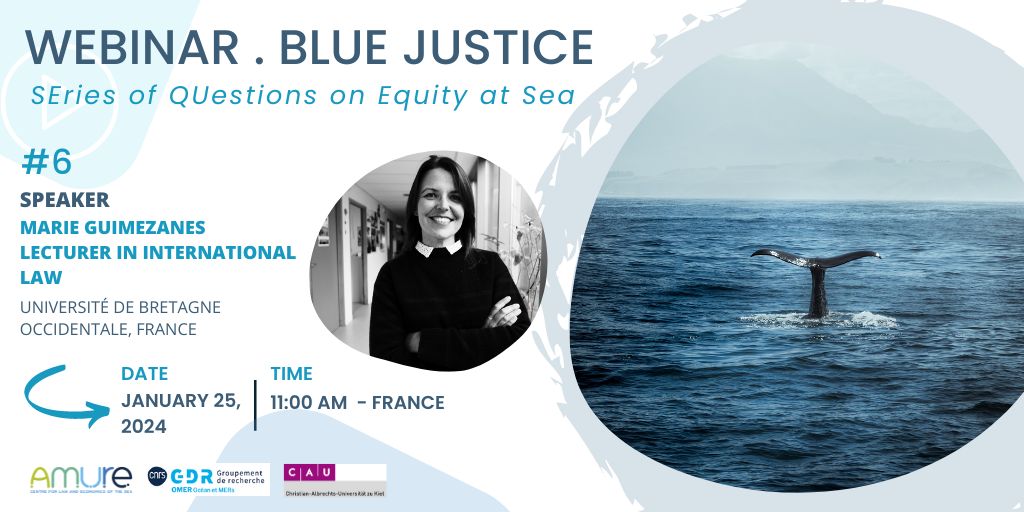
📢Don't miss the next webinar Blue Justice 🌎 with our collegue Marie Guimezanes, specialist in international law who will share about👁🗨"Climate finance: an instrument of justice for the South?" Jan. 25 at 11h, online ↘️https://t.co/aAwqPK2RRk
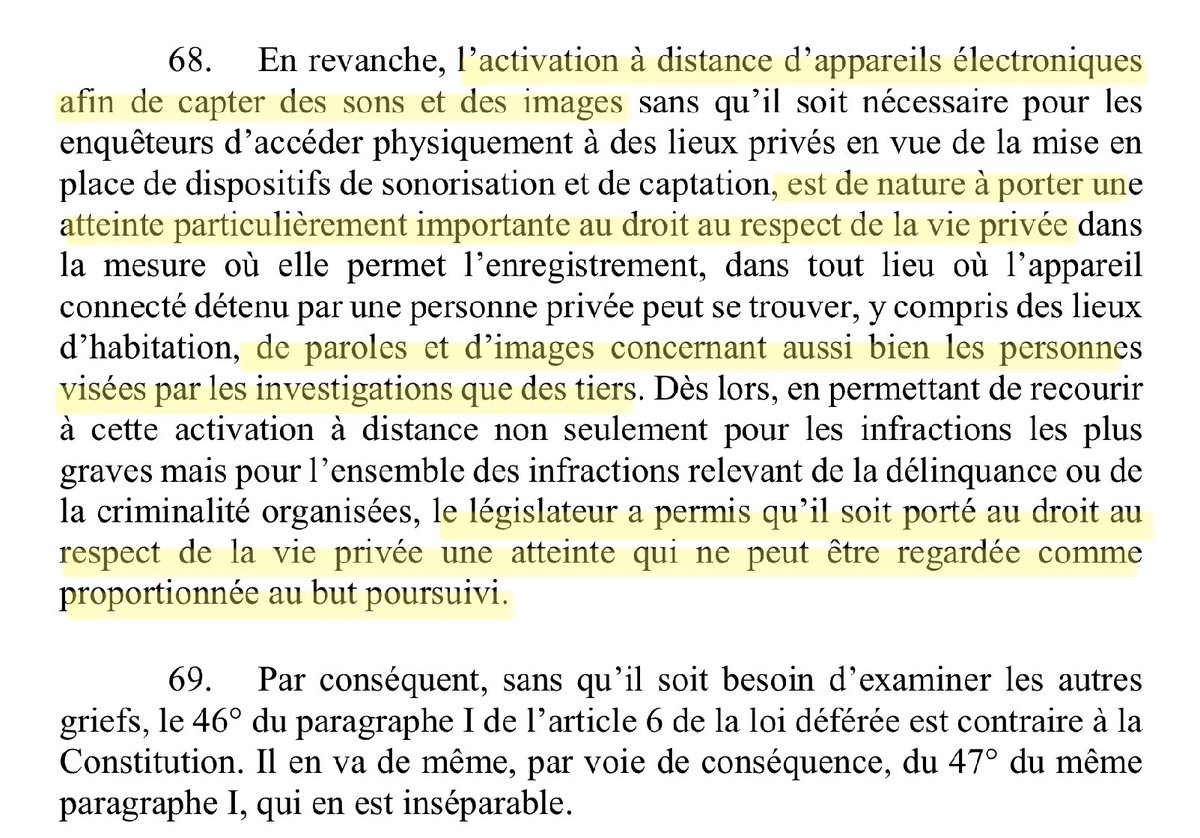
Vie privée : Le @Conseil_constit censure le (très critiqué) dispositif d’activation à distance d’appareils électroniques (dont téléphone) pour capter des sons & images.
Car crée "une atteinte particulièrement importante" & "disproportionnée" au droit au respect de la vie privée.
Le Cercle étudiant de la SQDI vous convie à la conférence midi « Le droit international des investissements face à l’urgence climatique » qui aura lieu le 21 novembre en ligne, de 12h30 à 13h30. Toutes les infos : https://t.co/ynWuCjsSVP
Postdoc fellowship : 18-month contract, "Social media governance and regulation" research program in Brest (France). Deadline to apply : Nov. 21.
Feel free to share! https://t.co/14IGP50a9u
🎧Pour son 50e podcast, la Cantine a reçu Pascal Raux, co-animateur du pôle Observation, données et méthodes du laboratoire ARMURE, unité mixte de l'UBO, de l'IFREMER et du CNRS. Il nous entretient du rapport entre chercheurs, étudiants et données. https://t.co/IlnWGMPKvT
Applications are still open for the 2024 Hamilton Shirley Amerasinghe Memorial Fellowship on the Law of the Sea! 🌊
Learn more: https://t.co/NNynRvu56U
*Application Deadline: 12 November 2023
📢Join us for an online briefing on the #BBNJ Agreement, crucial for addressing the triple planetary crisis and for achieving ocean-related #GlobalGoals and ocean-related goals and targets of #KMGBF. 🌎🌊
⏰6 Nov 2023, 8-9 am EST
✍️Register by 31 Oct 2023: https://t.co/rPOI6PHqge
La billetterie est désormais grande ouverte, n'attendez pas: ateliers, conférences, "Capture The Flag", puis social event...
"Unlock Your Brain, Harden Your System", c'est le 3 et le 4 novembre à "#Brest même" !
https://t.co/mo6S0FKnIR
🆕 Non-doctrinal #ResearchMethods in #EnvironmentalLaw, edited by Paul Martin, Solange Teles da Silva, Marcia Leuzinger, Miriam Verbeek and Andrew Lawson
More information on the book ➡️ https://t.co/6erKLJ4O0f
🆓 Read Chapter 1 on Elgaronline ➡️ https://t.co/nw5kCDFJbg
Deep seabed mining is considered a game-changer as the seafloor is bestowed with rare earth metals that are the backbone of renewable technologies. However, deep seabed mining can potentially harm the marine environment.
https://t.co/Y01oL6DKz4