I'm into 70+ Meta ad accounts right now. 20 of them spending $1M+/month. Last week, I took the time to sit down and review what the accounts growing fastest actually have in common.
The pattern is impossible to miss at this scale: it's not volume, It's variety.
Here's what's running simultaneously in the accounts winning on Meta right now:
Statics:
- Offer-based with a strong headline and an actual offer.
- Native ads that look like a newspaper article, or just a single weird picture of a surgery room or a bathroom with a wall of text in the description.
- Ugly ads: kids drawings, post-it notes, crayon fonts on white backgrounds.
- Highly creative AI-generated visuals that hallucinate the product benefits just enough to make you stop scrolling (think driving past something on the highway and doing a double take).
-Infographics, especially in supplements, just pure educational stats stacked on each other.
Text-heavy statics with almost no visual at all.
Videos:
- Podcast-style with two people talking about a topic the brand actually cares about.
- Yapping ads in full TikTok format: a girl getting ready, talking for 7 minutes, a dude in his car going to Starbucks talking about whatever.
- UGC still working, still needed.
- Animated characters, like in the health space you've got cartoon figures literally inside a stomach explaining how the product works.
Volume is still happening, but as a consequence, not a strategy. Different formats create different stories, not more of the same one.
The ad market on Meta is just getting harder every year. The top accounts are lifting the floor for everyone.
“We’ve read your emails, we’ve bought your credit card history, we know where you are at all times via mobile GPS, now prove you’re human by verifying your face.”
We're launching Search profiles, a new way for publishers and creators to shape their presence on Search. Search profiles are a dedicated, shareable space to highlight content across social media, video and news platforms, and help audiences find accurate and up-to-date information about sources on Search.
Went on Bloomberg - Anthropic and OpenAI are dangerous and unsustainable companies that shouldn’t IPO. The AI bubble is a con and retail investors are the marks.
AI doesn’t have ROI, it’s nothing like AWS/Uber, and it’s got no post-bubble recovery story.
https://t.co/ROww0H5ugs
1/New York just became the first US state to require advertisers to disclose AI-generated people in ads.
It takes effect June 9, 2026. If you run paid media, you have days, not months.
Here's what it actually means for your brand or agency. 🧵
"AI Overviews reduce clicks to the #1 result by 58%. That’s up from 34.5% just 10 months earlier. The trend is accelerating." = RIP the open web? Kinda makes me want to build a 90s website with a guestbook.
In the last 6 months at @Ahrefs, we analyzed over 1 billion data points across 14 studies. Here's what we learned about AI search optimization:
1) "Best X" blog listicles are the single most prominent content format cited by AI chatbots. They make up 43.8% of all page types cited by ChatGPT specifically.
2) 67% of ChatGPT's top 1,000 citations come from sources marketers can't influence: Wikipedia (29.7%), homepages (23.8%), app stores (6.6%). Only 32.3% are influenceable content like educational pages, reviews, news, and blog posts.
3) 28.3% of ChatGPT's most-cited pages have zero Google organic visibility. These pages get cited repeatedly by ChatGPT despite not ranking in Google at all. A completely separate discovery layer.
4) ChatGPT only cites about 50% of the URLs it retrieves. It fetches dozens of pages per query but uses half as background context without attribution. This means that being retrieved and being cited are very different things.
5) Adding schema markup had zero meaningful impact on AI citations. AI Overviews actually dipped −4.6%, while AI Mode (+2.4%) and ChatGPT (+2.2%) showed changes indistinguishable from zero.
6) YouTube mentions have the highest correlation (0.737) with AI brand visibility out of all the factors we studied (including all the conventional SEO metrics like backlinks, page count, DR, etc). This held true for both Google-owned and OpenAI products.
7) AI Overviews reduce clicks to the #1 result by 58%. That’s up from 34.5% just 10 months earlier. The trend is accelerating.
8) 99.9% of AI Overviews appear on informational intent queries. Transactional, navigational, and local searches are almost entirely AIO-free. Shopping triggers AIOs just 3.2% of the time.
9) For a given search query, Google’s AI Mode and AI Overviews reach the same conclusions 86% of the time — but cite almost entirely different sources (only 13.7% citation overlap).
10) AI Overviews change every 2.15 days on average, with 70% of content differing between consecutive observations. But semantic similarity stays at 0.95. The words, sources, and entities constantly shuffle, but the actual meaning barely moves.
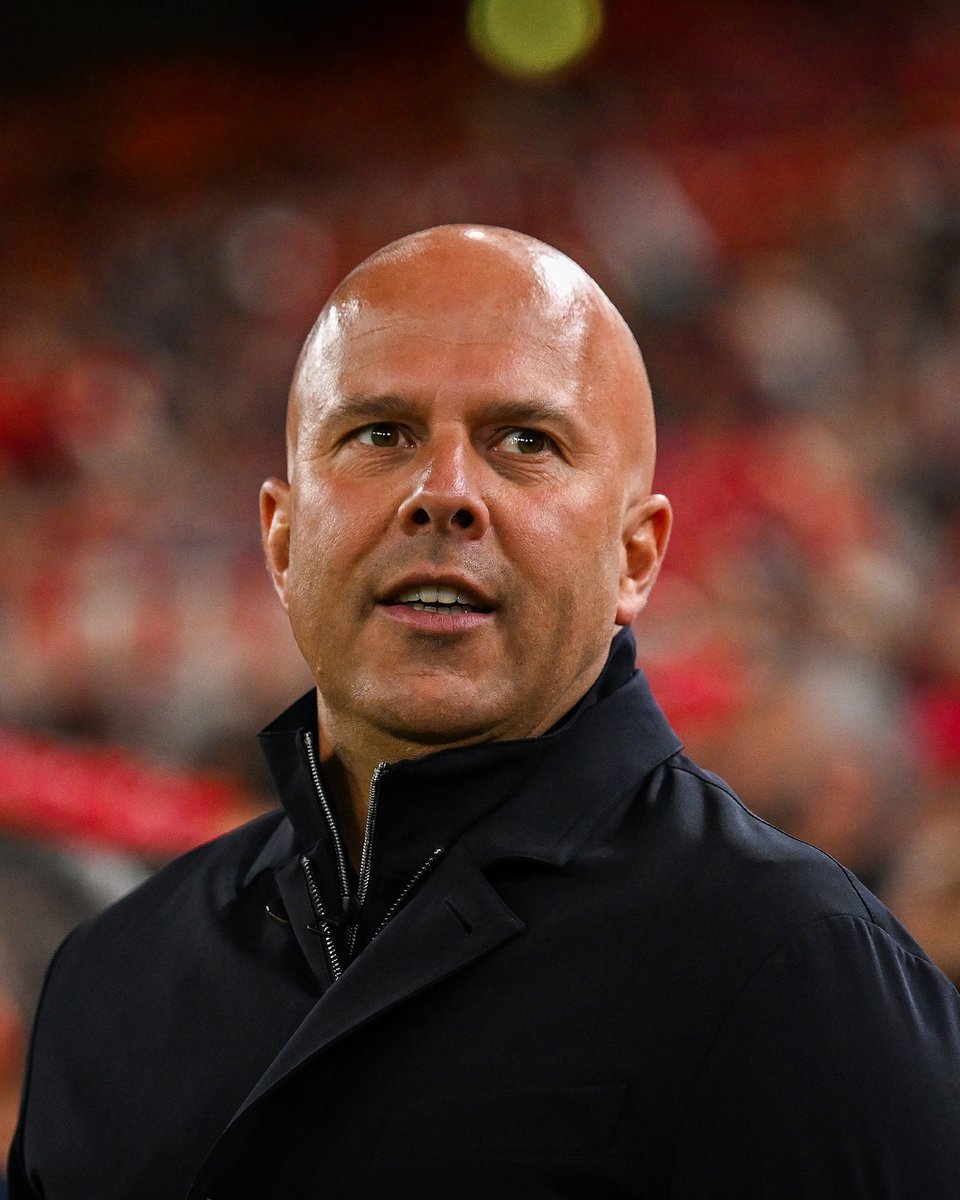
Liverpool FC can confirm Arne Slot is to depart his role as head coach with immediate effect and that the process to appoint a successor is under way.
He leaves with a Premier League title to his name and our deepest gratitude and appreciation.
This is a brand problem, not a tech problem. As tech becomes a bigger part of our personal lives, the B2B-ness of Microsoft kills any desire to be associated. It’s nearly killed Xbox already… #ai#brand101
“Ex-Microsoft exec says the company blew it with Al, as it did with mobile”
"Not even 3% of paying Copilot users use it even when it's pre-deployed right in their faces”
The Microsoft 3% problem. See Word and Excel features.
We’ve shipped a security-guidance plugin for Claude Code that helps identify and fix vulnerabilities as you’re writing code.
Available for all Claude Code users. Install from the plugin marketplace (/plugins).