@DeivonDrago One conceptual sticking point for me was the particle number operator / occupation number definition. E.g., do all states in QFT have a definite/integer occupation number? Would love to know if you touch on that, but either way I would be happy to read!
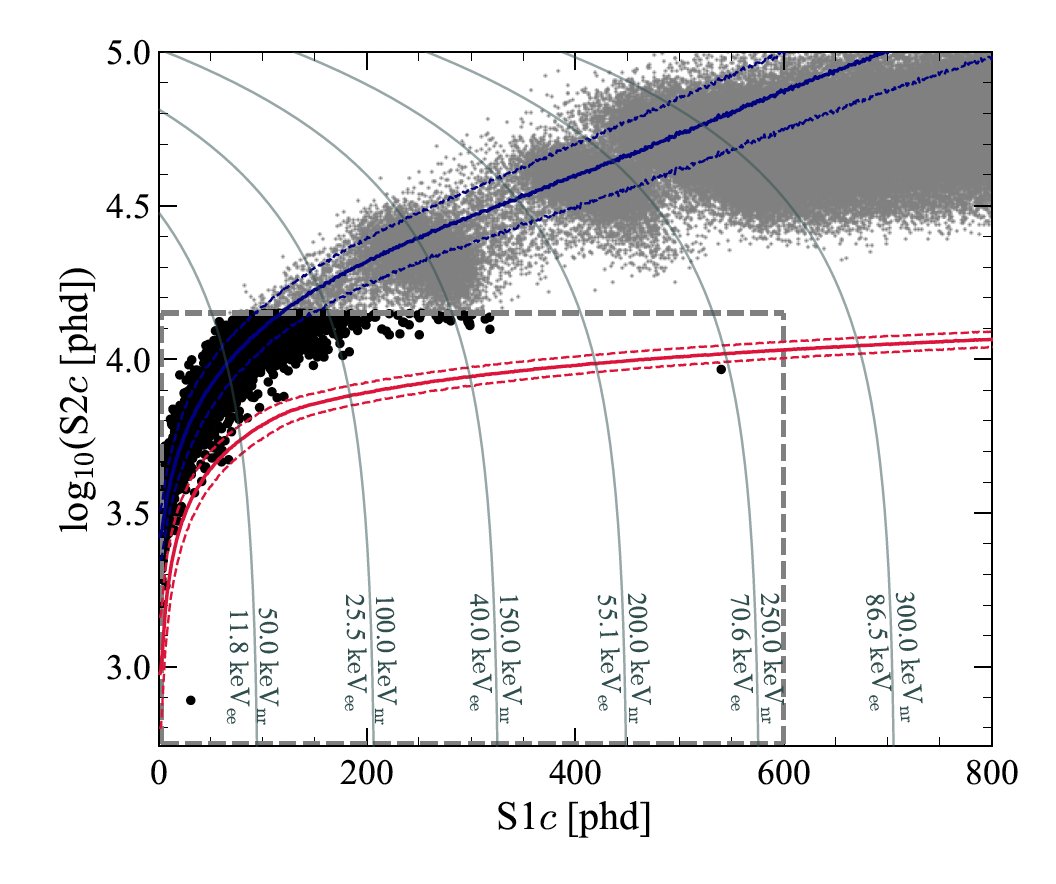
Our new results are out! We have observed a single nuclear recoil in our detector that we find difficult to explain with our background model. Could it be a hint of dark matter? It’s far too early to say, but it’s certainly intriguing! #darkmatter
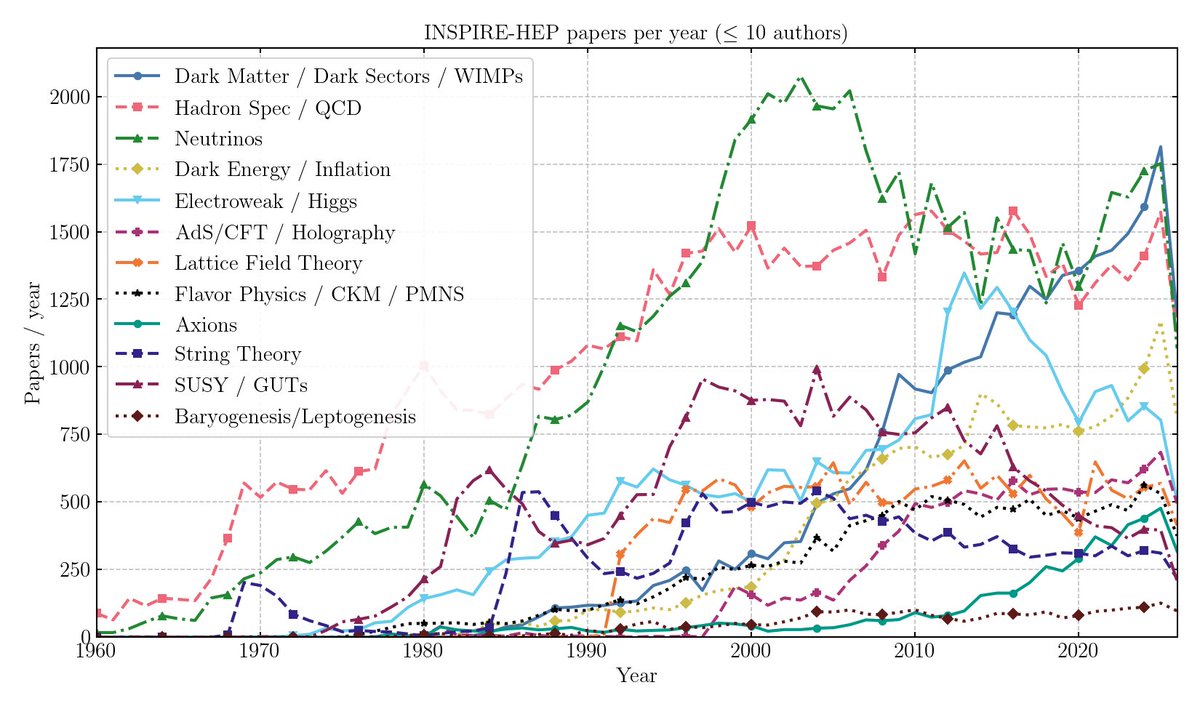
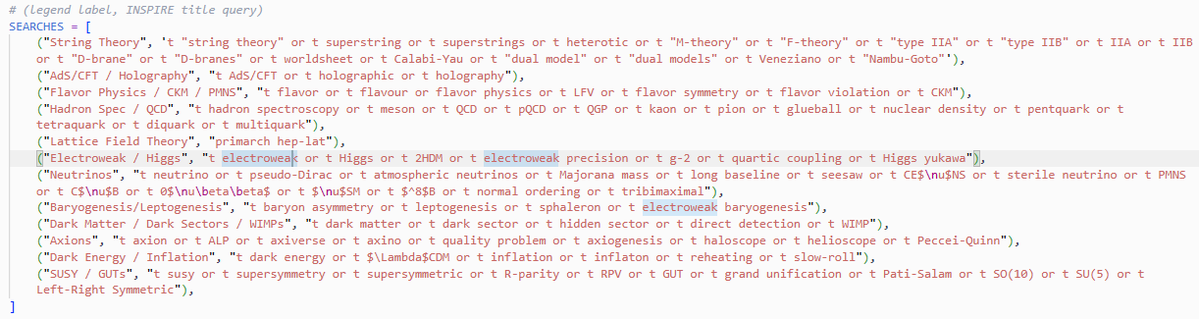
its super imperfect, and missing many other important categories, but here's a plot of particle theory trends since 1960 using iNSPIRE API. #particle#arxiv#physics
@Kaju_Nut@cretin_signpost These don't count as falsification tests, but you could also mention several low-energy observables from ST: large extra dimensions in Supernovae, colliders [1], or axiverse spectra [2], you don't have to build a ST collider
[1]https://t.co/sd12UMOZwz
[2] https://t.co/Hc2ntC5mLD
The Xenon dark matter detector has just announced the observation of the lowest energy solar neutrinos ever detected, allowing to understand processes in the interior of the sun better
The energy threshold is an order of magnitude lower than previous searches!
Took the first step and started learning Hindi on Preply ��
You can get 70% off your first lesson if you want to try it too: https://t.co/7J7MvnE9Io via @PreplyCom
The Nancy Grace Roman Space Telescope has officially launched and is heading to its forever home at L2!
Over the next three months, the observatory will perform final checks and power its instruments before revealing its first images by early 2027.
https://t.co/IdabpolHmh
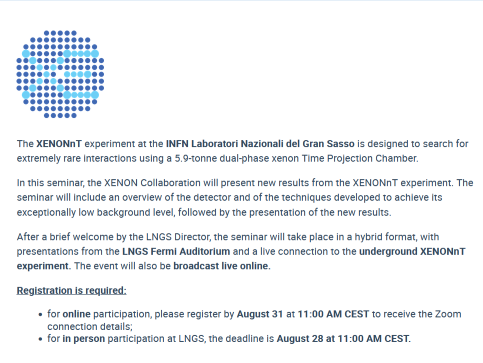
The Xenon Collaboration is excited to announce that it will be hosting a LIVE presentation on Monday, August 31 at 10:00am EST about new findings from the XENONnT experiment.
Learn more at https://t.co/W7FDhvF9yr. Registration is required!
#PPOD: A Bubbling Betelgeuse 🫧
This remarkably detailed view of #Betelgeuse, captured by the Atacama Large Millimeter/submillimeter Array (@almaobs), reveals the uneven, bubbling surface of the famous red supergiant about 600 light-years away. Nearly 800 times larger than the Sun, Betelgeuse is covered by enormous regions of hot gas rising from deep within the star, creating the bright hotspots seen across its surface.
One of those hotspots has presented astronomers with a mystery: it appears in observations taken seven years apart, far longer than current models predict such features should survive. Understanding these enormous structures could offer new clues about the behavior of massive stars as they approach the final stages of their lives—and, eventually, explode as supernovae.
Credit: ALMA ( @ESO@prcnaoj_en@TheNRAO ) / W. Dent et al.
#astronomy
X(2370) now appears glueball-dominated: after 15 years and 10 billion J/ψ decays, its 0⁻⁺ identity and flavor-singlet nature align with a pseudoscalar glueball. https://t.co/JJOdnu8xsG
Chinese researchers have for the first time confirmed the existence of the glueball, an entirely new form of matter, according to the Institute of High Energy Physics (IHEP) under the Chinese Academy of Sciences (CAS). This finding comes after 15 years of experimental research.
This is the clearest experimental result in the search for glueballs over nearly five decades, researchers said, adding that it verifies the theoretical prediction that gluons can bind with one another to form a new type of matter, and is of great significance for testing the standard model of particle physics.