Nicholas Decker is one of the most infuriating (and also terrifying) people on this site. Leftists and rightists are at least tolerable because at least they have values they believe in and can appreciate higher things. Decker on the other hand has a downright Lovecraftian mind.
I have never once seen wanye defend a position at full. He exclusively responds to criticism and counterargument by crying that you won't pretend he said something smarter than he actually did. I am convinced he is secretly 7 years old at this point.
"My mysterious old neighbor gave me a horse"
"I took fifty silver coins from an assassin sent to kill me and prevent the prophecy"
"I brought my father's old sword"
It's crazy to me that anyone has ever taken this post seriously for a second, it's pure idiot chow. Every fantasy story figures out a way to get a poor farm boy on the road. That's what a story is.
Assumes, in that dumb liberal-racist way, that the indigenous alt-history would be utterly static and "pure" -- as if no further great migrations (e.g. like the Apache-Navajo migration from Canada to the American Southwest) would occur.
This is where HOTD apologia is at right now - “your best friends dad!!! This is hard!!!”
You’d think this was a daytime family drama and not a show about two ambitious, brutal women who despise each other and want to control the most powerful position in the world.
This is actually a good insight that nobody seems to really get. If electability and winning elections is the your main goal, then... just dissolve your party and join the other team. Then you'll never lose another race again, right? Obviously, there's more to it than "winning".
This was already a thing before the 2000s. In the 80s and 90s, there were plenty of Red state Democrats and Blue state Republicans who could win.
But we can't go back to that era because the partisan ideological sorting has already more or less played itself out. There's no undoing that and going back in time. You can't bring back the "socially moderate, fiscally conservative" Blue state Republicans, or "socially conservative, fiscally moderate" Red state Democrats any more than you can bring back the Solid South or the Reconstruction-era GOP coalition.
Trying to do this is like trying to depoliticize political parties, and that's simply impossible. The parties themselves became ideologically sorted in the first place because voters did the same. Why bother voting for a Joe Manchin Democrat when you can just vote for a Republican? And why bother voting for a Charlie Baker Republican when you can just vote for a Democrat?
Maximizing electoral efficiency is only one reason why a political party exists in the first place. Winning elections obviously matters quite a lot. But politics is about far more existential questions than "how do we get Democrats elected everywhere?"
Even before you get to the stage where you try to win an election, political coalitions have to ask themselves who they are, what they're fighting for or against, what sort of society they want to create or live in, and what actions are necessary to get there vs which ones are an act of betrayal.
So when primary voters, who have already ideologically sorted themselves into a political party and have long since asked these questions before they cast a single vote, decide to reject your more "moderate" or "electable" candidate, they're not being nearly as irrational as the academic technocrats think they are.
Sure, they're hurting the party's chances of winning one state or district, but they're enforcing the boundaries of the coalition that were erected before any candidate even filed to run for office. The primary voters are basically just declaring that "Winning with candidate X doesn't count, because candidate X is not really one of us."
You can't solve that problem by just arguing that both parties need to moderate over and over again, because demands for moderation are in some ways a demand for the political tribe to dissolve itself. The moderates who are politically engaged think of themselves as far more important than they truly are. They're a tiny percentage of the overall public, and while they might be able to decide the outcome of a general election, they have virtually no power when it comes to deciding the outcome of a primary battle in the same way that "moderates" usually find themselves with little to no power during a revolution.
Only in the US, there's two separate revolutions going on, both pulling in opposite directions.
This is not good. The world needs less romance. Less love.
It needs to celebrate couples who are together but do not love each other. This is the foundation humanity was built on. Love has always been rare. It cannot be the norm. Or else the world will drastically shrink
Here’s the thing about housing: if you could magically press a price-control button and make all rents in NYC affordable, permanently, with no concern for operating costs etc, it would lead to outrageous waitlists and lotteries. People would avoid moving at all costs, and it would be nearly impossible to move within-city.
Anyone who wanted to move to New York would end up waiting a decade to get a place. That’s because there is a *real physical shortage of housing* in NYC, and that short supply is allocated presently through price mechanisms. In our magical world where prices can be declared by fiat with no ill-consequence, the short supply would be allocated by waitlist and lottery instead.
But, before you either praise me or get mad at me for saying this, take note: *many people would strongly prefer this to the present system, if they had this choice.* In fact, I would guess that *most* people would prefer such a system.
An analogy: in a disaster, price gouging is “efficient,” but people fucking loathe it. They strongly prefer long lines or lotteries over high prices, because they are more *morally fair* in the eyes of most people.
Whenever there is a shortage, price rises are *efficient* and also *despised*. Obviously, everyone would prefer to pay less for things they want and need—which is another way of saying we’d all like to be richer, because that’s what wealth really is: the actual quantity and quality of stuff you can acquire.
But it’s much deeper than that. There is also an underlying sense of fairness that gouging violates, and there is an underlying need for *stability* and *security* that it destroys. Many people would happily choose the hypothetical NYC of decade-long waitlists because, once you’re in, even if you have less freedom to move around, you’re *secure*. You no longer have to have anxiety about losing your housing. It removes a huge part of the background radiation of anxious, precarious modern life.
Now, I prefer that we build a ton of housing to resolve the shortages in big cities, and I would like much of that housing to be state-operated. But when we talk about things like rent control, you *must* confront the political, moral, and genuinely hedonic dimensions.
Seeing my more libbed-up YIMBY friends upset about the NYC rent freeze, predictably. But the arguments are not good.
I like and agree with my many liberal friends when they say "hey! There are tradeoffs! Let's be honest about them!" But the libs subsequently fail, almost always, to make a persuasive case about why we should always choose the efficiency-maximizing resolution to those tradeoffs.
Restrictive zoning is a bad tradeoff. It costs us new housing, and what we get in exchange *is also bad*. Concentration of wealth, segregation, and car-dependent single-family neighborhoods are the *benefits* in the eyes of the people advocating for that kind of zoning, and those things suck! That's why I'll always defend maximal upzoning.
Environmental review is a tradeoff that might seem appealing in principle, but in reality, as implemented, it's been a gigantic drag on construction without delivering meaningful environmental benefit--in fact, by hampering infill density, it has actively made environmental harm *worse* in many ways. Bad tradeoff.
But rent control *is* different. It offers stability in housing for residents, which is a genuine good. People really dislike feeling precarious in their ability to secure shelter, and rightly so. Shelter is actually a real, universal human need, and anxiety about its precarity is an unavoidable psychological response. If we actually care about hedonic utilitarianism or something like it, this is an intrinsic and unavoidable source of fear and despair *not* fully resolvable simply through increasing output.
The tradeoff of rent control is that it does dampen new supply, to a variable extent, heavily dependent on the specific implementation. There are ways to lessen or increase the costs of this tradeoff, and they may or may not correspond substantially to the benefit gotten in exchange--stability in housing access for rent-controlled tenants, freedom from the innate human fear of loss of the home.
This is a tradeoff that actually demands to be taken seriously. If there are other ways to resolve it that are more efficient than rent control, great, but what people like about it is that it allows them to anticipate the future in a way that market-rate housing does not.
Even in a healthy private housing market with lots of construction that keeps rents relatively low, that process only looks smooth when zoomed out. In the micro, it involves economic cycles of increasing rents, overbuilding, falling rents, underbuilding, repeat.
People dislike these cycles, for deep and innate reasons of human psychology. We like stability, predictability, and we really like it where it concerns our deep and innate needs, like for shelter. You can't just brush that off.
Is the point of policy just to always maximize output? Or is it to address human suffering, and secure human happiness? If the latter, we must pay attention to "irrational" features of human psychology, like strong preferences for predictability, when we craft policy.
Tim’s big issue, and it’s reflected in Epic’s entire strategy, and why Valve succeeded and will continue to assuming they stick with it.
Valve is not like innately better or more benevolent. Well, maybe a little, but at the end of the day they are a business, and out for their benefit. Which, in an ideal world, is about making the product customers want at a price they can afford. Epic is doing the same, but the issue is in who their customer is.
For Valve, players are the consumers and the product they sell is access to the developers and publishers. To that end they facilitate things via consumer facing features that better facilitate this.
For Epic, though, the publishers and developers are the customers. This is why all their strategy was targeted at them, lower cuts and all. The players are a resource they want to give access to but they fail to understand cultivating it. They tried brute forcing it with exclusives and free games but lacked even basic player friendly features and to this day are way behind. Their concern is, as demonstrated here, about how these things affect the developer.
Valve’s premise is based in the idea that customers want to know and it costs them nothing. Epic’s is that their customers want to hide it. It’s ‘unfair’ to their customers. Meanwhile, Valve goes after price parity cus it’s ‘unfair’ to THEIR customers.
Once you figure out how a company is oriented this way their behavior makes sense, stripped of moral pretenses.
Exactly correct, it's so dumb when people bring it up as some sort of own or attack against a movement. Saying that "our enemies are a serious threat but we can beat them" is an outrageously normal thing to do.
One of my least favorite trope is the idea that "characterizing your enemy as both strong and weak" is unique to fascism
Every side of the aisle does that, it's normal to overstate a threat your enemy poses while claiming some level of superiority over them
One of my least favorite trope is the idea that "characterizing your enemy as both strong and weak" is unique to fascism
Every side of the aisle does that, it's normal to overstate a threat your enemy poses while claiming some level of superiority over them
What's amusing to me is that these are the same type of people who go into complete meltdown mode when leftists run as 3rd party candidates also. The truth is they just don't want anti-corporate views to have an expression anywhere in the political system.
In the past the social narrative you got from your betters was abundance. That anything was possible, you could do anything. Now what you get is "realism": you clearly are expecting TOO much already by default. Now which would you expect during a time of decline?
From a 🔒 account:
Yeah the bitterness and entitlement is remarkable, to the point of driving Dem leadership to commit strategic errors. Ironically, they’re demonstrating much less pragmatism and realpolitik than the DSA is. It’s all “how dare you take my fief” outrage
How can people like this say this shit outright without any self-awareness? They think they're the "normal people" while calling for the ideological disenfranchisement of 40% of their fellow Americans, instead of for proportional representation.
How many more years do normal people have to look at primary election results, in both parties, with abject horror before we abolish the primary system and let parties pick their candidates, as is common in every other democracy?
This guy's always been a hypocrite, but for whatever reason he's deciding now to get even more overt and outrageous about it. Excusing his and his family's philistinic low-IQ anti-social behaviour while clutching his pearls at everything else. How does he live with himself?
My parents — good citizens, volunteers, hard workers, etc etc etc — once on a lark stole a road sign from a street with our last name on it. Is that great behavior? No, I guess not. But it’s the kind of thing most people who later saw the sign laughed about. You can get a little high on your own supply with some of this stuff.
Boomer is upset she moved to be closer to her children/grandchildren who are in the middle of living their lives raising children. Doesn't offer to help with any of the day to day, ie become integrated and part of their lives, and is dissatisfied when they're busy and don't have time to entertain her lol
i personally dubbed it "lemming phenomenon" few years ago when ranting to coworker
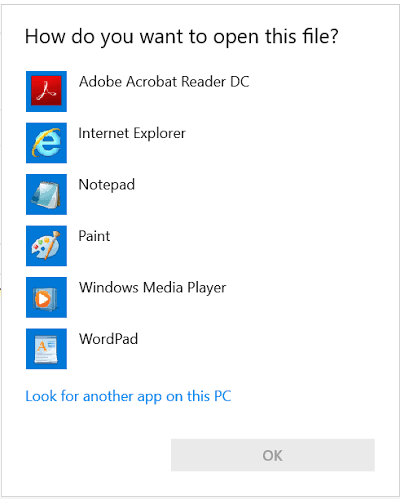
you give a person an instruction "okay open this file" and they try to open it and this window pops out
it completely stunlocks them and they are unable to proceed