Ian is going to slay Pittsburgh NPC. Amazing growth season, stellar cut and immense dedication to posing. He truly embodies the ethos of bodybuilding while balancing family life as well.
Proud of you brother!
If you’re trying to build your physique, lose fat, or simply improve your cognitive and physical performance, not to mention increase your work capacity, and you’re doing anything remotely close to low-carb, you are sabotaging yourself.
Intermittent fasting is absolute garbage. You’re just using the clock to reduce your calorie intake and simultaneously torpedoing your metabolic health and performance.
Keto, outside of those who’ve made the prior commitment to becoming metabolically fluid, is absolute garbage.
And anything low-carb outside of those with severe metabolic disorders or insulin resistance is absolute garbage as well.
Carbohydrates are the cleanest fuel you can run on.
Carbs refill muscle glycogen, which is what actually powers a hard training session, and they keep your central nervous system fed so your output in the gym and your output at work both stay sharp.
Fat and ketones can keep you alive. Carbs let you perform.
Eat more carbohydrates. Time your macros properly. But don’t deprive yourself of the finest form of energy you can feed yourself with.
Bloodwork 101
Hemoglobin
Hemoglobin carries oxygen to your muscles and brain. Optimal levels = better endurance, faster recovery, sustained energy during heavy training.
Low levels kill performance.
High levels (common on TRT) need monitoring for blood thickness.
Part of CBC in every panel.
One thing that I’ve noticed is that the more you try to describe objective experience through studies, or trying to intellectualize everything,
It actually takes away from presence
You’re not really in the world
You’re more in your head and less in your actual body.
This applies to how you do your work, or how you actually partake in the world.
It shows up in doing reps in the gym, writing, and how you conduct yourself at work.
Sometimes you just need to be in contact with reality instead of trying to understand every aspect of it,
Which inevitably shuts you out anyway.
If you're not yet fist-bumping all the regulars at your gym when you arrive, you haven't been going long enough.
It's like a cool kid's club when you're consistent over the years.
Every day, a bump with a "what's up bro", and a nod.
IYKYK.
You really shouldn’t many pre-determined parts of any steroid cycle.
If the goal is to achieve X goal by Y date, that’s one thing.
But things like predetermined AI dosing, overall dose increases, cycle duration, and other interventions should be used only according to your goal.
For example, let’s say Jeff has a lot of size to build before he reaches his goal physique. We’re talking 30lbs+.
Jeff is super lean, and ready to begin his next blast.
Instead of “okay I’m gonna run 500 test and 200 primo for 16 weeks”
It should be, “I’m going to start test and primo high enough above cruise dosages to elicit growth, I’m going to increase food intake at plateaus, and I will add just enough extra gear to keep continue growing once added food seems to make me fat much more than it drives performance”
Then, watch biomarkers the whole time, and end the cycle when it actually makes sense, vs after a random time allotment.
If you’re staying healthy, growing like a weed, milking those incremental increases, and loving life, there really isn’t any reason to just stop.
Long, slow, off-seasons/bulks are always going to be more fruitful and more healthy than random blasting because you want to look like a geared out dude with a bunch of veins and no muscle.
I received numerous requests…so let’s DO IT AGAIN:
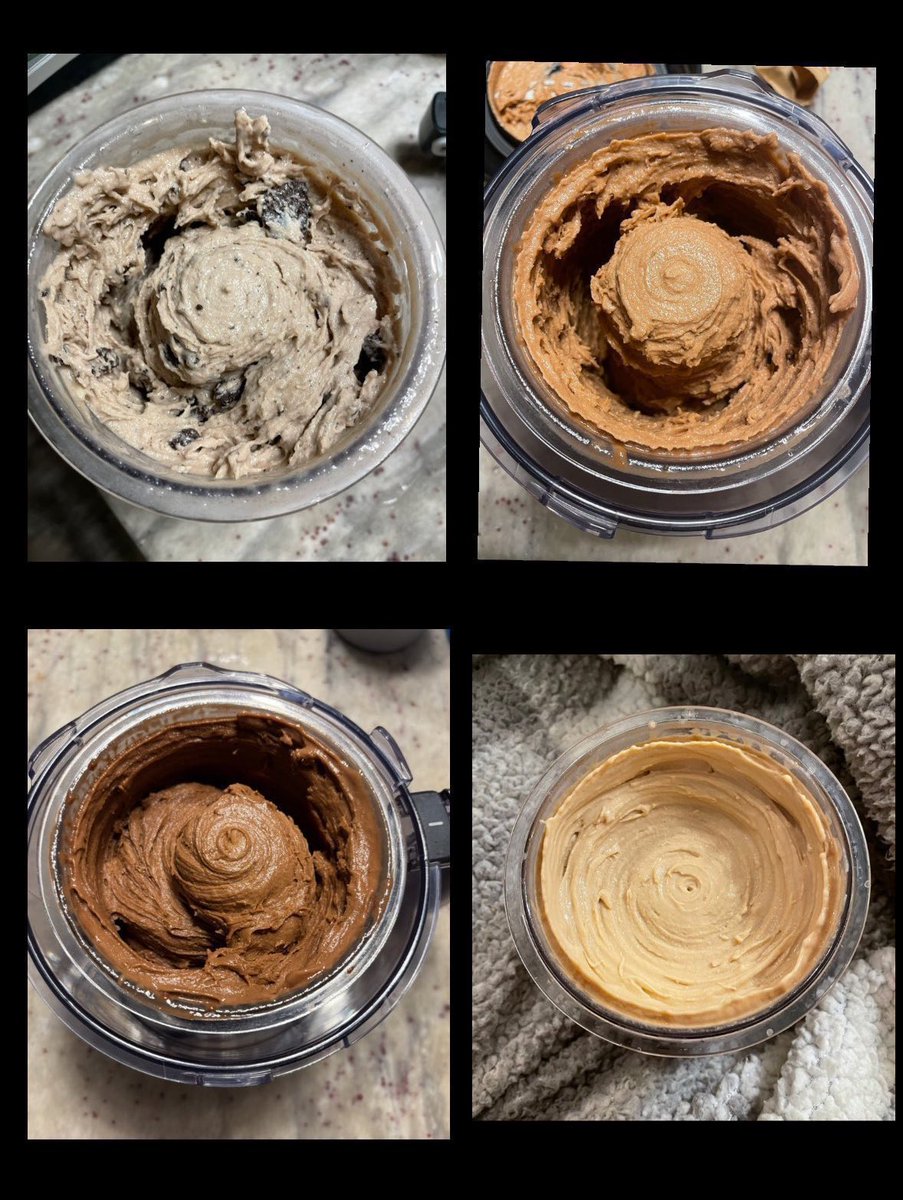
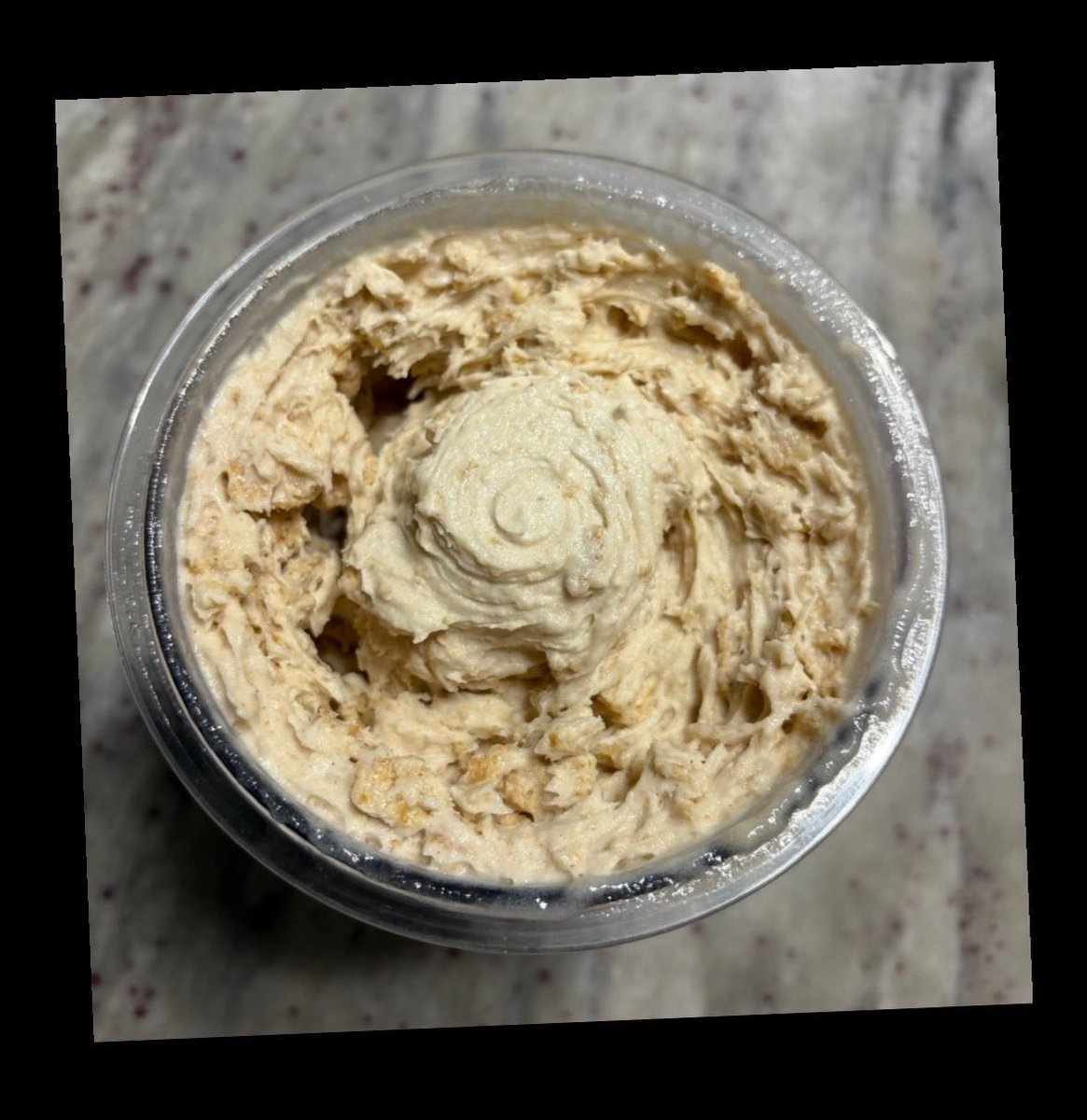
My TOP 7 Ninja Creami Recipes w/ Preparation Instructions
(These actually taste like REAL Ice Cream despite being WAY lower in Calories)
𝗕𝗜𝗥𝗧𝗛𝗗𝗔𝗬 𝗖𝗔𝗞𝗘 𝗪𝗛𝗜𝗥𝗟:
- 360ml Fat Free Fairlife
- 2 servings Sugar Free Cheesecake Jello Pudding Mix
-3 squeezes of SweetLeaf Sweet Drops Vanilla Sweetener
- 1 serving True Nutrition French Vanilla Egg White Protein Powder
- 12g sprinkles
- 2g Xanthan Gum
350 Calories / 45g Protein
𝗖𝗜𝗡𝗡𝗔𝗠𝗢𝗡 𝗧𝗢𝗔𝗦𝗧 𝗖𝗥𝗨𝗡𝗖𝗛 𝗦𝗪𝗜𝗥𝗟:
- 300ml Unsweetened Vanilla Almond Milk
- 120ml Whole Milk from Fairlife
- 68g Trueflavor Cinnamon Toast Swirl Egg White Protein Powder from True Nutrition
- 41g Cinnamon Toast Crunch Cereal
- 2g Xanthan Gum
500 calories / 58g protein
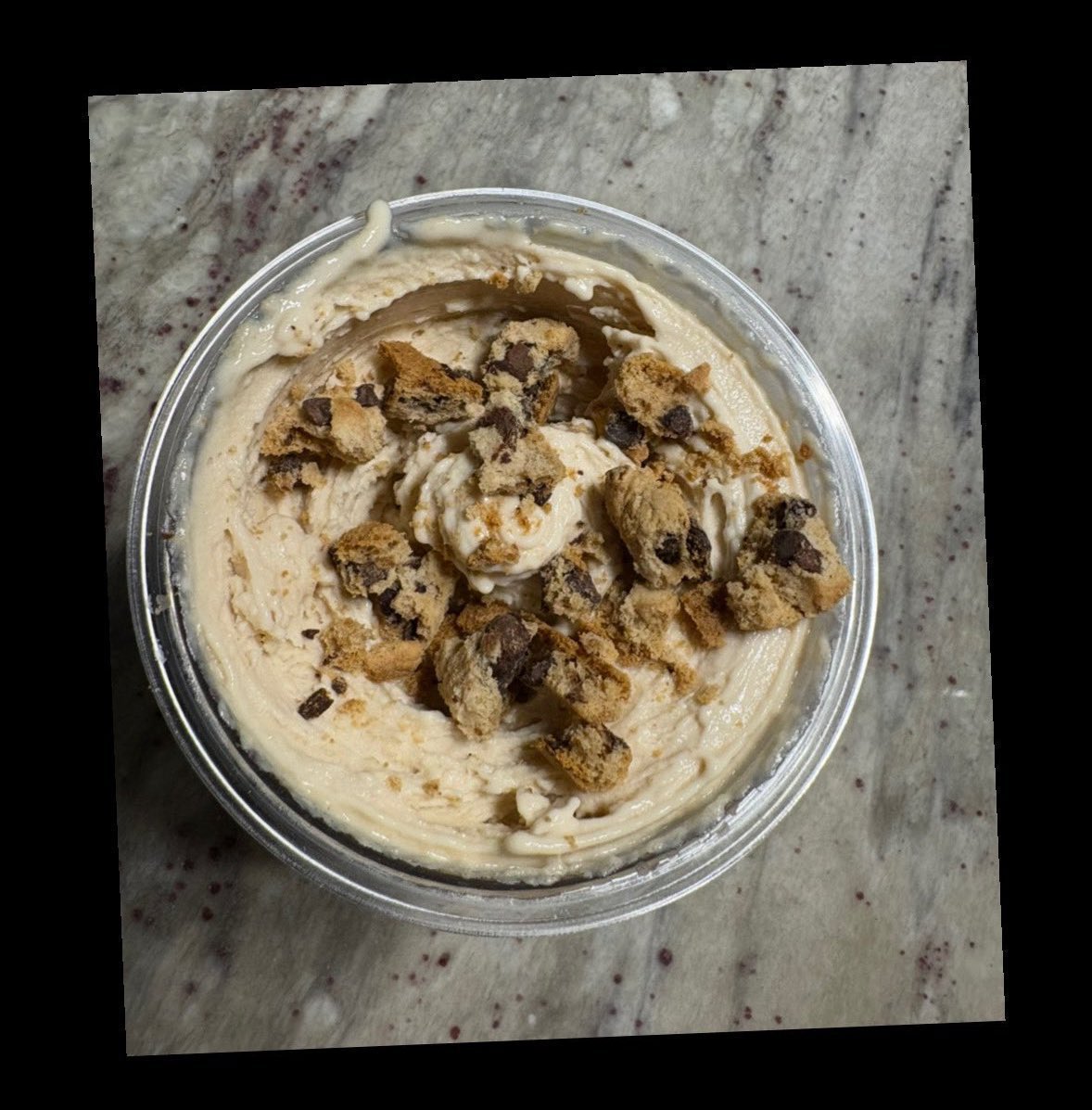
𝗢𝗔𝗧𝗠𝗘𝗔𝗟 𝗖𝗛𝗢𝗖𝗢𝗟𝗔𝗧𝗘 𝗖𝗛𝗜𝗣 𝗖𝗢𝗢𝗞𝗜𝗘:
- 300ml Unsweetened Vanilla Almond Milk
- 120ml Whole Milk from Fairlife
- 76g Oatmeal Cookie Protein Powder from JYM
- 2 Chunky Chocolate Chip Cookies
- 2g Xanthan Gum
550 calories / 57g protein
𝗢𝗥𝗘𝗢 𝗕𝗟𝗜𝗭𝗭𝗔𝗥𝗗 𝗥𝗘𝗣𝗟𝗜𝗖𝗔:
- 240ml Fairlife Skim Milk
- 240ml Almond Milk Unsweetened Vanilla
- 51g True Nutrition Cookies N Cream Egg White Protein
- 30g Oreos Cookies N Creme Instant Pudding Mix
- 4 Oreo Thins
- 2g Xanthan Gum
540 calories / 50g protein
𝗖𝗛𝗢𝗖𝗢𝗟𝗔𝗧𝗘 𝗣𝗘𝗔𝗡𝗨𝗧 𝗕𝗨𝗧𝗧𝗘𝗥 𝗖𝗨𝗣:
- 480ml Unsweetened Vanilla Almond Milk
- 51g Chocolate Peanut Butter Cup Egg White Protein
- 32g 100% Peanuts Natural Peanut Butter
- 10g Zero Sugar Chocolate Pudding Mix
- 2g Xanthan Gum
450 calories / 46g protein
𝗧𝗥𝗜𝗣𝗟𝗘 𝗖𝗛𝗢𝗖𝗢𝗟𝗔𝗧𝗘 𝗟𝗔𝗩𝗔:
- 480ml Fairlife Chocolate Milk
- 51g Chocolate Fudge Brownie Egg White Protein from True Nutrition
- 10g Chocolate Sugar Free Jello Mix
- 2g Xanthan Gum
490 calories / 62g protein
𝗣𝗘𝗔𝗡𝗨𝗧 𝗕𝗨𝗧𝗧𝗘𝗥 𝗕𝗔𝗡𝗔𝗡𝗔 𝗦𝗪𝗜𝗥𝗟:
- 480ml Unsweetened Vanilla Almond Milk
- 51g Chocolate Peanut Butter Cup Egg White Protein
- 13g PB2
- 150g Banana Dannon Light & Fit Greek Yogurt
- 2g Xanthan Gum
380 calories / 56g protein
𝗣𝗥𝗘𝗣𝗔𝗥𝗔𝗧𝗜𝗢𝗡 𝗜𝗡𝗦𝗧𝗥𝗨𝗖𝗧𝗜𝗢𝗡𝗦 👇🏻👇🏻👇🏻
- Put all Creami ingredients (minus the Xanthan gum) in the cup
- Froth it
- Add Xanthan gum
- Froth again
- Freeze for 24+ hours with NO LID
- Thaw out for 15-20 minutes
- Put lid on then run the side & bottom under hot water for 30-40 seconds
- Load in mixing cup with that lid & blade
- Click full and hit spin
- Add 30 more ml of milk after initial spin
- Click full & respin
- Add mix ins
- Click full again and hit mix in (do this even if you did NOT add mix ins)
- Enjoy
One final note:
When in doubt…RESPIN!!!!!!
People on my recent trip couldn’t do a 40-minute incline hike to a beautiful Japanese temple.
In their late 20s, early 30s…
And I don’t say that to put anyone down.
I say it because it hit me so hard in that moment:
I never want that to be me.
And I won’t ever let that be me — even into my later years.
Cause we were in Japan…
All the way across the world, experiencing things we will likely never get to do or see again.
And people had to sit it out because their body couldn’t handle it.
That’s crazy to me.
I never want my health to limit my ability to live and enjoy life.
To say no to something like that.
To miss out on experiences like that.
I wouldn’t be able to live with myself knowing I was there… and my body was the reason I couldn’t do it.
That’s the part people don’t think about.
Fitness isn’t about abs. (yeah that’s a fun side effect)
But it’s about being able to say YES to your life.
Because when the moment comes… your body either shows up for you… or it doesn’t.
And I don’t know about you, but I want to have the power to say yes or no based on what I want to do— not based on what I’m able to do.
The body doesn’t know how much weight you’re using when you're in the gym.
It doesn’t know if you are using 100 lb dumbbells or 50 lb dumbbells.
The weight is just a tool.
You’re going to see actual progress if your form is 100% perfect with the 50 lb dumbbells versus shit form with the 100 lb dumbbells.
Not only that, but you’ll save yourself from a lot of injuries.
The whole purpose of lifting weights for hypertrophy (muscle growth) is to place the muscles under proper mechanical tension.
When this is done properly, the muscle fibers break down and then through diet/sleep, they recover/repair/adapt which then leads us to getting stronger and bigger or gaining more muscle.
If you ever see a jacked dude in the gym using weight that you think is “light”, watch that dude’s form.
It’s probably perfect form, he’s focusing on the eccentric (lowering the weight), focusing on the concentric (lifting the weight), and focusing on the contraction (squeezing of the muscle at the top of the rep).
You don’t always have to lift super heavy to get results.
Now, I’m not saying lift light.
Your goal should be to always lift the maximum possible weight with the best possible form, but form is everything when it comes to getting the best possible results in the weight room.
A dive in to Glucose and Cortisol:
I was asked if I track blood sugar / glucose and if/how to dial in carbs to manage cortisol spikes…
I don’t track glucose daily with a monitor. I do pull it as part of my blood panel.
If somebody isn’t diabetic or doesn’t have a metabolic issue, is relatively lean, and is making smart nutrition choices (balanced meals, not just refined carbs solo), they should see a normal rise in glucose post-meal and then a return toward baseline. Walking ~10 minutes post-meal can help blunt that spike and improve clearance.
Having a meal, especially one with carbs, provides glucose. The body responds by releasing insulin to shuttle that glucose into muscle/liver (insulin up and glucose comes back down). In a metabolically healthy person, that’s exactly what you want. That glucose is being used for performance, recovery, and glycogen storage.
Where people run into problems is:
-poor food quality (highly refined, low fiber, hyper-palatable combos)
-*and* constant snacking (never letting glucose/insulin return toward baseline)
-*and* low activity / low muscle mass (less ‘sink’ for glucose)
Ultimately, that’s what drives chronically elevated levels, not just carbs themselves (carbs are not evil).
Yes, cortisol is a stress hormone, but it’s not inherently bad. Its role is to raise blood glucose when needed (training, fasting, stress). Insulin and cortisol aren’t just opposites, rather they’re context dependent. Insulin doesn’t ‘block’ cortisol, but a fed state (especially with carbs) generally blunts excessive cortisol output, while low glucose states tend to elevate it.
So this isn’t about ‘avoiding cortisol spikes’ as we actually want acute cortisol around training. The issue is chronically elevated cortisol from poor sleep, under-eating, excessive deficits, excessive stimulants/caffeine, etc.
Takeaway:
Carbs, especially peri-workout, help to:
-maintain blood glucose
-support training performance
-reduce the need for elevated cortisol to keep glucose up
-improve recovery