Some people say nanotechnology is not achievable. But it already exists - biology is nanotechnology.
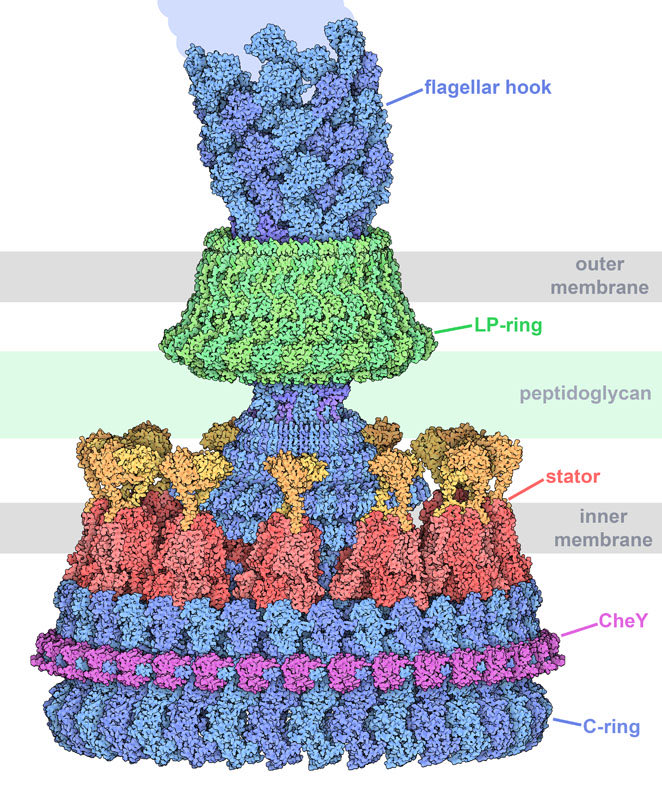
The bacterial flagellar motor is a perfect example. It’s a biological nanomachine, only a few dozen nanometers across, built from precisely arranged proteins that form a rotary engine.
It can spin at up to 100,000 revolutions per minute, powered by ion gradients across the bacterial membrane, just like an electric motor powered by voltage.
It even has equivalents of a rotor, stator, bearing, and drive shaft, all self assembled from molecular components.
With the help of AI, we’ll reach that level soon.
80 years ago today, an atomic bomb was dropped on Nagasaki (Aug 9, 1945), the last time a nuclear weapon was used in war.
Just a friendly reminder on this beautiful Saturday, that if one is ever used again, it will be the end of human civilization.
There's a lot of division, turmoil, injustice, suffering in the world... but the truth remains that all of us humans are stuck here together on one small planet (for now), tasked with preserving the flame of human consciousness while wielding technology powerful enough to destroy everything we've ever built.
The good news is that we humans are a clever bunch and are fundamentally compassionate at the core. So, I'm betting humanity lasts at least another thousand years, and I'm hoping for another million.
But it is indeed very suspicious that we have not seen obvious signs of alien civilizations everywhere in the sky. Maybe the great filter is ahead of us and this whole intelligent civilization thing is harder to pull off than we realize.
Either way, I'm glad I get to be alive here for a bit with all you.
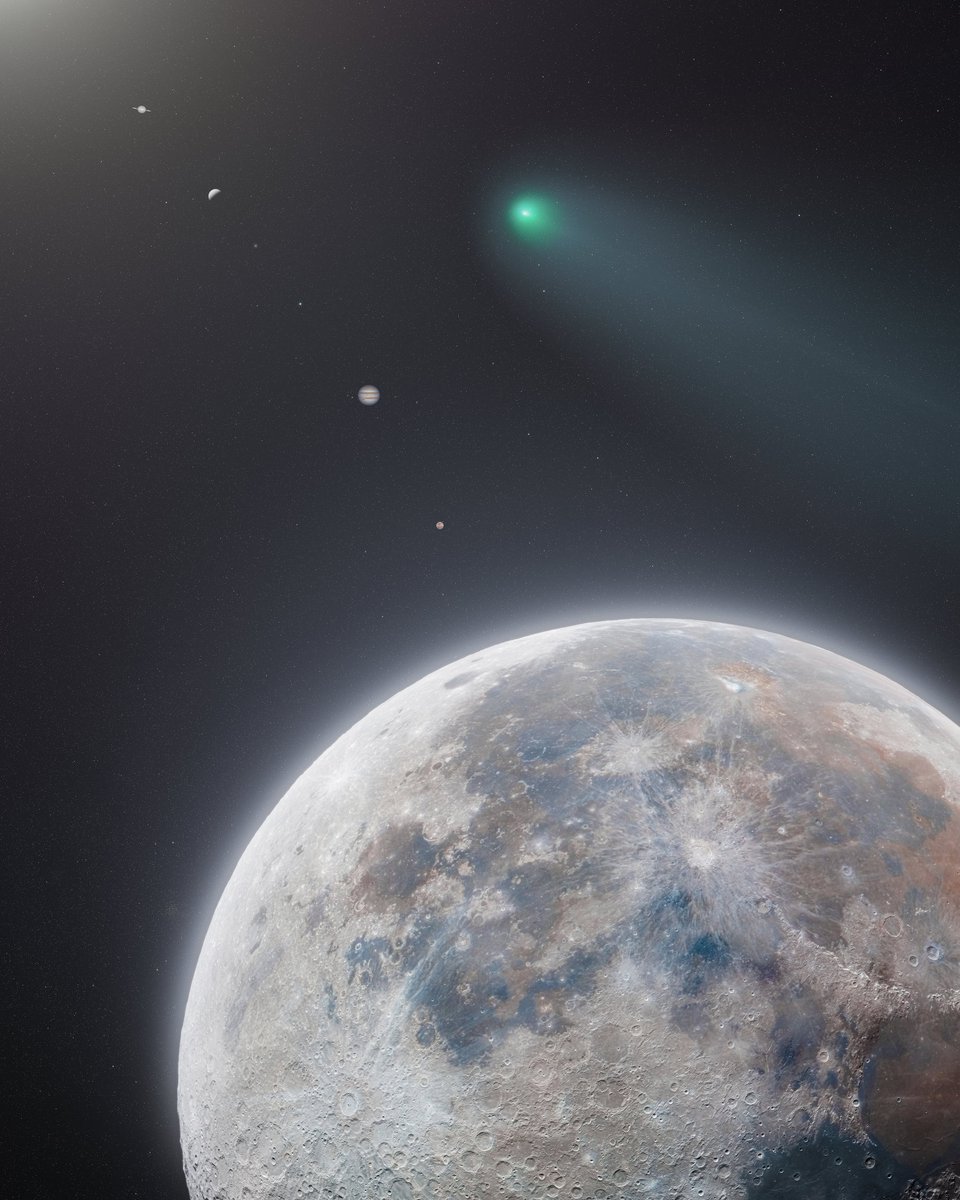
I captured the entire "Planetary Parade" using my 11" telescope, and combined everything into one composite photo that stayed true to the angular scale of these objects.
Made entirely with real photos, I hope this composite helps illustrate the scale of these things!