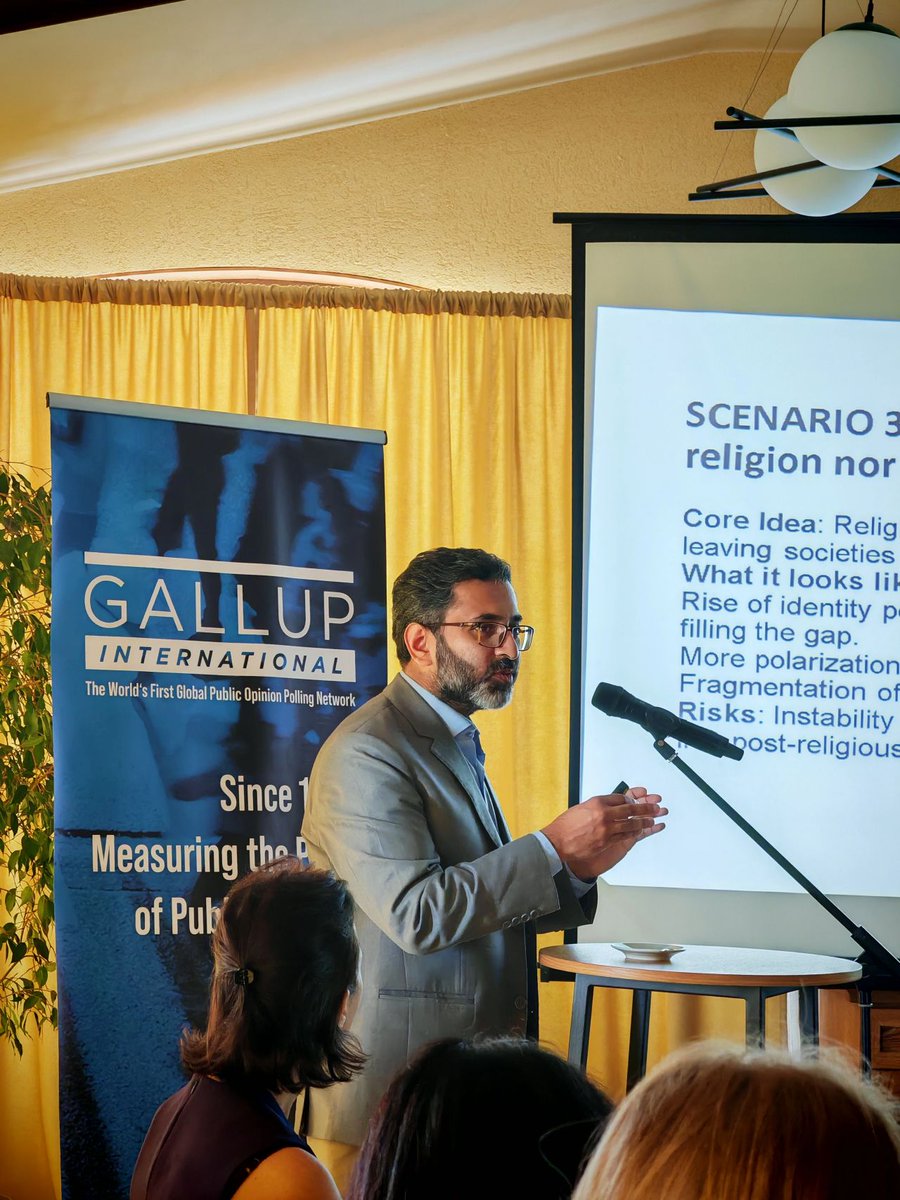
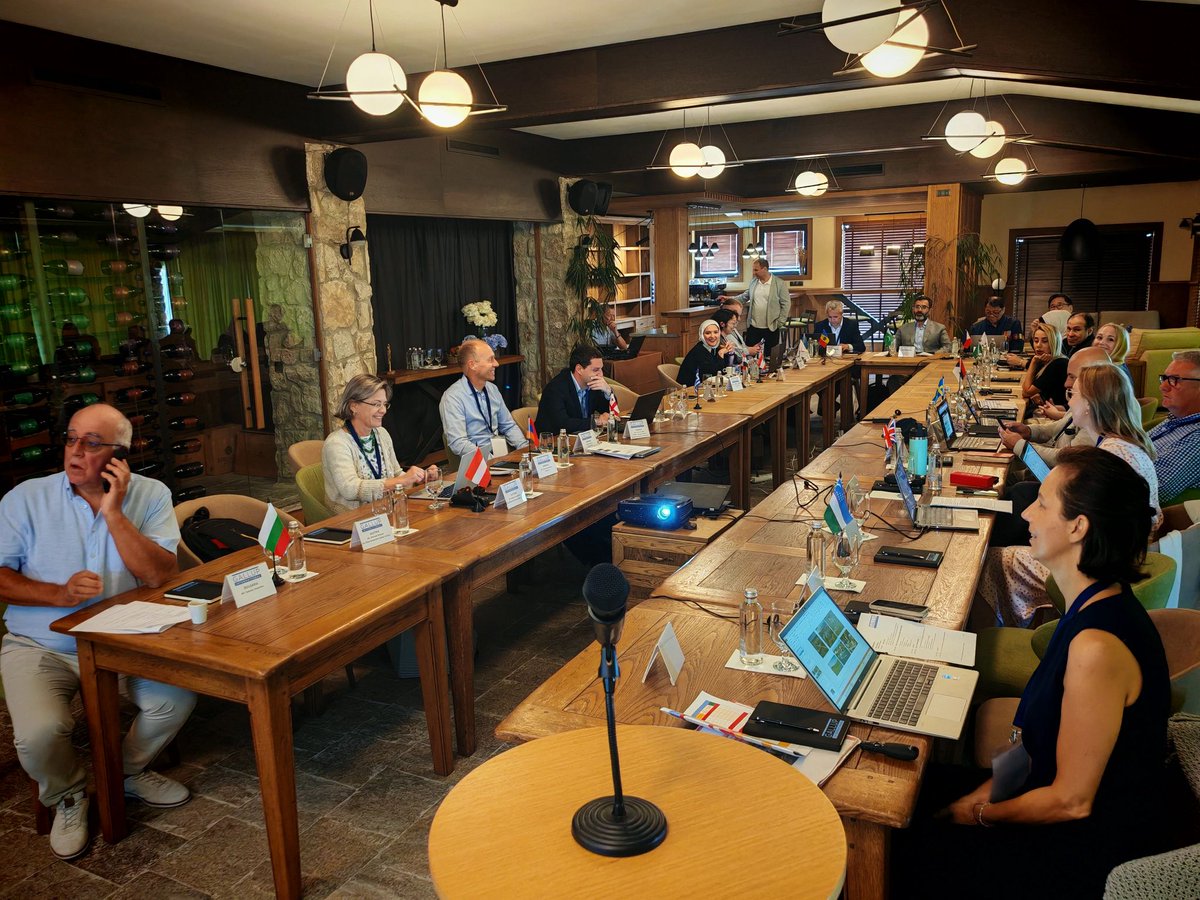
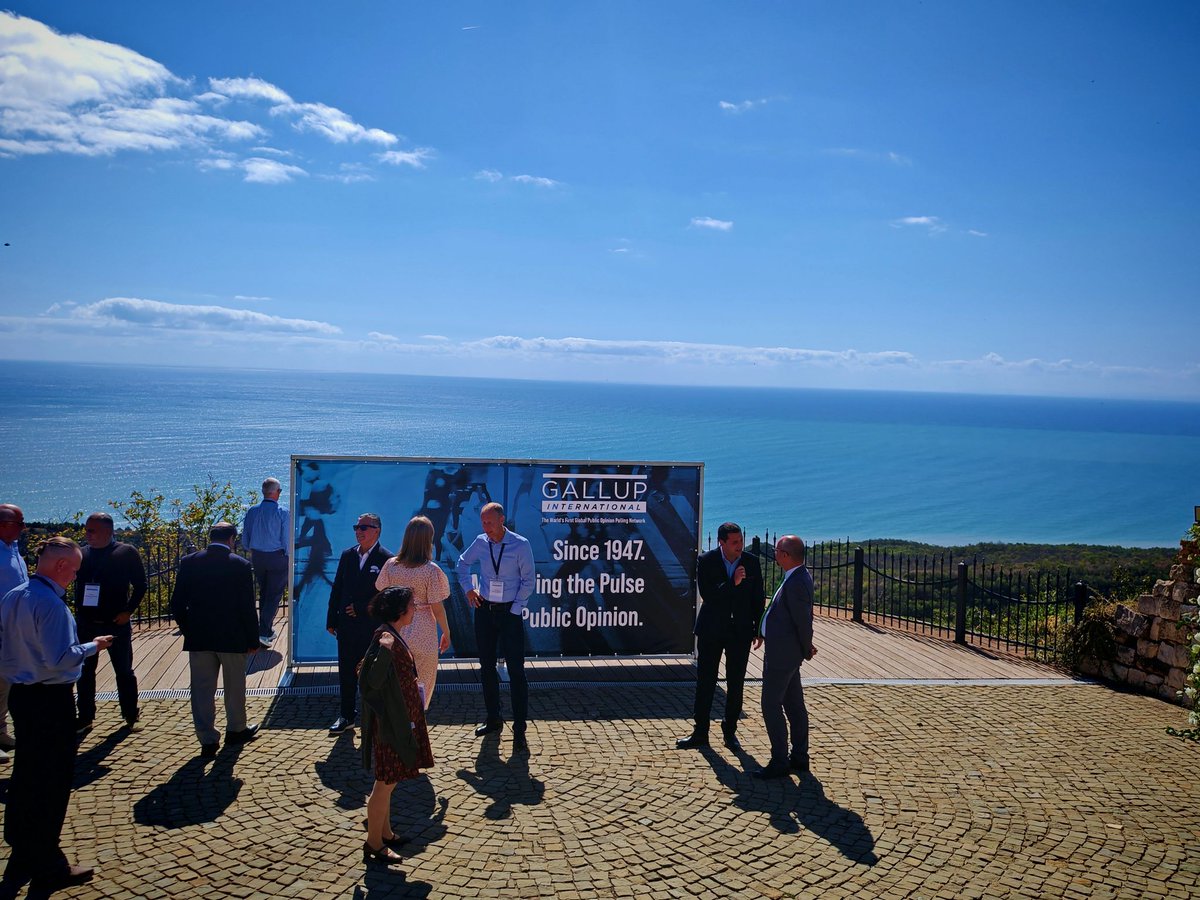
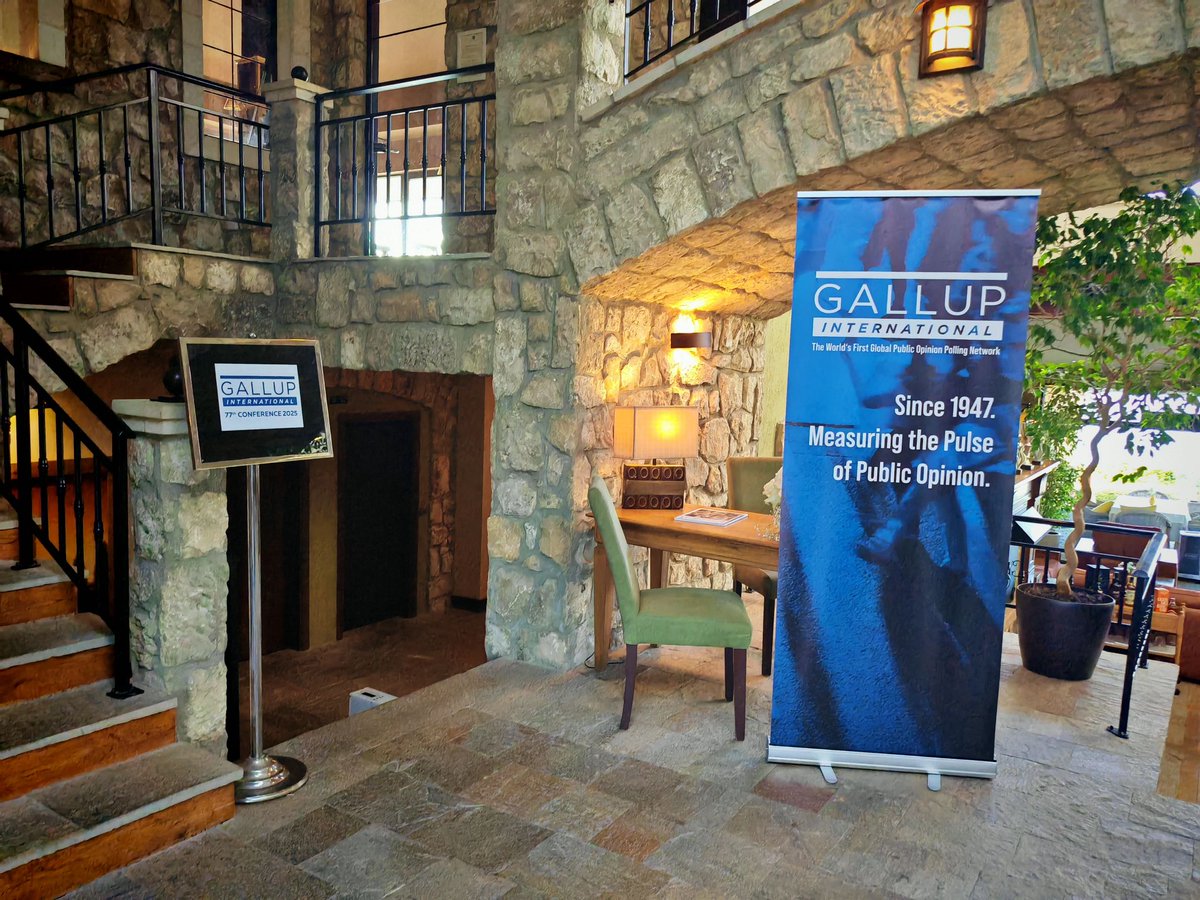
Bilal Ijaz Gilani, Executive Director of Gallup Pakistan and Board Member of Gallup International Association, attended the 77th Annual Conference of Gallup International Association in Varna, Bulgaria.
This unique gathering of pollsters from across the globe discussed new techniques in survey research as well as new ideas reshaping the world.
In his presentation, Bilal Gilani showcased insights from Gallup International’s End of Year surveys, conducted annually since 1977, which chart a changing world over nearly five decades. He highlighted four key global trends emerging from the data:
Backsliding of democracies and weakening of faith in democratic institutions
Decline of religion and the rise of post-religious societies
Belief in technology and dataism, with people placing increasing faith in science, algorithms, and innovation
Rising global economic anxiety, with concerns about jobs, inflation, and inequality shaping outlooks everywhere
Another major theme of his talk was the rise of a multipolar world, and how public opinion worldwide views the U.S.–China rivalry with caution, recognizing both risks and uncertainties for global stability.
Gallup International, since 1947, has remained committed to “Measuring the Pulse of Public Opinion” — providing an evidence-based lens on how societies are evolving.
Advance of Southwest Monsoon 2026
❖ The Southwest Monsoon has further advanced into some more parts of westcentral & eastcentral Arabian Sea, Karnataka, entire Goa, some parts of Maharashtra and Andhra Pradesh, most parts of Tamil Nadu and southwest Bay of Bengal, some more parts of westcentral & northeast Bay of Bengal, entire eastcentral Bay of Bengal and some parts of northwest Bay of Bengal, Mizoram and Manipur, today the 6th June, 2026.
❖ The Northern Limit of Monsoon passes through 17.5°N/60°E, 17.5°N/65°E, 17°N/70°E, Devgad, Koppal, Ananthapuramu, Chennai, 15.5°N/85°E, 20°N/89.5°E, Aizawl and 25°N/95°E as on 6th June.
❖ Conditions are favourable for further advance of southwest monsoon into some more parts of central Arabian Sea, Maharashtra, Karnataka and Andhra Pradesh, some parts of Telangana, remaining parts of Tamil Nadu and southwest Bay of Bengal, some more parts of westcentral & north Bay of Bengal and Northeastern states during next 2-3 days, also entire Central Arabian Sea, some more parts of Maharashtra, remaining parts of Karnataka, some more parts of Telangana & Andhra Pradesh, some parts of Chhattisgarh & Odisha, some more parts of Northeast India and some parts of Sub-Himalayan West Bengal & Sikkim during subsequent 4-5days.
#SouthwestMonsoon #MonsoonUpdate #WeatherForecast #RainySeason #IndiaWeather #Monsoon2026 #Rainfall
@moesgoi@airnewsalerts@DDNational@ndmaindia@ICRER_MHA
Putin on Pakistan, answering Indian journalist:
You said that Pakistan is a country that is fully under the control of China.
I don't think so. Pakistan is a large country...
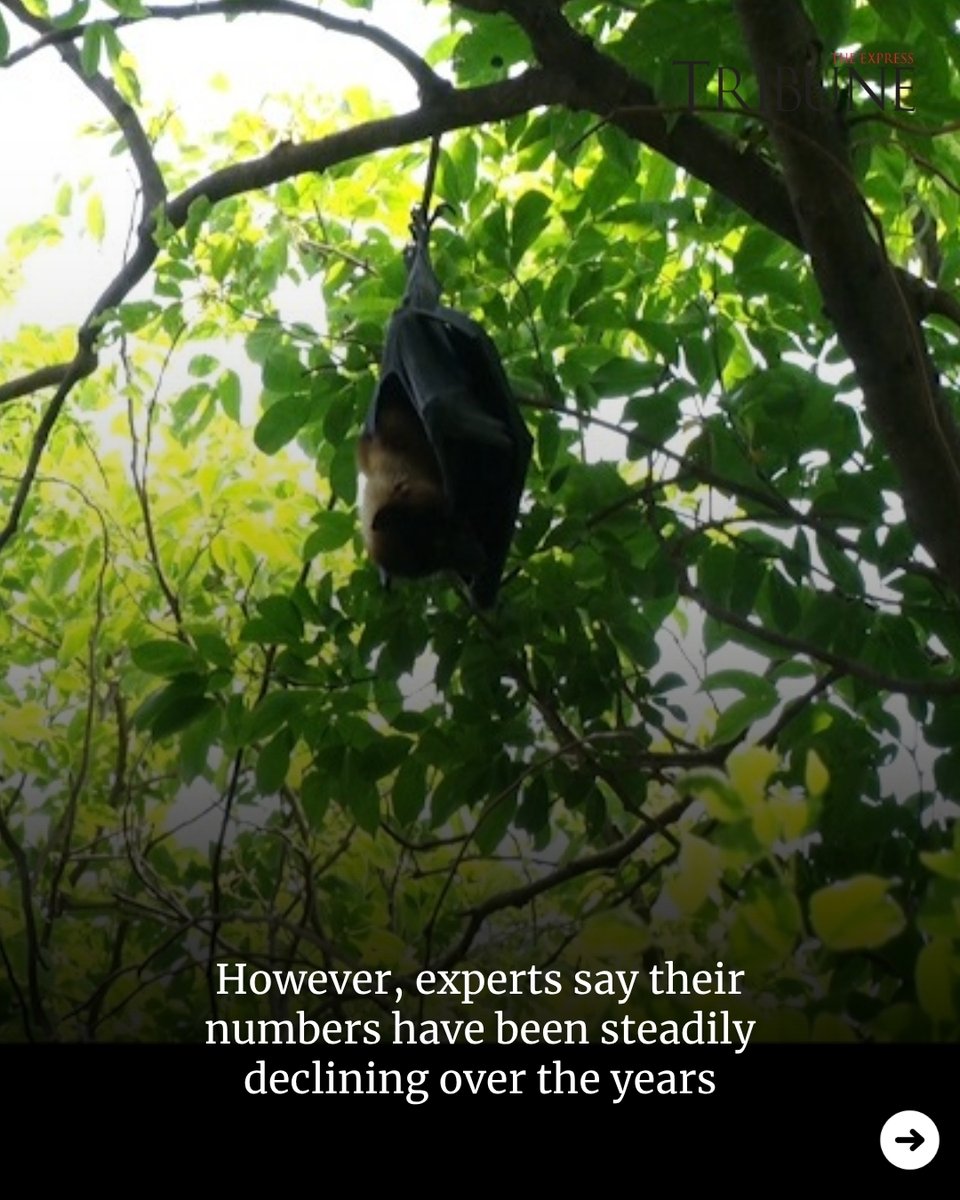
The historic Bagh-e-Jinnah remains one of the largest bat roosting sites in Lahore.
Hundreds of bats can still be seen hanging from old trees during the day before leaving in search of food at dusk. However, experts say their numbers have been steadily declining over the years.
Urbanisation, shrinking green spaces, artificial lighting and widespread misconceptions among the public are contributing to a gradual decline in bat populations in Lahore, wildlife experts and biologists warned, stressing the need for conservation measures to protect the species and maintain urban biodiversity.
According to wildlife expert Shahzaib Khurshid, rapid urban expansion is the primary reason behind the decrease in bat population.
He said the construction of roads, housing schemes and commercial projects has led to the loss of mature trees and natural habitats that bats depend on for shelter.
Full story on our website.
120 million dollars.
A Turkish architect.
A Saudi king who never lived to see it.
Pakistan's most iconic building.
Faisal Mosque. Islamabad. The story behind it is as extraordinary as the building itself.
In 1966 King Faisal bin Abdul Aziz visited Pakistan and personally offered to fund a national mosque for Islamabad.
Pakistan held an international competition in 1969. Architects from 17 countries submitted 43 designs.
The winner was Vedat Dalokay. Former Mayor of Ankara and A Turkish architect.
His design broke the most fundamental rule of mosque architecture.
No dome.
An eight-sided structure shaped like a Bedouin desert tent. Four 262-foot minarets. White Thassos marble. Blue calligraphic tiles designed by Turkish artist Mengu Ertel. The interior mixing Ottoman and Pakistani artistic traditions.
Pakistan chose it. Over every traditional design submitted.
Construction began in 1976. King Faisal was assassinated in 1975. He never saw the first stone laid.
The mosque was named after him. The road leading to it was named after him.
120 million dollars. 10 years of construction. Pakistani engineers and workers building every inch.
When it opened in 1986 it was the largest mosque in the world.
Sets against the Margalla Hills. Visible from every corner of Islamabad. One of the most photographed buildings in the Islamic world.
A Saudi dream. A Turkish design. Pakistani hands.
All of it standing at the foot of Pakistan's mountains.🇵🇰
24,000 Pakistanis working illegally in Spain have secured a path to legal residency under a Spanish regularisation scheme, with Islamabad issuing 8k passports, 24k character certificates & 10k affidavits to help its citizens meet deadline
@NuktaPakistan https://t.co/tSvpuKvggX
Excellent new addition to the Makers of the Muslim World Series, a volume on the brilliant Shah Waliyullah Dihlavi by SherAli Tareen. @OneworldNews@SheraliTareen https://t.co/0SfEaVzVd8
E-Challan to be enforced at Karachi's main Shahra e Faisal from, today. But, it will be quite a task as hundreds and thousands of motor-bikes, cars and other vehicles ply every day on this key road. Can this bring somekind of a discipline will be a challenge particularly in the presence of VIP and VVIP culture. Good luck.
M-Tag app is down, recharge outlets are closed, and commuters are being forced to pay Rs. 700+ extra in cash lanes because of your system failure. Why are citizens being penalized for government mismanagement? Fix this immediately. @CMShehbaz@MaryamNSharif@NHMPofficial
On 31 May, 1935, Quetta suffered one of the most destructive earthquakes in human history
British troops placed Quetta under martial law. An inquiry into their conduct was blocked then, and remains unopened till today
I wrote for @prismdawndotcom
https://t.co/TqcwgaXNQP
Why does Pakistan's agriculture sector continue to underperform despite employing 40% of the labour force? @sajidfaiz_ (@IGC_Pakistan) and @Taimur_T_Malik (Agriculture expert) discuss declining productivity and climate vulnerability. Watch now: https://t.co/FcEi9fH1kg
Pakistan has accelerated work on four dam projects that are expected to add more than eight million acre-feet of water storage capacity, reports state media. https://t.co/vGOtoiMG3i
آزاد کشمیر کا روایتی سیاسی کلچر بھی باقی پاکستان سے تھوڑا مختلف ہے، یہ تصویر آج کی ہے، پی ٹی آئی کے صدر اور حلقہ ایل اے 18 سے امیدوار سردار عبدالقیوم نیازی نے کرسی پر چوہدری یاسین گلشن کو بٹھا رکھا ہے جو مسلم لیگ ن کے رہنما اور اسی حلقے سے ان کے مخالف امیدوار ہیں مگر ضعیف ہیں،بٹل میں ایک جنازے میں سامنا ہو گیا تھا
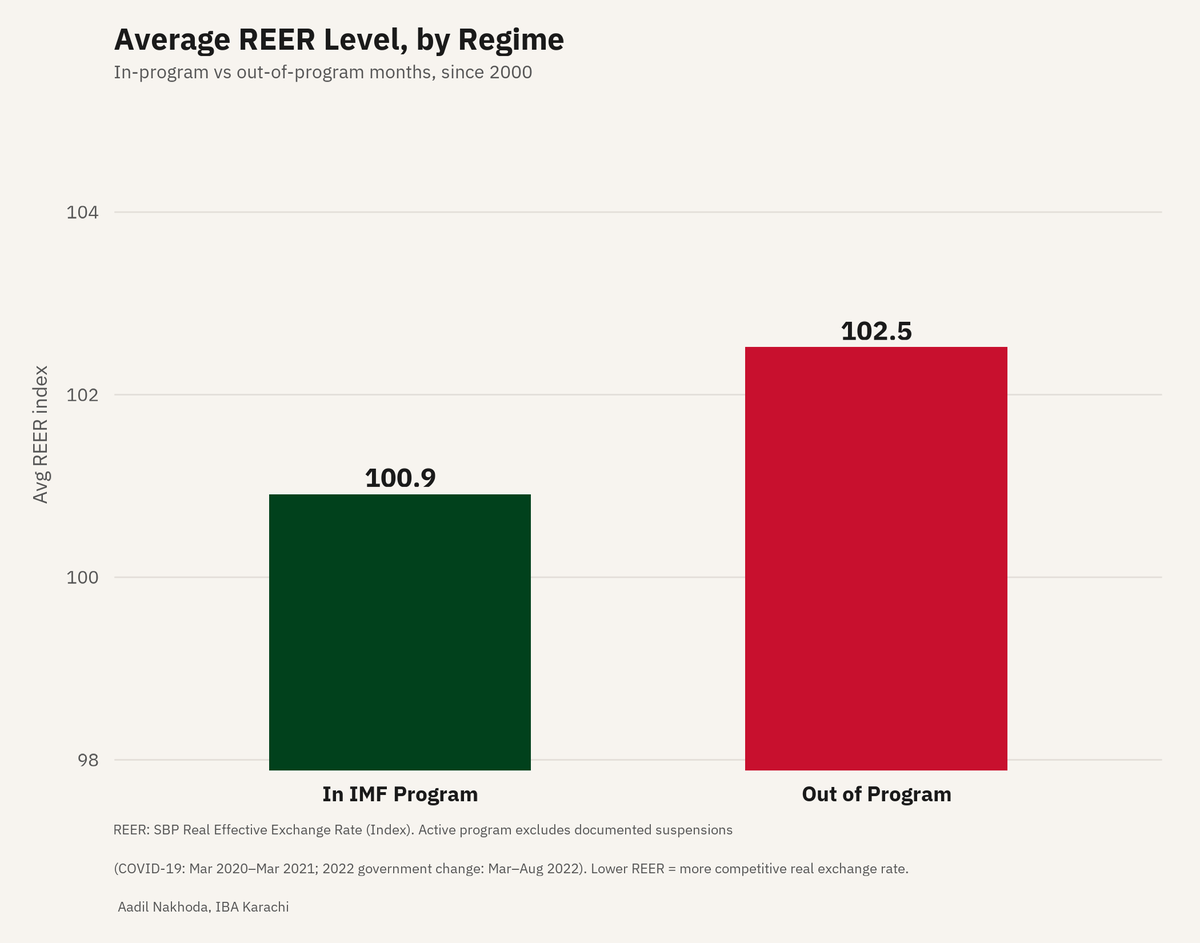
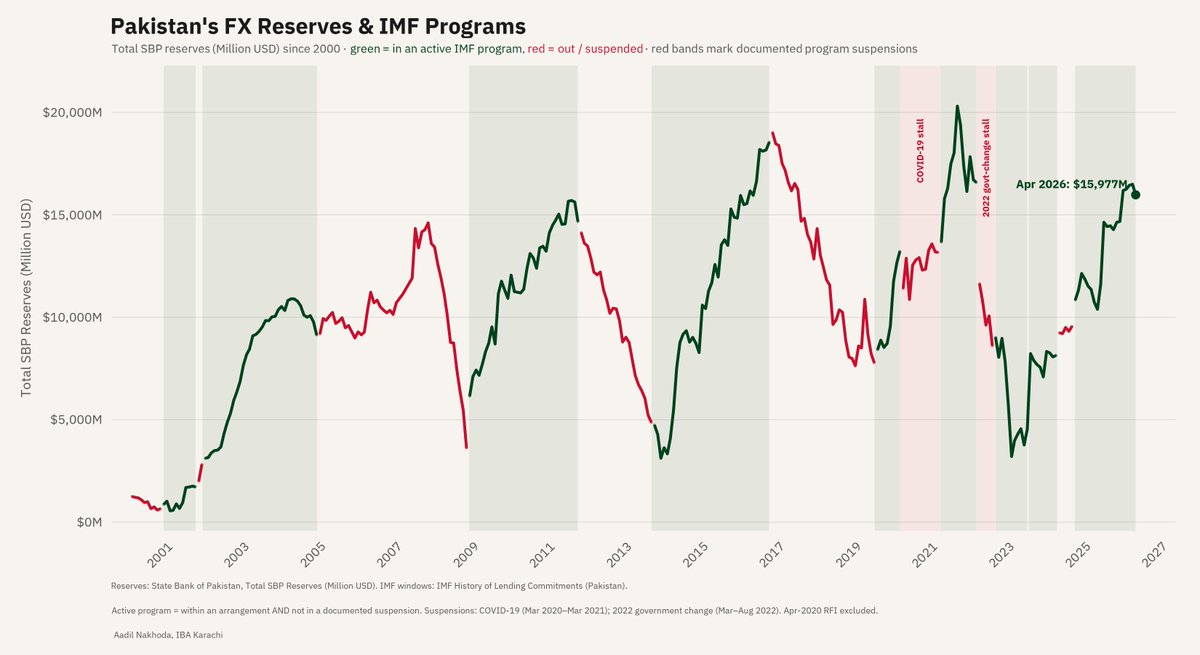
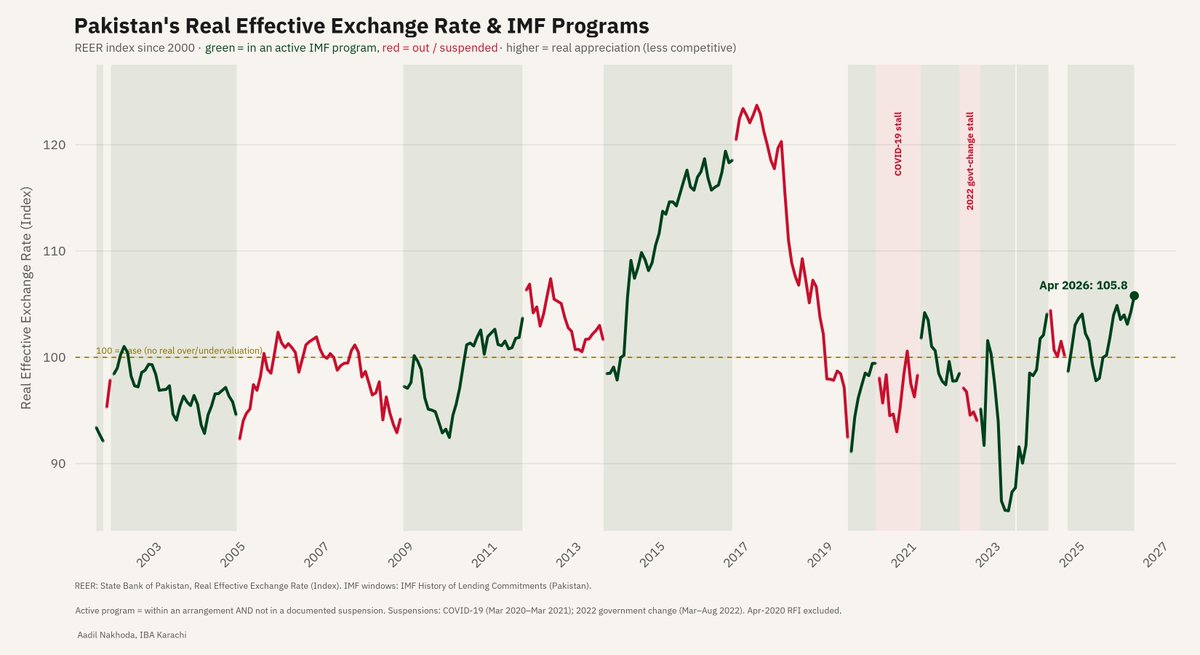
🇵🇰 Pakistan has two economies: IMF-on, and IMF-off. Since 2000, the data is brutal 👇
📉 The rupee. Out of a program: a cumulative +270.6% depreciation against the dollar.
In the program: just +45.4% cumulative depreciation, even though those in-program stretches cover more months.
Outside a program the rupee doesn't drift, it lurches: confidence evaporates, capital flees, and the currency depreciates sharply with disorderly jumps. Every major crash in 2008, 2018-19, 2022, the hits were more severe when we were out of the program. 💥
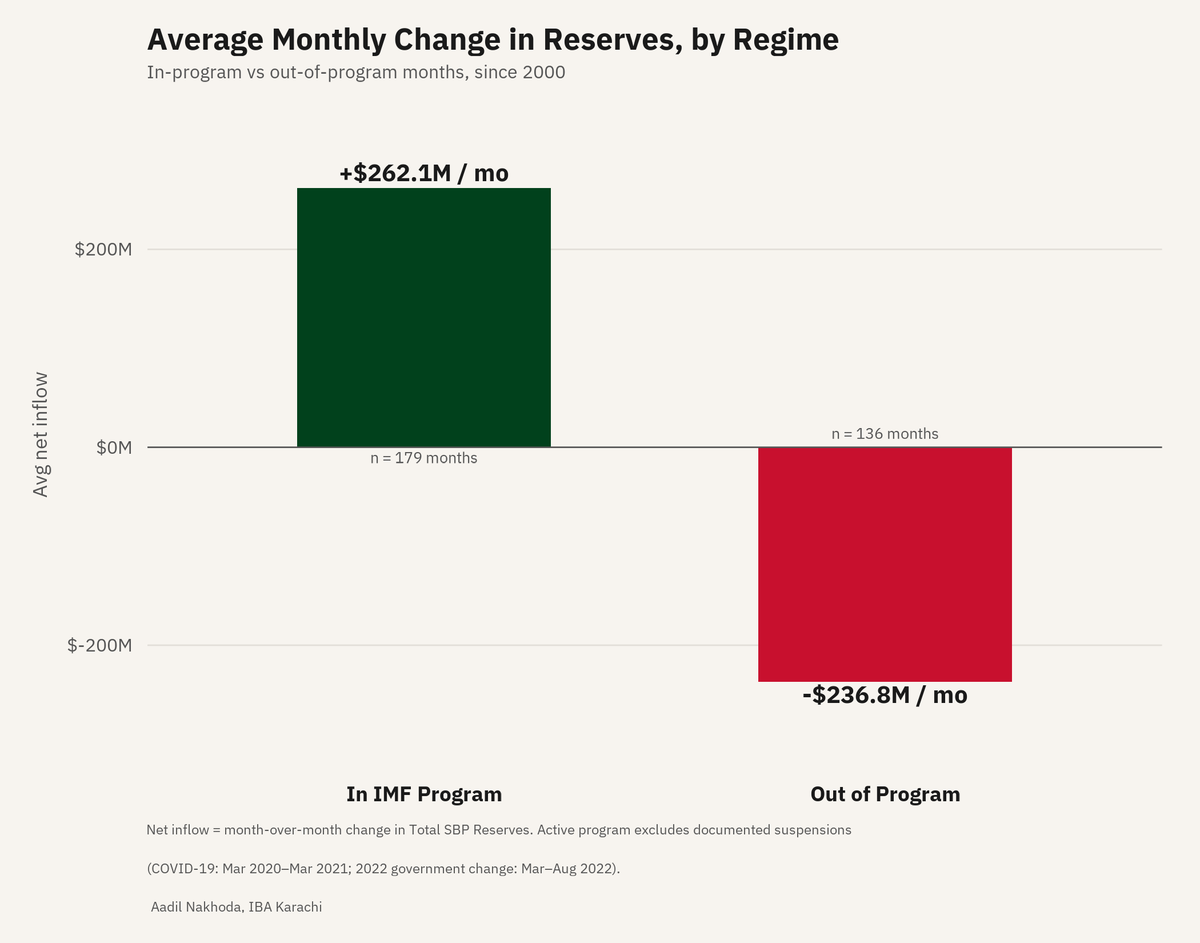
💸 Reserves. In a program, they build: +$262M/month. Out of one, they bleed: −$237M/month. That's a ~$500M monthly swing between survival and crisis.
📊 The REER volatility hits the hardest in the gaps too with no program, no anchor, no defense.
🔑 It's a trap: leave → reserves fall → rupee crashes → crisis → crawl back to the IMF. 🔁
The point isn't to stay forever. It's that walking away only works with a plan. A real strategy to stockpile reserves, stabilize the fluctuations in the rupee, and absorb shocks ourselves, not borrow more to build reserves.
❓One question decides everything: can we build a reserve buffer big enough to stand on our own?
If not, every IMF "exit" is just an intermission before the next crisis drags us back. 🇵🇰
اسلام آباد کی 4 شاہراہوں کو سنوارنے اور نکھارنے کا بڑا منصوبہ۔ تحمینہ لاگت سوا چار ارب روپے۔ سری نگر ہائے وے کے لئے 2ارب 23 کروڑ۔ CDA نے پہلے کتنے پیسے خرچ کیے۔
https://t.co/k5BPCg8V0c