I FINALLY got the opportunity to see my favorite band #Queen “live” in IMAX!!!! Tears and emotions were flowing… I was crying, the group behind me was crying… we all crode (sic)
Such a beautiful experience!!!
❤️❤️❤️❤️❤️👑👑👑👑👑
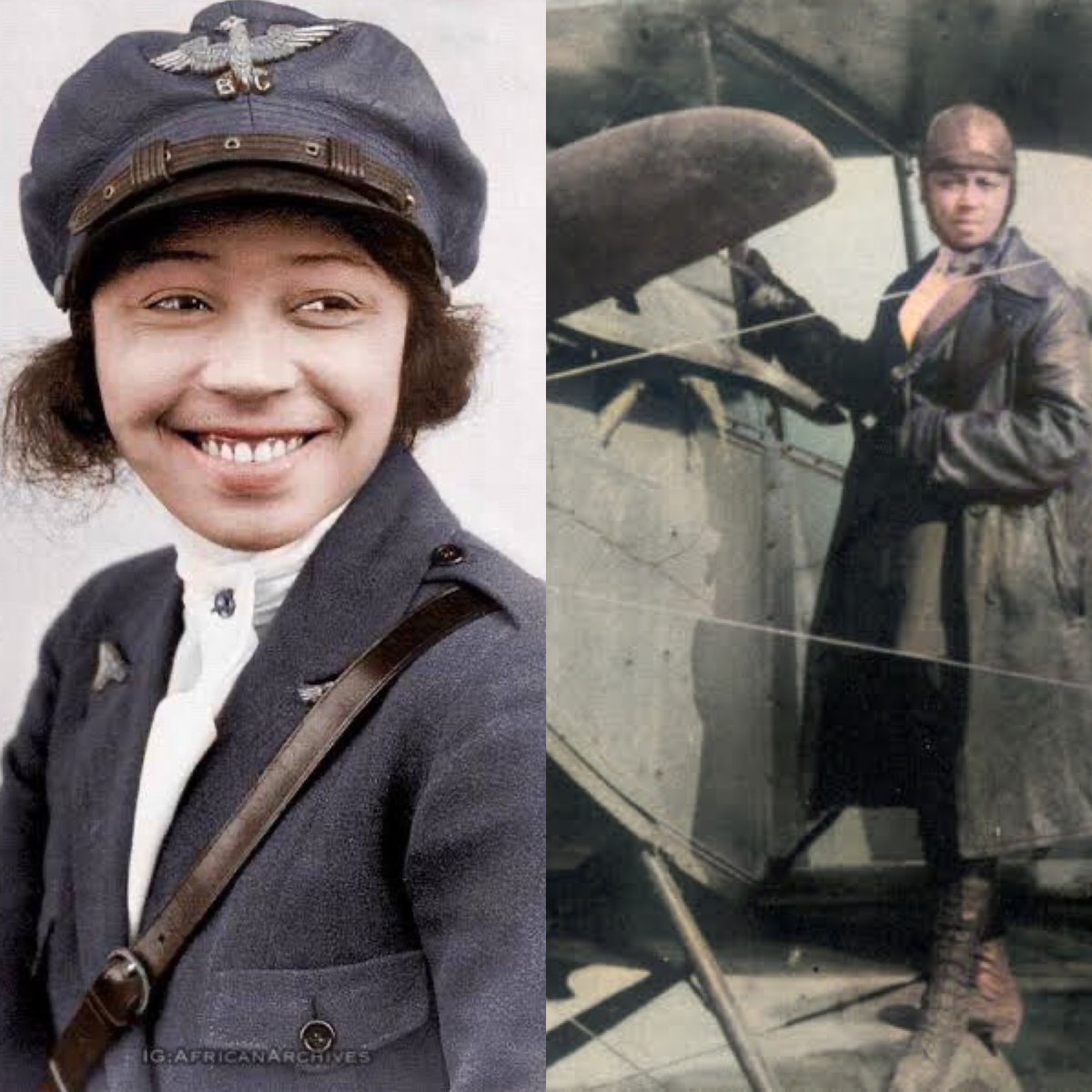
In 1921, Bessie Coleman received her pilot's license becoming the first black licensed pilot.
Women and people of color had no training opportunities in the US so she learnt French and moved to Paris to earn her license.
Black Pilots Who Broke Barriers:
A THREAD
Hey y’all! If you want quality photographic prints be sure to visit my Etsy shop!!!
The whole store is 50% off until Dec 15, 2023!!!
https://t.co/PXaAl5EDEz
Everyone starts untalented, unconfident, anxious, shy, physically weak, mentally confused, but while some people give up on getting better because it's easier to play the victim, some others decide they are going to change and improve their lives no matter how much time it takes.
Hey y’all! New items have been added to my Etsy shop! Please take a look and bookmark it to save for later. These prints will make perfect gifts 😁😁😁
https://t.co/PXaAl5EDEz
providing for your kids physically, as in a warm home & food & physical safety is the bare minimum.
if you don’t learn how to nurture your kids emotionally, listen to them as if they are whole human beings with real feelings, validate their emotions no matter how *childish* yOu think they are, you will leave them with a deep wound that they will spend most of their lives trying to run away or heal from.
if you don’t know how to do this or if you are unwilling to learn, you probably shouldn’t choose to have kids.
Lonnie Johnson, NASA engineer, invented the Super Soaker. He made your childhood hot summers fun.
African-American engineer and inventor Lonnie G. Johnson was born in Alabama in 1949. He earned his master's degree in nuclear engineering from Tuskegee University, and went on to work for the U.S. Air Force and the NASA space program. After tinkering with the invention of a high-powered water gun, Johnson's Super Soaker became a top-selling item by the early 1990s. He has since been developing the Johnson Thermoelectric Energy Converter (JTEC), an engine that converts heat directly into electricity.
Lonnie George Johnson was born on October 6, 1949, in Mobile, Alabama. His father was a World War II veteran who worked as a civilian driver at nearby Air Force bases, while his mother worked in a laundry and as a nurse's aid. During the summers, both of Johnson's parents also picked cotton on his grandfather's farm.
Out of both interest and economic necessity, Johnson's father was a skilled handyman who taught his children to build their own toys. When Johnson was still a small boy, he and his dad built a pressurized chinaberry shooter out of bamboo shoots. At the age of 13, Johnson attached a lawnmower engine to a go-kart he built from junkyard scraps and raced it along the highway until the police pulled him over.
Johnson dreamed of becoming a famous inventor and, during his teenage years, began to grow more curious about the way things worked and more ambitious in his experimentation—sometimes to the detriment of his family. "Lonnie tore up his sister's baby doll to see what made the eyes close," his mother later recalled. Another time, he nearly burned the house down when he attempted to cook up rocket fuel in one of his mother's saucepans and the concoction exploded.
Growing up in Mobile in the days of legal segregation, Johnson attended Williamson High School, an all-black facility, where, despite his precocious intelligence and creativity, he was told not to aspire beyond a career as a technician. Nevertheless, inspired by the story of famed African-American inventor George Washington Carver, Johnson persevered in his dream of becoming an inventor.
Nicknamed "The Professor" by his high school buddies, Johnson represented his school at a 1968 science fair sponsored by the Junior Engineering Technical Society (JETS). The fair took place at the University of Alabama at Tuscaloosa, where, just five years earlier, Governor George Wallace had tried to prevent two black students from enrolling at the school by standing in the doorway of the auditorium.
The only black student in the competition, Johnson debuted a compressed-air-powered robot, called "the Linex," that he had painstakingly built from junkyard scraps over the course of a year. Much to the chagrin of the university officials, Johnson won first prize. "The only thing anybody from the university said to us during the entire competition," Johnson later recalled, "was 'Goodbye' and 'Y'all drive safe, now.'"
After graduating with Williamson's last segregated class, in 1969, Johnson attended Tuskegee University on a scholarship. He earned a bachelor's degree in mechanical engineering in 1973, and two years later he received a master's degree in nuclear engineering from the school.
Lonnie G. Johnson went on to join the U.S. Air Force, becoming an important member of the government scientific establishment. He was assigned to the Strategic Air Command, where he helped develop the stealth bomber program. Johnson moved on to NASA's Jet Propulsion Laboratory in 1979, working as a systems engineer for the Galileo mission to Jupiter and the Cassini mission to Saturn, before returning to the Air Force in 1982...
O'Shae Sibley, the Brooklyn dancer killed after he was reportedly attacked by men who said his voguing offended their faith, is being remembered as an advocate for social justice https://t.co/9MN4luw4FJ
We tweet for the filmmakers with no aspirations to join Hollywood.
We tweet for the filmmakers who revel in being independent.
We tweet for the filmmakers who have full time jobs and make films on their PTO.
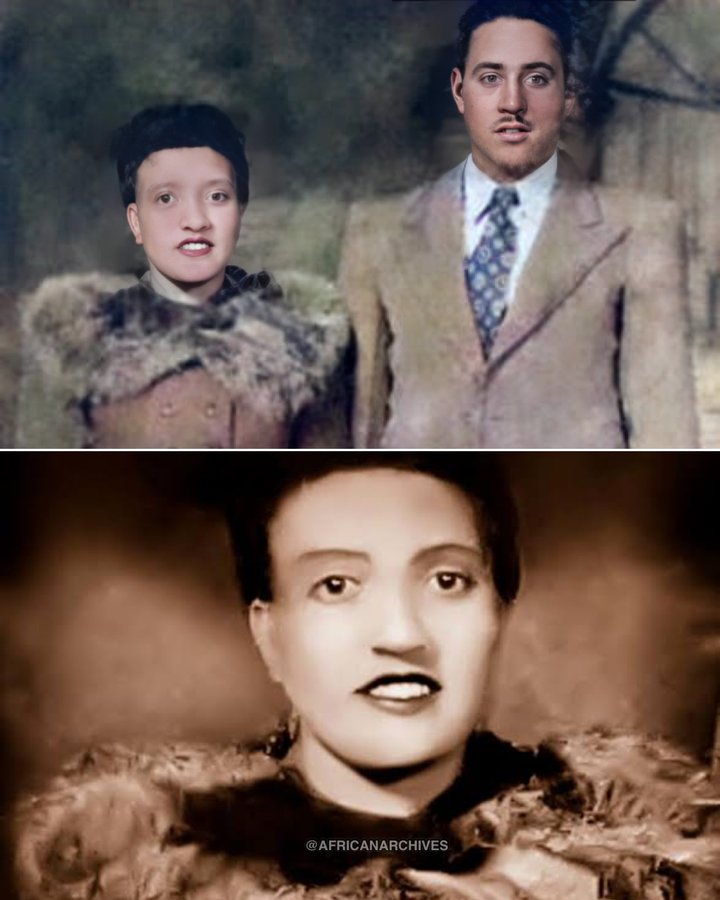
On this day in 1920, Henrietta Lacks was born.
Her cells were taken without her knowledge in 1951 (HeLa cells) and became one of the most important tools in medicine. They became vital for developing the polio vaccine, cloning, gene mapping, vitro fertilization & more
A THREAD