“What we learn from History is that no one learns from History”
~ Otto von Bismarck, 1815-1898
"There are no solutions, only tradeoffs"
~ Thomas Sowell
The bottleneck was never the code
'The Roadmap is the Limit
What slows down a team where agents do the implementation is the production of specifications precise enough for an agent to pick up and run
https://t.co/N5WJjqml87
A woman who flunked her way through every math and science course in high school enlisted in the United States Army the day after graduation because she had no other options.
She learned Russian. She translated on Soviet trawlers in the Bering Sea. She worked at the South Pole Station in Antarctica. Then in her mid-twenties she decided to go back and learn the exact subject that had defeated her. She earned a degree in electrical engineering, then a master's, then a PhD in systems engineering. She became a professor of engineering. Then she built the most enrolled online course in the history of the internet.
It is a course about how to learn.
Her name is Barbara Oakley.
Here is the story, because the person who taught more humans how to learn than anyone alive is someone who spent the first half of her life believing she could not.
Barbara was born on November 24, 1955 in Lodi, California. Her father Alfred was a bomber pilot in the US Army Air Corps during World War II. She grew up convinced she was not wired for math. She did not just struggle with it. She flunked it. She flunked her way through high school math and science courses and saw no path forward that required either.
She enlisted in the Army immediately after graduation. She rose from the rank of Private to Captain. She was recognized as a Distinguished Military Scholar. She leaned into the one thing she was good at, languages, and became fluent in Russian.
The Army sent her to places most people never see. She worked as a Russian translator on board Soviet trawlers on the Bering Sea during the final years of the Cold War. She worked as a communications expert at the South Pole Station in Antarctica. She thrived in extreme environments. But a thought kept following her. The world seemed to reward people who could do things she could not. Calculations. Technical reasoning. Systems design.
She began to wonder whether her problem with math was permanent or whether it was a problem with how she had tried to learn it.
In her mid-twenties she did something most people would never attempt. She went back to school to study the subjects she had failed at. She enrolled in mathematics and engineering courses and committed to learning them from the ground up. She was starting over at an age when most engineers were finishing their degrees.
She earned a bachelor's degree in electrical engineering. Then a master's degree. Then a PhD in systems engineering. She became a Professor of Engineering at Oakland University in Rochester, Michigan. The woman who had flunked high school math was now standing at a whiteboard teaching engineering to hundreds of students.
Then she asked a question nobody else in her position was asking. Why had she failed the first time, and what had changed the second time?
She spent years studying neuroscience and learning science. She collaborated with Terrence Sejnowski, the Francis Crick Professor at the Salk Institute, one of the most respected neuroscientists in the world. Together they built a free online course on Coursera called Learning How to Learn.
The course exploded. It became the most popular massive open online course ever created. Over two million students registered in the early years. The number has continued to grow. It teaches the mental tools experts use to master difficult subjects, chunking, spaced repetition, focused and diffuse thinking, and it is grounded in neuroscience rather than productivity hacks.
She wrote A Mind for Numbers, subtitled How to Excel at Math and Science Even If You Flunked Algebra. She wrote Mindshift. She wrote Uncommon Sense Teaching. She won the McGraw Prize, often called the Nobel Prize for Education. She won the Chester F. Carlson Award from the American Society of Engineering Education. She became a Fellow of IEEE. Her research was described as revolutionary by the Wall Street Journal. She published in the Proceedings of the National Academy of Sciences.
A woman who flunked high school math built the most enrolled course in the history of the internet about the thing she was worst at.
She did not overcome a limitation.
She studied the limitation itself, and turned it into a curriculum the entire world now learns from.
America’s way of war isn’t working – POLITICO
'The U.S. may have the strongest military in the world, but repeated failures reflect a deeper flaw in its approach to military conflict'
https://t.co/86jGD7n5T7
Ukraine has just done something astonishing.
The Ukrainian Ministry of Defence has just launched TrophyLab - essentially making access to all captured Russian weapon technologies free for foreign governments, research institutions and the defence industry.
They will even send physical hardware to allies for examination and to rip it apart to discover Russian military secrets. As well as technical specifications, blueprints and research results.
The website includes listings for armoured vehicles, missiles, aircraft, UAVs, EW assets, UGVs, cruise missiles etc.
Governments usually want to keep this kind of captured tech a secret for its own advantage. Ukraine has decided to make it (relatively, I think) open access for the benefit of the West.
Nothing kills you faster than chronic worry.
When you stay trapped in constant anxiety over things you can’t change, you’re not just losing your peace of mind—you’re quietly injuring your physical health.
Persistent worry keeps your stress-response system permanently switched on, flooding your body with cortisol and adrenaline. Over time, this chronic activation grinds down essential systems: it suppresses immune function, leaving you more prone to infections and possibly even cancer; it drives up blood pressure and hardens arteries, sharply raising the odds of heart attack and stroke.
The fallout continues. Excess cortisol throws digestion into chaos, sparks frequent headaches, and locks muscles in painful tension. On top of that, many people cope by overeating, smoking, or drinking—habits that pile on even more damage.
Letting go of what’s beyond your control isn’t just good emotional advice; it’s one of the most powerful things you can do to protect your long-term health.
[American Psychological Association. (2023). Stress effects on the body]
Why China got rich and India didn't - David Oks
'China succeeded because it spent decades on the basics of human development and social modernization. India did not. The rest is just commentary'
https://t.co/8JvqEEiju9
Alzheimer’s may be linked to gum bacteria, new research shows.
Scientists have repeatedly found Porphyromonas gingivalis—the chief bacterium that causes periodontitis—inside the brains of people who died with Alzheimer’s.
When researchers deliberately infected mice with this oral bacterium, the animals rapidly developed key Alzheimer’s pathology, including the buildup of amyloid-beta plaques.
Perhaps most alarming, the bacteria’s toxic enzymes have been detected in the brains of people showing early Alzheimer’s changes years before memory loss or other symptoms appear, suggesting the infection may quietly initiate damage long in advance.
These discoveries have sparked serious interest in new treatment approaches. An experimental drug called COR388 (from the company Cortexyme) has already succeeded in lowering both bacterial load and amyloid-beta levels in preclinical models. Although large human trials are still needed, the evidence is mounting that at least some cases of Alzheimer’s may have an infectious trigger rather than being purely degenerative.
[Dominy, S. S., et al. "Porphyromonas gingivalis in Alzheimer’s disease brains: Evidence for disease causation and treatment with small-molecule inhibitors", Science Advances, 5(1), eaau3333]
🧵 China’s population collapse is now mathematically irreversible.
There simply aren’t enough women left of childbearing age.
Even if the fertility rate magically returned to replacement level (2.1 children per woman) tomorrow, the country would still lose more than 40% of its population by 2100.
It won't. The real number is 75%. There's nothing like it in history. 🧵
Massive Study Warns Marijuana Use in Teens Is Linked to Serious Mental Illness
'study followed 463,396 adolescents & found cannabis use in the past year associated with significantly higher risks of newly diagnosed psychotic disorders, which doubled ..'
https://t.co/KiDiiMCUBv
Sure, GoogleMaps is cool but not half as cool as ORBIS. The Stanford Geospatial Network Model of the Roman World allows you to check travel times during Roman times. You can choose your mode of travel too! Source: https://t.co/zgVnhUdbKh
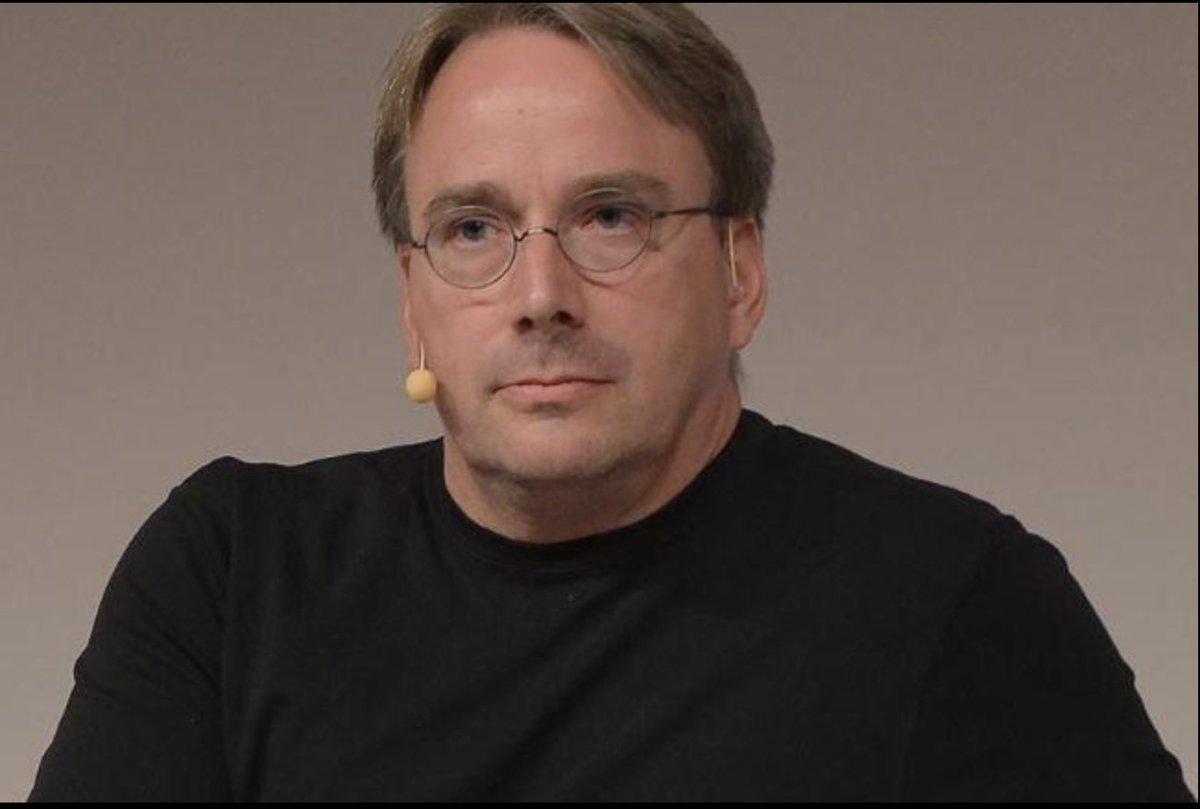
The creator of Linux just publicly called out the AI hype. Word for word.
Linus Torvalds took the stage at Open Source Summit 2026 and said this:
"When I see people saying 99% of our code is written by AI, I literally get angry. Because those same people — I can pretty much guarantee — 100% of their code is written by compilers. But they never say that."
He is not anti AI. The Linux kernel saw a 20% jump in submissions this release because of AI tools. He uses it. He gets it.
His point is something most people are too afraid to say.
AI is a productivity tool exactly like compilers were. Compilers boosted programming by 1000x. AI adds another 10x on top. Enormous. But nobody says "the compiler wrote my code." So why are we saying AI wrote it?
He also flagged something nobody is talking about.
AI is flooding small open source projects with drive-by bug reports. Someone runs a prompt, files a report and disappears when asked for a patch. Maintainers with one or two people are drowning trying to keep up.
"Sometimes AI reports a bug and when you ask for more information the person has done that drive-by and does not even answer your question. That is the real burnout issue."
And his final warning was the sharpest of all.
"People who do not understand the complexity of systems will prompt systems and write processes that will fail."
The AI hype crowd is very loud right now.
Linus has been building real systems for 35 years. When he talks, engineers listen.
Full interview here:
https://t.co/LmXJtvKc4O
Agile Is Dead. AI Killed It. Welcome Back, Waterfall. | by Brian Carpizo | Medium
'Agile was never really a methodology. It was a coping mechanism, a dressed-up surrender to the fact that humans are terrible at planning complex software systems'
https://t.co/FtwQ8KkAAB
Megatrends: AI vs the decade’s structural headwinds - Deutsche Bank Research Institute
'Megatrends: AI vs the decade’s structural headwinds'
https://t.co/j23uwkZ3uh
Scientists break 30-year superconductivity record at normal pressure
'Scientists just smashed a superconductivity record — bringing the dream of lossless power and futuristic energy tech one big step closer'
https://t.co/pbBRXWaIIo
I don't agree. The rich person does not simply create his company from nothing using magic. His skills are complementary to the institutions of the nation around him. In other words: Try getting rich in Somalia.
If you're a Westerner reading this, please do not fall into the trap of thinking "oh, China is scared. Freedom wins again. We’ve got the AI race in the bag.”
This idea that closed authoritarian systems cannot innovate needs to be challenged. There are countless examples in history of these types of societies innovating ruthlessly, relentlessly, and often faster than we care to admit.
The Soviet Union put Sputnik in orbit and Yuri Gagarin in space while half the West was still debating whether color TV was a fad. Nazi Germany built the V-2 rocket and the first jet fighters under a regime that made today’s CCP look like a book club. Imperial Japan industrialized at breakneck speed under militarist control. And modern China? High-speed rail networks, dominance in solar panels, EVs, batteries, hypersonic missiles, quantum research, and now - yes! - frontier AI models.
SURE, tech transfer and industrial espionage means China's rapid advancement wasn't achieved without an assist from the West but that doesn't mean that China cannot innovate because they have stamped out individualism and hedonistic self-expression.
Talent responds to incentives. Authoritarian regimes can offer massive incentives to engineers - priority access to compute clusters, blank check funding, zero regulatory friction, and the blunt threat of consequences if you don't deliver.
Read China's move as an escalation in the AI race. They're now treating their AI researchers the way the Manhattan Project treated its physicists - as national assets.
Scientists discover simple way to relieve arthritis pain without pills or surgery
'A tiny change in the way people walk may dramatically reduce knee arthritis pain — and even help protect joints from further damage'
https://t.co/40X5Ildtvx
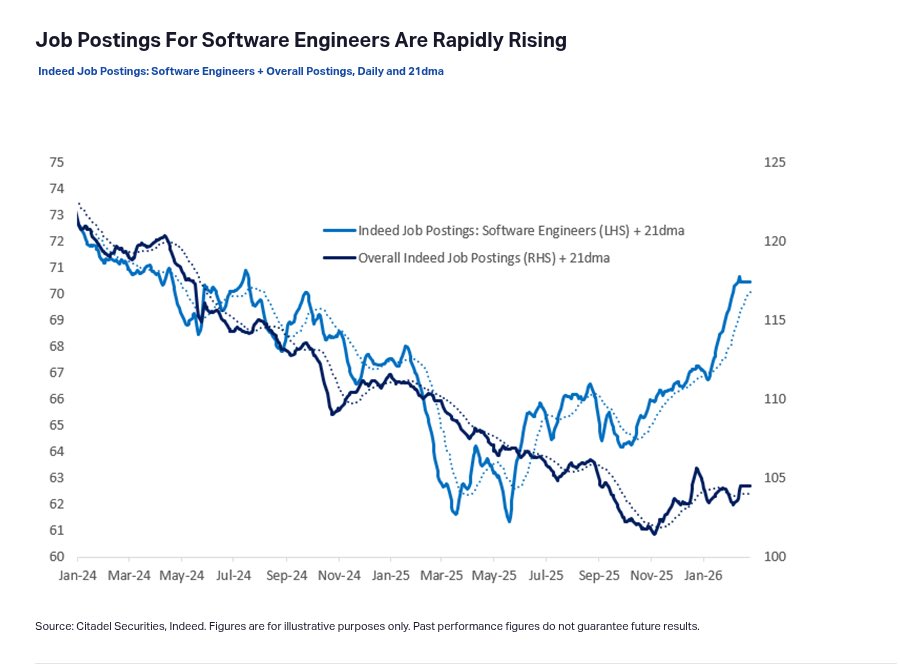
Q: How are job postings for software engineers rising rapidly despite AI agents automating coding?
A: Because there’s far more code to manage than ever before. We’re already seeing a 14x YoY increase in GitHub commits, and it’s accelerating.
AI has dramatically lowered the cost of writing code, so it’s now being used across far more businesses, applications, and use cases.
We’re at the beginning of a massive productivity boom driven by the proliferation of bespoke software throughout the entire economy.
Coding has been AI’s breakout use case this year. The fact that it’s increased demand for software engineers — rather than decreased it — should call into question the entire “AI will cause mass job loss” narrative.





![Rainmaker1973's tweet photo. Nothing kills you faster than chronic worry.
When you stay trapped in constant anxiety over things you can’t change, you’re not just losing your peace of mind—you’re quietly injuring your physical health.
Persistent worry keeps your stress-response system permanently switched on, flooding your body with cortisol and adrenaline. Over time, this chronic activation grinds down essential systems: it suppresses immune function, leaving you more prone to infections and possibly even cancer; it drives up blood pressure and hardens arteries, sharply raising the odds of heart attack and stroke.
The fallout continues. Excess cortisol throws digestion into chaos, sparks frequent headaches, and locks muscles in painful tension. On top of that, many people cope by overeating, smoking, or drinking—habits that pile on even more damage.
Letting go of what’s beyond your control isn’t just good emotional advice; it’s one of the most powerful things you can do to protect your long-term health.
[American Psychological Association. (2023). Stress effects on the body]](https://pbs.twimg.com/media/HKnWkGAWEAA1Mad.png)
![Rainmaker1973's tweet photo. Alzheimer’s may be linked to gum bacteria, new research shows.
Scientists have repeatedly found Porphyromonas gingivalis—the chief bacterium that causes periodontitis—inside the brains of people who died with Alzheimer’s.
When researchers deliberately infected mice with this oral bacterium, the animals rapidly developed key Alzheimer’s pathology, including the buildup of amyloid-beta plaques.
Perhaps most alarming, the bacteria’s toxic enzymes have been detected in the brains of people showing early Alzheimer’s changes years before memory loss or other symptoms appear, suggesting the infection may quietly initiate damage long in advance.
These discoveries have sparked serious interest in new treatment approaches. An experimental drug called COR388 (from the company Cortexyme) has already succeeded in lowering both bacterial load and amyloid-beta levels in preclinical models. Although large human trials are still needed, the evidence is mounting that at least some cases of Alzheimer’s may have an infectious trigger rather than being purely degenerative.
[Dominy, S. S., et al. "Porphyromonas gingivalis in Alzheimer’s disease brains: Evidence for disease causation and treatment with small-molecule inhibitors", Science Advances, 5(1), eaau3333]](https://pbs.twimg.com/media/HKnWXkkXcAAkD31.png)