A French engineer who lives quietly in Paris has spent 30 years writing software that the entire internet now runs on without knowing his name.
He wrote the code that streams every YouTube video, every Netflix show, every TikTok clip. He wrote the code that runs the virtual servers underneath AWS, Google Cloud, and Microsoft Azure. He calculated more digits of pi than anyone in history. He has no Twitter. He has no marketing. He just keeps shipping.
His name is Fabrice Bellard.
Here is the story, because almost nobody outside the systems programming world knows what one man has built.
Fabrice was born in 1972 in Grenoble, France. He studied at École Polytechnique, the top French engineering school. He never went to Silicon Valley. He never built a startup empire. He just wrote code.
In 2000 he started a project called FFmpeg, an open-source multimedia framework for encoding, decoding, and streaming video. He was 28. The project did one thing nobody else had done well. It handled every video and audio format that existed, in one library, on every operating system. He led it himself for years.
Today FFmpeg is the invisible engine of the internet. YouTube uses it. Netflix uses it. VLC uses it. Chrome and Firefox use parts of it. Every Android phone, every iPhone, every smart TV, every video editing tool you have ever touched runs FFmpeg somewhere underneath. If you have watched a video on a screen in the last 20 years, Fabrice's code processed it.
He was not done.
In 2003 he started QEMU, a machine emulator and virtualizer. He wrote it solo until version 0.7.1 in 2005. QEMU lets you run any operating system on any other operating system. It became the foundation of modern virtualization. KVM, the Linux kernel hypervisor, runs on top of QEMU. Every major cloud provider, AWS, Google Cloud, Microsoft Azure, IBM Cloud, runs virtual machines on infrastructure built around it. The Quick Emulator is the most cited piece of cloud infrastructure code on Earth.
He kept going.
In 2001 he won the International Obfuscated C Code Contest with a small C compiler that grew into TCC, the Tiny C Compiler. TCC can compile and boot a Linux kernel from source in under 15 seconds. In 2004 he calculated the most digits of pi ever computed at the time, using a personal desktop computer and an algorithm he derived himself called Bellard's formula. In 2011 he wrote a complete PC emulator in pure JavaScript that runs Linux in your browser, a project called JSLinux that engineers still cannot believe is real.
In 2019 he released QuickJS, a small but complete JavaScript engine that fits where V8 cannot. In 2021 he released NNCP, a neural network based lossless data compressor that immediately took the lead on the Large Text Compression Benchmark.
Then he turned his attention to large language models. He built TextSynth Server, a web server with a REST API for running LLMs locally. He released ts_zip and ts_sms, compression utilities that use language models to compress text and short messages at ratios traditional algorithms cannot reach. He released TSAC, a very low bitrate audio compression system. In December 2025 he released Micro QuickJS, a new JavaScript engine for microcontrollers, separate from QuickJS, designed for environments with almost no memory.
Fabrice co-founded a telecom company called Amarisoft in 2012, where he serves as CTO. Amarisoft builds 4G and 5G base station software used by carriers and labs around the world. He has been running it for over a decade while continuing to ship personal projects from his own home page at bellard dot org
He has no Twitter. He has no Instagram. He gives almost no interviews. His personal website is a flat list of projects with no styling, no fonts, no marketing copy. Just titles and links.
A quiet French engineer who never moved to Silicon Valley wrote the code that quietly runs the internet.
He is still shipping.
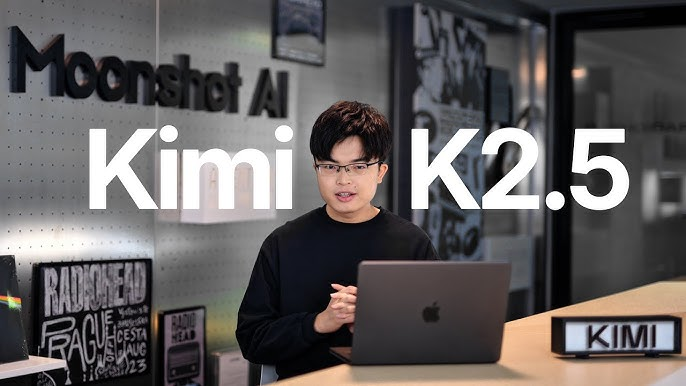
A kid from Shantou with no programming background got into Tsinghua University's computer science department by winning a high school informatics olympiad, then quit a job offer from Google Brain to start an AI company in Beijing with two of his college bandmates. Four years later that company released a 1 trillion parameter open-source AI model that outperformed every American closed model on coding benchmarks and became the fastest Chinese tech company in history to hit a $10 billion valuation.
His name is Yang Zhilin. The company is called Moonshot AI. The model is called Kimi K2.
Here is the story.
Yang was born in 1992 in Shantou, a small city in Guangdong province. In high school he had never written a line of code. He got selected for an informatics olympiad training program anyway. He won first prize at the Guangdong provincial level, which got him guaranteed admission to Tsinghua University.
He scored 667 on the gaokao, far above the Tsinghua cutoff. But the system placed him in Thermal Energy Engineering. He transferred to Computer Science in his sophomore year. He graduated in 2015 ranked first in his department class. During undergrad he was advised by Tang Jie, a Tsinghua professor who would later co-found another Chinese AI giant called Zhipu.
He went to Carnegie Mellon for his PhD under Ruslan Salakhutdinov and William Cohen. He finished in under four years. During that time he co-authored two of the most influential papers in modern AI, Transformer-XL and XLNet, which together shaped the long-context capabilities every modern LLM relies on. He worked at Facebook AI Research and Google Brain. He contributed to the original Google Gemini and Bard projects.
Then in November 2022 ChatGPT launched.
Yang flew back to the United States, looked at what OpenAI had done, and made up his mind. He told an interviewer later that he sensed two things were about to move at once, capital and talent, and when those two move together it is the rare moment when you can build a company from zero to one whose only purpose is AGI.
In March 2023 he founded Moonshot AI in Beijing with two Tsinghua classmates, Zhou Xinyu and Wu Yuxin. The three of them had been bandmates in a college rock group called Splay. The company name is a tribute to Pink Floyd's Dark Side of the Moon, Yang's favorite album. The company launched on the album's 50th anniversary.
He raised $60 million and built a 40-person team in three months. By 2024 he had raised over a billion dollars. The investors included Alibaba, Tencent, and Sequoia China. Moonshot AI became the fastest Chinese startup in history to reach a $10 billion valuation. ByteDance took four years. Pinduoduo took three. Moonshot did it in two.
In October 2023 they launched Kimi, a consumer chatbot with a 200,000 character context window, the longest in the world at the time. By 2024 it was running on Chinese hardware and had tens of millions of users.
Then on July 11, 2025 they released Kimi K2.
K2 is a 1 trillion parameter Mixture of Experts model that activates 32 billion parameters per inference. It is open weights. It beat GPT-4 and Claude on coding benchmarks. It outperformed DeepSeek V3 on agent tasks and tool use. Former OpenAI researcher Andrew Carr publicly said K2 communicates differently than other models, refusing to be sycophantic and pushing back on bad ideas the way few models do.
By early 2026 Moonshot had crossed $240 million in revenue. The Kimi K2.5 release exceeded the entire 2025 revenue total in under 20 days. K2.6 dropped in April 2026 with a SWE-Bench Pro score of 58.6, ahead of the leading closed-weight coding models at the time.
A kid from Shantou who had never coded a line in high school just released the open-source model that competes head-on with everything OpenAI, Google, and Anthropic have shipped.
He named it after the dark side of the moon.
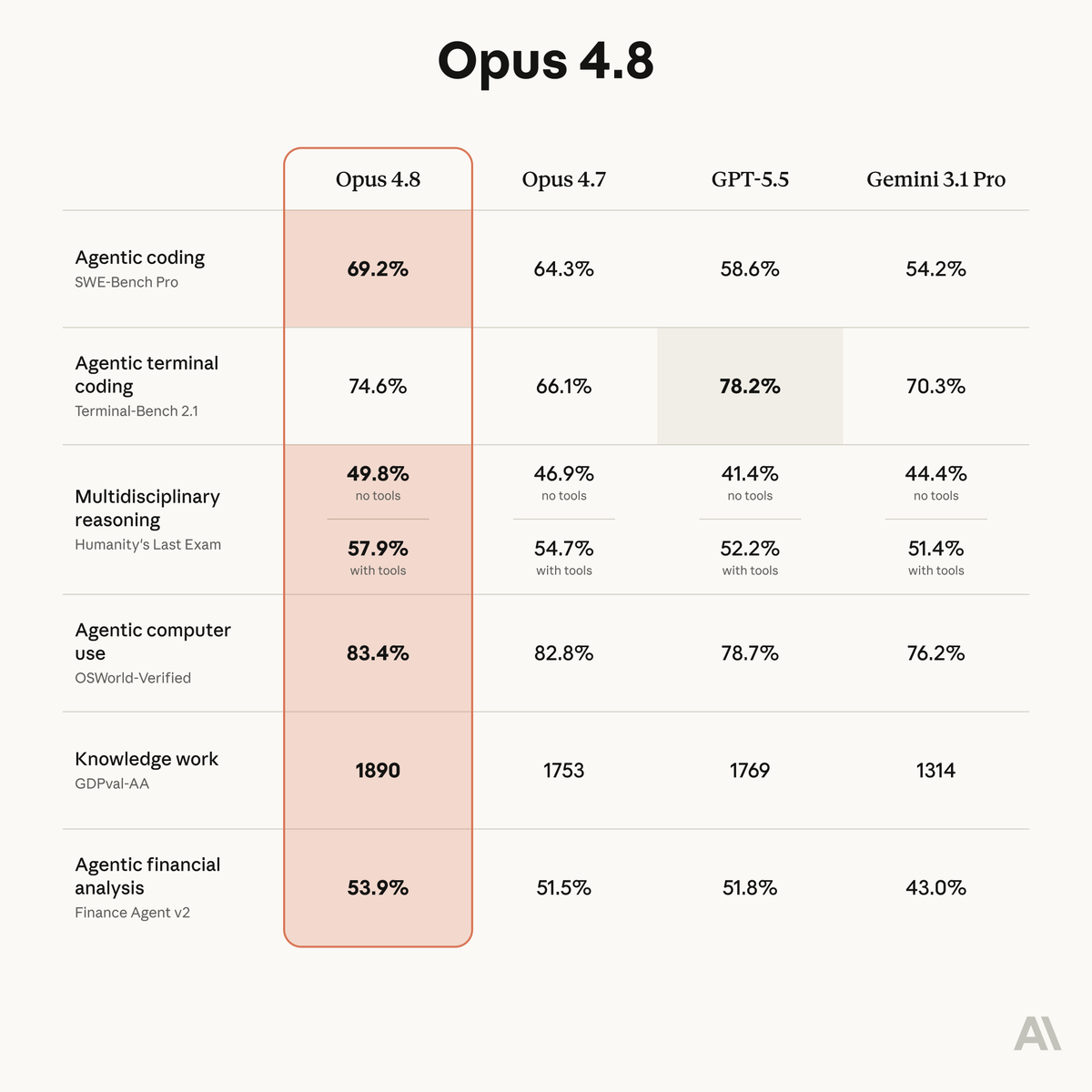
Introducing Claude Opus 4.8: it builds on Opus 4.7 with sharper judgment, more honesty about its own progress, and the ability to work independently for longer than its predecessors.
Available today at the same price.
Here's my conversation all about @FFmpeg, the legendary open-source software powering most video on the Internet. In the episode, I talk with Jean-Baptiste Kempf and Kieran Kunhya. JB is lead developer of VLC and Kieran is FFmpeg contributor, codec engineer, and the person behind the now-infamous @FFmpeg account on X.
VLC (@videolan), by the way, is also a legendary piece of open-source software: it's a video player that can open basically anything & has been downloaded over 6 billion times.
I think both FFmpeg and VLC are two of the most important and impactful software systems ever created, both open source, and both created & maintained by volunteers: brilliant engineers from all walks of life.
Thank you to everyone who contributed to FFmpeg and VLC, and in general to all engineers giving their heart & soul to building systems used by millions (or billions) of people, and often doing so not for money, status, or fame, but purely for the love of building great software and doing good for the world.
Thank you to the builders! 🙏❤️
Shoutouts in this chat to @ID_AA_Carmack@karpathy@elonmusk@TimSweeneyEpic and everyone who is a contributor & fan of open source!
It's here on X in full and is up everywhere else (see comment).
Timestamps:
0:00 - Episode highlight
2:17 - Introduction
5:35 - Weirdest things VLC opens
9:59 - How video playback works
19:20 - Video codecs and containers
30:07 - FFmpeg explained
51:07 - Linus Torvalds
55:46 - Turning down millions to keep VLC ad-free
1:10:04 - FFmpeg & Google drama
1:29:18 - FFmpeg developers
1:35:55 - VLC and FFmpeg
1:40:29 - History of FFmpeg
1:43:46 - Reverse engineering codecs
1:57:01 - FFmpeg testing
2:01:08 - Assembly code (handwritten)
2:25:26 - Rust programming language
2:34:42 - FFmpeg and Libav fork
2:43:04 - Open source burnout
2:50:51 - x264 and internet video
3:04:07 - Video compression basics
3:11:04 - CIA and fake VLC
3:21:39 - Ultra low latency streaming
3:39:07 - AV2 codec and video patents
3:48:59 - VLC backdoors
3:59:14 - Video archiving
4:05:51 - Future of FFmpeg and VLC
I'm traveling the world for a bit, starting with China but then hopping around the globe, anywhere. Open to any adventure. No plans, only a backpack. Hoping to meet & get to know humans from all walks of life. The pic is from a long hike on the Great Wall. For me, as a fan of history, this was an epic experience.
In China, first I'm visiting a few big cities & talking to engineers at the heart of China's AI revolution. After that, if feeling crazy enough, I'm hitchhiking (first time) across rural China for a few weeks. Hitchhiking because I think it's the best way to meet rural folks who I would otherwise never get the chance to meet. I hope to do the same in US and other places.
I have a request, if you have a travel recommendation, fill out the form(s) below if you feel like it. Or share with folks who might have advice about such travel.
Form 1 - travel recommendation:
If you can, recommend to me an interesting place I should visit anywhere in the world. For this, fill out form 1. Not touristy stuff, but something off the beaten path, that tourists may not know about, but is legendary. It could be as remote as meeting a herder in the mountains who is a local legend. Asia, Middle East, Europe, India, South/North America, Africa, Australia, anywhere. In China, I'm hoping to visit maybe Heibei, Shanxi, Shaanxi, Gansu, Sichuan, Yunnan, etc, so recommendations for spots to visit are helpful.
Form 2 - coffee:
If you want to grab a coffee with me anywhere in the world, fill out form 2 (please don't use form 1 for that).
Anyway, I hectically tossed stuff in backpack. Realizing I don't have a clear plan of any kind, which is probably the only way to do it. LFG.
Love you all ❤️
Personal update: I've joined Anthropic. I think the next few years at the frontier of LLMs will be especially formative. I am very excited to join the team here and get back to R&D. I remain deeply passionate about education and plan to resume my work on it in time.