Just for a second entertain the possibility, that this generation is able to visualise a country…that my dumbass generation and the one above us forgot. We idealistically thought of it, and forgot it quick. Distracted by life and prosperity. Maybe it’s because they’ve grown up documenting and broadcasting their entire life. So they’ve had a good look at themselves during formative years. Assessed their values, albeit to showcase them. Which we weren’t able to do. So they are possibly more sure of themselves at this age, which seems completely alien to us. It’s possible.
🚨First paper on dog issues in #Delhi: https://t.co/qYLakH1PIR 🚨 #PREPRINT NOW Online: The #dog, #monkey, kite, human #Coexistence Study
#Delhi's 795K dogs, rebounding macaques & kite conflicts stem from the same root: poor urban planning. Ritual feeding, waste systems & inequality drive multispecies conflict. #Systemic change, not just animal removal.
In Aug 2025, #Thinkpaws shared preliminary data on #Delhi's free-ranging dog populations following the Indian #SupremeCourt directives. The response was overwhelming—the post was well reciprocated, and many of you requested access to the full research.
Today, I'm sharing our preprint submitted as revision to the editorial comments (a scientific journal).
#What we found:
1. Delhi harbors an estimated 795,313 free-ranging dogs supported by 327,069 feeding stations and 85,109 garbage points
2. Macaque troops achieved full recovery within a month after displacement—despite removing 50 individuals from Ambedkar University Delhi campus in Sept 2023.
3. These aren't isolated species problems. They're symptoms of systemic urban planning failures.
4. The #keyInsight: Dog conflicts, monkey displacement, and black kite aggregations all stem from the same root causes—ritual feeding practices, inadequate waste management, socioeconomic inequalities, and architectural design that inadvertently supports commensal populations. Over 12 years of research (2012-25) across Delhi's socioeconomically diverse neighborhoods, we discovered that animal removal doesn't work. Population recovery is rapid when the underlying infrastructure remains unchanged.
Real #solutions require addressing human practices: → Redesigning waste management systems → Regulating ritual feeding practices → Incorporating multispecies considerations into urban architecture → Centering environmental justice—outdoor workers bear disproportionate conflict costs while having minimal management agency
The Supreme Court's revised directives of Aug 22 came at a critical moment. This research demonstrates why reactive, species-specific interventions fail—and what evidence-based coexistence actually requires.
#LINK TO PREPRINT: on top👆
Dear @PetaIndia and @peta world. Please understand that the connotation of "starving" is very human centric. In nature, nonhumans, like humans, over produce in terms of #no. of offsprings. Based on the skill of parents (or otherwise the access to resource pool, when parental care is not involved), a fraction of these offspring survive to become adults.
Once they are adults, the struggle continues to secure habitats where they can breed, and the cycle goes on. In nature, you do not have "ICU and Medical Emergency"... else, you will have the whole planet ecosystems shaken.
Humans are different; we use physical forces of nature (heat, force, physio-chemical processes, nuclear, etc.) to carve more spaces for people. In the process, we do have emotional reflections towards a select nonhumans.
In current times, however, our ability to channalise the ability to target feed a few: pigeons, dogs, monekys, etc. is creating regional dis-balance, with costs (diseases and conflicts) borne by poor, who have no access to facilities.
Many animals are part of the urban web of life. Hence, we have no RIGHT to dramatically alter this web. Feeding and maintaining millions of pigeons is one such urban problem. Other being dogs that bite people. Countless animals are "starving", contributing to local extinctions, coz we care to grow bird feed that is worth billions of dollars per year. We have no right to play with who is intentionally fed, extending the ripples of "starvation" to billions that are not in immediate sight (of convenience).
If you really care for animals, please have some people who understand nonhumans beyond this rhetorical posturing. For details, you may refer to @ThinkpawsOrg
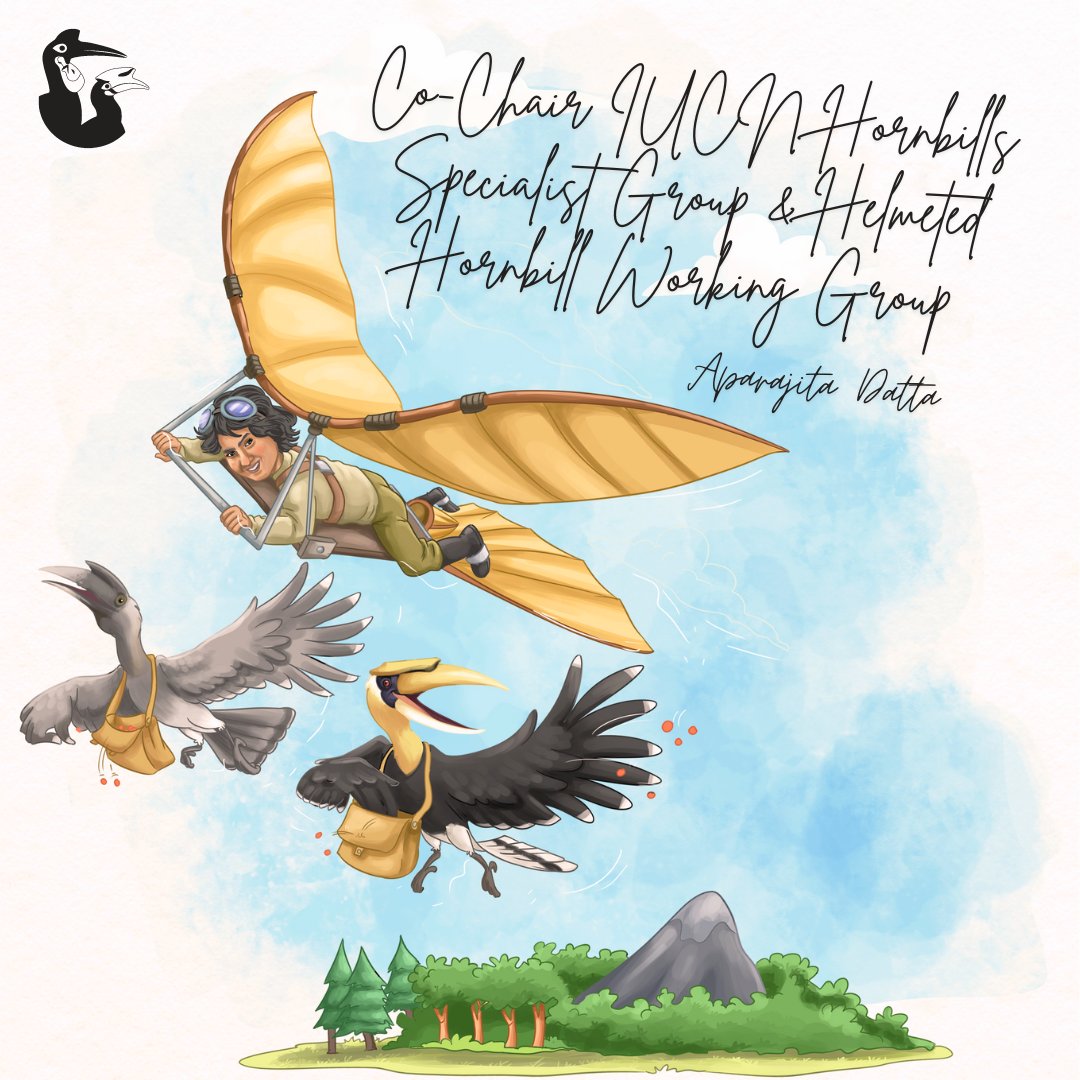
Meet @AparajitaDatta4 👋🏻, a wildlife biologist dedicated to protecting hornbills and the forests they help thrive. Aparajita's research involves collaborating with local communities to safeguard these birds and the ecosystems they support.
If you have a few moments to listen to this interview as a parent with your child.
Possible one of the best post race interviews I have ever watched #PlayOn
We kickstart day 3 of IWEC with a symposia on : Seed dispersal in the Anthropocene
First Talk by Bibidishananda Basun about understanding the role of mammalian frugivores in seed dispersal effectiveness in northeast India. (1/n)
#iwec24
I hate grades. I hate creating them. I hate assigning them. I hate when students stress about them. And I especially hate how administrators obsess over them.
Another PhD field season in the books! Back to city life but already missing the field and its creatures.
My favorite pastime? Studying animals on trees and observing their every move.
Here's a troop of capped langurs munching on Bauhinia purpurea seeds.
#phdlife
Though I haven't done anything substantially in my academic career however my shadow CV is so long 😁 and I am absolutely certain that it will be longer and that's how it works.
It's so heartening that people are talking about failure, which is much needed in academia
Since the topic has come up, here are some of my top "failures":
1. Didn't qualify IIT JEE
2. Didn't get into any good college in West Bengal after 12th
3. Dropped out of BSc in the 2nd year and started afresh in a new place - it wasn't working out, academically and otherwise
Hi @RailMinIndia,
Can I know why the 22808 santragachi sf express is running late for more than 40 hours? Lots of children and old age people have been on the train for the last three days (more than 60 hours) and no one knows when it will reach Santragachi? @AshwiniVaishnaw
@RailMinIndia@AshwiniVaishnaw is this the norm now that whoever is travelling by train, themselves and their family always has to be under stress? Is it not safe for old age and children anymore? @RailMinIndia
@RailMinIndia now with a shortage of food and water, the train is getting stuck in the signal literally everywhere? Isn't the onus of passengers reaching home without stress on you? Firstly why someone is traveling through train has to be under this kind of stress?
@bird_biochemist@MAnupamaDevi1 Hey thanks for the tag
I would love to be a resource person for plant taxonomy and always up to train other people..but my schedule up to feb end from now is totally jam packed because of PhD fieldwork. Let me know if after Feb works..