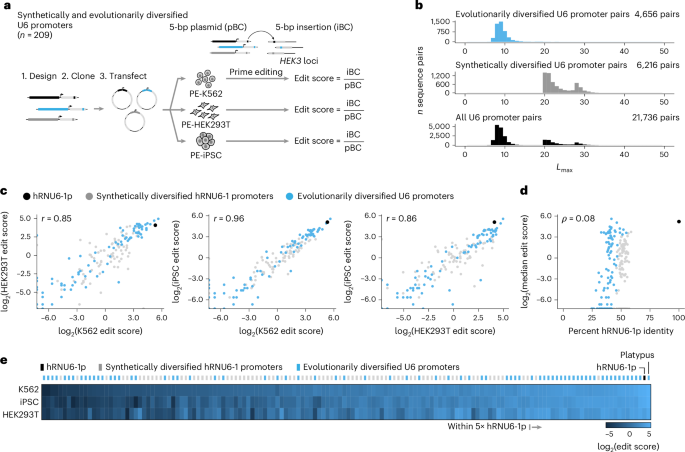
Very happy to release our latest paper from @hsalis Lab in collaboration with @klavins Lab at UW on "Automated design of thousands of nonrepetitive parts for engineering stable genetic systems", now published in Nature Biotechnology! 1/18 https://t.co/572bD5iYR4
@anshulkundaje I think I know very little, but one thing I'm convinced about is that the truth is inevitable. It's the only thing that converges and survives, asymptomatically. Maybe something beautiful emerges when all the dust settles.
@anshulkundaje Maybe we’re moving toward trust as a new currency? When flooded with generative noise, verified high-fidelity info becomes a competitive advantage? Maybe we don't abandon AI, but use it for scale, while all claims without a verification protocol and provenance are auto discarded?
@omarabudayyeh I wonder if the "AI might prolong the reliance on flawed theories" part is True. Could be true depending on how AI systems are designed and used?
🧠 Why do smart scientists feel stupid when reading papers?
Because nobody teaches you HOW to read them efficiently.
This 3-pass system will change how you approach every paper: 🧵
🚨 New preprint 🚨
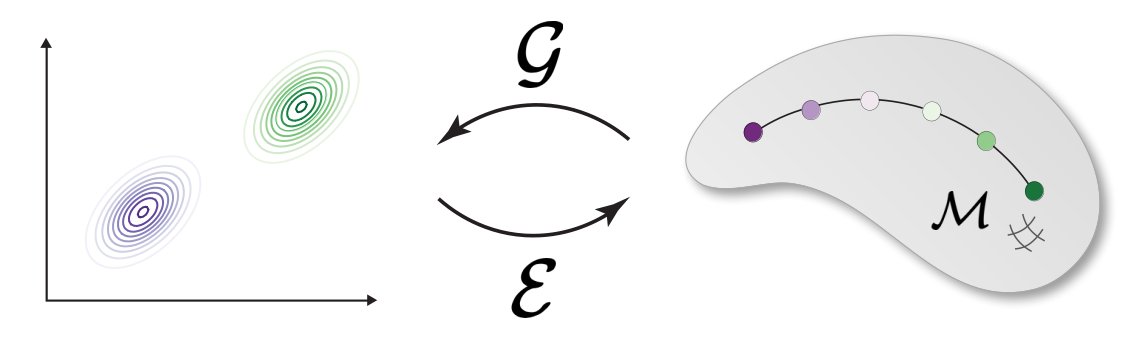
We introduce Generative Distribution Embeddings (GDEs) — a framework for learning representations of distributions, not just datapoints.
GDEs enable multiscale modeling and come with elegant statistical theory and some miraculous geometric results!
🧵
New lab preprint! 🚀
Modeling complex data distributions is tough.
We designed GDEs, a new framework that tackles this head-on!
GDEs generalize across text, images & MANY bio apps (think virtual cells, spatial bio, viral genome tracking).
Thread 👇
If you have a solid strategy and a small amount of compute, you can go pretty far. If you have huge clusters of GPUs and no strategy, your only achievement will be burning capital.
This is a great paper from the @hsalis lab.
- Measure the decay rates of 50,000 mRNAs in bacteria.
- Use biophysical models + ML to build models of mRNA stability.
- Profit.
And a good reminder of what's possible when one turns a biological problem into a sequencing problem!
I am pleased to announce our latest publication ‘Predicting synthetic mRNA stability using massively parallel kinetic measurements, biophysical modeling, and machine learning’ in @NatureComms
Designing synthetic mRNAs 🧬 for optimal stability and expression? Checkout our work led by @DanielCetnar on biophysics infused machine learning approaches for delineation of mRNA degradation kinetics ⚡ out now in @NatureComms https://t.co/54rkYKaHnb
We applied rational learn-by-design 🔢 methods to create a maximally informative library 📚, coupled that with high throughput, barcoded, massively parallel reporter assays to decrypt major design rules using Gradient Boosted Trees 🌳!