Professor of Psychology
Author of Discovering Behavioral Neuroscience @biopsych & @intropsych
Society of Social Neuroscience Bi-Chair
Author @CengageLearning
Belgian researchers Marie-Claire Cammaerts and Roger Cammaerts tested three species of ants (Myrmica rubra, Myrmica ruginodis, and Myrmica sabuleti) using a version of the mirror self-recognition (MSR) test (also called the mark test), which is the same method used for animals like chimpanzees, elephants, dolphins, and some birds
Researchers marked some ants with a small blue dot on their head (a spot they couldn't normally see without a mirror).
When placed in front of a mirror, most of the marked ants (e.g., 23 out of 24 in some reports) tried to clean or remove the dot by grooming themselves.
Control conditions showed this didn't happen without the mirror, when the dot was the same color as the ant's body (invisible in the reflection), or when ants saw other ants through clear glass instead of a mirror.
The ants also showed exploratory behaviors toward the mirror itself (slow movements, antenna waving, touching it), different from how they interact with nestmates.
[Cammaerts, M.-C., & Cammaerts, R. (2015). Are ants (Hymenoptera, Formicidae) capable of self recognition? Journal of Science, 5, 521–532]
Words Of Wisdom From Children. These Are
Brilliant.
1. Never trust a dog to watch your food. Patrick,
age 10
2. When your dad is mad and asks you, "Do I look stupid?* don't answer him. Michael. 14
3. Never tell your mom her diets not working.
Michael, 14
4. Stay away from prunes. Randy, 9
5. Never pee on an electric fence. Robert, 13
6. Don't squat with your spurs on. Shelly, 13
7. Don't pull dad's finger when he tells you to.
Emily, 10
8. When your mom is mad at your dad, don't let her brush your hair. Bridgett, 11
9. Never allow your three-year old brother in the same room as your school assignment. Traci, 14
10. Don't sneeze in front of mom when you're
eating crackers. Mitchell, 12
11. Puppies still have bad breath even after eating a tic lac. Andrew, 9
12. Never hold a dust buster and a cat at the
same time. Timmy, 9
13. You can't hide a piece of broccoli in a glass of
milk. Jeffrey, 9
14. Don't wear polka-dot underwear under white shorts. Kellie, 11
15. If you want a kitten, start out by asking for a
horse. Naomi, 15
16. Felt markers are not good to use as lipstick.
Lauren, 9
17. Don't pick on your sister when she's holding a baseball bat. Joel, 10
18. When you get a bad grade in school, show it to your mom when she's on the phone. Amy, 13
19. Never try to baplize a cat. Jason, 8
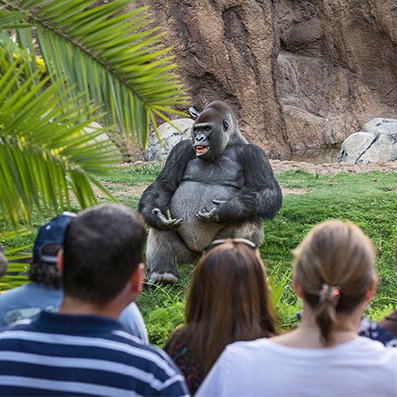
Gorilla appears to give an outdoor lecture to zoo visitors
A gorilla at the Los Angeles Zoo was photographed sitting in front of a crowd, creating a scene that looked less like a zoo exhibit and more like a university lecture being held outside on a sunny day.
@StackieRobins0n@NoFilterSkin That's just who I am. If I were single and childless, I would exhaust myself by throwing myself into my work. I'm glad to have made the choices I made.
The surviving Confederates of Pickett's Charge walked that field one more time.
The Union men waiting on the other side shook their hands.
Fifty years earlier, they had tried to kill each other.
This time, they met as friends.
A powerful reminder this Memorial Day 🇺🇸
A gas made in the body appears to steer how brain genes are edited—and in Alzheimer’s, that control seems to fade. @UHhospitals@MolecularCell https://t.co/SzSJxdfjpp
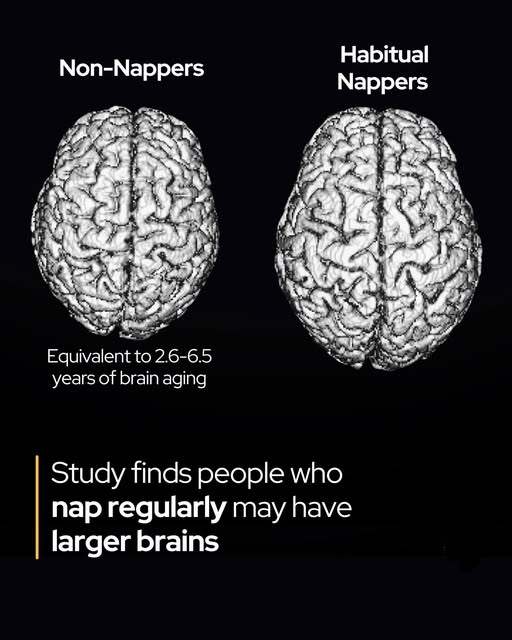
Skip your daily nap, shrink your brain.
A study by researchers from University College London and the University of the Republic in Uruguay has found that people who habitually take daytime naps tend to have significantly larger total brain volume—a key indicator of brain health that typically declines with age and is associated with reduced dementia risk.
The team used Mendelian randomization, a method that leverages genetic variants (present from birth) that make people more likely to nap regularly. By analyzing brain MRI scans and health records from more than 35,000 participants in the UK Biobank, they discovered that those genetically inclined to nap had brain volumes corresponding to 2.6 to 6.5 fewer years of aging.
While this doesn’t definitively prove that napping itself enlarges the brain, the genetic approach helps rule out many lifestyle-related confounding factors, providing stronger evidence of a potential causal relationship than traditional observational studies.
Notably, the researchers found no link between napping predisposition and performance on tests of reaction time, memory, or visual processing. However, previous studies have shown that short naps can deliver immediate cognitive benefits.
The study lacked specific data on nap duration, but prior research suggests naps of 30 minutes or less provide the greatest advantages while minimizing disruption to nighttime sleep.
This is the largest study to date linking regular napping with brain structure. Although further research is needed in more diverse populations, the findings bolster the idea that a brief daytime rest may help preserve brain volume and support long-term cognitive health.
Between goals and movement, the brain appears to use a stripped-down channel that carries just the context needed to shape action. @NatureNeuro https://t.co/WnmFIaJJrD
Lab-kept bumble bees roll small wooden balls around for no apparent purpose other than fun, a 2022 study revealed.
Learn more on #WorldBeeDay: https://t.co/Jw11mAIuiN
Beluga whales watched themselves in a mirror, shifted from “other whale” to “this is me,” and then did something that challenges how we define animal self-awareness: https://t.co/WJ7qSGgSiX




![Rainmaker1973's tweet photo. Belgian researchers Marie-Claire Cammaerts and Roger Cammaerts tested three species of ants (Myrmica rubra, Myrmica ruginodis, and Myrmica sabuleti) using a version of the mirror self-recognition (MSR) test (also called the mark test), which is the same method used for animals like chimpanzees, elephants, dolphins, and some birds
Researchers marked some ants with a small blue dot on their head (a spot they couldn't normally see without a mirror).
When placed in front of a mirror, most of the marked ants (e.g., 23 out of 24 in some reports) tried to clean or remove the dot by grooming themselves.
Control conditions showed this didn't happen without the mirror, when the dot was the same color as the ant's body (invisible in the reflection), or when ants saw other ants through clear glass instead of a mirror.
The ants also showed exploratory behaviors toward the mirror itself (slow movements, antenna waving, touching it), different from how they interact with nestmates.
[Cammaerts, M.-C., & Cammaerts, R. (2015). Are ants (Hymenoptera, Formicidae) capable of self recognition? Journal of Science, 5, 521–532]](https://pbs.twimg.com/media/HLP6vY1XkAE03X5.jpg)