I've been sick with ME/CFS & related comorbidities for 20 years and noticed it's really hard to find any reliable info on treatment beyond pacing recommendations
So I built a treatment database for our community, covering ME, LC, POTS, MCAS, FM, SFN
https://t.co/fbnG2Qk9ju
"ME/CFS is when one doctor declares you fit for work and the other doctor approves assisted suicide for you." (@cstroeckw)
Constanze Ertl's speech on the occasion of receiving the Robert Hochner Prize.
Urgent reading recommendation!
https://t.co/lxh2qJXDuf
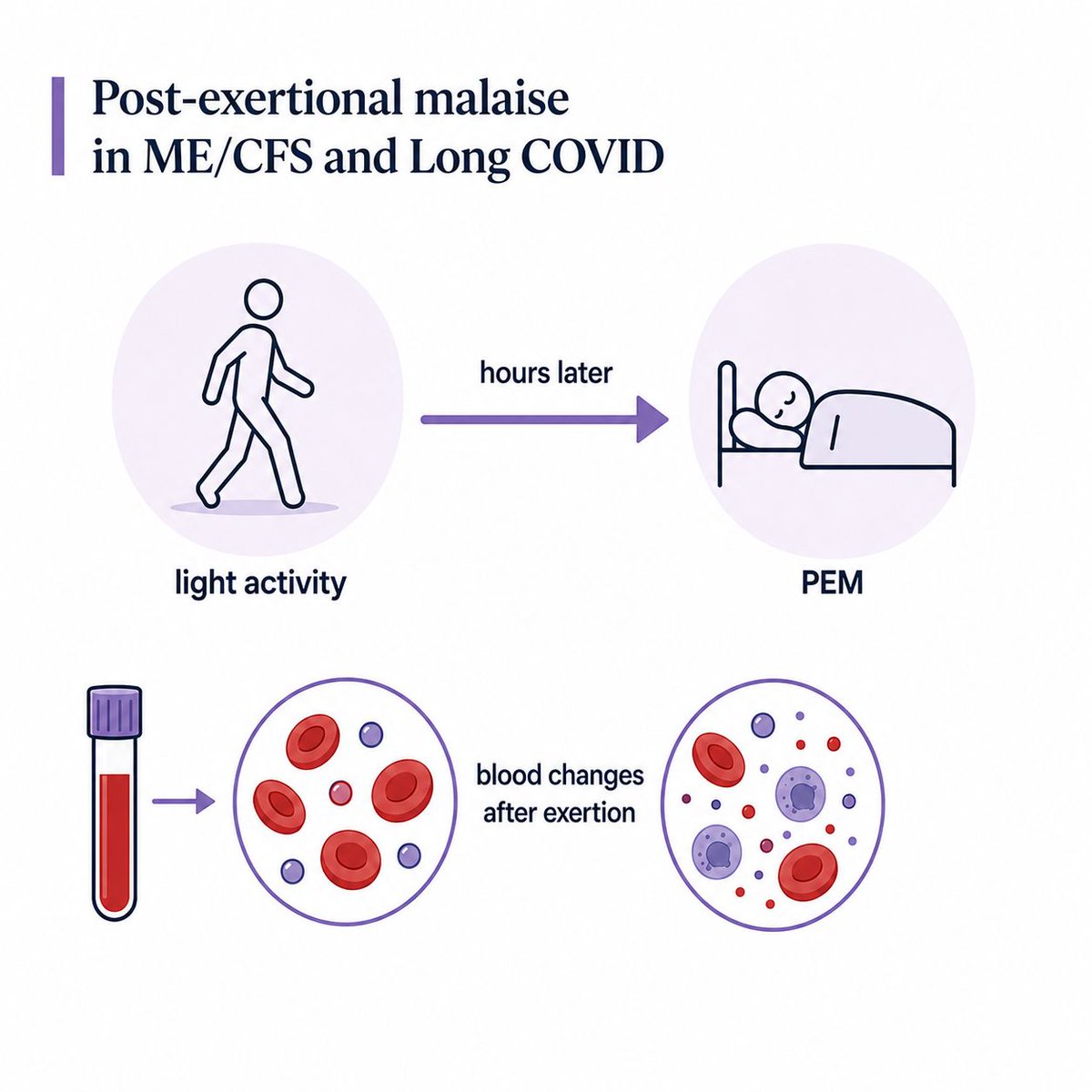
Post-exertional malaise is a delayed or prolonged worsening of symptoms after physical, cognitive or emotional exertion. Understanding its biology is critical to understanding ME/CFS.
What changes when blood is tested before and during PEM? 🧵
@AlanLevinovitz@MeganTStevenson@stevemagness Narrator voice: she did in fact, save a lot of people from harm. Alan is way over his head and is now attacking patient advocates.
Alan, stop it. It's not working
I've been sick with ME/CFS & related comorbidities for 20 years and noticed it's really hard to find any reliable info on treatment beyond pacing recommendations
So I built a treatment database for our community, covering ME, LC, POTS, MCAS, FM, SFN
https://t.co/fbnG2Qk9ju
There are largely two types of academics: A and B. Their worlds are so different, so insular they don't even know the other type exists.
Type A:
> Comes from a middle, upper-middle class family
> Well-educated parents (with advanced degrees including PhDs)
> Parents map out their kid's career trajectory
> Parents teach academia's hidden curriculum: applications, admission essays, extracurriculars, and so on.
> Send the kid to a "good" school (private or private tutoring)
> Kid gets good grades
> Goes to Ivy League or Oxbridge or a similar top school for undergrad
> Decides to do a PhD
> Gets into another top program in a top school because of top undergrad school, duh
> Gets a well-connected supervisor during PhD
> Gets a tenure-track job offer from another top university in the final year of PhD even before graduation because of the supervisor, duh
> Fully understands the tenure clock
> Publishes papers, monographs on time
> Gets tenure
> Thinks PhD is easy, tenure is easy, academia is easy
> Marries a colleague in the same university
> Has kids
> The cycle repeats
Type B:
> Comes from a dysfunctional, working-class family
> Parents who barely graduate high school
> Parents with no idea what kind of education their kids need
> Goes to a no-name shit school with underqualified teachers
> Then goes to a community college or some such institution if lucky, joins the military if unlucky (KIA.exe)
> Reads a lot, become autodidact, becomes a half-decent writer
> Someone suggests, do a PhD, become a professor
> Likes the idea of academic life, starts applying to PhD programs
> Gets rejected from top programs because don't have good recommendation letters or connections
> Goes to a third tier PhD program in a university located in the middle of nowhere
> PhD stipend is not enough, has to work part-time to make ends meet
> Lives in a shitty apartment, sometimes eats at the soup kitchen
> Still works hard and publishes a bunch of papers
> Thinks I'll write my way out of poverty
> Sees a bunch of Type A PhDs in conferences, tries to "network" with them, Type A folks recognize Type B PhDs and stay away from them.
> Defends PhD where the committee says this is excellent work and imminently publishable
> Applies to tenure-track jobs left, right, and center. Gets rejected from everywhere
> Idea of being unemployed with a PhD causes desperation
> Gets a temporary teaching job, gets paid per course basis with no health benefits
> Spends a few years as adjunct with semester to semester renewal of job contract
> Barely survives, has to take up part-time jobs
> Get a one-year postdoc, decides to turn PhD dissertation into a monograph in the hopes it will get tenure-track job
> Postdoc ends, back to temporary adjunct jobs
> Monograph stays incompelete, no time to work on it
> Tries moving out of academia, is considered over-qualified
> Reads social media posts by Type A academics saying PhD is easy, academia is easy
> Thinks, what could I have done better?
Sci-Hub is an evil website that pirated 85M+ research papers and made them freely available
And now they've added AI to their database to make Sci-Bot.
It answers your questions using latest, full-text articles.
But DO NOT use it. We should all try to make billion-dollar academic publishers richer.
I'm putting the link below so you know how to avoid it.
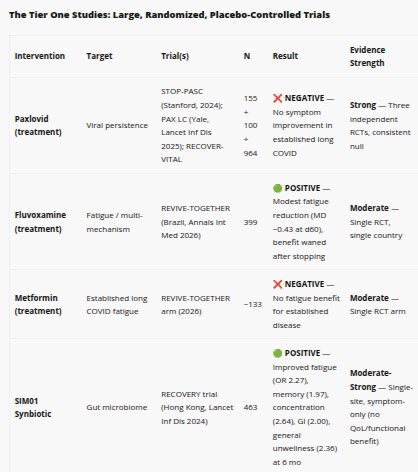
Here's a great roundup on what the Long COVID Community has learned from recent clinical trials, from the always insightful @CortJohnson Definitely worth a read! 🤔🧠
Cort draws several key points from these trials, including:
👉Short term antiviral treatments don't work. It's somewhat surprising after we've all heard the anecdotes of some patients improving on 5-10 days of Paxlovid. Unfortunately, trial results do not show a benefit here.
👉Treatments that prevent Long COVID don't necessarily work to treat it - as in the case of Metformin
👉Interestingly, the reverse is true. Treatments that don't prevent Long COVID at all - as in the case of the antidepressant fluvoxamine - actually have been shown to treat it.
👉Narrow treatments are less helpful than broadly acting ones. For example, Paxlovid has been proven to be less helpful in preventing Long COVID than metformin. Paxlovid ONLY targets SARS-CoV-2 replication, whereas metformin is a host-directed antiviral that affects multiple bodily systems.
There's a lot more great info here - highly recommend checking out the article!
1/
This is an incredible $10M donation to our PolyBio Long COVID Cure Initiative (LCCI) Program. Funds are from the Park-Pagliuca Fund: a philanthropic collaboration between the families of Todd Park & Steve Pagliuca, each of whom have family members impacted by Long COVID
If there is one good thing that can come out of having my health issues exposed to the world, it’s raising awareness for complex chronic conditions like POTS, MECFS, Long Covid or EDS. 🧵
https://t.co/nNkKjGAHZm
@YannickBuccella Makes sense, thanks. When I spoke to patients about chemo side effects, they also commonly reported that drops in blood cell counts or neuropathy led to tx regimen changes. In clinical practice, do GI side effects regularly precipitate changes too?
@YannickBuccella I'm trying to get a sense of what kind of side effects lead to dose reductions or discontinuation when you're treating patients with CRC and would appreciate any clinical insights you have.
He did not build his own treatments. He also didn’t use AI to analyze his own tumor data. It’s more a story about your options, when you’re wealthy enough, so you can pay all these not yet approved treatments on your own risk.
So you can pay your PRRT in Germany, and pay for your tumor-DNA directed scan in China, while getting immunotherapy at home. Good for him and fairplay also to him that he tries to make this accessible for everyone, but this is not a tech bro story about someone using AI to cure himself.
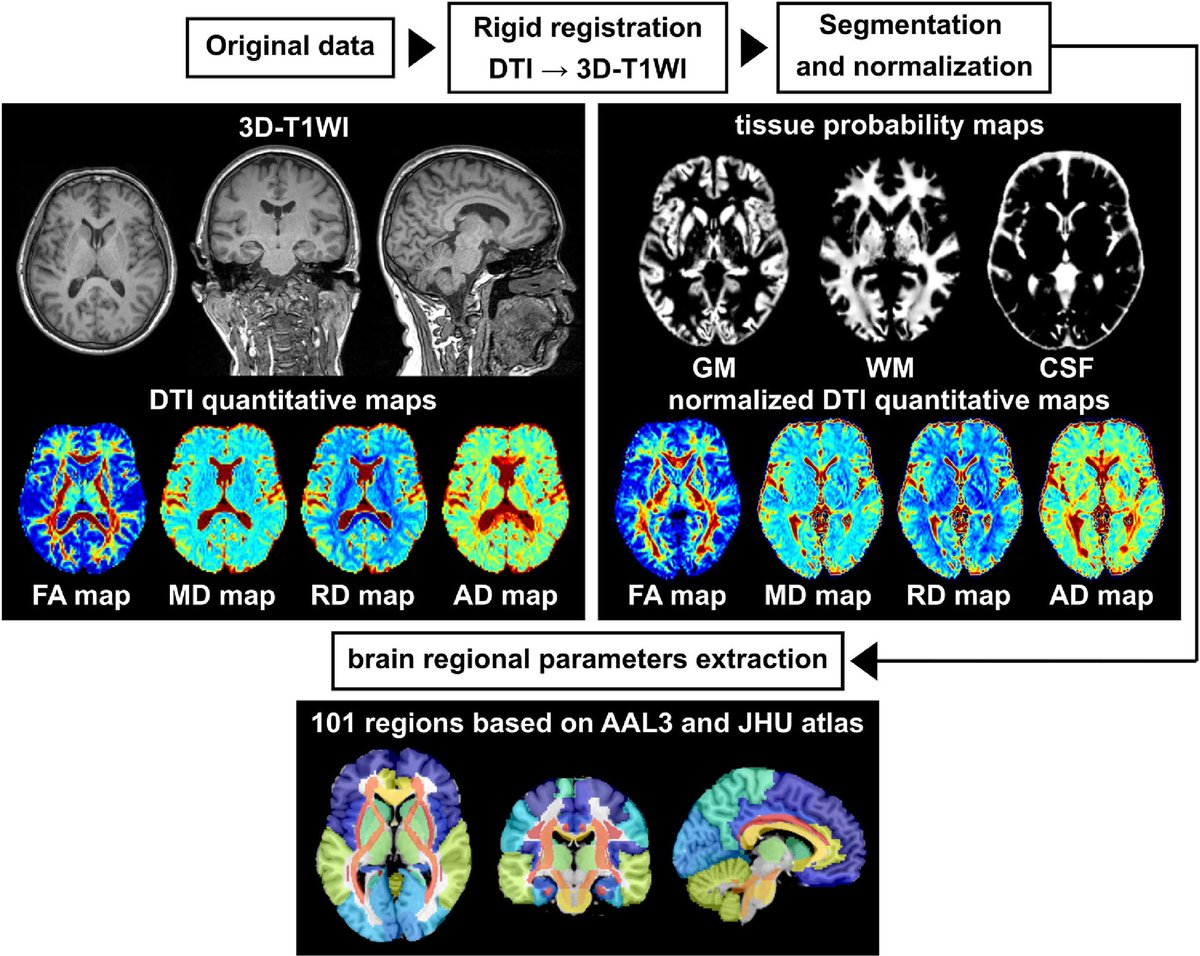
A review of 49 MRI studies shows that COVID-19 is associated with structural and functional brain changes.
➡️ Abnormalities are most commonly seen in the frontal, temporal, and parietal lobes, as well as the limbic system and subcortical regions.
➡️ These findings suggest widespread brain involvement, not limited to a single area.
➡️ The changes may explain both acute neurological symptoms and long-term effects (LongCOVID).
👉 COVID-19 is not just a respiratory disease—it has measurable, widespread effects on the brain
https://t.co/jh3xH1ZlIR