Interesting to see from Altimmune's p2 AUD trail (RECLAIM) $ALT
pbo showed a 2 day drop in heavy drinking days (pemvi arm was -4 days; registrational endpoint), but PEth (an objective biological marker for alcohol consumption) didn't move in the placebo arm.
Conclusion: pbo arm patients still either can't self-report accurately, overstate their drinking reduction, or PEth is not as accurate.
Perhaps a combo of all 3, but shows why collecting PEth in AUD trials is so critical, otherwise good drug signal could be noisy due to imperfect self-reporting
I don't think anyone is buying MDGL. Resmetirom a great first dedicated MASH drug, but it's modestly effective for fibrosis response. Others are coming that are much better - both on the FGF21 side and GCGR/GLP side. It'll do OK, but it's upside is now capped a bit. For instance, new Euro guidance (EASL) essentially put sema ahead of it - mostly due to cost
I can see them tapping out at 100k patients on drug, but with reimbursements are lowered in the coming years
More interesting data from the GCGR/GLP-1 class in MASH
DD01 (zabopegdutide) has just published its full Phase 2 story in Lancet. At 12 weeks, MRI-PDFF fell ~62%. MRE liver stiffness fell ~20%. Extremely fast results
Mean body weight declined ~4% at 12 weeks
D&D Pharma also released the 48-week biopsy results prior to EASL - so we can compare these 12-week MRE results to actual 48-week histologic results. In that analysis, 50% of patients achieved ≥1-stage fibrosis improvement without worsening of MASH, 62.5% achieved MASH resolution without worsening of fibrosis, and all endpoints were stat sig. So MRE predicted 48W histologic results
The important caveat is that the company has only reported per-protocol histology results - and it looks like there were a lot of dropouts (data on only 35 of 67 randomized), so interpretation should remain cautious until ITT data is available
The GCGR/GLP1 class continues to look fit-for-purpose in MASH - working quickly and appearing to produce liver effects beyond what would be expected from weight loss alone
@Pharmdca Seems oversold. 50k on drug is great progress. They had a slide that showed 500k total F2-F3 patients have now been diagnosed - which is great for all MASH developers, and shows the liver community is going a great job with screening and diagnosis. This should bounce.
not invested, but in the field. Seems silly: 50k on drug is a big milestone and good tailwinds for other MASH developers, as it shows the Hep/GI community is doing a good job raising awareness, increasing screening, getting people on drug who need it. It also shows sema is not going to be a dominate player here.
GCGR/GLP are doing extremely well in MASH/liver trials. Pemvi, maz, DD01, and survo are showing fast liver action - much better than GLP mono and remetirom.
They are certainly the future for all liver conditions
These AUD results were extremely good. Encouraging too that they've moved up the start of the MASH p3 by a quarter.
I think NVO is a good fit to buy them out, giving them a dual GCGR/GLP in MASH/AUD/ALD/MetALD. Sema isn't getting much uptake in MASH specifically bc of the tolerability/titration and it being viewed as a GLP mono that is an obesity drug repurposed for MASH. All the GCGR/GLP1s are showing great data in MASH. NVO would be wise to get one.
$ALT incredibly undervalued
GCGR/GLP duals showing best in class for liver/MASH. Just reported best AUD trial results ever. Starting MASH p3 this quarter. Finalizing enrollment in ALD this quarter. Now planning EOP2 in AUD and hopefully a single registrational trial here. Has $530m in the bank plus another $225m from exercisable warrants.
Still trading at cash value.
GS suspends analyst coverage of $ALT 🤨🧐
They’ve been the one bear among all of the other analysts.
Suspensions usually can happen when there is a conflict with other banking divisions, such as in mergers. Interesting.
@significant2025 12 weeks is very early for any fibrosis remodeling to happen. Might have been just inflammation resolving and it showing up on MRE. Hard to say without paired biopsy. I’m a believer that dual GCGR/GLPs are the next wave of MASH drugs, but the right ratio is tricky.
𝐃𝐞𝐞𝐩 𝐃𝐢𝐯𝐞: 𝐌𝐀𝐒𝐇 𝐓𝐡𝐞𝐫𝐚𝐩𝐞𝐮𝐭𝐢𝐜𝐬 - 𝐓𝐡𝐞 𝐍𝐞𝐱𝐭 𝐅𝐢𝐯𝐞 𝐘𝐞𝐚𝐫𝐬
The MASH field has entered its second phase. The first generation of therapies—Rezdiffra and semaglutide—established that pharmacologic treatment can improve liver histology. The next generation will likely be determined not simply by biopsy responder rates, but by a combination of:
1. Histologic efficacy
2. Patient persistence and tolerability
3. Weight loss and metabolic benefit
4. Long-term safety
5. Biomarker validation
Viewed through that lens, the competitive landscape appears considerably more nuanced than headline efficacy numbers suggest.
𝐋𝐚𝐧𝐢𝐟𝐢𝐛𝐫𝐚𝐧𝐨𝐫 (𝐈𝐧𝐯𝐞𝐧𝐭𝐢𝐯𝐚) - 𝐥𝐚𝐭𝐞 𝟐𝟎𝟐𝟔
Lanifibranor may become the next approved therapy after Rezdiffra and semaglutide, but commercial positioning will likely be challenging.
While pan-PPAR activation has demonstrated meaningful histologic benefit, it is also associated with weight gain, edema, anemia and gastrointestinal adverse events in an obesity-driven disease where physicians increasingly expect therapies to improve—not worsen—metabolic health.
As GLP-based therapies become standard of care, long-term uptake may prove more difficult than regulatory approval itself.
Investment question: Can meaningful fibrosis efficacy overcome a metabolically unfavorable profile?
𝐄𝐟𝐫𝐮𝐱𝐢𝐟𝐞𝐫𝐦𝐢𝐧 (𝐍𝐨𝐯𝐨/𝐀𝐤𝐞𝐫𝐨) - 𝟐𝐇 𝟐𝟎𝟐𝟕
Efruxifermin is widely viewed as the fibrosis leader in MASH, but investors should distinguish between the widely cited 96-week completer analysis and the more relevant intent-to-treat (ITT) data.
The ITT results are more representative of real-world effectiveness and more closely resemble the analyses used in pivotal trials.
Week 24 ITT:
Placebo: 19%
28 mg: 36% (statistically significant)
50 mg: 33% (not statistically significant)
Notably, the selected Phase 3 dose (50 mg) did not achieve statistical significance after 24 weeks.
Week 96 ITT:
Placebo: 19%
28 mg: 29% (ns)
50 mg: 49% (stat sig)
Notably, the lower, more tolerable 28 mg dose regressed after nearly two years. The impressive long-term fibrosis benefit was driven almost entirely by prolonged treatment with the higher 50 mg dose, which also carries the greatest concern regarding reductions in bone mineral density.
Perhaps more importantly, the pivotal Phase 3 program is evaluating a substantially more difficult endpoint than many investors appreciate. Rather than fibrosis improvement alone, the primary endpoint requires:
fibrosis improvement AND MASH resolution
Historically, dual histologic endpoints produce lower response rates than fibrosis improvement alone. Combined with the earlier 52-week biopsy assessment, the registrational treatment effect may be considerably smaller than implied by the highly publicized 75% fibrosis responder figure from the completer analysis.
Investment question: Can approximately one year of therapy produce a statistically robust dual endpoint before the full antifibrotic effect observed at 96 weeks develops? Is the market prepared for a readout that potentially shows:
pbo: 8%
efrux 28mg: 17% (ns)
efrux 50mg: 21% (stat sig)
Those would be more realistic at just 52 weeks and for a dual endpoint. They'll certainly separate out fibrosis response alone in a secondary analysis, but even that may peak in the 30%-39% range for the 50mg dose - certainly not in the headline completer range from 96 weeks. This might not be the slam dunk that many expect and may not be much better than resmetirom.
𝐏𝐞𝐠𝐨𝐳𝐚𝐟𝐞𝐫𝐦𝐢𝐧 (𝐑𝐨𝐜𝐡𝐞 / 𝟖𝟗𝐛𝐢𝐨) - 𝟐𝐇 𝟐𝟎𝟐𝟕
Pegozafermin provides Roche with a differentiated FGF21 platform and demonstrated encouraging biology in Phase 2.
However, histological fibrotic treatment effects were relatively modest (~25%) - low for the FGF21 class - while pegozafermin benefited from an unusually low placebo response. Whether those placebo dynamics persist in Phase 3 remains uncertain.
The pivotal program also requires approximately 1,300 biopsy patients, increasing both development cost and operational complexity.
Roche’s commercial capabilities substantially reduce execution risk following approval, but efficacy remains the central clinical question.
Investment question: Will Phase 3 reproduce the favorable placebo-adjusted treatment effect observed in Phase 2?
𝐏𝐞𝐦𝐯𝐢𝐝𝐮𝐭𝐢𝐝𝐞 (𝐀𝐥𝐭𝐢𝐦𝐦𝐮𝐧𝐞) - 𝐞𝐚𝐫𝐥𝐲 𝟐𝟎𝟐𝟖
Pemvidutide may currently represent one of the most underappreciated/undervalued Phase 3 assets.
Unlike survodutide, pemvidutide employs a balanced 1:1 GLP-1:glucagon agonist designed to combine direct hepatic glucagon biology with meaningful—but not maximal—weight loss.
Phase 2 demonstrated:
- substantial liver fat reduction
- strong MASH resolution (~55%) and numerical fibrosis efficacy (36%) at just 24 weeks
- one of the lowest discontinuation rates among late-stage metabolic therapies
- 7% weight loss in 48 weeks
- excellent NIT biomarker reductions along with AI histologic reductions in fibrosis
Importantly, the highest planned pivotal dose (2.4 mg) wasn't tested in the p2b IMPACT trial. So Phase 2 biopsy data reflect only the 1.2 mg and 1.8 mg doses, leaving open the possibility for additional efficacy in Phase 3 while preserving the favorable tolerability profile demonstrated thus far.
Pemvidutide also benefits from one of the most efficient pivotal programs in the field.
Approximate biopsy enrollment:
- Pemvidutide: ~990 patients
- Pegozafermin: ~1,300
- Survodutide: ~1,800
A substantially smaller biopsy program should reduce development costs, simplify enrollment and potentially accelerate completion.
From a biomarker perspective, pemvidutide may also occupy an interesting middle ground. The drug's construction isn't to max out weight loss, but rather to increase glucagon activation in the liver. This is critical, since NITs like VCTE are increasingly being shown to be confounded by significant weight loss, limiting its use as a key registrational biomarker. If future studies confirm that extreme weight loss increasingly confounds VCTE interpretation, dual agonists (survodutide, tirzepatide) producing maximal weight loss may prove more susceptible to this limitation and find a skeptical FDA in regard to this endpoint.
Investment question: Can the untested 2.4 mg dose match efruxifermin-like efficacy while maintaining the favorable tolerability demonstrated through 1.8 mg, and spurring moderate weight loss?
𝐒𝐮𝐫𝐯𝐨𝐝𝐮𝐭𝐢𝐝𝐞 (𝐁𝐨𝐞𝐡𝐫𝐢𝐧𝐠𝐞𝐫 𝐈𝐧𝐠𝐞𝐥𝐡𝐞𝐢𝐦) - 𝐥𝐚𝐭𝐞 𝟐𝟎𝟐𝟖/𝐞𝐚𝐫𝐥𝐲 𝟐𝟎𝟐𝟗
Survodutide combines numerical histologic efficacy (not stat sig in p2) with substantial weight loss but currently demonstrates one of the least favorable tolerability profiles among late-stage MASH therapies.
Its approximately 8:1 GLP-1:glucagon receptor activity appears to produce strong metabolic efficacy but also frequent gastrointestinal adverse events and discontinuation rates approaching 20–25% (overall 40% d/c in the latest MASLD study reported in June 2026).
Persistence may ultimately become a major commercial differentiator in chronic disease.
Survodutide also carries one of the largest pivotal programs in development, requiring nearly 1,800 biopsy patients, increasing both enrollment risk and development expense.
Investment question: Will efficacy outweigh tolerability limitations in routine clinical practice?
𝐓𝐢𝐫𝐳𝐞𝐩𝐚𝐭𝐢𝐝𝐞 / 𝐑𝐞𝐭𝐚𝐭𝐫𝐮𝐭𝐢𝐝𝐞 (𝐋𝐢𝐥𝐥𝐲) - 𝟐𝟎𝟑𝟏?
Lilly has adopted a fundamentally different development strategy.
Rather than pursuing accelerated approval through liver biopsy, its pivotal program emphasizes clinical outcomes using non-invasive testing, relying primarily on VCTE rather than histologic confirmation.
This strategy could ultimately generate the strongest outcomes evidence in MASH.
It also introduces perhaps the largest scientific uncertainty currently facing the field.
At EASL 2026, Madrigal reported that among patients achieving >5% weight loss, reductions in VCTE became increasingly influenced by weight loss itself rather than biopsy-confirmed fibrosis improvement. The MASLD study by BI of survodutide showed that most patients enrolled as "mild to moderate fibrosis" didn't actually have any fibrosis.
Similarly, analyses supporting semaglutide have shown that improvements in VCTE did not reliably distinguish histologic fibrosis responders from non-responders despite substantial reductions in liver stiffness.
Collectively, these findings suggest an important possibility:
If VCTE-based enrollment includes a meaningful proportion of patients whose fibrosis stage is overestimated, event-driven trials (like Lilly's) may enroll lower-risk populations than intended. Because liver events are concentrated among patients with true advanced fibrosis, lower event rates could reduce statistical power or require longer follow-up before clinical benefit becomes apparent.
Further, the therapies producing the greatest weight loss may also be the therapies in which VCTE becomes least specific as a fibrosis biomarker.
FDA is already familiar with these limitations through its review of semaglutide and the broader biomarker literature.
Investment question: Can VCTE-based enrollment accurately identify patients at sufficient risk to support an efficient outcomes trial? Will Lilly's trial fail to produce enough events in both treatment arms and pbo arms to be able to show a treatment effect with significance?
𝐓𝐡𝐞 𝐋𝐚𝐫𝐠𝐞𝐫 𝐐𝐮𝐞𝐬𝐭𝐢𝐨𝐧 𝐇𝐚𝐧𝐠𝐢𝐧𝐠 𝐎𝐯𝐞𝐫 𝐭𝐡𝐞 𝐄𝐧𝐭𝐢𝐫𝐞 𝐅𝐢𝐞𝐥𝐝
Madrigal is expected to report MAESTRO outcomes data supporting full approval in 2027–2028.
Those data could fundamentally reshape how both regulators and industry evaluate therapeutic response - and recent EASL abstracts/posters already provide important clues.
One analysis demonstrated that early and Week 52 changes in MRE, MRI-PDFF and ALT predicted biopsy-confirmed fibrosis improvement following resmetirom treatment.
A second analysis demonstrated that VCTE becomes increasingly confounded by weight loss.
If MAESTRO outcomes ultimately demonstrate that improvements in MRE/ALT/PDFF identify patients who subsequently experience fewer liver-related events—and that VCTE proves less predictive in therapies producing substantial weight loss—the implications would extend far beyond Rezdiffra.
These observations suggest that biomarker strategy may itself become a competitive differentiator.
Many ongoing Phase 3 studies collect VCTE as an exploratory endpoint. But given the emerging evidence that VCTE interpretation becomes increasingly challenging as weight loss increases, sponsors may wish to consider prospectively incorporating MRE into late-stage development whenever feasible. Unlike VCTE, MRE has consistently demonstrated strong relationships with biopsy-confirmed fibrosis, has not demonstrated comparable weight-loss confounding to date, and is progressing through FDA’s Biomarker Qualification Program.
Should future outcomes data from MDGL validate MRE as the strongest predictor of long-term clinical benefit (as the EASL data suggest), sponsors collecting only VCTE may find themselves with a less informative evidence package than competitors who prospectively incorporated MRE. The incremental cost of an MRE substudy is modest relative to the overall investment required for a global Phase 3 program, yet it could provide meaningful regulatory, mechanistic, and commercial value.
𝐁𝐨𝐭𝐭𝐨𝐦 𝐋𝐢𝐧𝐞
The next generation of MASH therapies is unlikely to be determined by the highest biopsy responder rate alone.
The eventual leaders will likely combine:
- meaningful fibrosis improvement
- metabolic benefit
- durable weight loss
- excellent tolerability
- demonstrated reductions in liver-related clinical events
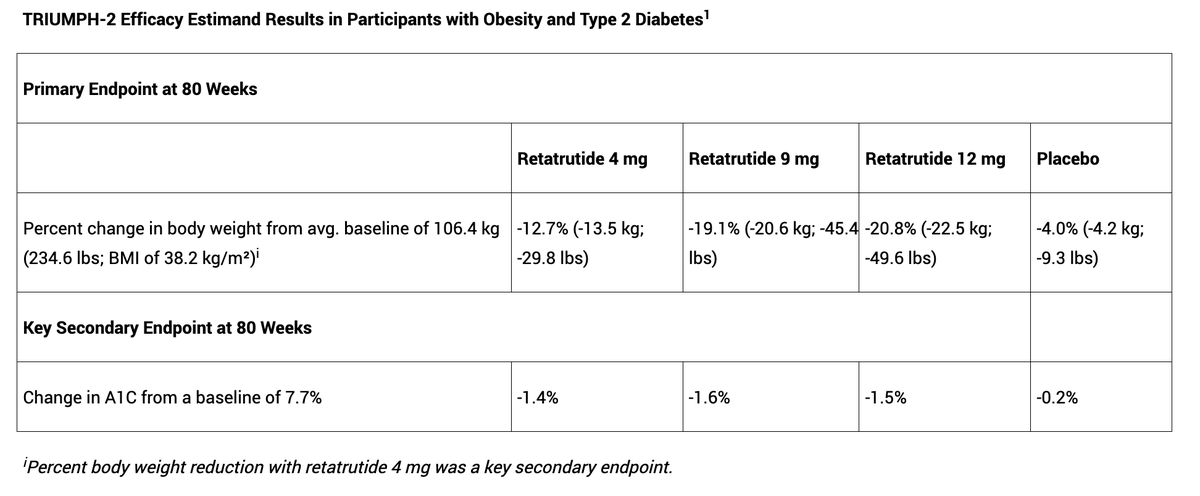
We may indeed see a couple of failures or underwhelming results in the next couple of years before we see the next-gen MASH treatment emerge. Lilly's trial hinges upon Madrigal's outcomes/VCTE data - which, after EASL, seems increasingly tenuous - leaving tirzepatide and retatrutide's MASH outcomes trial in limbo for a positive 2030 read out. But as NVO and MDGL continue to build out the clinical market, the next blockbuster - a well-rounded, holistic treatment for metabolic disease/MASH - could be just a couple of years behind. $XBI $NVO $ALT $LLY
Zabo is interesting for sure - another GCGR/GLP for MASH that looks promising
My list was just drugs in p3
Zabo still has to publish for 48 week p3 data, and it’ll be interesting to see the full adverse event picture - bc nearly half didn’t finish the trial from enrollment. Powerful drug but maybe too much GLP1?
@chrislhayes@Indian_Bronson@NateSilver538 When you realize that most post grad degrees are just left-wing echo chambers with no real-world relevance, it makes sense that they were duped, are self-aggrandized, yet are now poor