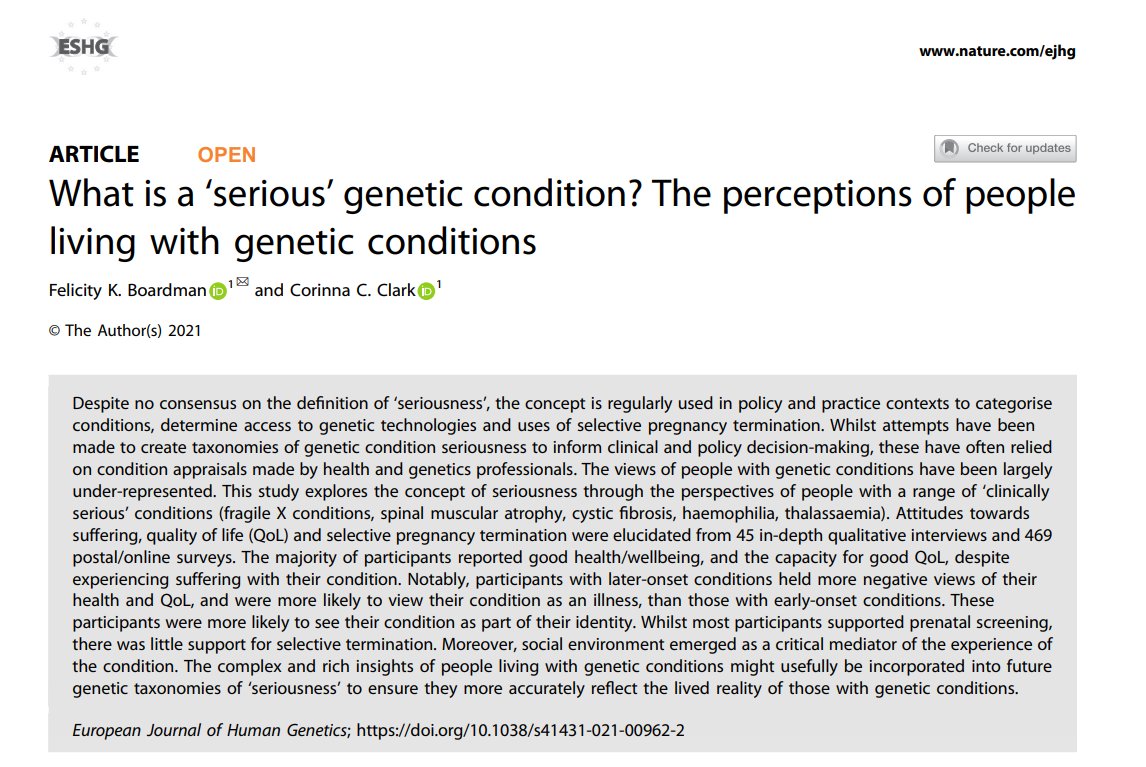
The views of people with genetic conditions have been largely under-represented. This @ejhg_journal study explores the concept of seriousness through the perspectives of people with a range of ‘clinically serious’ conditions. https://t.co/CmoR6mwC9p
We've just added a new information guide on TUBA1A - associated tubulinopathy to our website at https://t.co/Gdngu3coLA. With thanks to Dr Dixit for kindly reviewing this guide for us. #TUBA1A#Genetics#Genomics
Genetic testing is crucial for those with a suspected #Alportsyndrome diagnosis or those unsure of the exact type they have. Learn more about the no-charge KIDNEYCODE #genetictesting program: https://t.co/7mbc3MoXV2
Genetic testing and minimization of steroid exposure matters to avoid unnecessary immunosuppressive treatment and its side effects.
Read more in IPNA 🆓#openaccess Guidelines
➡️https://t.co/nmTuooOre7
#SRNS#nephroticsyndrome#CKD@SpringerNature
Chromosome 16 vs 11? Blimey that’s a tough one. 16’s pretty but 11 has style... let me just have a think what their gene highlights are. @becky_lew want to help me? #ChromosomeClash
In a close match, #chromosome 22 pulled out a win against chromosome 7! We loved seeing your #GENEfacts about your favorite chromosomes, so keep it up and vote in today's #ChromosomeClash match.
Today is the last day to complete the survey - if you are a healthcare professional involved in requesting genomic testing for patients, have your say!
Fabulous opportunity for me to collaborate with @asheetagupta to share our experiences of the changing landscape of genetic testing in patients with inherited renal disease #BAPN2020
Elizabeth Watson: describes the reorganisation of genetic diagnostic services in the UK. Test directories and panels are available online at
https://t.co/E9IqnRSDWP
#BAPN2020@GenomicsEngland
Interested in joining the scientist team at based at Bristol Genetics Lab in the @SWGLH Band 7 post adverts open now with closing date 14th Feb https://t.co/mUsV8l0Hbo
A noninvasive urinary immunohistochemistry test identified
MUC1fs protein in those who were negative for MUC1 27dupC mutation.
This study also identified 5 novel mutations in VNTR in MUC1.
https://t.co/9Y4T8Qq6SA
#IrishNeph
Nomenclature as per KDIGO.
Clinical classification depending on causal gene. Genetic aetiology unclear in 40% of cases.
MUC1 is most common cause of ADTKD and hardest gene to sequence - not possible to do routinely.
https://t.co/QiuAYF9BBO
#IrishNeph