Before Bitcoin, before most people had email, a cryptographer named David Chaum already built digital cash that actually worked.
In 1982 his Berkeley dissertation laid out nearly every piece of what we now call a blockchain, missing only one: proof of work. By 1990 he had founded DigiCash, and by 1994 people were spending eCash that no bank could trace. He had solved the privacy. He had solved the math. He was a decade ahead of everyone.
Then in 1998 DigiCash went bankrupt, and the money died with it. Not because the cryptography failed. Because it ran through a company, and companies fail, get bought, or get shut down.
That was the piece Satoshi added. Not better math. No company at all. No office to raid, no CEO to pressure, no firm to go under.
Chaum built money a bank couldn't trace. Bitcoin built money no government can kill.
Prague didn't become one of Europe's richest cities in the 14th century because of its castles. 🪙🦋🍄
It became rich because of silver.
In the 13th century, enormous silver deposits were discovered near Prague in Kutná Hora. The Bohemian kings quickly understood what that meant: if you control the silver, you control the market. 👀
They turned that silver into the Prague groschen, a currency so trusted that it spread across Central Europe and helped fuel centuries of trade.
History keeps teaching the same lesson:
Whoever controls the money supply shapes the economy...
For most of civilization, that power belonged to kings, emperors, governments, and eventually central banks. They decided how much money existed and when more could be created.
The problem is that when money can be "expanded" without a hard limit (brrr), the value of everyone else's savings depends on the decisions of a small group of people.
Silver is scarce by nature.
Gold is even scarcer.
But Bitcoin takes it to the next level.
It's not only scarce but also transparent, inclusive, borderless, decentralized, and censorship-resistant.
No new discoveries.
No surprise printing.
No central authority.
This is the first time in history that money isn’t controlled by the few.
That’s why I'm here for the long run. 🔥
BIP110 is a simple statement: "we reject Core 30’s proposed addition of data storage to bitcoin."
Bitcoin is money. That is the starting point. If we lose sight of that, we lose the plot.
With all of the exploits in DeFi, Zcash, and all of the other insanely complex crypto systems we are reminded again that Bitcoin’s simplicity is its biggest feature.
Warum wir nur auf Bitcoin setzen.
Der gestrige Post über unsere Unternehmensreserve hat großes Interesse ausgelöst. Viele haben gefragt: warum nur Bitcoin?
Die Welt wird digitaler. Kapital bewegt sich grenzenlos. Aber das Geldsystem dahinter ist noch dasselbe wie vor 50 Jahren – national, inflationär, kontrolliert.
Bitcoin ist die Antwort auf genau das.
Nicht weil es trendy ist. Sondern weil es das erste Mal in der Geschichte ein Geld gibt, das niemand kontrolliert. Kein Staat, keine Zentralbank, kein CEO. Das Protokoll entscheidet – nicht Menschen mit Eigeninteressen.
Absolut knapp. 21 Millionen. Unveränderbar.
Gold hat das Prinzip – aber es ist als Geld bereits gescheitert. Zu schwer, nicht teilbar, nicht digital übertragbar ohne Gegenpartei.
Aktien haben Wachstumspotenzial – aber sie haben immer einen Emittenten, einen Vorstand, ein Risiko das du nicht siehst.
Immobilien gelten als sicher – aber sie sind illiquide, standortabhängig, regulierbar und ohne erheblichen Kapitaleinsatz kaum zugänglich.
Bitcoin hat viele Stärken: begrenztes Gut und digitales Netzwerk. Grenzenlos übertragbar, selbstverwahrbar, machtneutral – und erfüllt alle weiteren Eigenschaften die ein perfekter Wertspeicher haben sollte.
Alle disruptiven Innovationen brauchen Zeit – und sind anfangs volatil. Nicht verwunderlich, wenn manche es für die größte Innovation aller Zeiten halten, während die meisten anderen noch ein Schneeballsystem ohne inneren Wert sehen.
In einer zunehmend digitalen Welt ist überprüfbare digitale Knappheit ohne Gegenpartei eine grandiose Innovation – deren Potenzial wir noch gar nicht vollständig begreifen können. Wer früh versteht was hier passiert, trägt ein überschaubares Risiko für ein enormes Potenzial.
Deshalb nur Bitcoin. Nicht aus Sturheit. Aus Überzeugung.
Study the history of money and you’ll see one constant; the money always gets captured in every society
Very bright minds have spend most their lives trying to create a money that can’t be captured and failed
Bitcoin is the first money in history that’s resistant to capture from any centralized power
It’s also the most prestige collateral ever and the only asset with true property rights
99% of people see Bitcoin as a risk asset.
Bitcoiners see it as a safe haven.
The asset with a fixed supply gets called dangerous.
The currencies being devalued year after year get called safe.
That's how effective the conditioning has been.
People are staring at the soundest money humanity has ever had access to and treating it like a casino chip.
One day they'll realise Bitcoin wasn't the risky bet.
Trusting fiat was.
Lately I've seen a lot of Bitcoiners talking about how bad the sentiment is. Here are my thoughts:
You better be using this time wisely.
Right now, you get to see who the real Bitcoiners are. The people still building in this space right now are the ones who truly care about freeing the world from monetary prison.
We don't *just* care about the fiat gains.
Yes, OF COURSE we do care about fiat gains. Anyone who says they don't care about NGU is lying. But that time is not now.
That time will come.
What I care about most is doing the best I can to make sure my country is no longer financially raped by an elitist, parasitic, unconstitutional monetary system that our founding fathers warned against.
The most beautiful thing about the bull/bear cycles is that those who truly understand Bitcoin, those who continue to build during a bear market while sentiment is low and hope feels lost - these people will be the ones becoming the most successful.
Why? Because we are acquiring Bitcoin while the price is lower, while nobody cares about it.
We are building right now while others are distracted with whatever else they're being mentally programmed to feel "hyped" about.
Really quite a notable phenomenon. Bitcoin rewards those who reject the masses.
I've been in this for a decade now. I don't give a shit about bear markets. I like them.
I am devoting all of my time to build with the team at @BULLBITCOIN_ and I wouldn't want to be doing anything else. We know where the world is headed, we know Bitcoin is the next global reserve currency, we actually give a shit about privacy, and we're not funded by sketchy VCs like so many other companies are (Bull has been bootstrapped since 2013).
Now is the time to build, form alliances, help each other out, and prepare for the inevitable adoption of Bitcoin.
The world's most powerful country (USA) and the country it's at war with (Iran) are BOTH pro-Bitcoin...and you're bearish?
The world order is changing and Bitcoin is at the epicenter of this change.
You will look back on these days and wish you did more.
So, do more.
When someone says, "Bitcoin is going down," they're usually referring to its price in fiat terms.
But money isn't valuable because of the number attached to it. Money is valuable because of what it can acquire.
Goods.
Services.
Labor.
Land.
Businesses.
Productive assets.
That's why I've always thought purchasing power is a more useful lens than price alone.
If Bitcoin's dollar price is lower than it was a few months ago, but one bitcoin continues to acquire more goods, services, and scarce assets over time, what exactly became less valuable?
The dollar supply changes. Debt changes. Asset prices change. Gold supply grows.
Bitcoin's supply does not.
So when I evaluate Bitcoin, I'm less interested in what one bitcoin is worth in dollars today and more interested in what one bitcoin can acquire over time.
To me, that's the real measure of money.
As a young socialist, Hayek read Ludwig von Mises’ 1920 paper “Economic Calculation in the Socialist Commonwealth.”
Mises showed that socialist central planning isn’t merely inefficient, it’s impossible.
Without private property and genuine market prices, planners lack any rational way to allocate scarce resources or determine real costs and needs.
Even Oskar Lange, a leading socialist in the calculation debate, effectively conceded the point.
While he promoted “market socialism” with trial-and-error pricing by a central board, real-world socialist planners in Eastern Europe quietly relied on world capitalist market prices as a guide.
Without external free-market price signals, pure socialism would be economically blind and coordination would collapse.
Mises went further, arguing that interventionism, the “middle way” of government meddling, is inherently unstable.
Each intervention creates problems that invite more interventions, eventually leading to full socialization.
Price controls cause shortages, subsidies distort production, and the cycle continues until the economy is fully planned.
The lesson is clear.
Rational economics requires genuine market prices emerging from voluntary exchange and private property.
Half-measures don’t stabilize the system. They accelerate the drift into central planning.
The Austrian School understood this decades before the collapse of the Soviet bloc proved it in practice.
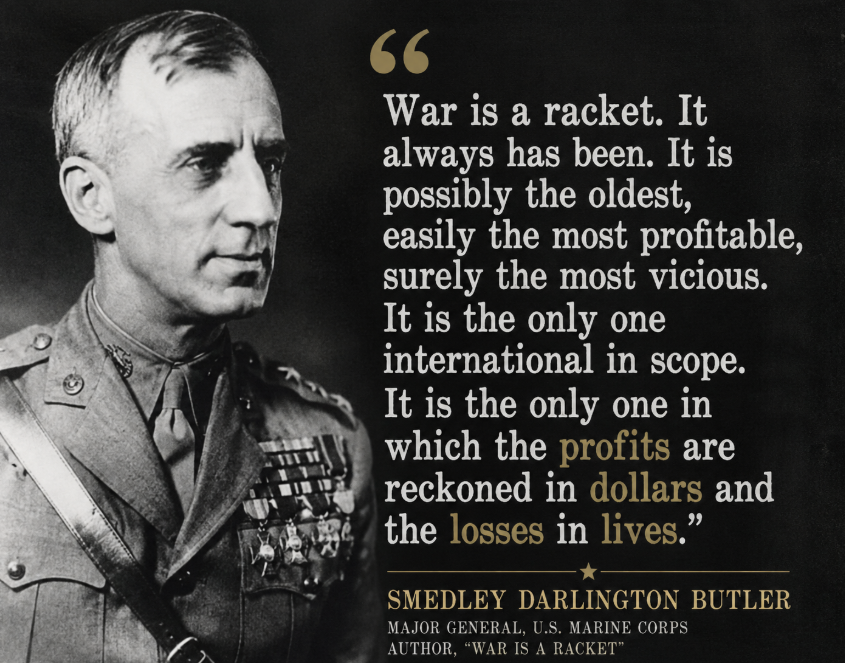
Bitcoin taught me that printing money to fund endless war is theft hidden behind patriotism.
I’m pro human freedom, sound money, and peace.
Every war enriches someone while ordinary families pay the price in blood, inflation, and broken lives.
Opt out. Build. Save in Bitcoin.✊
The lie you've been told stops today.
You want to know what inflation really is?
Strip away the economics textbooks, the PhD jargon, the CNBC smooth-brains explaining "supply chain pressures" like they discovered fire.
Inflation is theft.
Pure. Surgical.
Government. Sanctioned. Theft.
It's not rising prices, that's the symptom, not the disease.
Inflation is your government printing currency units faster than you can earn them, deliberately diluting every hour you've ever worked into monetary vapor.
They're not raising the cost of living.
They're lowering the value of your life.
See that?
Milton Friedman said it decades ago, and they buried it under a mountain of Keynesian propaganda:
"Inflation is always and everywhere a monetary phenomenon."
Translation: Every cent of inflation comes from one place and one place only. Printing money.
• Not greedy corporations.
• Not supply shocks.
• Not your local grocery store.
Bureaucrats in suits, armed with spreadsheets and the legal authority to counterfeit, systematically destroying your purchasing power while lecturing you about "price stability."
Bitcoin fixes this.
You start reading weird books.
You buy “The Bitcoin Standard” and then “The Fiat Standard” and then you accidentally end up reading Murray Rothbard, and then somehow you’re reading Mises, and then it’s 11:47 PM on a Tuesday and you’re 340 pages into “Human Action” and you’re highlighting passages about praxeology and your wife comes downstairs and asks if you’re coming to bed and you say “in a minute” but you don’t come to bed for two hours because you have just discovered that everything you were taught about economics in college was wrong, all of it, every single sentence, and now you can’t go back, you can never go back, you have been orange-pilled in a way that goes deeper than money, you have been epistemologically orange-pilled, you now believe that John Maynard Keynes was a charlatan and the gold standard was actually fine and the income tax is theft and you can never say any of this out loud at a dinner party ever again.
1 Bitcoin priced in Big Macs over time:
May 2010 (Pizza Day): 0.001 Big Macs (literally less than 1 bite)
Dec 2014: 67 Big Macs
Dec 2017: 2,798 Big Macs
Dec 2020: 5,115 Big Macs
Jul 2024: 11,072 Big Macs
Today: 13,080 Big Macs
1 BTC now buys 36 years of daily Big Mac lunches.
In 16 years:
The Big Mac got 65% more expensive in dollars.
The Big Mac got 99.5% CHEAPER in Bitcoin.
Inflation eats your dollar.
Bitcoin eats inflation.
The "Coin" in Bitcoin is not arbitrary like @JasonPLowery says in his 2023 MIT Bitcoin Expo.
Coins are not money. Things that are coined make for good money.
"Coin" comes from Latin cuneus — a wedge used for stamping. It first meant the die that did the stamping, then the stamped object itself.
To coin something is to authenticate it with a mark of authority. @SLictionary
The Lydians (an ancient kingdom in what is now western Turkey) started coining metal around the 7th century BCE. The breakthrough wasn't the metal — electrum (a natural alloy of gold and silver) was already valuable.
The breakthrough was the stamp.
Raw gold → mint (melt, weigh, assay, stamp) → coin.
After stamping, merchants don't have to weigh and assay the metal themselves on every transaction. They look at the mark, feel the weight, and trust it. That's the work the stamp does. It transmits the mint's authority into the metal so anyone can verify it at a glance.
@kurtwuckertjr — you probably already knew this but figured we'd tag you since you like history and numismatics.
Satoshi, in the whitepaper Section 2 (https://t.co/WyNSpi6pTE):
"We define an electronic coin as a chain of digital signatures."
Not a unit of money. Not a token. A chain of authentication acts.
The signatures do what the mint's stamp did - authenticate.
The whitepaper uses the word "mint" — but to describe the OLD centralized model Bitcoin replaces. What replaces the mint? Section 3: the Timestamp Server.
The "stamp" in "timestamp" and the "stamp" of coining are the same word doing the same conceptual work - coining.
A common framing — like @anil_bharrat's recent post:
"Bit + Coin = Data + Cash System."
This puts the cart before the horse. Better reading: Data + Integrity.
Once bits have integrity, you can do anything with them — electronic cash, identity, SPV, data provenance, anything.
"Coin" is not arbitrary. It is not synonymous with money. It is integrity.
cc @vamosvigilante — what I was trying to explain in Austin last year. Better in writing.
"Anything that can be prevented, taken away, or coerced is not a person's own—but those things that can't be blocked are their own."
Epictetus on bitcoin.
Money does not exist in nature.
If every human vanished tomorrow. Poof! Thanos snap. Money dies with us. Not slowly. Instantly.
Because money isn't real.
It's not gravity. It's not water. It's not some fundamental law of physics carved into the universe's source code.
Gravity pulls planets whether you believe in it or not. Water cycles through ecosystems without asking permission. Those persist.
Money is a shared hallucination. A collective delusion we all agreed to participate in because the alternative, pure barter, was a logistical nightmare.
Look around. Animals hoard food. Birds collect shiny objects to attract mates. Squirrels bury acorns. But they're not pricing those acorns in seed-backed dollars. No interest rate on stored seeds. No squirrel taking out a loan to front-run winter scarcity.
That's instinct. That's biology. That's not money.
Money only exists when humans assign value to something and agree that it represents stored labor, future purchasing power, or social coordination at scale.
Without minds to recognize it, gold is just a shiny metal in the ground. Bitcoin is dormant code on dead servers.
Carl Menger figured this out in the 1870s. Money emerges organically from human action and voluntary agreement—not government decree, not divine mandate.
Gold became money because humans decided it had the right properties: scarce, durable, divisible, portable, verifiable. We built entire civilizations around that consensus. But gold isn't inherently money without us assigning it that role. It's just element 79 on the periodic table.
Bitcoin? Same deal. A digital construct we engineered because we needed better properties for a global, hyperconnected world. But in a human-less universe? Bitcoin's ledger halts. The network dies. The protocol becomes a fossil record of a species that once tried to escape monetary debasement.
This is what most people miss:
The evolution of money doesn't happen because it's etched into the fabric of reality. It happens because we build it. We improve it. We upgrade the operating system.
Seashells → Gold → Paper → Digital.
Each iteration solves problems the previous one couldn't. Each step is human ingenuity, not natural inevitability.
And we're in the middle of the biggest monetary upgrade in human history.
Bitcoin isn't "real" in the sense that it exists independent of us. But neither is the dollar. Neither is gold as money.
The difference is Bitcoin was engineered, deliberately, mathematically, incorruptibly, to be the best form of money humans have ever built.
21 million hard cap. No central authority. No counterparty risk. No inflation. No debasement.
It's not real because it's natural. It's real because we made it that way.
And that's the point.