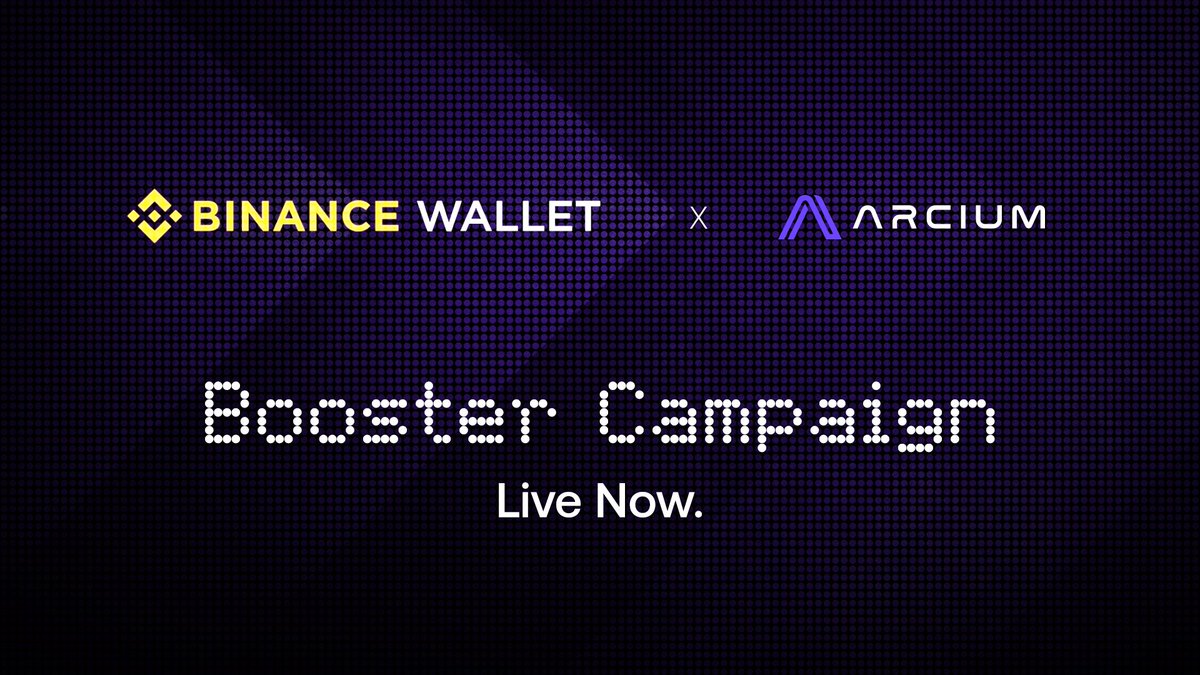
Arcium × @BinanceWallet Booster Campaign is live.
Eligibility: Binance Wallet MPC Wallets with at least 2 Alpha Points.
Rewards: 1,500,000 ARX for 50,000 Winners
To join, go to Binance Wallet App - Discover - Booster - Arcium Booster Campaign.
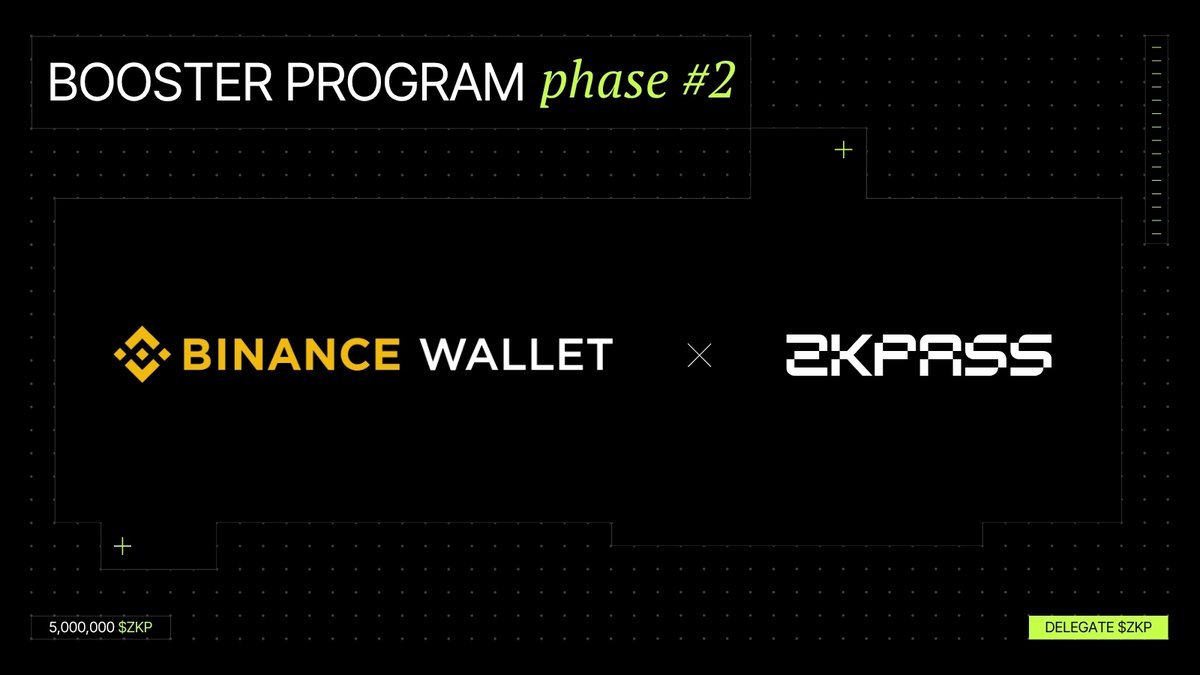
zkPass × @BinanceWallet Booster Program - Phase 3 is live.
🔸 Starts Jun 11, 7AM UTC
🔸 Eligibility: 61+ Alpha Points
🔸 Rewards: 5,000,000 $ZKP
Arena is now open.
Complete verifiable quests, delegate $ZKP, and participate in a reputation system built on proven actions.
🌐 https://t.co/asVFhOo4np
Sentio Network testnet is live 🌐
A decentralized data layer for blockchains — run your own indexers, store data, query anywhere.
The infra powering Sentio for years. Now yours to run.
Docs → https://t.co/pdNvLtytZG
Explorer → https://t.co/Vj1NL71LBm
Naval’s latest AI/coding take is basically this:
Software is no longer scarce.
The scarce assets are now:
taste
distribution
data
trust
network effects
hardware
clear product vision
AI coding agents turn natural language into prototypes. That means more one-person software companies, more custom apps, and less defensibility for “pure software.”
The new founder edge is not “I can code.”
It’s:
“I know exactly what should exist, who needs it, how it should feel, and how to distribute it.”
Naval’s latest AI/coding take is basically this:
Software is no longer scarce.
The scarce assets are now:
taste
distribution
data
trust
network effects
hardware
clear product vision
AI coding agents turn natural language into prototypes. That means more one-person software companies, more custom apps, and less defensibility for “pure software.”
The new founder edge is not “I can code.”
It’s:
“I know exactly what should exist, who needs it, how it should feel, and how to distribute it.” @naval #opc
New podcast on vibe coding - A Return to Code.
A Return to Coding 00:20
The Personal App Store 03:17
Vibe Coding Is a Video Game with Real-World Rewards 06:22
Pure Software Is Uninvestable 10:33
A Place for Each Model 14:22
AI Is Eager to Please 17:57
Why Math and Coding? 22:10
The Beginning of the End of Apple’s Dominance 24:17
Coding Agents As Customer Service Reps 27:55
1/ Introducing Sentio AI Skills 🧩
Your AI coding agent now speaks Sentio — describe the processor, SQL query, alert, or dashboard you want, and it ships it end-to-end.
https://t.co/SrPIsWfwUT
TAO didn’t just dump last night.
What really got repriced was the market’s belief premium on “decentralized AI.”
A lot of people are reading this as:
“Some project had drama with the network, left, and the token sold off.”
No.
If this were just normal ecosystem drama, TAO wouldn’t be hit this hard.
The real issue is that Covenant AI didn’t complain about revenue split, partnership terms, or some minor internal conflict.
They attacked the core of the entire Bittensor narrative:
Is it actually decentralized?
That’s the point.
The market wasn’t giving TAO a premium because it’s printing huge cash flow today.
It was giving TAO a premium because people believed it could become one of the few real contenders for decentralized AI infrastructure — decentralized training, decentralized incentives, decentralized coordination.
But once a major builder comes out and says:
subnet emissions can be suspended by one actor
community control can be overridden
projects can be deprecated without real process
“governance” looks more like decentralization theater
then the question changes completely.
It’s no longer:
“Will this project recover from some drama?”
It becomes:
Is TAO a truly decentralized AI network, or a high-beta asset wrapped in a decentralization story?
That’s why this selloff matters.
This is not just panic.
This is a governance discount being priced in.
Now, to be fair, Covenant AI probably isn’t a neutral party here either.
Their exit statement also does 3 very obvious things:
keeps the technical prestige for themselves
pushes the governance blame onto the network
preserves moral high ground for their next raise / next project
So this isn’t a story of one side being purely right and the other purely wrong.
It’s a fight over narrative control.
But as investors, the key is not picking a side emotionally.
The key is understanding this:
When an asset trades at a premium because of belief, the biggest risk is not bad news. It’s a crack in belief itself.
Could TAO bounce?
Of course.
High-beta assets almost always bounce after violent liquidations.
But that’s not the real question.
The real question is:
Is the bounce a recovery from a market overreaction, or just a technical rebound after the first crack in the thesis?
My view:
short term: tradable bounce possible
medium term: not a clean “load the boat” dip yet
long term: what matters now is whether the ecosystem can prove this network is actually moving away from single-point control
Because if it can’t, then last night’s candle wasn’t just a selloff.
It was the market pricing the first serious discount to TAO’s decentralization premium.
One-line summary:
TAO didn’t just lose price. It lost trust. And for high-multiple assets, trust is usually the first thing that gets repriced — and the hardest thing to win back.
#TAO #Bittensor #Crypto #AI #Decentralization
TAO didn’t just dump last night.
What really got repriced was the market’s belief premium on “decentralized AI.”
A lot of people are reading this as:
“Some project had drama with the network, left, and the token sold off.”
No.
If this were just normal ecosystem drama, TAO wouldn’t be hit this hard.
The real issue is that Covenant AI didn’t complain about revenue split, partnership terms, or some minor internal conflict.
They attacked the core of the entire Bittensor narrative:
Is it actually decentralized?
That’s the point.
The market wasn’t giving TAO a premium because it’s printing huge cash flow today.
It was giving TAO a premium because people believed it could become one of the few real contenders for decentralized AI infrastructure — decentralized training, decentralized incentives, decentralized coordination.
But once a major builder comes out and says:
subnet emissions can be suspended by one actor
community control can be overridden
projects can be deprecated without real process
“governance” looks more like decentralization theater
then the question changes completely.
It’s no longer:
“Will this project recover from some drama?”
It becomes:
Is TAO a truly decentralized AI network, or a high-beta asset wrapped in a decentralization story?
That’s why this selloff matters.
This is not just panic.
This is a governance discount being priced in.
Now, to be fair, Covenant AI probably isn’t a neutral party here either.
Their exit statement also does 3 very obvious things:
keeps the technical prestige for themselves
pushes the governance blame onto the network
preserves moral high ground for their next raise / next project
So this isn’t a story of one side being purely right and the other purely wrong.
It’s a fight over narrative control.
But as investors, the key is not picking a side emotionally.
The key is understanding this:
When an asset trades at a premium because of belief, the biggest risk is not bad news. It’s a crack in belief itself.
Could TAO bounce?
Of course.
High-beta assets almost always bounce after violent liquidations.
But that’s not the real question.
The real question is:
Is the bounce a recovery from a market overreaction, or just a technical rebound after the first crack in the thesis?
My view:
short term: tradable bounce possible
medium term: not a clean “load the boat” dip yet
long term: what matters now is whether the ecosystem can prove this network is actually moving away from single-point control
Because if it can’t, then last night’s candle wasn’t just a selloff.
It was the market pricing the first serious discount to TAO’s decentralization premium.
One-line summary:
TAO didn’t just lose price. It lost trust. And for high-multiple assets, trust is usually the first thing that gets repriced — and the hardest thing to win back.
CLARIFY: I hold a big position of $TAO
#TAO #Bittensor #Crypto #AI #Decentralization
TAO didn’t just dump last night.
What really got repriced was the market’s belief premium on “decentralized AI.”
A lot of people are reading this as:
“Some project had drama with the network, left, and the token sold off.”
No.
If this were just normal ecosystem drama, TAO wouldn’t be hit this hard.
The real issue is that Covenant AI didn’t complain about revenue split, partnership terms, or some minor internal conflict.
They attacked the core of the entire Bittensor narrative:
Is it actually decentralized?
That’s the point.
The market wasn’t giving TAO a premium because it’s printing huge cash flow today.
It was giving TAO a premium because people believed it could become one of the few real contenders for decentralized AI infrastructure — decentralized training, decentralized incentives, decentralized coordination.
But once a major builder comes out and says:
subnet emissions can be suspended by one actor
community control can be overridden
projects can be deprecated without real process
“governance” looks more like decentralization theater
then the question changes completely.
It’s no longer:
“Will this project recover from some drama?”
It becomes:
Is TAO a truly decentralized AI network, or a high-beta asset wrapped in a decentralization story?
That’s why this selloff matters.
This is not just panic.
This is a governance discount being priced in.
Now, to be fair, Covenant AI probably isn’t a neutral party here either.
Their exit statement also does 3 very obvious things:
keeps the technical prestige for themselves
pushes the governance blame onto the network
preserves moral high ground for their next raise / next project
So this isn’t a story of one side being purely right and the other purely wrong.
It’s a fight over narrative control.
But as investors, the key is not picking a side emotionally.
The key is understanding this:
When an asset trades at a premium because of belief, the biggest risk is not bad news. It’s a crack in belief itself.
Could TAO bounce?
Of course.
High-beta assets almost always bounce after violent liquidations.
But that’s not the real question.
The real question is:
Is the bounce a recovery from a market overreaction, or just a technical rebound after the first crack in the thesis?
My view:
short term: tradable bounce possible
medium term: not a clean “load the boat” dip yet
long term: what matters now is whether the ecosystem can prove this network is actually moving away from single-point control
Because if it can’t, then last night’s candle wasn’t just a selloff.
It was the market pricing the first serious discount to TAO’s decentralization premium.
One-line summary:
TAO didn’t just lose price. It lost trust. And for high-multiple assets, trust is usually the first thing that gets repriced — and the hardest thing to win back.
#TAO #Bittensor #Crypto #AI #Decentralization
TAO didn’t just dump last night.
What really got repriced was the market’s belief premium on “decentralized AI.”
A lot of people are reading this as:
“Some project had drama with the network, left, and the token sold off.”
No.
If this were just normal ecosystem drama, TAO wouldn’t be hit this hard.
The real issue is that Covenant AI didn’t complain about revenue split, partnership terms, or some minor internal conflict.
They attacked the core of the entire Bittensor narrative:
Is it actually decentralized?
That’s the point.
The market wasn’t giving TAO a premium because it’s printing huge cash flow today.
It was giving TAO a premium because people believed it could become one of the few real contenders for decentralized AI infrastructure — decentralized training, decentralized incentives, decentralized coordination.
But once a major builder comes out and says:
subnet emissions can be suspended by one actor
community control can be overridden
projects can be deprecated without real process
“governance” looks more like decentralization theater
then the question changes completely.
It’s no longer:
“Will this project recover from some drama?”
It becomes:
Is TAO a truly decentralized AI network, or a high-beta asset wrapped in a decentralization story?
That’s why this selloff matters.
This is not just panic.
This is a governance discount being priced in.
Now, to be fair, Covenant AI probably isn’t a neutral party here either.
Their exit statement also does 3 very obvious things:
keeps the technical prestige for themselves
pushes the governance blame onto the network
preserves moral high ground for their next raise / next project
So this isn’t a story of one side being purely right and the other purely wrong.
It’s a fight over narrative control.
But as investors, the key is not picking a side emotionally.
The key is understanding this:
When an asset trades at a premium because of belief, the biggest risk is not bad news. It’s a crack in belief itself.
Could TAO bounce?
Of course.
High-beta assets almost always bounce after violent liquidations.
But that’s not the real question.
The real question is:
Is the bounce a recovery from a market overreaction, or just a technical rebound after the first crack in the thesis?
My view:
short term: tradable bounce possible
medium term: not a clean “load the boat” dip yet
long term: what matters now is whether the ecosystem can prove this network is actually moving away from single-point control
Because if it can’t, then last night’s candle wasn’t just a selloff.
It was the market pricing the first serious discount to TAO’s decentralization premium.
One-line summary:
TAO didn’t just lose price. It lost trust. And for high-multiple assets, trust is usually the first thing that gets repriced — and the hardest thing to win back.
#TAO #Bittensor #Crypto #AI #Decentralization
🚨 Phase 2 of the Sentio x @BinanceWallet Booster Campaign is live!
Your mission:
✅ Complete new tasks and explore Sentio’s features in depth
📊 Browse dashboards, interact with AI, and go deeper into on-chain transactions
🎁 12M $ST rewards up for grabs
🔑 Log in to Binance Wallet and tap the Booster banner to join
🔹 Tutorial:
https://t.co/iQTFxXCI6l
💻 Now on desktop
Sentio is proud to partner with Binance Wallet to be the first to bring Booster Campaign to the web — you can now complete tasks directly from your desktop/laptop.
Download Binance Wallet Extension 👇
https://t.co/DlOfzjZEL7
AI is draining most old moats.
Knowledge used to be power.
Now knowledge is free.
The new moats are:
audience
distribution
data
network effects
capital
Welcome to the attention economy. @naval#AI
@naval AI is draining most old moats.
Knowledge used to be power.
Now knowledge is free.
The new moats are:
audience
distribution
data
network effects
capital
Welcome to the attention economy.
1/ Introducing Sentio Network: The Decentralized Data and Compute Layer
We are thrilled to unveil the Sentio Network, evolving our production-grade observability platform into the world’s first decentralized, AI-native data infrastructure.
Sentio is moving from a unified platform to an open, incentive-aligned network. Here is everything you need to know about the Sentio Litepaper:
Middle.
Here’s why:
1️⃣ The repetition looks too perfect
The arches on the Leaning Tower are extremely uniform. In real photos, even though the structure is symmetrical, you usually see subtle variations caused by:
Weathering of stone
Slight construction irregularities
Perspective compression
Natural lighting inconsistencies
In this image, the arches feel almost copy-pasted with unusually consistent spacing and shading — a common AI pattern.
2️⃣ Lighting feels evenly “rendered”
The tower’s lighting distribution is very smooth and evenly balanced. Real photography typically shows:
Slight shadow gradients
Localized light shifts
Small contrast differences across surfaces
This looks more like a clean digital render than a camera capture.
3️⃣ Texture lacks natural imperfection
The stone surface appears sharp but slightly artificial. It’s missing:
Micro cracks
Uneven erosion
Organic material wear patterns
AI often produces surfaces that are detailed but subtly “too clean.”
Why not Left or Right?
Left (London Eye): Water reflections, boats, and building edges look natural and physically consistent.
Right (Statue of Liberty): The oxidation texture, pedestal stone detail, and flag placement look realistic without distortion artifacts.