Useful data from @DSBatten: Bitcoin’s hashrate is up ~9.8x in seven years, yet network emissions stayed roughly flat (37.8 → 40.0 Mt CO2e/yr). Worth a read for anyone weighing mining’s role on a renewables-heavy grid like ours.
I've been waiting 2 years to write this article. The data now shows how and when Bitcoin is likely to become carbon negative without buying a single offset. I don’t know of another energy-intensive industry with that prospect. https://t.co/KXEe82aQl1
A sensible step from the FMA: digital money used to pay should be treated as payment, not an investment. The same logic should apply in tax and for bitcoin. Everyday bitcoin spending under a de minimis amount, shouldn’t be taxed as an investment disposal.
The FMA has proposed that qualifying New Zealand dollar stablecoins be treated as a way to pay, not an investment, and no longer count as financial products, with no application needed. Submissions close 18 December.
🔗 https://t.co/yyVaTfHrPA
Thanks for hosting us @JosephMooneyMP . Looking forward to continuing the discussion on how bitcoin can empower more New Zealanders and solve some of our biggest problems.
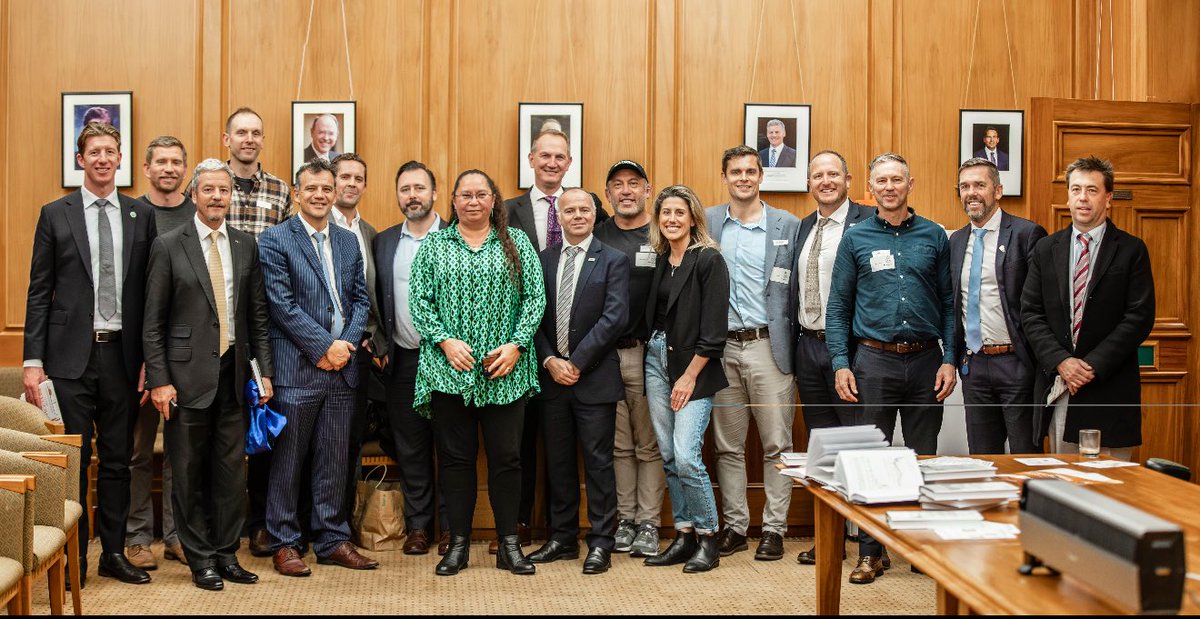
This week I hosted in Parliament a discussion about Bitcoin with Members of Parliament and the Bitcoin Basin Circular Economy, Lightning Pay Limited and The Bitcoin Policy New Zealand.
Interesting discussion about Bitcoin as the world’s first decentralised peer-to-peer cryptocurrency, and its use both as a currency and as a store of value, as well as a demonstration of how it is “mined.”
El Salvador became the first country in the world to use Bitcoin as legal tender in 2021, and this year the United States Government established a Strategic Bitcoin Reserve stating that “there is a strategic advantage to being among the first nations to create a strategic bitcoin reserve.”
There was also a discussion about how Bitcoin differs from most other cryptocurrencies and things like a central bank digital currency due to its decentralised structure, it is non-sovereign by design: not issued or controlled by any state or organization, provably scarce with a fixed cap of a maximum of 21 million coins, and that it has never been hacked despite being the oldest cryptocurrency established in 2009.
Imagine 1/3 of the entire coalition government of a Western Nation meeting to talk about Bitcoin, while a miner mined SATS in the govt building.
Well, that just happened!
Well done @simonocollins and all who made that happen in NZ.
This was a great discussion yesterday.
NZ politicians were a little more clued up on Bitcoin than I expected.
Excellent questions, awesome discussion.
Great to be a part of @bitcoinpolicynz, a very knowledgeable and motivated group of Bitcoiners.
Exciting to be a part of this moment with @bitcoinpolicynz
Yesterday we presented to a room of 20+ members of the New Zealand Coalition MPs.
A great presentation delivered by @r0bertclarkson - An expert in breaking down Bitcoin for all levels, particularly in a very limited time. The success was apparent by the amount of time the MPs stuck around afterwards to dive deeper - genuinely interested to learn more.
Rob also brought a Bitcoin miner along, it was fun to watch security scan it and ask what it was.
This must be a first?! Surely!
We spoke about how @TheBitcoinBasin is growing through transactional spending through @lightningpaynz . Empowering our local businesses and strengthening our communities.
We emphasised the importance of not letting NZ get left behind.
All MPs walked away with a copy of The Bitcoin Standard by @saifedean and a link to "What's the problem" by @satmojoe
Great questions, surprising in fact. The tide is shifting.
They can't ignore what Bitcoin is, nor its potential any longer.
#bitcoinnewzealand