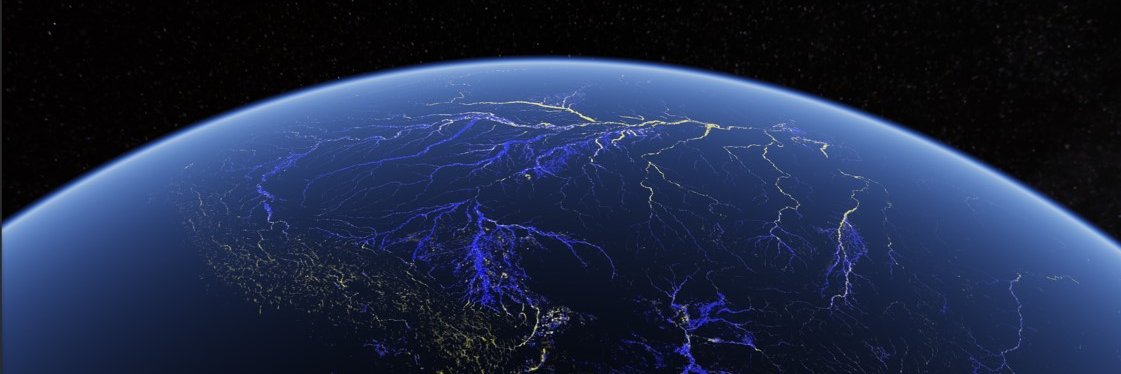
🚨Check out our article in @NatureComms that defines the global extent of river channel belts! This is a new step towards creating high-resolution global landform maps to improve our understanding of river systems.@uibgeo@BjerknesBCCR
👉https://t.co/sDC7cNM9ya
Im excited to share our C3-eKerala project has been funded by the Norwegian Research Council! 🥳 A collaborative Norwegian-Indian initiative, we aim to analyze impact of sea-level rise on coastal communities in the Kerala region.
@zzsylvester Really good work. One question, why are you building the initial Unet segmentation using Tensorflow rather than pytorch which the SAM model uses?
This is big. No #embargoes. No #APCs.
"The #EU is ready to agree that immediate #OpenAccess to…publicly funded research should become the norm, w/o authors having to pay fees & that the bloc should support #nonprofit scholarly publishing models."
https://t.co/0eI8FigzV6
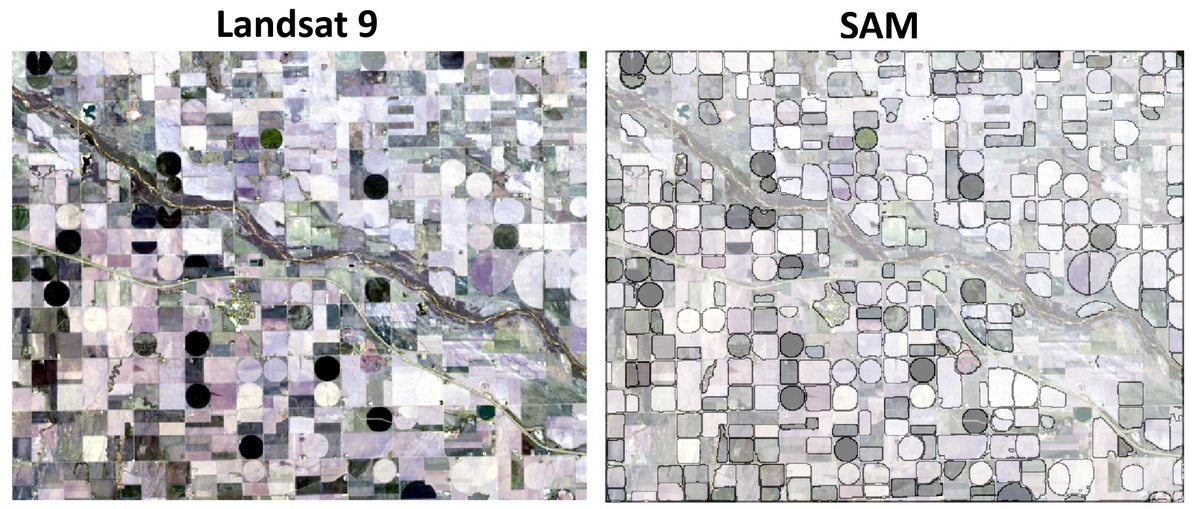
Meta's Segment Anything Model (#SAM) is now implemented within the Geometric Attributes plugin for #QGIS! Go explore its potential for your own use cases here -> https://t.co/t6Fy6Oy9an
#AI#GeoAI#Geospatial#EarthObservations#opensource
Meta's Segment Anything Model (SAM) applied to characterizing fracture networks in NetworkGT! A promising start but still room for improvement/fine tuning...
MetaSAM👉 https://t.co/I97TrjBslI
NetworkGT 👉 https://t.co/XmiztA4URQ
#Structuralgeology#earthobservations#AI
🌊🏞️ Out today, @jess_raff explores the potential for nature-based solutions to counter sea-level rise in the Ganges-Brahmaputra delta. Monsoon intensification could increase sed delivery by 34-60%, but dams & diversions may undermine this natural response. #NatureBasedSolutions
Introducing segment-anything-py, an official #Python package for Meta AI's Segment Anything Model. Install it with one command line: 'pip install segment-anything-py' .
PyPI: https://t.co/OkU5cx8PFp
GitHub: https://t.co/POWw9twFfe
#AI#deeplearning#machinelearning
The morphology of features show valuable information on how regions formed and will change, influencing both ecosystems and human livelihoods. If interested, explore the dataset further using the interactive map 👉https://t.co/aaovOZHDZG
#rivers#hydrology#earthobservations
🚨Check out our article in @NatureComms that defines the global extent of river channel belts! This is a new step towards creating high-resolution global landform maps to improve our understanding of river systems.@uibgeo@BjerknesBCCR
👉https://t.co/sDC7cNM9ya
Excited to share the SEDucate plugin to create sedimentary log exercises from modern depositional environments! Published in @sedimentologika it is an @iearth_no project working with students for students to improve educational resources! Paper -> https://t.co/bMXEjGgaSA
William Helland-Hansen and I discuss sea level rise and coastal change in the 21st century. Article is available in Naturen (Norwegian only) using the link below 👇
https://t.co/Kjfb1sev50
@uibgeo@BjerknesBCCR
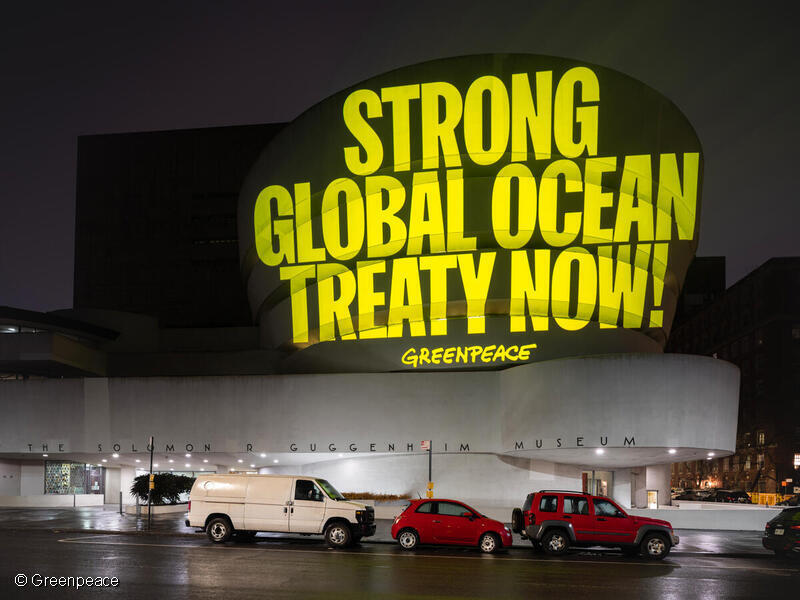
1/8 📢🚨: Governments @UN have just agreed on a Global Ocean Treaty! 🌍
🎉 This is huge - it’s the biggest conservation victory ever! 🎉
Here’s a 🧵 on how we got here and what it means:
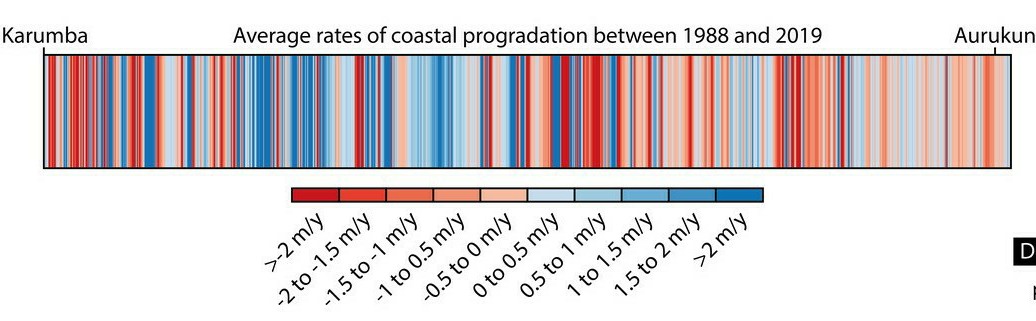
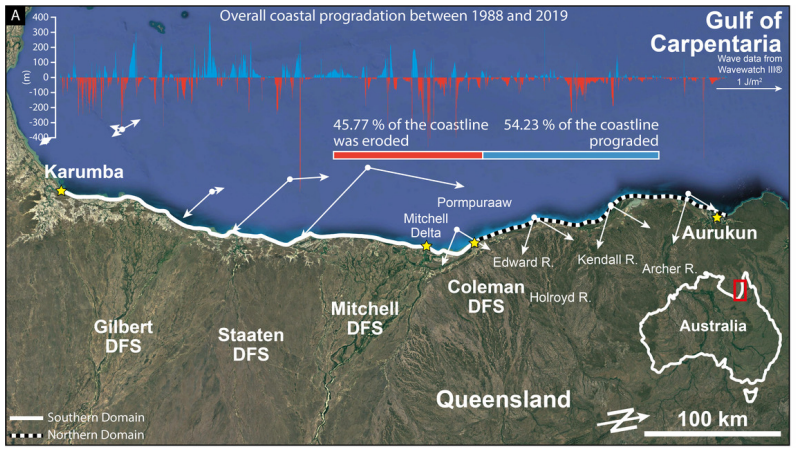
Check out our paper in @TheSedRecord showing the variability in coastal progradation along the Gulf of Carpentaria and its implications for the stratigraphic record! Link below 👇
💙Happy VALENTIN's Day!
...nope, that's not a typo -- we're just celebrating the new article by Valentin Zuchuat (@stratival) et al., documenting patterns of erosion-progradation in the Gulf of Carpentaria, northern Australia.
Check it out here: https://t.co/MUOIFZ8GQN
Our paper on the legacy of plastic waste in rivers is out in @STOTEN_journal with @Seamoht@PeterHarrisGRID and Iane Kane. Take home message - we require targeted mitigation strategies for different river systems! Check out the interactive map below 👇
https://t.co/eMMSQM32hA
The NetworkGT plugin just surpassed 10,000 downloads in January!🥳 Just in case you've missed it, a step by step user guide on how to characterize the geometry and topology of fracture networks is available on our wiki.
https://t.co/PFab6Np0hR
#Geology#fractures