Trailing P/E isn't as useful, especially when company dynamics shift very rapidly in Pakistan. That's why we focus on analyzing price to earnings ratio based on future earnings. We have compiled future earnings estimates from almost all research houses, including yours, and the numbers tell an interesting story.
For example in Fertilizers, #FATIMA offers a pretty steep discount and #EFERT's P/E makes sense when you consider the earnings estimates have consistently gone down in the last one year. Similarly #SYS is trading at an 11x forward earnings multiple, almost half the trailing P/E. The difference is much more useful in Pharma but your list doesn't include any stock from that sector.
#PSX
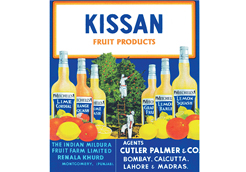
It was named after a railway station in undivided Punjab & was literally torn in 2 by the Partition. While 1 half became a legend in Pakistan, the other became the Tiffin King of India under the watch of a beer tycoon. Discover the Ghost of Renala Khurd, the brand that turned a Scottish man’s bankruptcy into the most iconic Kissan (Farmer) legacy in the world.
In the early 1930s, a Scottish man named Francis J. Mitchell arrived in British India. He had lost his entire fortune in a business crash & was desperate. He leased 720 acres of barren land in Renala Khurd (now in Pakistan) to grow citrus fruits.
The Northwestern Railway had just opened a track passing right through his farm. The railway authorities asked Mitchell to suggest a name for the small station they were building there. Mitchell looked at the local farmers who were bringing him fresh fruits every day. He did not choose a British name. He called the station "KISSAN" (the local word for farmer).
The trains would stop, people would buy Mitchell’s fresh fruit preserves, & they started calling it the stuff from Kissan station. A brand was born from a railway platform.
When the line was drawn across Punjab in 1947, the Kissan empire was decapitated. The main farms & the original factory were now in Pakistan, but the brand’s biggest market was in India. To survive the chaos, the brand had to be surgically divided. An agreement was reached: the Pakistani company would keep the family name Mitchell’s, & the Indian entity (based in Bengaluru) would keep the name Kissan.
To this day, if you go to Pakistan, you will see the exact same jars & flavors, but with the name Mitchell’s. In India, we have Kissan. They are Twin Brands separated at birth by a political tragedy.
After Partition, the Indian side of Kissan was struggling. It was a Ghost Brand looking for a new home. It was acquired by Vittal Mallya (Vijay Mallya’s father) & the United Breweries (UB) Group in 1950. For decades, the jam on our breakfast table was owned by the same man who owned the Kingfisher beer. It was only in 1993 that the brand was sold to Hindustan Unilever.
In the 80s & 90s, jam was seen as a British habit something we ate with a knife & fork. Kissan realized they needed to Indianize the jam. They launched the Kissan Jammy Art campaigns, encouraging kids to draw on their bread.
They were the 1st to move the product from the Posh Dining Table to the Tiffin Box. By making it colorful & fun, they turned a colonial preserve into an Indian childhood staple.
Kissan is a Ghost because it is a brand named after the very people (the farmers) who are often ignored by big corporations. Mitchell named it out of respect for the men who worked his land in the Punjab sun. It is a brand born out of a Scotland to Punjab struggle & kept alive by the India-Pakistan split.
We call it a sweet treat, but Kissan is a survivor of the greatest migration in human history. It is the only brand that is foreign in its origin, Indian in its heart, & has a twin brother across the border.
We are pleased to announce that CCL Holding (Private) Limited has successfully completed the acquisition of a 58.78% majority stake in Mitchell’s Fruit Farms Limited, one of Pakistan’s most iconic and trusted consumer brands.
Arif Habib Limited acted as the Buy-Side Financial Advisor and Manager to the Offer, facilitating this strategic transaction that marks a new chapter of growth and transformation for Mitchell’s.
Legal Counsel: Akhund Forbes
What defines true wealth? Is it financial success, or the responsibility to uplift those around you?
In the latest episode of Searching for Mana (in partnership with The London Stock Exchange @LSEplc) I'm joined by @MishalKanoo - Chairman of @KanooGroup_UAE to explore:
⚖️ Wealth vs Responsibility—why true leadership is about more than money
🏗️ Building a Legacy—how Dubai’s business landscape is evolving
🌍 The Next Tech Revolution—AI, IoT, Crypto, and the industries set to define the future
🤝 The Power of Leadership—why investing in people is the key to long-term success
Mishal’s insights blend history, philosophy, and business in a way that will make you rethink what success really means.
OUT NOW 🚀- Searching for Mana - Season 7 - continues….
LINKS ⬇️
#Leadership #MENA #Wealth #Innovation #SearchingForMana #Familyoffice #dubai
As the sun sets tonight, Muslims in Canada and across the world mark the beginning of the holy month of Ramadan.
I’m sending my best wishes to all who are reflecting, praying, and enjoying iftar surrounded by cherished friends and family.
Ramadan Mubarak!
On poverty traps, and Pakistan
Poverty is a terrible thing - but it always comes with a silver lining. Poor people are willing to work for less, and knowledge they can use to be more productive is already out there. If only a government can help harness this natural advantage, growth and prosperity follows, as countries like Vietnam and Korea have shown.
To put it differently, it takes effort to suppress growth for long periods of time. But some countries manage to do so through their collective decisions, and remain stuck in what economists refer to as a “poverty trap”. There is increasing evidence that Pakistan is stuck in such a trap due to decades of malpractice.
The black line below plots Pakistan’s GDP since 1980. It’s log-scale, meaning a straight line reflects constant growth rate. The straight red line depicts Pakistan’s growth rate during the 1980’s. The increasing separation of black line from red shows that Pakistan’s growth rate has progressively declined since the 80’s. In fact, the black line is almost flattening in recent years, depicting a stagnating economy - Pakistan is stuck in a poverty trap. (1/3)
آج پہلی بار احساس ہوا کہ واقعی کچھ بڑا ہونے والا ہے ۔ گوہر اعجاز کو جاننے والے جانتے ہیں کہ گوہر اعجاز بلا وجہ نہیں بولتے ۔ اب صورتحال کو ہلکا قطعی نہیں لیا جاسکتا۔
کروڑوں عوام کی کمائی کپیسٹی پیمنٹ کے نام پر 40 خاندانوں کو دی جارہی ہے، گوہر اعجاز