Probably the most honest note anyone has issued yet: JPMorgan throws up hands, says it has no clue what happens next.
"For the first time since the start of the Iran conflict, we don't have a baseline view. We simply don't know how to model the endgame." https://t.co/FZo9rY3XEX
Love to see the resurgence of the "you aren't a perpetual victim" "don't be a loser" messaging with gen z influencers and reporters, bless @emmma_camp_
Strava is sick because it’ll be like “remember when you could run a half marathon at a 7:00 min pace and now you’re sucking wind running 3 miles at a 9:00 min pace”
Chevron's plans to expand in Venezuela are real and operate separately from the political shenanigans surrounding the other oil deals. It's positive news for the country and should survive any future political transition in Venezuela or the US.
La historia del siglo XX venezolano fue la de tension entre las capacidades siberanas y la gestión efectiva del petróleo. Se nos olvida que el siglo terminó en 1999 y no 1975, cuando ya estábamos redefiniendo y desarmando el nacionalismo petrolero.
"Espero q estéis bien"
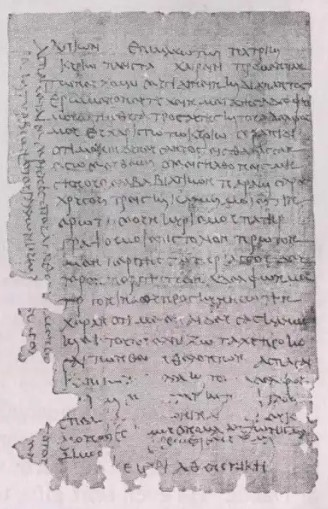
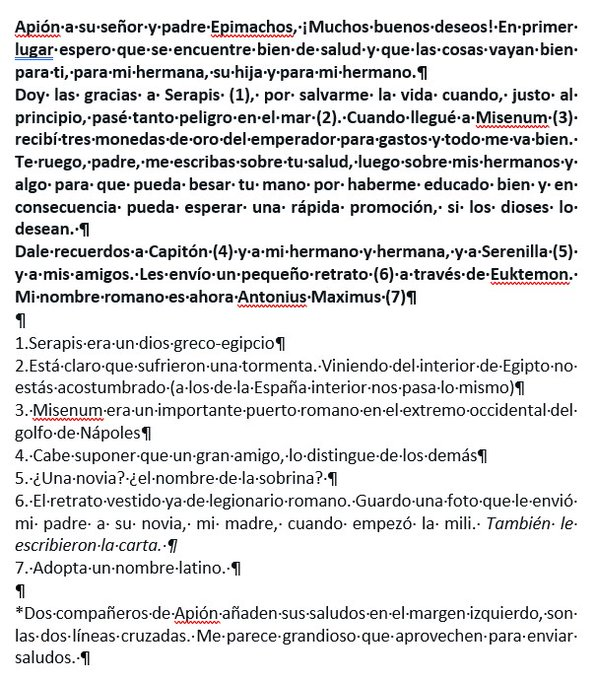
El joven egipcio Apión, II dC, envía a su padre Epimachos esta carta al llegar a Italia con un retrato suyo de legionario romano (guardo una foto de mi padre a mi madre al empezar la mili)
Está en griego, la lengua de esa zona del Imperio
Es enternecedora
Leibniz visited Baruch Spinoza in The Hague in November 1676. They discussed Spinoza's unpublished Ethics, Cartesian physics, and Leibniz's philosophical ideas. The meeting lasted only a few days but is one of the more intriguing encounters in the history of philosophy.
One of the funniest things I’ve ever seen. The way it’s gunning it with the cartoonish posture, the skeddadle backward like it slipped on a banana peel then the explosion. Could watch this happen for hours
I spoke with @LaulPatricia about Marxism:
One is: What’s remarkable is that Marxism has been tried. Now, of course, defenders of Marxism say it hasn’t really been tried anywhere, but certainly the people who implemented it claimed they were implementing Marxism.
And this is a massive experiment—a global experiment—with a very clear outcome. Namely, the Soviet Union was a disaster. The imposition of communism on Eastern Europe was a disaster. The imposition of communism in Venezuela was a disaster. The imposition of communism in Maoist China was a disaster. Disaster in terms of both poverty and oppression and genocide and stupid wars. So the world has told us what happens under communism, and it’s a sign of how out of touch intellectuals can be that there are still people who defend it despite the entire world giving a very clear-cut answer.
One more is: would you rather live in North Korea or South Korea? Would you rather live in the old East Germany or West Germany? We have an experimental group and a matched control group in terms of culture, language, and geography, and the answer is crystal clear. So this is a sign of, I think, the pathology of intellectual life—that Marxism can persist.
The other is, you did call attention to one of the appeals of Marxism, though, and more generally of heavy, strong influence of government guided by intellectuals, which is that there are certain kinds of reforms that you can state as principles. You can articulate them verbally as propositions—like equality, human rights, democracy—but there’s other kinds of progress that take place in massive distributed networks of millions of people, none of whom implements some policy. But collectively, there is an order, an organization that’s beneficial.
So that can happen organically through, for example, the development of a language. No one designed the English language. It’s just hundreds of millions of English speakers. They coin new words. They forget old words. They try to make themselves clear. And we get the English language and the other 5,000 languages spoken on earth.
Likewise, a market economy is something where knowledge is distributed. You don’t have a central planner deciding how many shoes of size 8 will be needed in a particular city, but rather information is conveyed by prices, which are adjusted according to supply and demand. And you’ve got a distributed network of exchange of information that can result in an emergent benefit.
Now, intellectuals tend to hate that. They like rules of language—of correct grammar. They like top-down economic planning. They like cultural change that satisfies particular ideals described by intellectuals. And so rival sources of organization, like commerce, like culture—traditional culture—tend to be downplayed by intellectuals.
And this can be magnified by the fact that many dictatorships give a privileged role to intellectuals, which may be why, over the course of the 20th century, and probably continuing to the present, there has not been a dictator that has not had fans among intellectuals—including the mullahs and ayatollahs of Iran, but also the communist dictators: Mao and Castro, even Stalin in his day. And every other dictator has had, actually, often fawning praise from Western intellectuals.