For me, there is Maradona and then there are all the other players in the world. I don’t have the words. He was a magician and a bastard on the pitch. And no matter how much of a battering he got, he just kept going. I don’t know how. He was a tiny player. But he persevered. And usually won.
I largely think of "crypto" as a failed asset class at this point.
I've written about the causes multiple times. Mainly, most crypto assets are worthless, or have dreadful value accrual, and most founders have abused the lack of guardrails and dumped on people indiscriminately, or are outright scammers.
On top of that we had the Memecoins SuperBullshitCycle, a trend that brought the worst out of people, and sucked everyone's souls & pockets dry. And then came the never-ending wave of DeFi hacks, which has dramatically increased since last April.
This can seem contradictory, as adoption of "crypto" is surging:
> Stablecoin adoption continues growing fast
> Politicians in the US are openly pro crypto
> Tradfi is looking at tokenizing everything
> Usage of equities & commodities perps is exploding in offshore and DeFi exchanges
> The US is in the early stages of adopting perps
> Prediction markets are becoming part of everyone's daily lives
These are more "blockchain" than "crypto", although there are some exceptions with a token in those fields, most of which have been performing very well in recent months. A few among those exceptions even distribute most revenue to holders via buybacks (Hyperliquid in particular), which is what every investor actually wants to see to be invested in a good business rather than a fleeting narrative.
We also have the privacy category. The one old school crypto category that is not liquid diarrhea. The world needs private non-custodial stores of value.
Crime in particular needs privacy, as proven by the DoJ confiscation of $15 billion in Bitcoin from Cambodia's pig butchering farms, legal filing for which was submitted on October 8, 2025 (coincidentally right before 10/10). Of course, everyone needs privacy, not just criminals, but crime flows are real, and large.
The asset attracting the most flows in this niche is Zcash. Zcash's recent performance has been fascinating, as it has been trending higher with bitcoin trending lower, a sign of real reallocation among bitcoiners.
Another crypto category that is not dead is the "AI" category, full of high flying, fundamentally lacking, narrative driven tokens. The standout exception is Venice, a private AI platform with growing users and revenue, whose tokens are directly backed by the business rather than a narrative.
So one could say old "crypto" is a failed asset class, but from the ashes come new beginnings, and the new face of crypto is one heavily dominated by the needs of Tradfi, prediction markets, AI, and privacy.
Crypto sucks. Long live crypto.
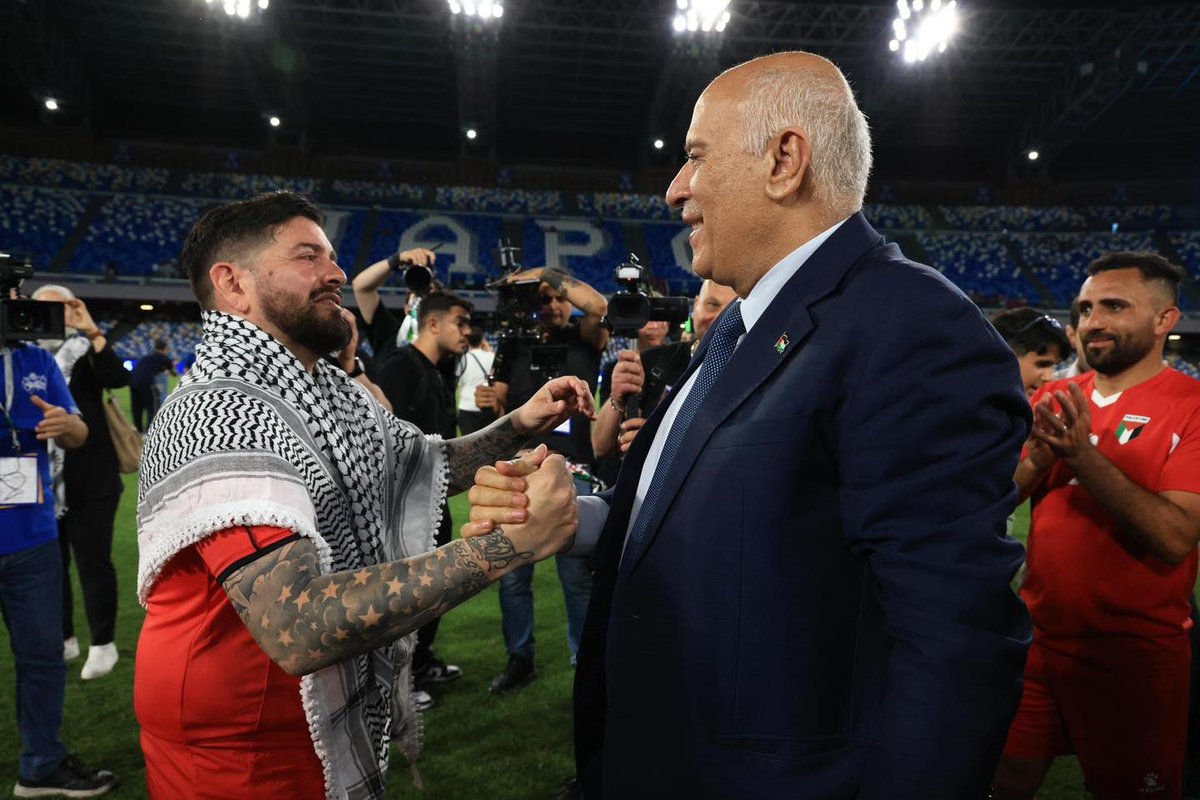
the son of football legend Diego Maradona with the Palestinian keffiyeh on the sidelines of the solidarity match in Naples, support and solidarity with Palestine
One of the most horrific scenes in human history has been revealed.
The moment a small child carrying a water jug to her besieged and thirsty family was bombed, killing her and shattering her body.
A video the world must never forget.
Horrific videos from Gaza have been circulating for hours after israel struck a residential building.
I don’t know what’s more disturbing, the image of children’s bodies torn apart (again) or the fact that it’s barely considered newsworthy because the children are Palestinian.
While more than 2 billion Muslims around the world celebrate Eid today,
over 1,000,000 women and girls are starving in Gaza.
Open the gates. Let aid into Gaza now!
"Israel envió a mi casa a 2 tipos para ofrecerme un sobre con 500 dólares para que dejase de investigar sus crímenes en Palestina. Después el jefe del Mossad, Yossi Cohen, me amenazó a mi y a mi familia para que dejase de investigar a Israel"
Fatou Bensouda, ex fiscal jefe de la Corte Penal Internacional, denuncia las amenazas y el intento de soborno que "Israel" le hizo para que parase de investigar sus crímenes en Palestina.
En esta entrevista, Fatou cuenta cómo los sionistas controlan a los jueces internacionales, a través de las amenazas y los sobornos, al igual que el imperio de EEUU, que bloqueó sus cuentas bancarias y le hizo la vida imposible por intentar juzgar sus crímenes.
Así funciona el mundo capitalista, los poderosos controlan a los jueces para que no les juzguen y solo persigan a sus enemigos, todo es corrupción y mafia.
Israel killed Fadi Almeghari today in Gaza.
He was not armed.
He was not a combatant.
Fadi was a journalist and photographer documenting the genocide against his people.
Israel is deliberately murdering the people showing the world its crimes.
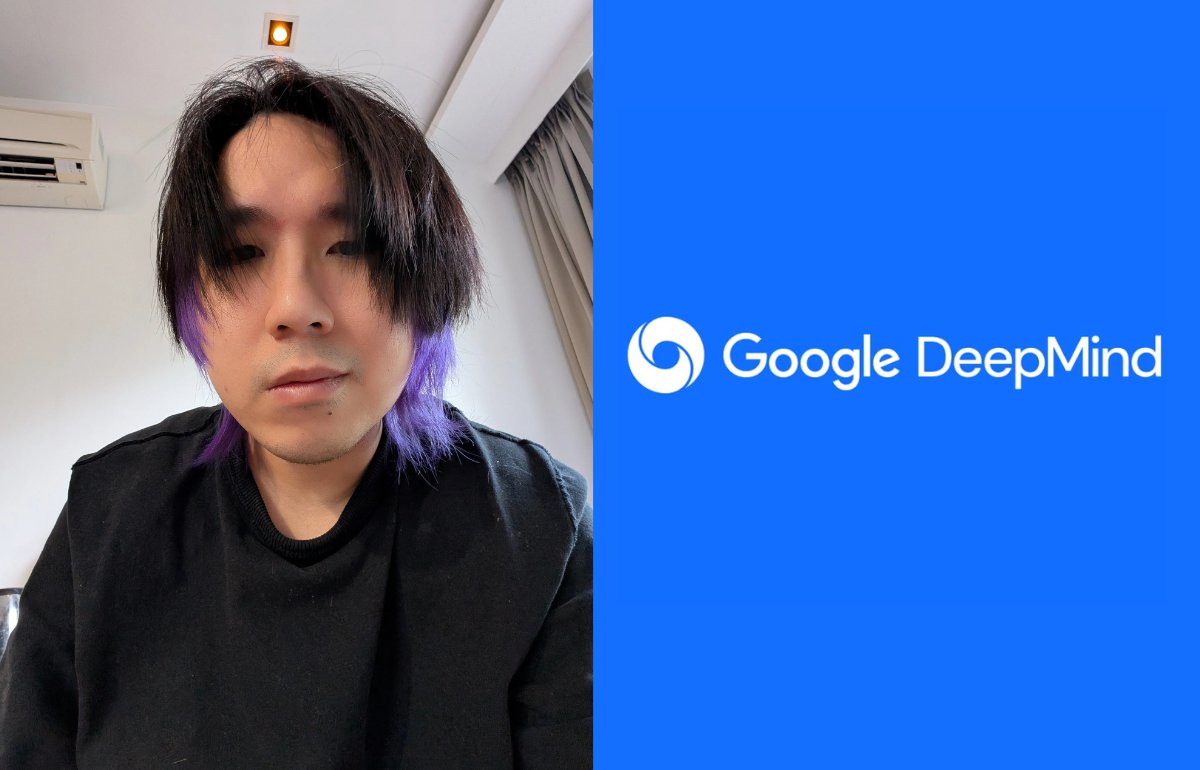
A kid from Singapore who grew up training to be a concert pianist became one of the most important AI researchers alive, quit Google to start a frontier AI lab with 20 people and $60 million, built a model that competed with GPT-4 in a year, then walked away from the unicorn he created and went back to Google to lead the team that just won the International Math Olympiad with an AI.
His name is Yi Tay. Almost nobody outside the AI research world knows it.
Here is the story.
Yi grew up in Singapore. He earned a classical piano performance diploma from Trinity College London in 2012 and almost became a professional musician. He went into computer science instead, did his PhD at Nanyang Technological University, and joined Google Brain as a research scientist. There were almost no Singaporean researchers in frontier AI at the time. He used to say he was on an uncharted path.
At Google he became the co-lead of PaLM-2, the brain behind Google's entire AI stack. He invented UL2, a pretraining method now used across the industry. He invented Differentiable Search Indexes. His work shipped inside Google Assistant, YouTube, and Search.
When ChatGPT launched in late 2022, Yi made a decision that shocked the research community. He left Google.
In 2023 he co-founded Reka with researchers from DeepMind and Meta. The headquarters was in San Francisco, but the team was scattered across Asia, Europe, and the US. They had no big-tech backing. They had 20 people total. They had $60 million in funding.
For context, OpenAI had around 600 people working on GPT-4. Google Gemini had 950 co-authors on the technical report. Reka had fewer than 5 people on pretraining.
Yi lived nocturnally for 639 days. Five cups of coffee a day. Takeout twice. He gained 15 kilograms. He had a newborn baby. He worked across time zones his entire team was spread across. He built infrastructure from scratch in places Google had taken for granted.
In May 2024 Reka Core debuted at number 7 on the LMSYS leaderboard. The only GPT-4 class model on the planet that was not trained by OpenAI, Google, Anthropic, or Meta. A 20-person company with 5 people on pretraining had just shipped a frontier model. Alibaba Cloud, NVIDIA, and Oracle became partners. The company hit a $1.3 billion valuation.
Then in November 2024 Yi did something nobody expected.
He walked away.
He posted a quiet note on his blog titled "Returning to Google DeepMind." After 639 days of building one of the most respected frontier labs outside the big four, he went back to the company he had left. He wrote that he had learned more than he ever thought possible. He did not explain much else.
Google made an extraordinary bet on him. They let him build something nobody else in the industry has, a DeepMind lab in Singapore. Yi runs it with Quoc Le. The team focuses on reasoning, reinforcement learning, and post-training for Gemini. It started with a dozen researchers. It now has over 300.
Last summer, Yi's team led the effort that won the International Math Olympiad gold medal with Gemini Deep Think. The model solved IMO problems in a live competition, the kind that fewer than a hundred humans on Earth can solve under time pressure. His team also drove the work behind Gemini's ICPC 2025 gold medal.
Yi still lives in Singapore. He still plays piano when he has time. He calls himself a global citizen who does not identify with any local AI scene. He has been at Google for nearly 14 years if you count the Reka detour. He says the Singapore lab is just getting started.
A pianist from Singapore co-led the model that powered Google AI, left to build a frontier lab with 20 people and beat models trained by armies, walked back into Google, and is now running the team that just taught a machine to win Math Olympiad gold.
The most influential AI researcher you have never heard of is sitting in a Singapore office right now, training the next generation of models that think.
Some of my perspective on where the @ethereumfndn is going.
First of all, this is only my own view. The board is not just me, and I have no extra special powers on the board that the other board members do not. @aerugoettinea is the one executing much of this transition. My input has been largely on technical questions. The board is in the process of expanding, and my own power within the org will continue to decrease, which is honestly what I want.
The 2025 era brought many important improvements to EF and its ability to execute. Many issues were resolved, and EF continues to benefit from its improved efficiency and greater focus on concrete goals to this day. And so with those problems resolved, early this year, the largest remaining hole that I perceived was something different nagging at me: I would regularly spot people saying things like "vitalik says these beautiful things about ethereum needing to be decentralized, and have privacy, and be a sanctuary technology, but why do the EF's actions not reflect that?"
Now, you may have been hearing something different. You may not have been sensing a feeling of crisis at all, and maybe were hearing people saying that finally we were taking execution and BD seriously and the main task for us is to keep going that way and be even better and faster. Then probably there is genuine difference between you and me, in what kinds of criticism I take most seriously, and what kinds of critics through their criticism are most able to make me feel pain.
As an analogy, let's briefly switch over to a different domain.
One belief you can have about Google is that it is a success story, and has brought a lot of good to humanity in organizing the world's information. Another belief you can have about Google is that they had a beautiful idealistic beginning, but at some point the corruption of mainstream corporate attitudes seeped in, and they slowly bit by bit completely abandoned the "don't be evil" slogan.
My belief on Google specifically is probably somewhere between the two. BUT, if you had taken me back in time to ~2008, and offered me a button to press to make Google one or two standard deviations more "dogmatic", eg. give Richard Stallman permanent veto power over some key policies, I would immediately press it.
Why? Because a choice for one company is not a choice for the world, or even one country. Google existed and exists in the context of a technology industry generally drifting away from early idealistic don't-be-evil roots and toward greed for financial gain, totalizing visions of accelerated superintelligence, infiltration by sociopaths, and craven capitulation to (or worse, active participation in) government pressure for ideological control, surveillance and war. And so *one company* doing something different, positioning itself to be what George Bernard Shaw calls the Unreasonable Man, resisting the trend of the times, would have been better for freedom, balance of power and stability of society as a whole, than *all* large companies bending to dominant trends. This is a part of my version of pluralism.
This line of thinking is not just mine, but I also is not too far off from what Aya and others had in mind with the Mandate.
Now how does this all get to the role of the EF?
EF is not a "center of Ethereum", rather EF is "one node, with a defined purpose, alongside other nodes". We've always said that the EF should be the latter, but many in the Ethereum ecosystem (and even within the EF) wanted us to be the former. Now, we are taking action to ensure that we will be the latter.
This is particularly important because EF is a limited organization, with limited resources and limited organizational capacity. The EF has only ~0.16% of all ETH (less than many other individual ETH holders), whereas among other blockchains it's common for "the central foundation" to have 10-50%. Fiscally, the EF was originally designed to fulfill a limited work scope defined in the token sale docs and other pre-launch materials (building the chain software; getting through Frontier, Homestead, Metropolis, Serenity), which was fully completed in 2022; it was not designed to be an eternal steward.
And so today, the EF is choosing to use its remaining resources to pursue longevity over breadth (yes, this means we sell less ETH). The EF focuses *specifically* on those activities critical to the success of ethereum as a censorship/capture-resistant, open, private and secure system, that would not happen otherwise. This means making hard choices, and in some cases even activities that we highly approve of and people that we highly respect becoming outside of the EF. People of great technical talent, public respect and even alignment with the mission and CROPS being outside of the EF is in fact necessary if we want important tasks to be able to attract outside capital. This also means the EF taking opinionated stands culturally.
This is all intended in cooperation with all other parts of ethereum. We recognize that many other parts of the ethereum world highly respect CROPS and related values. But highly respecting is not the same as choosing to specialize and totally dedicate to a domain (Compare in a different domain: I think reducing animal cruelty is important, and I like vegan food, but am not full unconditional vegan myself)
EF is still in a transition period, and we expect its new long-term form to stabilize over the next few months. What are the guiding principles of this new form? Again, I am only one person, but I can give my answer from a technical perspective (there are also critical non-technical aspects).
At the core, *Ethereum must be impressive*. We are living in an age of highly intelligent AI and all kinds of other technological acceleration. "Status quo EVM, with a hard fork or two a year to optimize for short-term needs of users" is not interesting.
To some, "impressive" means: 250ms latency and 1M TPS. I think Ethereum trying to go that route is a mistake. Being as fast and as scalable as possible, and only a small epsilon more decentralized than the others, is a route to mediocrity, and if we try it we will lose.
I think Ethereum should scale. But I think Ethereum should strive the hardest to be deeply impressive in a different dimension: the CROPS dimension. This means things like:
* Provably bug-free Ethereum. This is a goal that all cybersecurity researchers would have thought is absurd and impossible, up until roughly 6 months ago. Now, it's on the cusp of being possible, thanks to AI-assisted formal verification. So we should be frontrunners in doing this.
* Available chain consensus. Ethereum is, and with lean consensus will cotninue to be, the ONLY chain that has both (i) traditional-BFT style properties that it's safe under asynchrony up to a high level of fault tolerance, and (ii) the bitcoin PoW-style property that under synchrony it's safe up to 49% attackers. As far as I can tell, literally no other chain has this or is planning for it; bitcoin goes for (ii) only and most other chains go for (i) only. Some will remember I fought hard for this, Unreasonably insisting that it is not OK for ethereum to rely on social consensus and hard forks to rescue ethereum from 34% of nodes going offline. It's OK for chains like hyperledger, bnb, solana, tempo, etc. It's not OK for bitcoin or ethereum or eg. zcash.
* Intermediary minimization. The fact that smart contract wallets, protocols like railgun, etc have to send transactions through intermediaries to get included onchain is honestly embarrassing, and it's a constant point of fragility. Hence the work on FOCIL and EIP-8141 (and 7701 and years of work before) to make transaction sending intermediary-minimized with public mempool and strong inclusion properties, in a truly general-purpose way, that covers not just eg. secp256r1, but also privacy protocols and much more. Kohaku is pushing intermediary minimization at the user layer, pulling Ethereum away from the dystopian status quo world where our wallets don't even verify the chain, send our private data out to a dozen third-party servers, and toward a brighter CROPS future.
Some of these goals are Unreasonable - maybe Ethereum would be "fine" getting only 50% of the way - what if we depend on intermediaries, but make it easy to switch? But going 50% of the way would not make Ethereum Deeply Impressive in the CROPS way. So we push for 100%.
Fortunately all these goals are compatible with high TPS, this is a major focus of research (esp. on scaling the state). Well-designed L2s can also help, especially L2s optimized for specific applications (eg. high-volume trading, privacy...). These goals are even compatible with significantly lower slot times, thanks to Raul's work on erasure-coded P2P, and many other optimizations.
The most high-value "product" of the ethereum blockchain, financially speaking, is ETH the asset. Ethereum secures $250 billion of ETH. The types of properties of Ethereum that I mentioned above are very good for ETH the asset. Nearly 90% of my net worth is in ETH, and most of the remainder is ~$40m of onchain fiat of which every dollar has already been allocated for some open-source biotech or software or hardware initiative. That said, there are aspects of supporting ETH the asset - *necessary* aspects even - that are outside the scope of the EF. This is where we need other heroes (some of whom hold more ETH than the EF does) to step in and help. EF has been recently thinking more about how it will relate to other such organizations, and give them needed initial support.
EF will be a smaller ship than in previous years, a more opinionated one - in some cases more opinionated in ways that might be difficult to comprehend - but a longer-lasting one, and one suited to making sure that ethereum brings something meaningful to the world. We are grateful to all those inside and outside the EF who are helping to make this happen.