Tecnología web y eMarketing con aspecto humano. Estamos convencidos que un gran código y un gran diseño sólo puede ser creado por gente extraordinaria.
🚨Architects are going to hate this.
Someone just open-sourced a full 3D building editor that runs entirely in your browser.
No AutoCAD. No Revit. No $5,000/year licenses.
It's called Pascal Editor.
Built with React Three Fiber and WebGPU -- meaning it renders directly on your GPU at near-native speed.
Here's what's inside this thing:
→ A full building/level/wall/zone hierarchy you can edit in real time
→ An ECS-style architecture where every object updates through GPU-powered systems
→ Zustand state management with full undo/redo built in
→ Next.js frontend so it deploys as a web app, not a desktop install
→ Dirty node tracking -- only re-renders what changed, not the whole scene
Here's the wildest part:
You can stack, explode, or solo individual building levels. Select a zone, drag a wall, reshape a slab -- all in 3D, all in the browser.
Architecture firms pay $50K+ per seat for BIM software that does this workflow.
This is free.
100% Open Source.
Dude... This is ridiculously useful 🤯
A site that's like a swiss army knife for devs & designers.
Which contains a collection of small, browser-based tools across different categories that work without logins, tracking, or data collection.
Nice to bookmark if you like fast, no-BS tools that just work :)
Source 🔗: tools . rmv . fyi
Follow me for more amazing AI, Coding & Web Dev insights 💎
𝗕𝗲𝘀𝘁 𝗕𝗼𝗼𝗸𝘀 𝗳𝗼𝗿 𝗟𝗲𝗮𝗿𝗻𝗶𝗻𝗴 𝗗𝗮𝘁𝗮 𝗦𝘁𝗿𝘂𝗰𝘁𝘂𝗿𝗲𝘀 𝗮𝗻𝗱 𝗔𝗹𝗴𝗼𝗿𝗶𝘁𝗵𝗺𝘀
Been asked this a lot lately, so here's my go-to list. These books took me from "what's Big-O?" to actually understanding algorithms.
🟢 𝗙𝗼𝗿 𝗯𝗲𝗴𝗶𝗻𝗻𝗲𝗿𝘀
𝟭. 𝗖𝗼𝗺𝗽𝘂𝘁𝗲𝗿 𝗦𝗰𝗶𝗲𝗻𝗰𝗲 𝗗𝗶𝘀𝘁𝗶𝗹𝗹𝗲𝗱 - Ferreira Filho & Pictet
Super thin, covers everything at a high level: ideas, logic, Big-O, recursion, data structures. The goal isn't depth, it's building your vocabulary. A perfect first step.
👉 https://t.co/LDjAqwShJ1
𝟮. 𝗚𝗿𝗼𝗸𝗸𝗶𝗻𝗴 𝗔𝗹𝗴𝗼𝗿𝗶𝘁𝗵𝗺𝘀 - Aditya Bhargava
This one's fun. Lots of diagrams, minimal code, and it makes you laugh while learning. Goes deeper than book #1, no prior knowledge needed. The best book to start your algorithm journey.
👉 https://t.co/mPqTmiNpPF
🟡 𝗙𝗼𝗿 𝗶𝗻𝘁𝗲𝗿𝗺𝗲𝗱𝗶𝗮𝘁𝗲 𝗹𝗲𝘃𝗲𝗹
𝟯. 𝗔 𝗖𝗼𝗺𝗺𝗼𝗻-𝗦𝗲𝗻𝘀𝗲 𝗚𝘂𝗶𝗱𝗲 𝘁𝗼 𝗗𝗦𝗔 - Jay Wengrow
For self-taught devs and bootcamp grads. Practical, multiple languages (Ruby, Python, JavaScript). Explains the "why," not just the "how." Really good at making time complexity click.
👉 https://t.co/3rLPXrrrNx
𝟰. 𝗖𝗿𝗮𝗰𝗸𝗶𝗻𝗴 𝘁𝗵𝗲 𝗖𝗼𝗱𝗶𝗻𝗴 𝗜𝗻𝘁𝗲𝗿𝘃𝗶𝗲𝘄 - Gayle McDowell
The interview prep bible. 189 problems with detailed solutions. Teaches you how to think through issues and communicate solutions. A must-have if you're job hunting.
👉 https://t.co/JXgc3iiBYj
🔴 𝗙𝗼𝗿 𝘁𝗵𝗲 𝗮𝗱𝘃𝗮𝗻𝗰𝗲𝗱 𝗹𝗲𝘃𝗲𝗹
𝟱. 𝗜𝗻𝘁𝗿𝗼𝗱𝘂𝗰𝘁𝗶𝗼𝗻 𝘁𝗼 𝗔𝗹𝗴𝗼𝗿𝗶𝘁𝗵𝗺𝘀 (𝗖𝗟𝗥𝗦) - Cormen et al.
The bible. 1,300+ pages. On every serious programmer's shelf. Much more math, rigorous analysis, and pseudocode for everything. Not for beginners, but you'll reference it your entire career.
👉 https://t.co/5psFUnmBsC
𝟲. 𝗔𝗹𝗴𝗼𝗿𝗶𝘁𝗵𝗺𝘀 - Jeff Erickson (FREE)
Outstanding balance of math rigor and practical insight. Funny writing, extensive exercises. Requires mathematical maturity but rewards deep study.
👉 https://t.co/XCa8MAsNob
And my advice:
- Complete beginners: read 1 → 2 → 5
- Self-taught/practical: start with 2 → 3 → 4
- Interviewing soon: jump straight to 4, reference others as needed
- Want it all: do them in order
Also check out https://t.co/TwR95yRNRu, a great practice resource.
Remember: this isn't a sprint. Implement what you learn, and be patient with yourself. The concepts will click eventually.
What algorithm books changed your game? Drop them in the comments 👇
#technology #softwareengineering #programming #techworldwithmilan #coding
A spinning wheel menu, made in @rive_app
Drag to rotate, release to snap. Items scale and fade based on their position.
Made with Luau scripting and data binding.
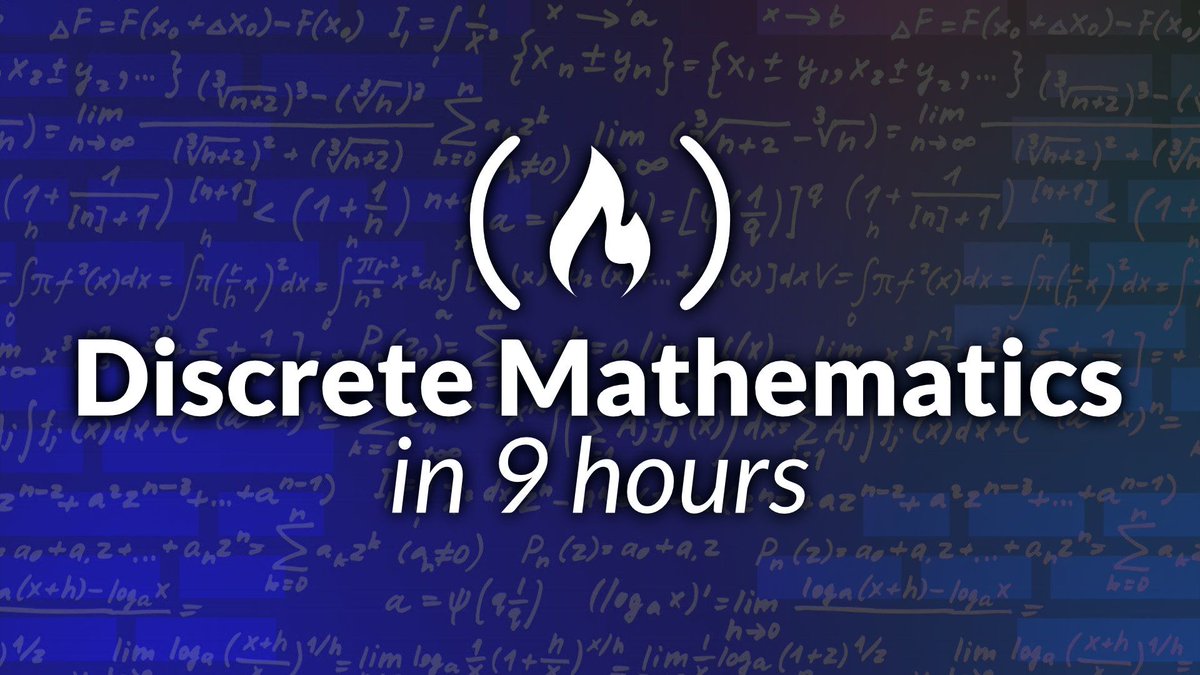
Discrete Mathematics plays a key role in machine learning and algorithms.
And in this Python course, you'll learn some of its key concepts like combinatorics, number theory, and the Pigeonhole Principle.
The course also covers permutations, the Rule of Sum, prime and rational numbers, congruences, and lots more.
https://t.co/JeAJME2puM