The world is not chaotic – it only appears chaotic to the uninformed mind. The perceived chaos is just a symptom of the changing world order – from the Western-dominated "rules-based" order toward a multipolar world. Read on: https://t.co/jqN04VNCk9
#foresight
@IIICapital If energy becomes free due to fusion, no one would ever need money or savings of any kind.🤯
If energy is infinite & free, who needs money that saves energy purchasing power like gold or BTC?
Fusion would likely promptly crash all asset prices set by financial markets.
Ok, we now have the actual text of the Greenland deal (https://t.co/VxZ1Q47jsh), so we can say how it compares to the existing 1951 arrangement and who, between Trump and Denmark, lied the most in their framing of it.
Long story short - which may surprise some - the Danes lied the most: Trump is pretty much correct in saying that this new deal grants the US control of Greenland.
Let's look into what changed compared to the 1951 deal.
1) This is now a permanent arrangement: whereas the existing 1951 deal only lasted as long as NATO existed, this one "does not have an end date and may only be amended by mutual consent."
It even survives a hypothetical future independence of Greenland: in that event, Denmark and Greenland must ensure that the independent Greenlandic state "affirmatively assume[s] all of the rights and obligations of the Kingdom of Denmark specified in this Agreement."
2) In the 1951 agreement, the US could set up bases only where both governments agreed, and only on the basis of NATO planning. The new deal locks in three bases: the US can "modernize and expand its activities" at Pituffik, its only base in Greenland until now, and "shall be allowed to establish an additional Defense Area at Narsarsuaq and Mestersvig." Further bases beyond these 3 can be justified by the defense of "the American continent," a US interest rather than a NATO one.
Also, quite subtle but this is interesting: Article IV(iii) says that "the United States may establish additional defense areas in Greenland" and that consultations are then held "to decide implementation details based on mutual agreement." What this means is that the principle of a new base is automatically granted and only the implementation details require agreement.
Article VII also gives the US "the right to raise concerns regarding construction, or change of use" of any building near a US base, after which the parties decide together what to do. Which means that the US has a say over civilian planning around its bases.
3) On US military movement across Greenland, the wording change between the 1951 agreement and this new one is quite funny.
The 1951 text said (Art. V(3)): the US "may enjoy... the right of free access to and movement between the defense areas through Greenland, including territorial waters, by land, air and sea," but only "in accordance with general rules mutually agreed upon and issued by the appropriate Danish authority in Greenland."
The new one says: "the United States of America shall enjoy... the right of free access to and movement between the Defense Areas through Greenland, including the Territorial Waters, by land, air and sea."
That's it: "May" becomes "shall," and the US military movement no longer has to follow rules "issued by the appropriate Danish authority in Greenland." The US also gets something new on top: "undersea access to and movement within the Territorial Waters," i.e. submarines.
4) Non-NATO exclusion: non-NATO states are barred from military installations or a persistent presence in Greenland unless all three parties approve, giving the US an effective permanent veto. The 1951 deal had no equivalent clause.
5) Investment screening: this is entirely new. "States or investors from a state that is not a member of NATO, a NATO partner, or an EU member state" (i.e. Russia, China, India, the Gulf States, etc.), "shall not be allowed to have (i) control, (ii) significant influence, or (iii) access to non-public information...within Particularly Sensitive Sectors or Activities in the territory of Greenland (including the Territorial Waters), unless agreed between the Parties."
Again, it basically means that the US has a permanent veto over who can invest in strategic sectors in Greenland, as far as non-NATO or EU states are concerned.
6) Lastly, in stark contrast with the 1951 deal, the framing of the deal changes significantly: this new deal is largely framed around the US.
The 1951 agreement existed only "for the benefit of the North Atlantic Treaty Organization." The new one lists the defense of "the American continent" as an objective, celebrates "the irreplaceable role" of the United States military as well as "the United States' indispensable historical and ongoing contributions to the security and defense of Greenland," and names the establishment of Trump's "Golden Dome" missile defense system as a key goal.
So, to sum up:
- The US secured a permanent military foothold that even an independent Greenland would inherit whether it likes it or not
- The US now has veto power over any non-NATO military presence in Greenland, and over who can invest in its strategic infrastructure and resources (beyond NATO and the EU)
- Denmark signed away its say over the principle of new US bases, with only the right to discuss the "implementation details"
- Danish authorities no longer set the rules for US military movement across the island
- And all of it is now justified by the defense of "the American continent"
I don't know in which universe this even remotely "recognizes the sovereignty and territorial integrity of the Kingdom and the Greenlandic people's right to self-determination," as Danish PM Mette Frederiksen put it (https://t.co/dHOavrPB3r).
Yes, the preamble of the text cynically "reaffirms" Danish sovereignty but, in my book, when you let a foreign country put bases on your soil, move its troops without following your rules and veto who else can come in, in perpetuity, after it spent two years threatening to take you by force, the word for that is anything but "recognized sovereignty" 🤷
I followed the money behind the “slow down AI” movement.
What I found is not a secret conspiracy.
It is more interesting than that.
It is a documented influence network connecting billionaire funders, nonprofits, creators, media, activists, frontier labs, and lawmakers.
🧵
Met a German founder this week and asked him if all the stories one reads about the challenges of startups in Germany are exaggerated. "No, they're understated." Proceeded to describe spending a full day having a 90-page investment contract read to him (mandatory under German law; § 13 BeurkG) by a notary that then charged €30,000. That was for his first company. His second company, needless to say, was not incorporated in Germany.
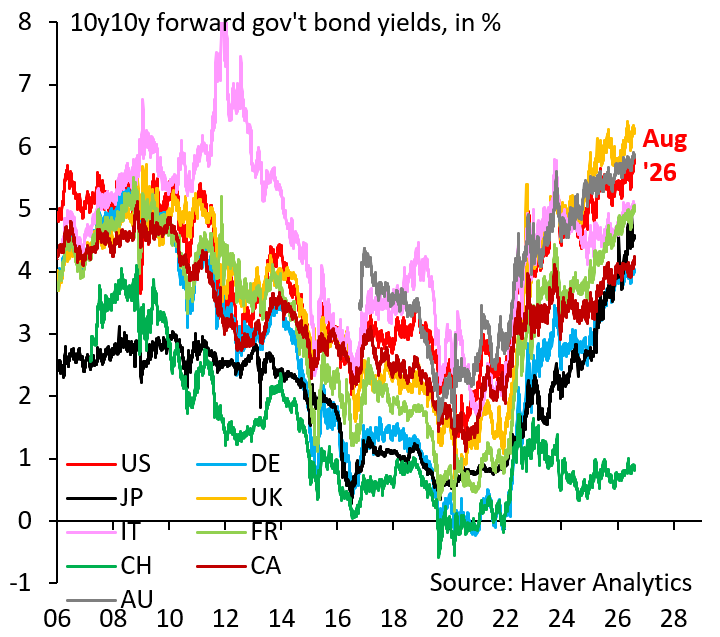
Longer-term government bond yields are rising everywhere. If you're wondering why that's happening, just look at the one outlier in all this: Switzerland. Swiss public debt is little more than 30%. Everywhere else, fiscal policy & debt are out of control.
https://t.co/PROCIP7B6b
Tucker dropped one of his most explosive theories yet:
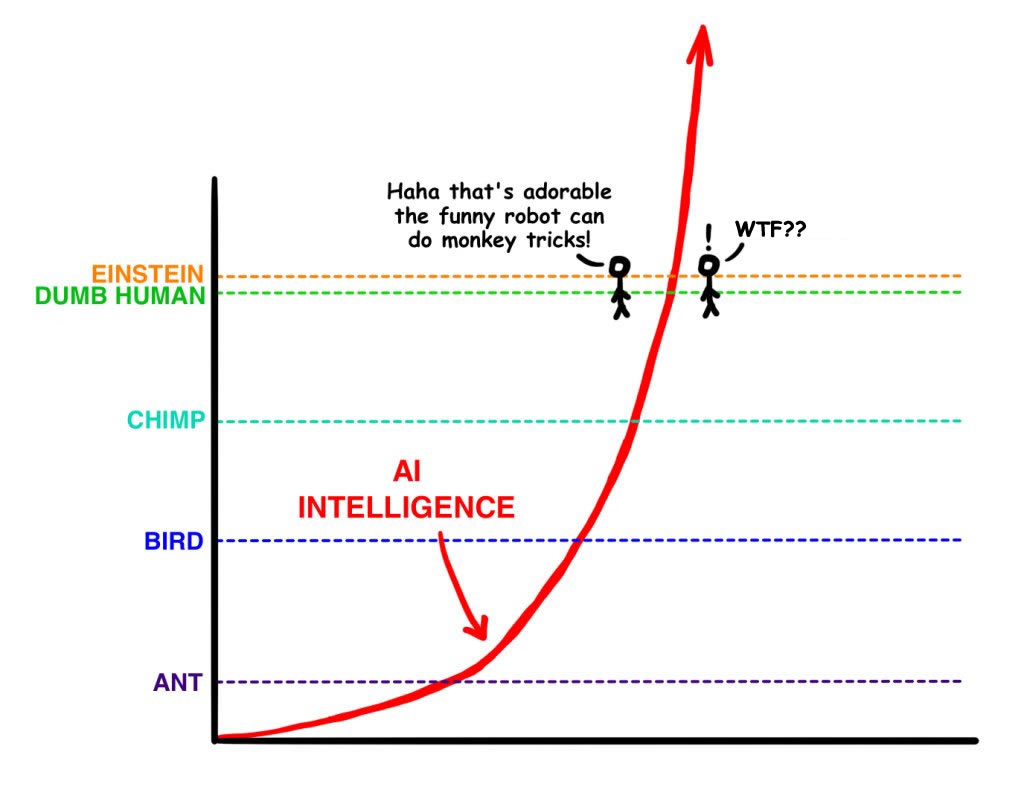
The real battlefield in today’s oil market is actually artificial intelligence.
As algorithms now dominate oil futures trading, governments no longer need to influence human traders, as they can simply flood the information space with reassuring statements, and the AI systems interpret those headlines as signals to keep prices low.
Control the narrative → control the machines → control the price.
There’s no direct proof the Trump administration is doing this on purpose, but the bigger question is impossible to ignore:
If machines are making the trades… Who's really moving the market?
The traders? Or the people shaping the information those machines consume?
Source: @tuckercarlson / Writer: Val
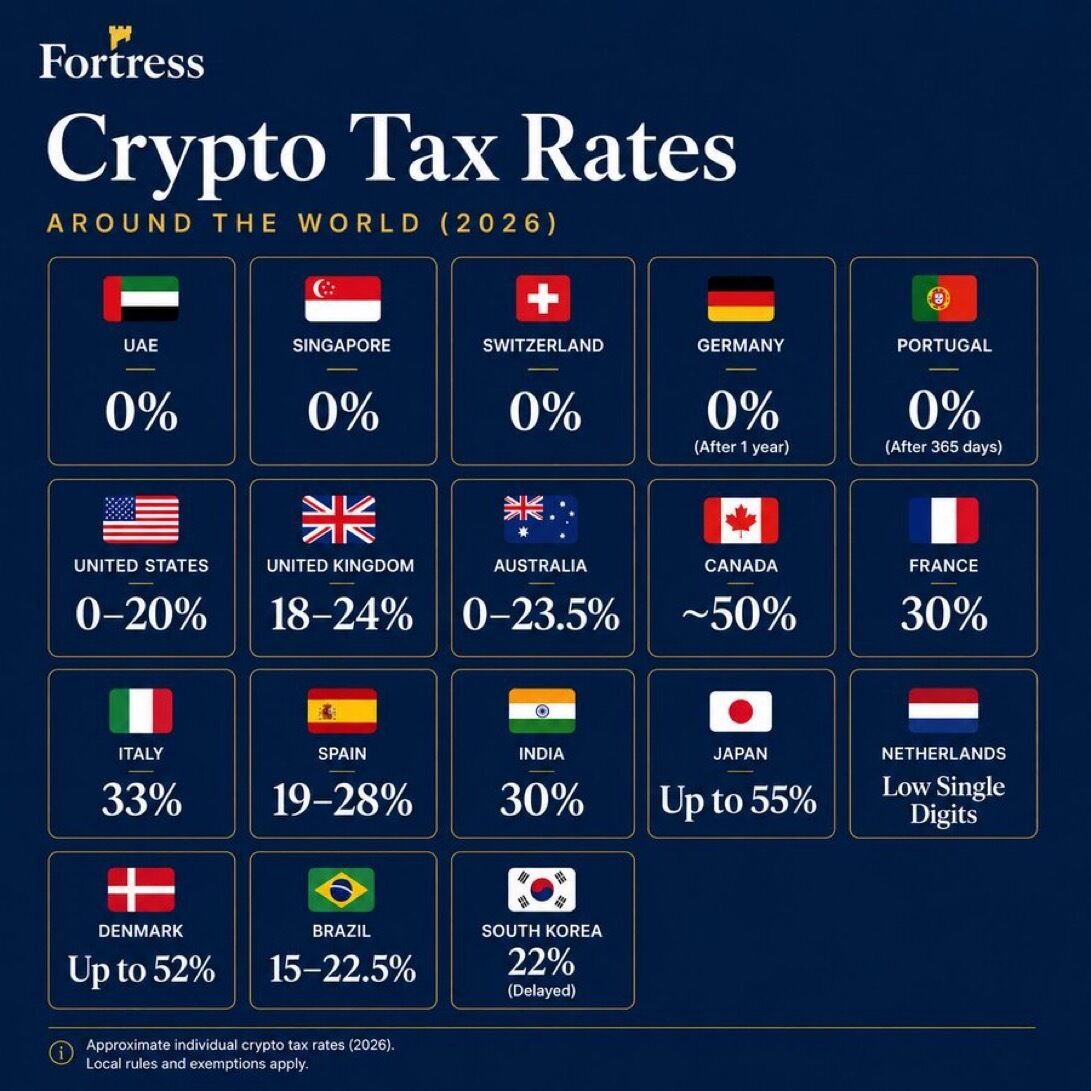
Für alle die nicht länger >50% Steuerlast ("schnief") möchten - wir helfen gerne beim Umzug in die Schweiz:
- Privates / geschäftliches Setup
- Kosteneffiziente Firmenstrukturen
- Immobilieninvestitionen
- Exzellente Kontakte in die Schweizer Wirtschaft
Wir haben Platz 😉
Lauterbach zahlt keinen Cent Rentenbeitrag.
Trotzdem hat er mit Bundestagsmandat und Ministerposten über 10.000 € Rente zu erwarten.
Und er macht sich über diejenigen lustig, die diesen Laden hier am Laufen halten.
Wie abgehoben, wie arrogant, wie widerlich kann man sein?
Es ist genau dieser Elfenbeinturm, dieses Leben im Luxus als Politiker, das ich in meinem Buch beschreibe. Und das dazu führt, dass solche Kommentare möglich werden.
Der Bürger spielt keine Rolle mehr. Auch das erkläre ich regelmäßig in meinen Vorträgen.
Und es ändert sich erst, wenn der Bürger genug hat.
@JoanaCotar Für alle die nicht länger >50% Steuerlast ("schnief") möchten - wir helfen gerne beim Umzug in die Schweiz:
- Privates / geschäftliches Setup
- Kosteneffiziente Firmenstrukturen
- Immobilieninvestitionen
- Exzellente Kontakte in die Schweizer Wirtschaft
Wir haben Platz 😉
WATCH: Michael Saylor accurately explain a Ponzi scheme by saying he's selling Bitcoin to buy Bitcoin 😜
"If we sell 1 bitcoin:native, credit investors will give us money to buy 20 bitcoin:native"
@newera_finance
Look at all the legacy companies backing this stablecoin.
This is clearly the Old Boys Club coming in and trying to topple the moats the crypto-native companies @Tether and @Circle have built for themselves.
I don't like it.
I was there in 1998 on an official mission from the Asian Development Bank, meeting senior gov't and central bank figures and managed to pull together how the Asian crisis was engineered by the central banks and the IMF. Published in 2000 by the ADB. I advised the Thai gov't to exit the IMF program early. They did after a delay.
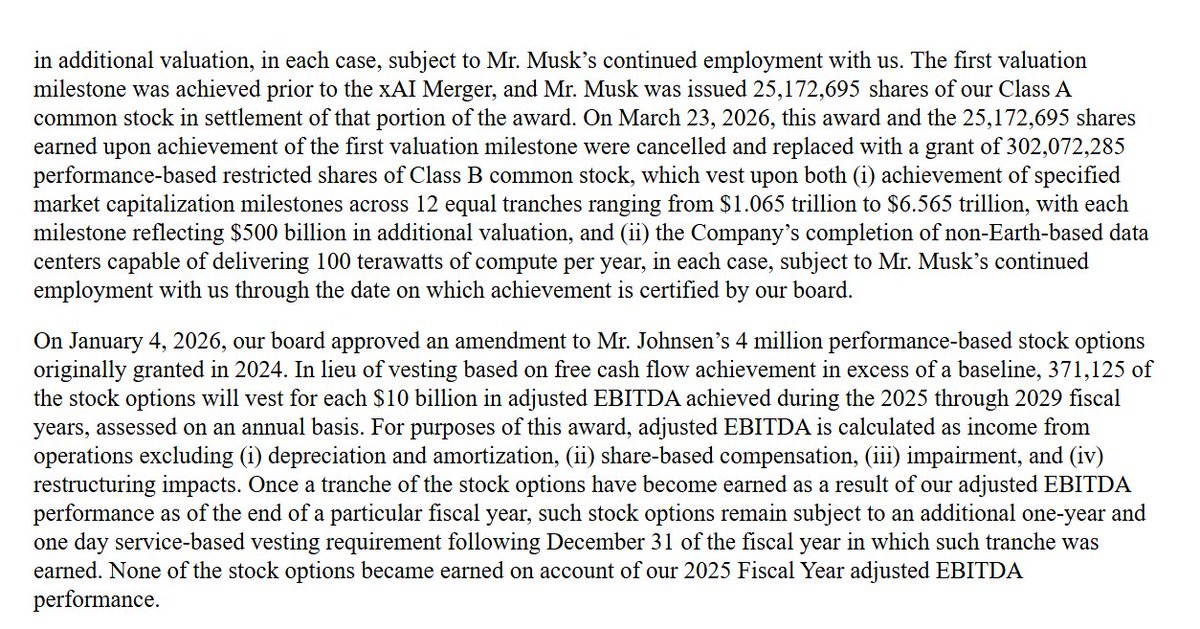
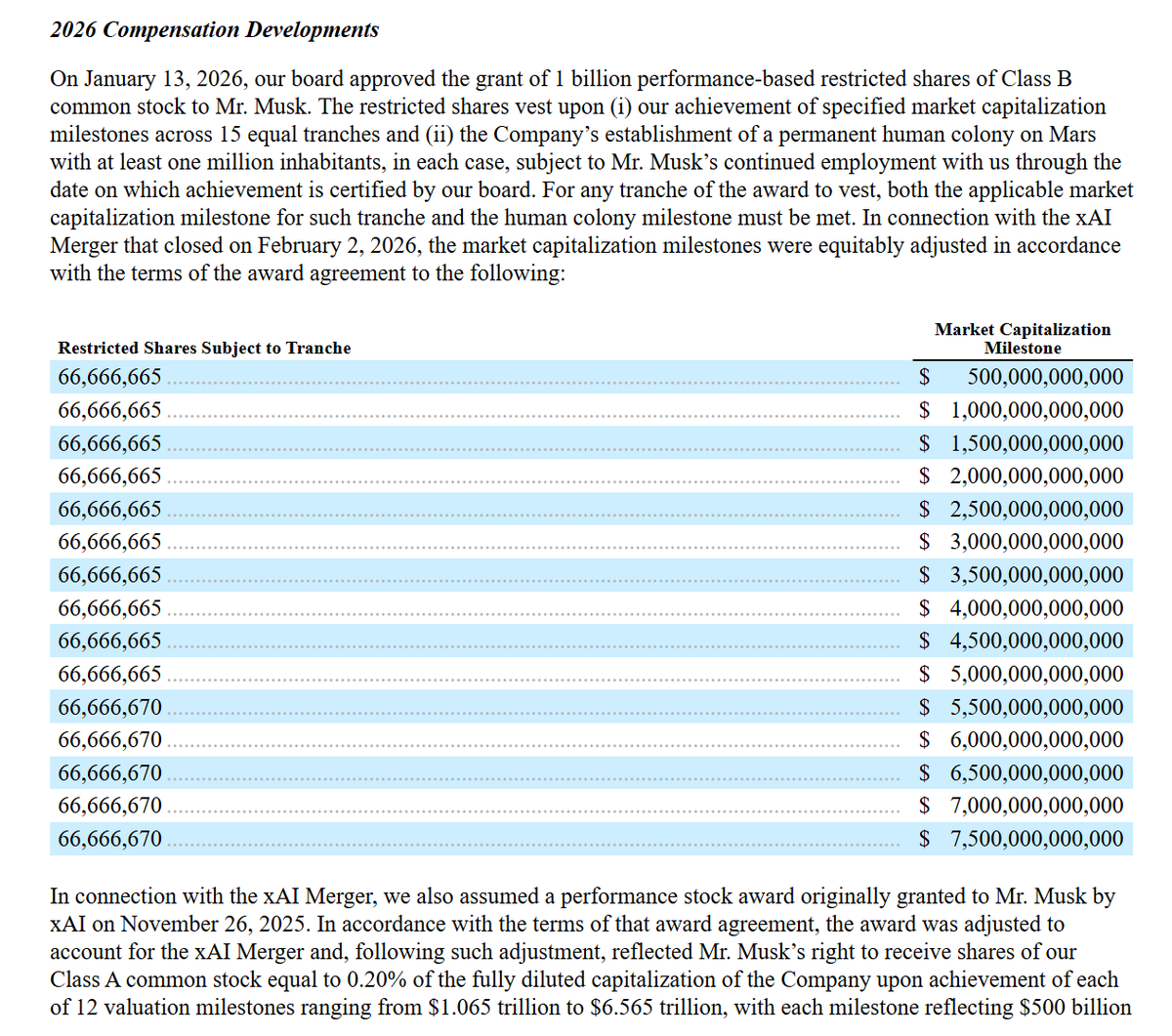
Elon Musk just landed the most insane SpaceX IPO performance stock package in history!
The board is awarding him 1 BILLION Class B shares, vested across 15 tranches but they only unlock if BOTH of these requirements are met:
1. Massive market cap milestones from $500B all the way to $7.5 TRILLION.
2. If SpaceX builds a permanent human colony on Mars with at least 1 million inhabitants.
On top of that, the recent xAI merger replaces an earlier award with 302 MILLION Class B SpaceX shares
These require market caps from $1.065T to $6.565T plus the completion of orbital data centers delivering 100 TERAWATTS of AI compute per year.
These are straight-up insane next-level milestone targets, pushing space travel to the forefront of the AI race.
Yes, the United States has the most progressive tax system in the world. The top 1% pay 40% of taxes, the bottom 50% pay 3% of taxes. We can make it even more progressive by zeroing out taxes on the bottom half. It’s a small amount of the total tax revenue but very meaningful to people in this group.
🚨THE FBI CREATED A FAKE CRYPTOCURRENCY.. LISTED IT ON UNISWAP.. HIRED MARKET MAKERS TO PUMP IT.. THEN ARRESTED EVERYONE WHO SAID YES..
THIS IS THE CRAZIEST LAW ENFORCEMENT OPERATION IN CRYPTO HISTORY!!!
The FBI built an actual ERC-20 token on Ethereum called NexFundAI.. 100 billion token supply.. A professional website.. Whitepapers promising "passive income through AI-powered investing"..
It looked exactly like every other crypto project.. Because that was the point..
Undercover agents posed as the founding team.. Then reached out to professional market-making firms and said "we need you to fake our trading volume"..
Every single firm said yes..
Here's what they recorded..
Gotbit.. A firm run by a 26-year-old Russian who publicly bragged in 2019 that he built a business faking trade volumes.. His team kept internal spreadsheets with columns literally labeled "fake volume" vs "market volume"..
When asked how fast they could pump NexFundAI's volume to $1 million per day.. They said "6 hours.. It will cost about $200"..
$200 to fake $1 million in daily trading volume..
MyTrade.. Run by a guy who called himself "the mastermind".. He explained the exact psychology of the scam on camera..
"We make the chart look like a really nice roller coaster ride.. That's where people jump in.. We have to make them lose money in order to make profit"..
He said that on a recorded FBI video call..
CLS Global.. A Dubai-based firm.. Their bots generated 98% of NexFundAI's total trading volume.. When the FBI asked if they could sync fake volume spikes with fake news announcements.. They said absolutely..
ZM Quant.. Bots executing 10 to 20 trades per minute through dozens of wallets to look organic..
All of them knew it was fraud.. All of them did it anyway.. All of it was recorded..
And the clients were even worse..
Saitama.. A meme coin that hit $7.5 billion market cap.. The founders coordinated buys through private Telegram chats.. Sent "pump it" memes while manipulating the price.. Then dumped on retail investors..
$7.5 billion.. Built entirely on fake volume.. Every penny of real money came from retail investors who thought the momentum was organic..
One founder left Saitama and started Robo Inu.. Used Gotbit again.. Another launched VZZN.. Same playbook..
Lillian Finance.. Founder claimed to be a defense contractor who addressed Congress.. Marketed the token as funding children's hospitals.. Pocketed everything..
When the FBI shut it down.. They seized $25 million in one day.. 18 people indicted across the US, UK, and Portugal.. The CEO of Gotbit was arrested in Portugal and extradited.. Sentenced to 8 months plus $23 million forfeiture..
But here's the part that broke my brain..
Real people bought NexFundAI..
The FBI's fake token.. With zero utility.. Zero real developers.. Created solely to catch criminals.. Attracted real retail investors because the fake volume made the chart look bullish..
When the FBI pulled the liquidity to end the operation.. Those people lost real money.. On a government-issued token..
The FBI had to set up a restitution portal to pay them back..
And it gets worse..
Within 24 hours of the DOJ announcing the sting.. Someone cloned the FBI's exact smart contract.. Launched a copycat token.. Rode the viral momentum.. And made $127,000 in a single day..
Using the exact same manipulation tactics the FBI just arrested 18 people for..
Then in 2026.. The FBI did it again.. New token called Lexobit.. 10 more arrests.. Including operators extradited from Singapore..
IRS forensics showed that in one firm's trading.. 1,209 out of 1,221 consecutive transactions went straight back to wallets the firm controlled.. 99% circular..
The FBI proved what everyone in crypto suspected..
The volume is fake.. The charts are painted.. The momentum is manufactured..
And every time you buy a token because "the chart looks bullish".. You might be the exit liquidity.