Higher meat intake was associated with less cognitive decline and lower dementia risk in APOE e4 carriers, a group at higher risk of Alzheimer's disease and dementia.
Those who ate ~2 servings of meat per day had a better 10-year cognitive trajectory and a 55% lower dementia risk compared to people eating less than a half a serving per day.
That pattern wasn't seen in the non-APOE e4 carriers and was NOT observed for processed meat. Unprocessed red meat alone was also linked to lower dementia risk in APOE e4 carriers.
My take is not “everyone should eat more meat.”
But a few servings per day of unprocessed meat (as observed in this study) is perfectly healthy for most people.
If you slept badly but still need to perform, listen to your favourite music.
In this study, motivational music during warm-up partially blunted sleep-loss hits to power, mood, attention, and reaction time.
Recent COVID vaccination has broad cardioprotective effects with a reduced risk of events like heart attacks and stroke, hospitalization, and death in people who had received the vaccine.
https://t.co/Pp3GuuLw5O
“those who received Covid vaccines (either mRNA or another type) had a roughly 38% lower risk of Covid-associated major cardiovascular events. This benefit was greatest for those 75 and older and those with chronic conditions like kidney and lung disease” https://t.co/e05qSa8UCl
Yet another study shows a 24% reduced risk of dementia after the Shingles vaccine. This one in over 500,000 participants with a recent skilled nursing facility stay, adding to 4 huge natural experiments in 4 countries (US, Canada, Wales, and Australia)
https://t.co/TmYqwTB7IT @AnnalsofIM
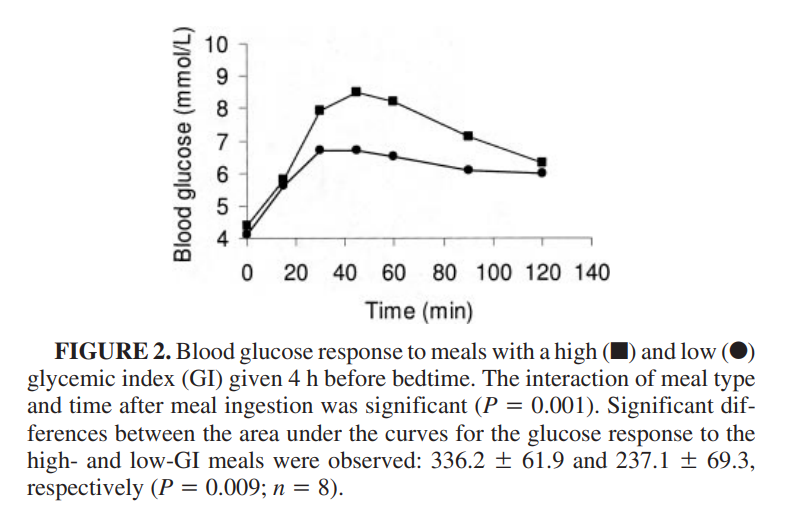
Incluir carbohidratos en la cena ayuda a conciliar el sueño al elevar la insulina, que hace que los músculos absorban los otros aminoácidos grandes, reduciendo así su competencia en la sangre y favoreciendo la entrada de triptófano al cerebro, donde se convierte en serotonina y posteriormente en melatonina.
El ejercicio físico reprograma el cerebro, reduciendo la rumiación y rompiendo el ciclo de pensamientos negativos.
El ejercicio: tu mejor psicólogo.
El ejercicio actúa a nivel cerebral modulando la red neuronal por defecto (DMN), una red que se activa cuando estamos pensando en nosotros mismos y que suele estar hiperactiva en personas con rumiación. Al mismo tiempo, fortalece los circuitos prefrontal-límbicos, mejorando el control “de arriba hacia abajo” que ejerce la corteza prefrontal sobre la amígdala, lo que ayuda a regular emociones y detener los pensamientos negativos repetitivos.
Además, el ejercicio promueve la liberación de neurotransmisores clave (como serotonina y dopamina) y factores neurotróficos, especialmente el BDNF, que favorece la neuroplasticidad, reduce la inflamación y aumenta la resiliencia emocional del cerebro. Estos cambios biológicos explican por qué el ejercicio no solo reduce la rumiación a corto plazo, sino que produce mejoras duraderas en la salud mental.
In this one, morning resistance exercise increased excess post-exercise energy expenditure (EPEEE), i.e. a sustained elevation in energy expenditure above resting levels after exercise, compared to evening exercise, an effect that appeared to be largely driven by the circadian rhythm.
☕️⚡ BEBIDAS ENERGÉTICAS Vs CAFEÍNA: ¿QUIÉN ES MEJOR?
Un ensayo aleatorizado comparó una bebida energética con L-teanina, tirosina, vitaminas B, etc. frente a una bebida con la MISMA cantidad de cafeína.
Resultado:
❌ No mejoró más la fuerza
❌ No mejoró más las flexiones
❌ No mejoró más el estado de ánimo
❌ No mejoró significativamente la atención
La conclusión fue clara: los ingredientes extra no aportaron beneficios relevantes más allá de la cafeína.
The suppressed report that concluded there is no protective or safe level of alcohol consumption, now published. It was commissioned by US Congress
Report https://t.co/XmmsSo9q3q
Editorial https://t.co/8NuqBwkugM
"Despite the study’s adherence to its mandate, its findings were sidelined.”
Alcohol is an underappreciated risk factor for cancer.
A new large analysis of 843 studies found that alcohol intake was associated with a linear increase in the risk of several cancers, with no clearly safe level observed.
- 16% higher risk of pharyngeal cancer at 1 drink/day
- 56% higher risk of pharyngeal cancer at 2 drinks/day
- 173% higher risk of pharyngeal cancer at 4 drinks/day
The evidence linking alcohol to cancer was substantially stronger than the evidence for any cardiovascular or metabolic benefits from small amounts of alcohol.
https://t.co/wDhW8UMuXi
It is time to end this war. But Russia’s ruler wants to keep fighting. That is why Ukrainian sanctions against this aggression are working. Last night, our drones covered a distance of about 1,000 kilometers to the St. Petersburg region – to the enemy navy’s arsenals and a base in Kronstadt. Our long-range sanctions also reached about 500 kilometers into the Krasnodar region – and hit an oil depot. These are important results of the joint efforts by warriors from the Armed Forces of Ukraine, the Security Service of Ukraine, and the Defense Intelligence of Ukraine. Russia must end its war and stop its attacks on life. Any manifestation of injustice against Ukraine will receive a just response. I thank our warriors for their precision.