Getting cited by ChatGPT and Perplexity is now a real content strategy. It's called GEO (Generative Engine Optimization). Most content teams haven't heard of it yet. The teams that have are already optimizing for it. Anyone working on this?
@thegirlcoder Probably part of good content strategy. The same way SEO became a core skill rather than a separate discipline, GEO will likely become another layer content teams need to account for.
Hi Kenzi 👋
We're building Boki to help teams research, create, distribute, and measure content from a single workspace.
Our focus is helping teams get more value from their content through better content operations and AI search visibility.
Looking forward to connecting with more builders here 🚀
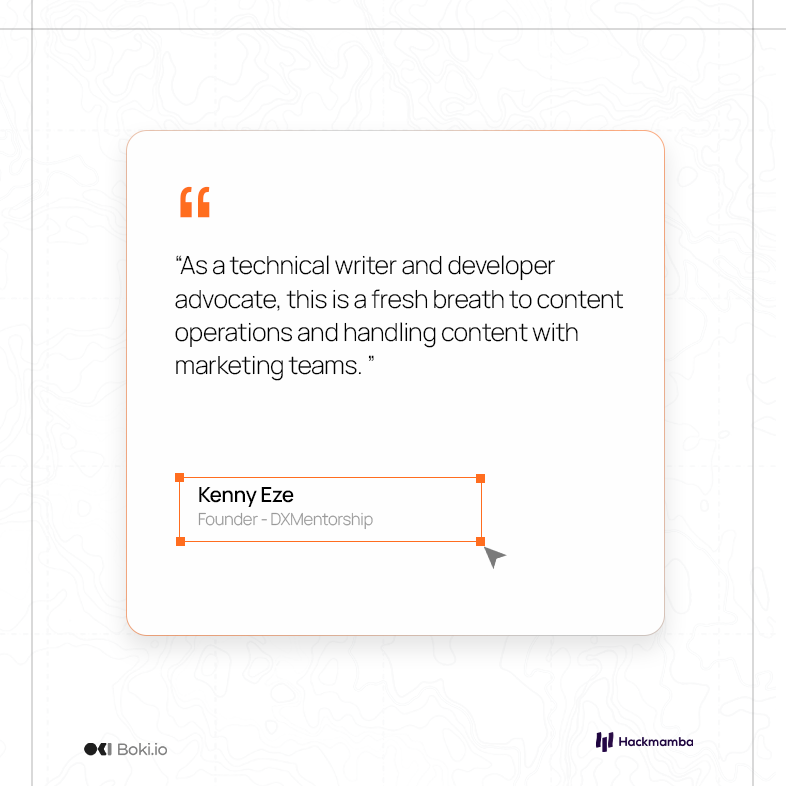
Kenny Eze is a technical writer, developer advocate, and Founder of DXMentorship.
He knows what good content operations look like because he has lived the broken version of it.
His take on Boki: a fresh breath for content operations and working with marketing teams.
Boki keeps that context intact from research to distribution. That is the difference @kenny_io noticed.
We are genuinely good at this. And our clients say it better than we do.
"Working with Hackmamba is like having a 10x technical writer who is in your team."
"They take complex topics and translate them into clear, engaging content that speaks directly to our audience."
"They deliver good quality results without needing much oversight."
Here is why.
Every article we write goes through three review passes before it reaches a client. This is the stage where most content teams cut corners and where we do not.
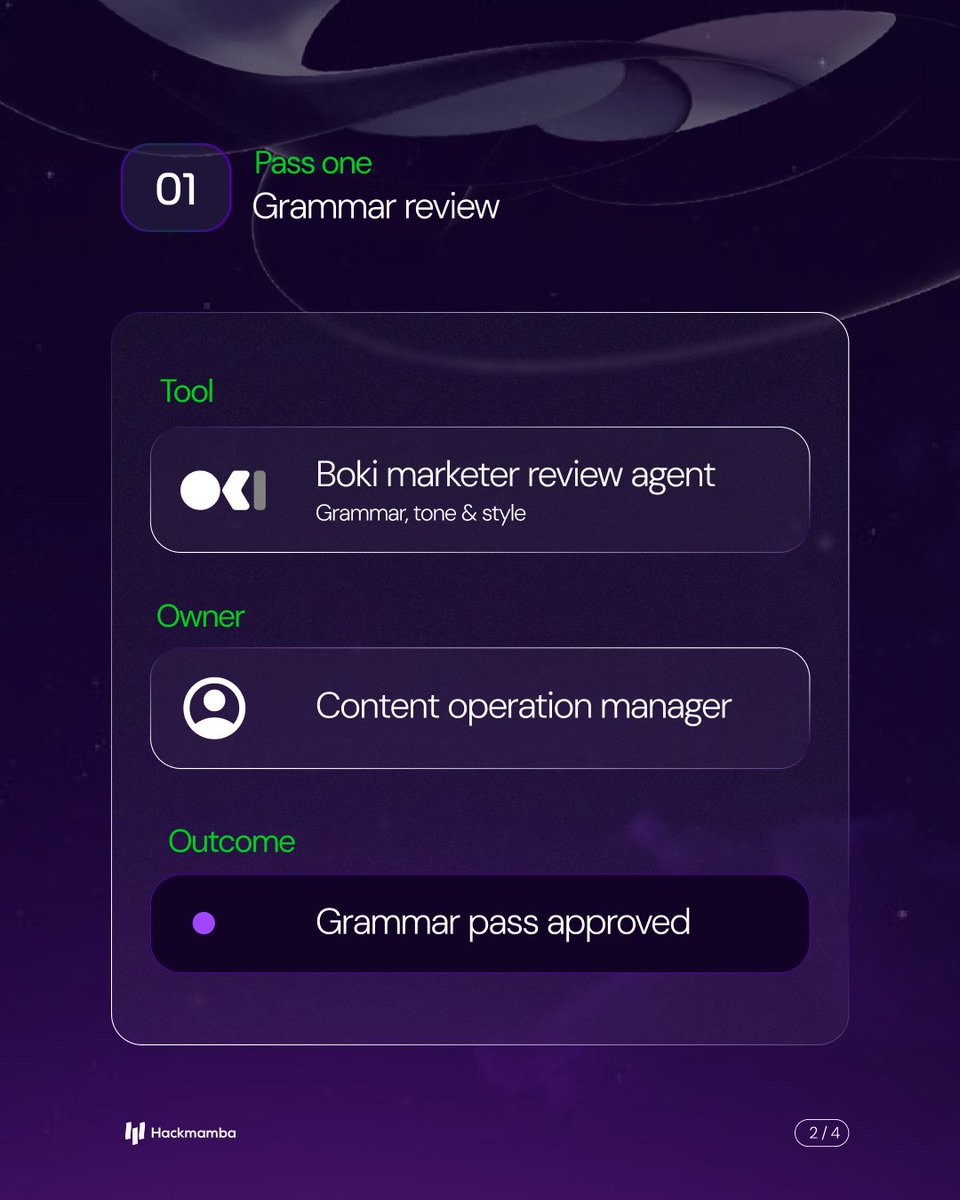
@BibiTheWriter, our content operations manager, runs the first pass using @boki_io's marketer review agent. It flags sentence-level clarity issues, structural problems, and anything that disrupts the reading experience with specific suggestions. Blessing reviews every flag and decides what changes. The tool surfaces the problems. The human makes the call.
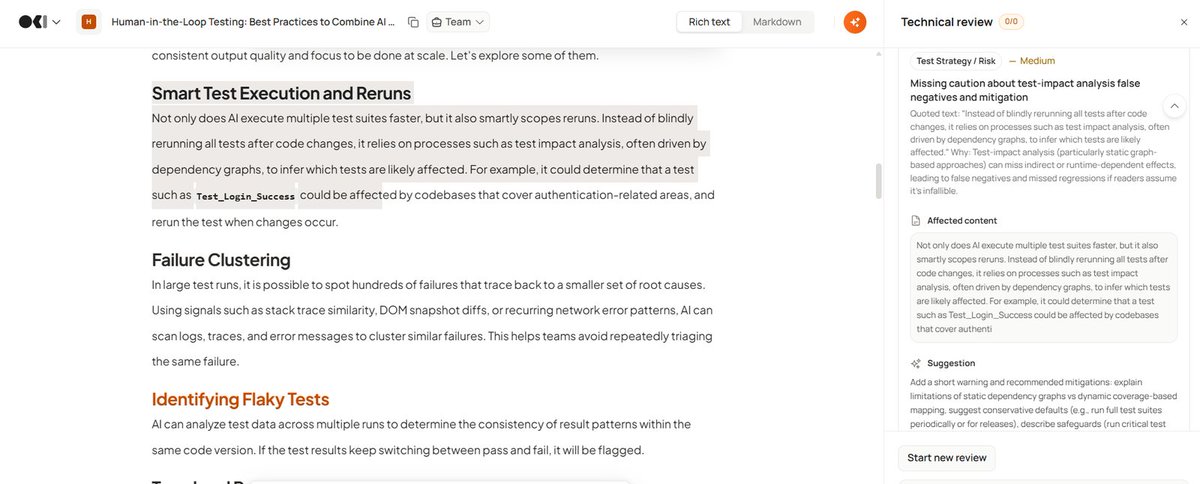
The second pass is technical review. Most content teams either skip it entirely or send a Slack message to an overworked engineer and hope for the best. Ours uses Boki's technical review agent to audit technical terms for accuracy, validate that sources back every claim, check code behaviour, and flag anywhere the piece loses coherence as a technical argument. This pass alone has cut writer back-and-forth by 65%. Our content marketers, @xamfonos_ and @rochiberardo, then own this review for their respective teams, focusing on whether the narrative arc holds, whether the argument would survive scrutiny from an experienced developer, and whether it ties back to the client's goals. If it gets past Henry or Rocio, it is ready for the final check.
The third pass belongs to Stella, our technical editor. She catches anything that slipped through, grammatical errors, sentences that do not quite land, and transitions that break the flow. Nothing goes to the client until Stella signs off.
That is the Hackmamba standard. Every article. Every time.
Taste is subjective in everything. Music, food, film, design. What you love, someone else cannot stand. That has always been true.
In marketing it becomes a real problem. Because you have to ship something. And someone has to decide what good looks like.
Two marketers, same brief, completely different articles. Both convinced theirs is better. The headline one person loves, another rewrites immediately. The tone that feels right to one team sounds off to another.
That judgment comes from experience. From paying attention. From knowing your audience well enough to have a opinion about them. You cannot train it into a tool.
That is what Boki is built around. Everything around your content, the research, the briefs, the reviews, the scheduling, handled. The taste that makes it work, that stays with you.
Automate everything but taste :))
Most content teams skip technical review entirely. Or they hand it to an engineer who has 12 other things to do.
@hackmamba uses Boki's technical review agent for every piece they produce for clients like @ActianCorp, @mintlify, and @coderabbitai.
The agent audits technical terms for accuracy, validates that every claim is backed by a source, checks code behavior, and flags anywhere the piece loses coherence as a technical argument.
Then a human content marketer steps in to test the code and evaluate whether the piece would hold up under scrutiny from an experienced developer.
Result: 65% less back-and-forth between writers and reviewers.
If you are a technical writer, try Boki's technical review agent on your next draft.
Google Sheets was built in 2006 to track data.
Content teams turned it into a content calendar. Then a brief tracker. Then a status board. Then a publishing log. Then a team directory. Then somehow also the source of truth for everything.
It was built for data. It just never said no :)
Boki is. Create up to 50 documents. No credit card required.
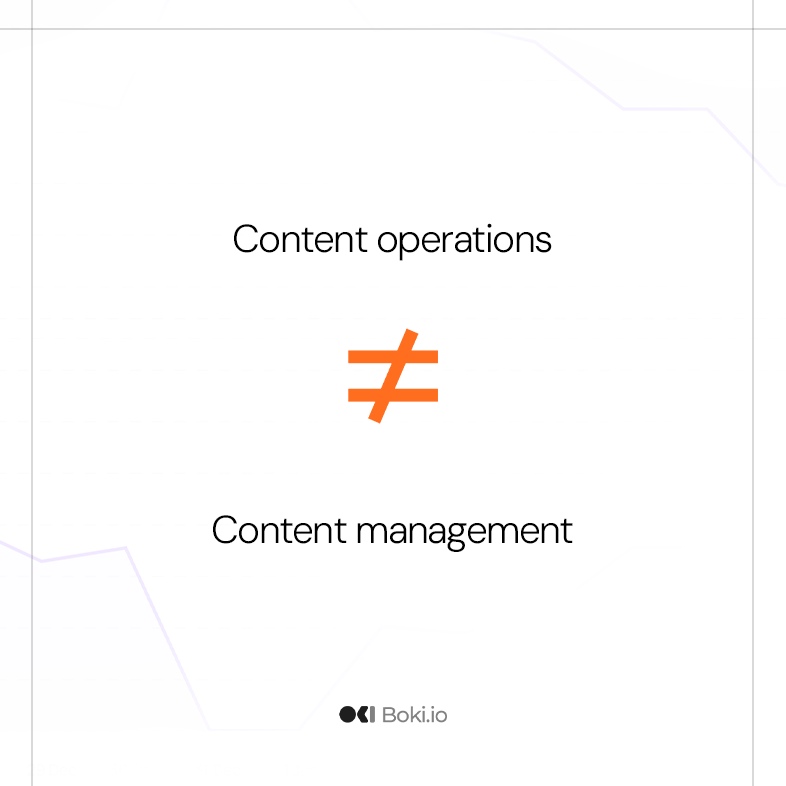
Content management is not content operations.
Repeat after me.
Notion is not a content operations tool. It is a note-taking and wiki tool.
Your CMS is not a content operations tool. It is a publishing tool.
Asana is not a content operations tool. It is a project management tool.
Google Docs is not a content operations tool.
Buffer is not a content operations tool.
Content operations is the system that takes content from strategy to distribution in one place, without the chaos.
Boki is the only tool built purely for it.