the inception fund. helping the bold start. first check for technical founders. Cybersecurity, AI infrastructure, physical AI, agents, the weird. since 2010
A stray idea Monday night turned into a full private event briefing podcast by Tuesday afternoon: https://t.co/40w7Y0QvSY
The best part? It took me longer to write the blog post than to build an entire product. And both building + writing were really joyful experiences.
when agents run for minutes not seconds, every minute counts 👀 @systalyze just hit #1 fastest provider for Kimi K3.1 Pro, 8x faster than https://t.co/oKTGmZmf5T and 2-4x faster than Fireworks, Nebius and Together 🚀 huge congrats Manya and team @systalyze… try it now!
GEN-1.5 assembling an engine housing: precisely placing two clamshell pieces onto the engine and lining them up with the screw holes, ... 100 times in a row.
With our friends at @FoundryRobotics
JPMorgan Chase CISO 👇
we spent decades making everything reachable and building security around it.
now, with autonomous AI agents, we may spend the next decade making only what needs to be reachable visible at all.
private by default 🔥
what's 🔥 #523: blue wave, data center jitters, and AI risk getting repriced fast
in times of uncertainty, expect everything to take more time. keep the ambition big, but have a plan A, B and C 🔥
https://t.co/HjMmUpPVpJ
Day-0 model availability is becoming table stakes. Kimi K3.1 Pro is live on Systalyze with an OpenAI-compatible endpoint, and that's how inference platforms win routing share. @systalyze
https://t.co/2C5QiCJf4N
🚀 Kimi K3.1 Pro is live on Systalyze, Day 0.
OpenAI-compatible:
Base URL: https://t.co/JcSXjBDuDu
Model: moonshotai/Kimi-K3.1-Pro
Sign up: https://t.co/2T88u09rf5
@Kimi_Moonshot
Physical AI just crossed into millimeter-scale dexterity. Thinner O-rings aren't a demo flex. They show the perception and control stack catching up to what factories actually need. @GeneralistAI
https://t.co/GSwRLpU90h
Even thinner O-rings.
These tasks test dexterity and the ability of the models to perceive fine-grained millimeter-scale details.
Read more about GEN-1.5 and sign up for the waitlist in the comments below.
Agents carry long histories, yet each decode step touches a sliver of it. Memory, not compute, becomes the next AI infra bottleneck. @netpreme is building the warm tier for KV cache.
https://t.co/gng5glE950
Our XM-Sparse article explores how Netpreme X-Mem™ integrates with SGLang HiSparse to provide high-bandwidth access to offloaded KV caches.
Read it here:
https://t.co/0kcFofPb3g
Sparse attention is changing what AI systems need from memory.
DeepSeek and https://t.co/SxSWkdvtRd’s combined share of OpenRouter’s publicly reported tokens rose from 23% in July to 41% in October.*
Meanwhile, research is advancing on several fronts:
🔹 Smarter selection of relevant context
🔹 Hierarchical search for efficient token retrieval
🔹 Reuse of KV data and token selections across layers
🔹 Hybrid architectures combining sparse retrieval with local or linear attention
Agents accumulate long histories. Video creates enormous token sequences. Yet each decode step often needs only a small subset of that context.
The hardware opportunity follows: retain KV history in a large warm memory tier, keep the active working set in HBM, and fetch selected data over a high-bandwidth fabric.
At Netpreme, we’re building toward memory capacity that scales independently of compute, with scale-up bandwidth connecting GPUs to a shared warm memory tier.
*The chart uses DeepSeek + https://t.co/SxSWkdvtRd lab totals as a proxy for sparse-attention adoption, not a model-by-model count. Source: OpenRouter, via CrbonFree: https://t.co/WwiltQkUwC
Our partner @ellenchisa spent ~120 hours building her own AI operating system and wrote up the architecture. Living inside agents is the fastest way to learn where they go next. Worth a read for builders.
https://t.co/1BQ07MlZcE
Since January I have spent ~120 hours (three full work weeks, a lot of it while "on vacation") building a robust personal operating system.
It focuses more on interlinkages vs. one-offs. I'd love to trade notes on architecture with like-minded folks.
https://t.co/AjS855swxX
Observability eating a third of cloud spend is a CFO problem, not just an SRE one. Cutting it toward 5 to 7% is the real prize as telemetry volume explodes. Great customer story from @grepr_ai and @jadtnaous
https://t.co/ZKkbBoaane
Securing the agents that write code now has its own Forrester Wave, and @snyksec leads on strategy. Protecting the code was never enough. Congrats to the whole team.
https://t.co/IZ71gAKg6J
Forrester says AI coding agents are “moving from developer assistants to active participants in development workflows.”
Snyk has been named a Leader in The Forrester Wave™: Agentic Development Security Tools, Q4 2026, with the highest score in the Strategy category. We believe that reflects our focus on securing software where it is created, which now includes the agents creating it.
Get the complimentary report: https://t.co/A23Cf3Jtt2
An alert nobody acts on is just a notification. @kpk_io wired @HypernativeLabs straight into its automation and exits fired within seconds. Detection that plugs into execution is where onchain risk is heading. cc @gbvpzffd2r
https://t.co/uTHrSejXyl
KPK’s agents acted within seconds of an alert, from Morpho exits to Gearbox pauses. This is what Hypernative is built for: giving teams the real-time signal to take whatever action they need, when it matters. We're very happy to be part of @kpk_io's stack and play our part in a positive result.🤝
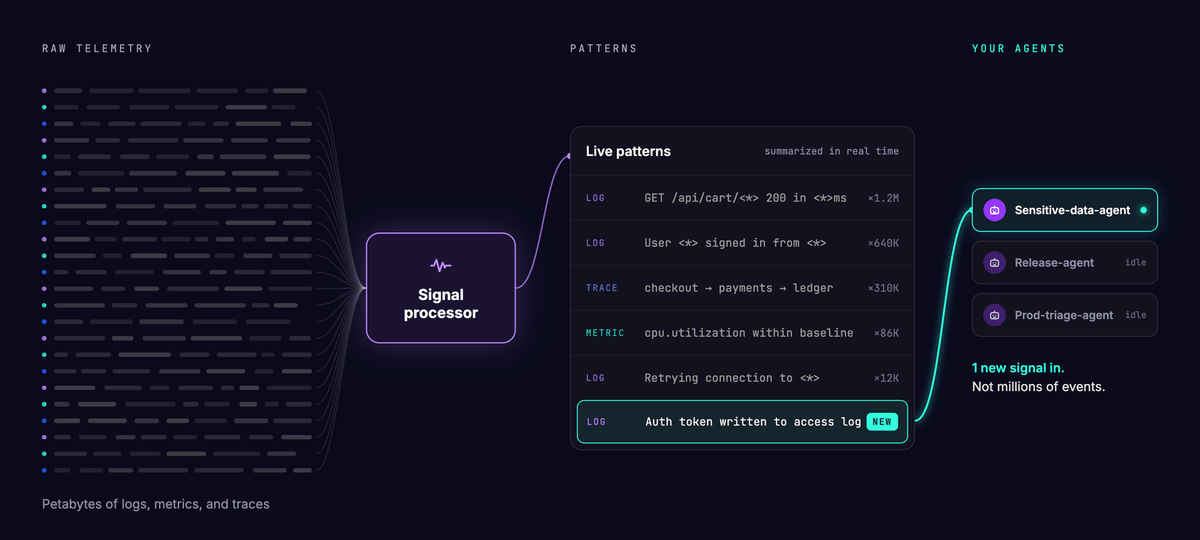
Huge release from @grepr_ai 🔥 Most AI for ops shows up after the outage. Grepr AI catches failures before they happen, and only Grepr can do it, because the real-time telemetry engine is built in. Petabytes in, live patterns out, agents act on what's new. Congrats @jadtnaous and team!
https://t.co/k1Q3Ctbvmp
so much money pouring into AI data centers, and still no comprehensive security for them 🤯 this is the next big thing
every vendor still covers only one layer. @lavaiodc connects GPUs, networking, storage and firmware into real attack paths, and their team has already popped control planes at 4+ neoclouds 🌋
great profile via @thenextweb on @elaygli + @YakirKad. proud @Boldstartvc investor since inception
https://t.co/qw13fG8BDu
❤️ this - Karp never forgets who laughed at him or his first investors. Chips on shoulders compound.
true inception investing - an eye roll or two means you are on right track
Another exchange drain, and @HypernativeLabs had flagged $40M+ moving across 10 chains before the exchange confirmed anything. Onchain finance needs detection that beats the press release. Great work @gbvpzffd2r and team.
https://t.co/xoECrrLanT
THE BLOCK: Brazilian crypto exchange Mercado Bitcoin confirmed a security incident and temporarily suspended deposits and withdrawals, saying customers were unaffected.
Blockchain security firm Hypernative earlier flagged more than $40 million in suspicious transfers across multiple networks, according to local outlet BitNotícias.
Want to build the identity layer for AI agents? @keycardai made the Cyber 60 and is hiring. So is @recolabs_ai, also on the list 🔐 Two @Boldstartvc teams, lots of open roles
https://t.co/PAvwqPTpRf
HIRING: FASTEST GROWING CYBERSECURITY STARTUPS (EARLY STAGE)
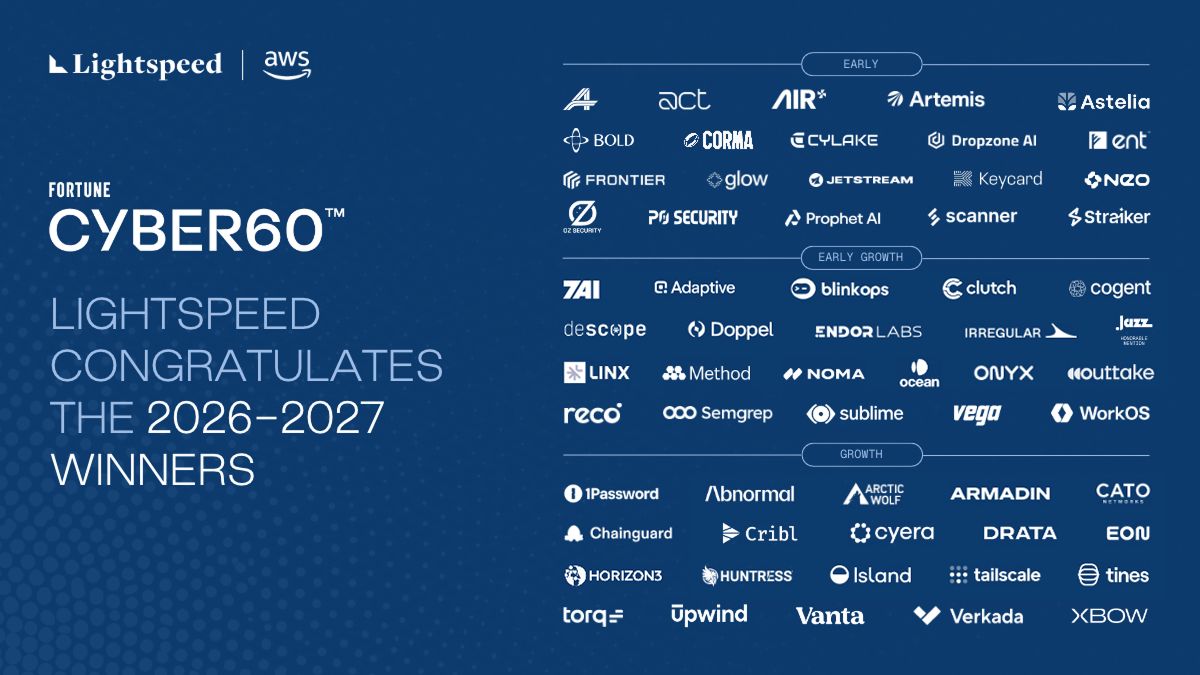
Congrats to the 2026–2027 @FortuneMagazine Cyber60 winners! Here are the 20 early-stage companies on the list:
A Security - autonomous offensive security that finds, proves, and fixes real attack paths
@CylakeAI - on-prem security data platform for air-gapped and sovereign environments
@straikerai - discovers, red-teams, and protects enterprise AI agents
@P0Security - runtime access control for both humans and AI agents
@air__security - a context firewall that vets the skills, MCPs, and plugins AI agents use
@neo_ai_security - the control layer for AI agents running inside enterprise software
Act - removes unnecessary cloud access paths before attackers can use them
@glowio - AI-powered endpoint security built on prevention
@artemis_sec - AI-native detection and response that adapts to each environment
@scanner_dev - security data lake that searches every log in seconds
@keycardai - identity and access for AI agents with task-scoped credentials
@DropzoneAI - AI agents that investigate alerts and hunt threats for the SOC
@jetstream_sec - governance and control layer for enterprise AI
Bold Security - on-device AI that stops data loss and insider risk
Astelia - exposure management that shows which vulnerabilities are actually reachable
@ProphetSec - an agentic AI SOC that triages, investigates, and responds to alerts
@CormaAI - foundation models built for cyber defense
@Ent_Security - intent-aware security that stops risky actions by people and AI agents
Frontier Security - autonomous defense for enterprise AI
Oz Security - next-generation network security for distributed organizations
Career pages for all 20 are in the comments 👇
@lightspeedvp@awscloud
Every team should be able to run a software factory without spending months building one. That's what makes this exciting. @tessl_io turns your repo into the starting point, with skills you own and loops that improve over time. Software factories, made easy 🔥
https://t.co/pWdpKOwafK
Software Factories are extremely valuable, but hard to build. @tessl_io's new product may have just solved that 🙂
- Simple onboarding turns a repo into a factory in moments.
- Template loops for code review, vulnerability remediation, cost optimization and more.
- Built-in self-improvement for loops, compounding your factory’s value.
- Interactive factory floor for tracking activity and solving problems.
- Clear and simple metrics to know what you’re getting.
Tessl factories are fully built on open skills, which you create, hone and own indefinitely. We help you create skills from your history, and the factory starts to self-improve them from here.
Lastly, Tessl factories are declarative and easy to understand and manage. Config files composing skills and environments into actions, actions and triggers into loops, and multiple loops into a factory.
This is the equivalent of Infrastructure-as-Code for factories. Instead of a bunch of disparate scripts you piece together to understand what’s happening, they codify what the factory does. This means Tessl factories aren’t just easy to setup, they’re easy to manage too.
At the end of the day, our job as tool builders is to delight our users. Solve real problems with strong technology and great UX, that help them run fast. I feel the Tessl Factory is getting this job done.
If it wasn’t obvious, I’m excited by our new product 🙂
At the end of the day, our job is delight our users, and I firmly feel the Tessl Factory does so.
As part of the launch, we’re offering $200 free credits to all users. Try it out, and let us know what you think - I can’t wait to see what you build.