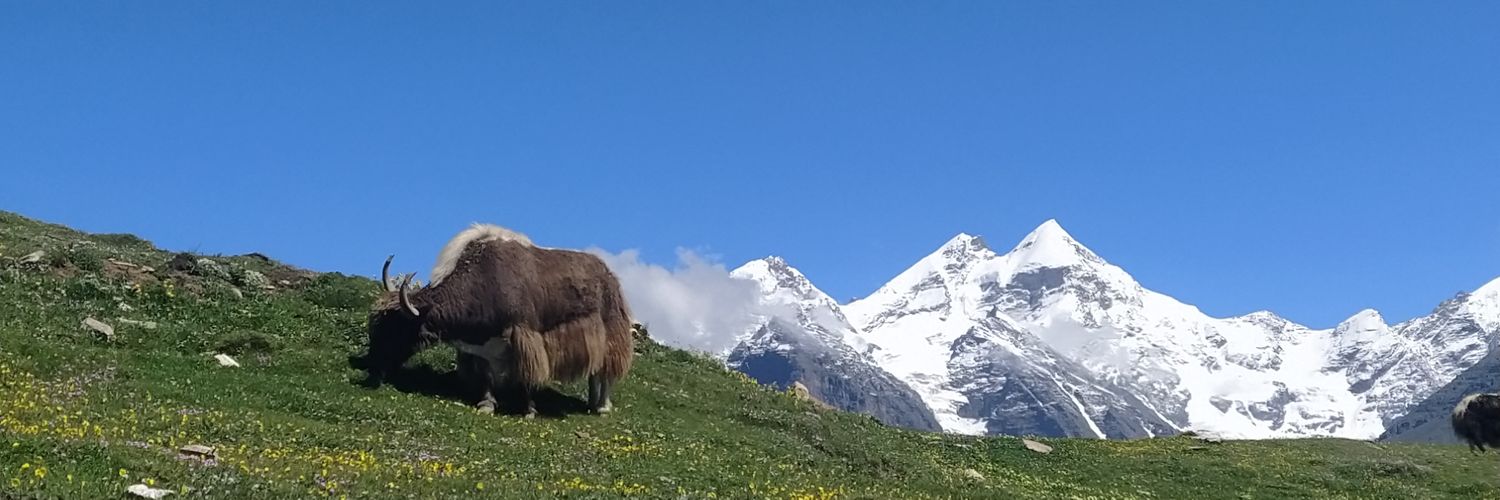
Alpine plants are gradually losing their protective snow cover. Thanks @mongabay and @csir for acknowledging our recent efforts towards understanding that how early snow melt will affect the eco-physiology of the Himalayan alpine plants.
A new @CSIR_IHBT study reports that future climate change could alter the functional composition of plants, thereby threatening their survival in #Alpine regions. The study helps to design #conservation strategies.
https://t.co/KYPs4QACFe
#PhDApplication
Plant Adaptation and Stress Signaling (PASS) Lab @CSIR_IHBT would host 2 PhD candidates this summer under AcSIR PhD programme.
Aspirants interested to decode how chloroplast shapes plays responses to stress cues, may reach out @[email protected]
Epstein was in the same business as Mother Teresa. Mother Teresa was a child trafficker who sold babies and made between $50 million and $100 million a year for the Vatican. Teresa's connections include Baby Doc Duvalier, the Haitian dictator, Charles Keating, the criminal of Saving and Loan, and Robert Maxwell, the father of Jeffrey Epstein's partner in child trafficking, Ghislaine Maxwell. And there is more, Mother Teresa opened the DC toddler home with none other than Hillary Clinton. This orphanage was silently closed in 2012. Sorry Zelensky, we are not letting Epstein leave our feed today.
Credit: The White Rabbit telegram.
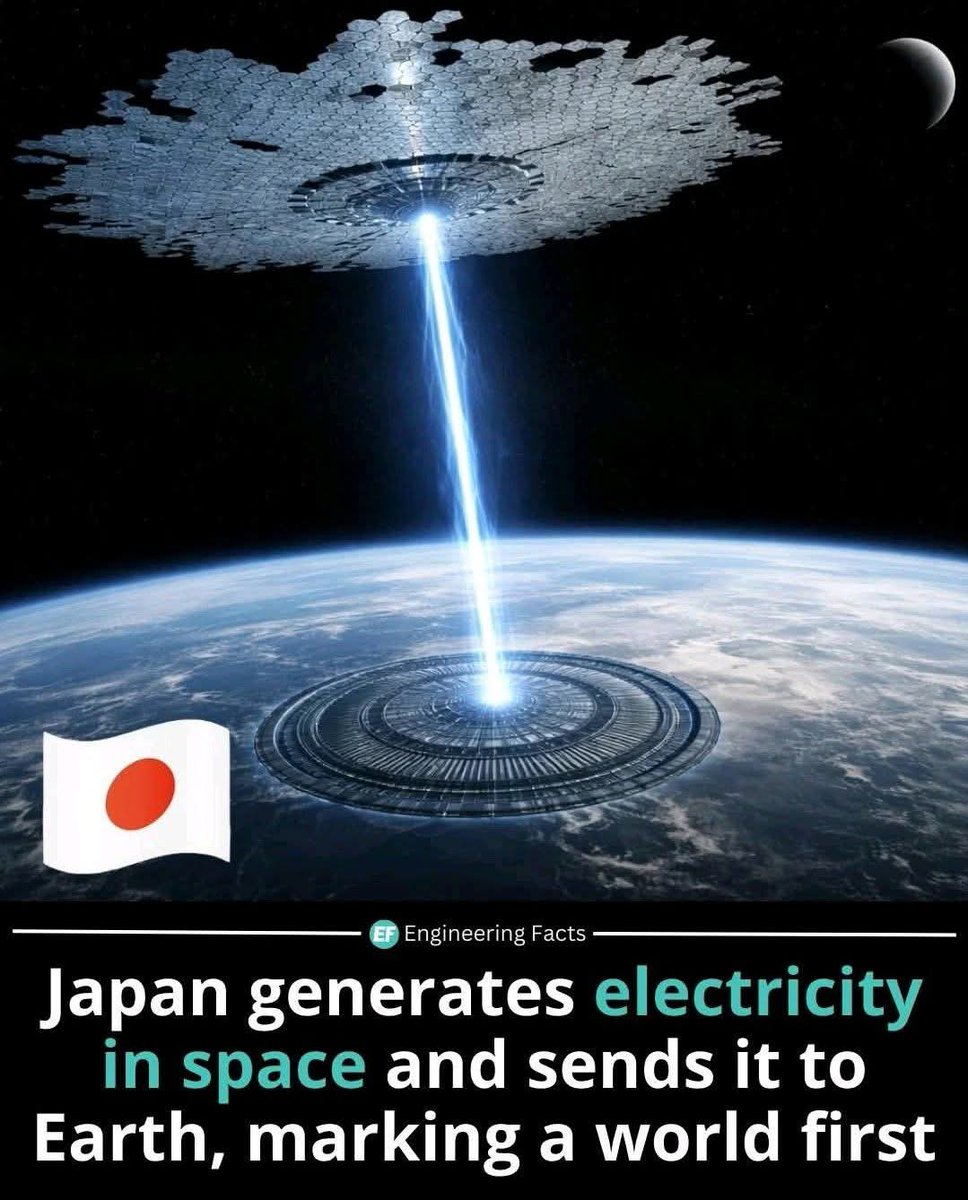
Japan has successfully tested a system that generates electricity in space and transmits it wirelessly back to Earth. Solar panels placed in orbit collected energy and sent it to a ground station using microwave transmission.
Once received on Earth, the microwave energy was converted back into usable electricity. This demonstrates that power can be harvested beyond the planet and delivered without physical cables or fuel transport.
Unlike ground-based solar power, space-based systems can collect energy continuously without weather, clouds, or night cycles. This makes the concept especially attractive for stable, large-scale renewable energy production.
The test represents an early but critical step toward future space-based solar farms. Engineers believe much larger arrays could eventually provide clean power to cities or remote regions.
Experts see this as a potential shift in how humanity produces energy, blending space technology with climate-focused solutions. While still experimental, the success confirms the concept is technically feasible.
via Paul Koti, LinkedIn
Hi everyone! I am looking for PhD candidates to join my group at IIT Kharagpur to pursue research in Molecular spectroscopy and dynamics. I request to kindly circulate this ad among your network. Thank you!
https://t.co/wNAa1tZ8sc
https://t.co/xJAaad6xna
What Next? Himachali orchardists experiencing the impact of climate change, as desperate farmers in Kinnaur (Himachal Pradesh) are scrambling snow from distant heights to protect apple orchards https://t.co/QEi8XCOulI
A significant partnership between the newly operationalised Anusandhan National Research Foundation @ANRFIndia & the U.S. National Science Foundation @NSF has been announced today in the India - US joint statement issued on the occasion of bilateral talks between Hon'ble Prime Minister Shri Narendra Modi ji @narendramodi with Hon'ble President of the United States of America, Mr. Donald J. Trump @realDonaldTrump in Washington, DC.
The final deadline is approaching! We have a few slots left.
I would especially invite abstracts under the themes Ecosystem and Community level Studies and Species Range Shifts
Regarding increasing the upper age limit of Scientist C in CSIR from the existing 32 years to 35 years (which is exactly the demand of research scholars), the expert Committee constituted to review the RRs has recommended to increase the upper age limit to 35 years. The agenda has been prepared and going to be placed before the GB CSIR for approval in the next meeting of GB, CSIR.
That will address the concerns of the research scholars as submitted in their representation and make the age criteria uniform across all scientific dept/organizations.
Meanwhile, the feasibility of regularising the advertisements for recruitment accordingly is being worked out.
Glad to share that our latest publication (@MeghnaSrishti , @SoniaRathee4Eco ) is now out in Functional Ecology.
"From low to high elevations, flowers adapt traits and phenology to climate, but phenology‐trait relationships weak".
https://t.co/klaeyJAi1Y