Finance background. Still questioning what they taught me. Options, economics, big trends, and the occasional thing I have not idea about. Founder of :
Last year I tracked 250+ options trades in a spreadsheet.
Worked fine until rolls and adjustments started piling up. Grouping legs by hand got
tedious. Figuring out P&L on a wheel with three adjustments? Forget it.
I decided to build a journal that handles the grouping for me.
Now, I’m looking for 10 traders (ideally options traders) to use it and tell me what’s missing.
You:
→ Trade wheels, condors, spreads, or multi-leg strategies
→ Use popular brokers like Schwab/TOS and Tastytrade.
In return: Pro free forever.
DM “tracking mess” if you're interested.
Sure thing!
Although I think following the old-fashioned way and running the process yourself, along with the AI, is the way to go.
You can identify what works, where issues arise, and how to set parameters deterministically to achieve consistent quality before documenting the skill.
@benteisheuer@karpathy It was Opus 5.5
I think, no matter the model, you’ll always end up iterating to achieve your perfect output.
Eventually, all of them settle into their familiar "AI-sms' pattern when given enough creative freedom.
@alexsaintx@karpathy Yes, indeed.
I don’t think we’re at a point where you don’t have to polish the output; especially for narration or story telling.
Yet, I’m betting on committed creators/educators whose work will prevail over the sloppy ones
@karpathy After reviewing your feedback and pinpointing areas for enhancement, here is v2.
This version required more input from me, but I see the potential once you guide it in your desired direction.
I followed your suggestion and created a 3b1b-style explainer video on stochastic calculus. It reminded me of my first encounter with the topic in my professional education.
I truly appreciate your insights and this new approach to LLMs.
I wish I had access to such technology earlier!
@its_tejesh_here@karpathy I didn't use any skills. I just had a basic planning session with Claude about video content and structure to test Karpathy's suggestion.
We'll be spending a lot more time trying to understand the outputs of language models. A few thoughts, tips & tricks:
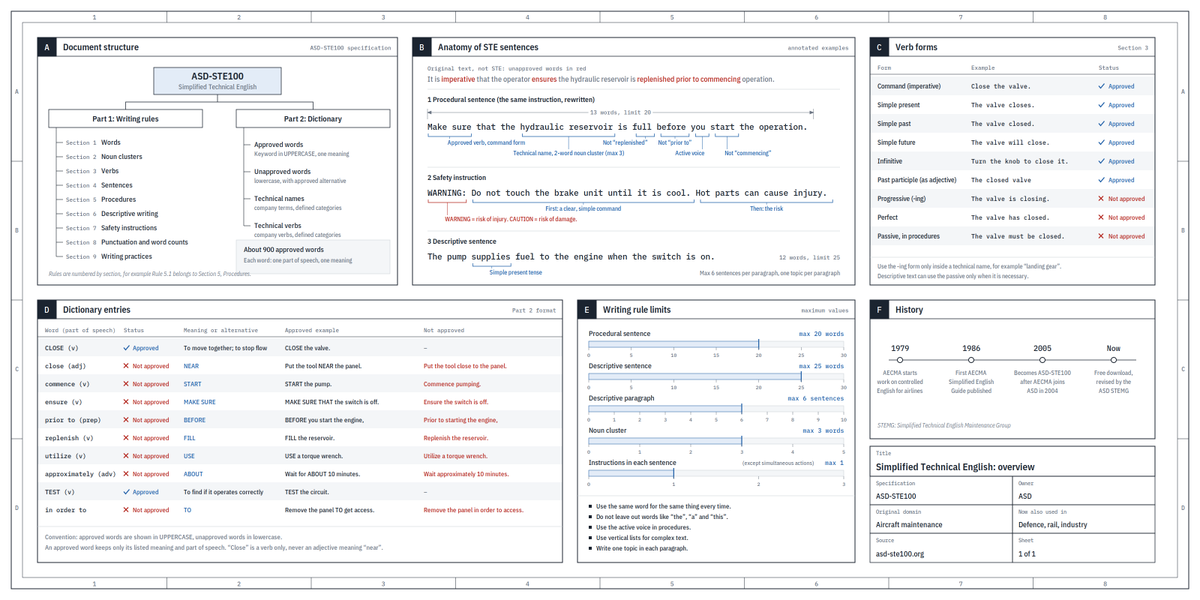
Writing. Something I've had success with: Ask your LLM to explain something in ASD-STE100, it's a controlled language specification originally developed for aerospace maintenance documentation. LLMs well-versed in this language and it comes with heavy constraints on clean writing style that I often find a lot more readable. Sometimes I've tried to soften it a bit e.g. ask for "80% of the way to ASD-STE100" because the spec is quite stringent. But even better:
Diagrams / images. Instead of writing, ask your LLM to create a diagram. These can be a lot easier to process, parse, and understand. But even better:
Web pages. Ask for output "in HTML" to get a beautiful, interactive webpage. LLMs are getting really good at frontend and can create beautiful experiences, animations, etc. But even better:
Explainer videos. The output format I am most bullish on is fully custom / bespoke explainer videos generated on any arbitrary topic. Experiment with things like "Create a 3b1b style video explainer on X. Use my ElevenLabs API key for audio narration". (you'd need an API key for the latter or you can ask your LLM to find you decent free alternatives that use your local compute). This is actually starting to work!
In summary:
- As LLMs get better, they will do more and more of the legwork autonomously, and a lot more of our work will rise up the abstractions into oversight and understanding.
- Luckily, LLMs can help here too because as intelligence and code are increasingly abundant, you can ask for large, custom, discardable software artifacts (e.g. web apps, video explainers) that would have never made sense to create before. Push the boundaries here and you'll be surprised.