🎉Our November issue is now online!
This month we cover inorganic impurities in post-consumer plastic waste, turnstile MOFs for molecular separations, our new Resource article format, and more!
Read it here: https://t.co/V8nUQn5NK0
21 hectares of forest disappear every minute. That's almost 11 million hectares a year.
And while deforestation is slowing, it’s not fast enough.
🌳 #ForestsCantWait, and they must be at the heart of the #COP31 conversations.
Learn more: https://t.co/oJ9P9CVMFm @unredd
The climate is changing faster than the world can adapt, and those who contributed the least to it are often the most vulnerable to its impacts.
Even tripling adaptation finance by 2035 would cover less than a third of developing countries' needs.
The #AdaptationGap is growing. Financing must catch up.
Demand for critical minerals is soaring as the world shifts to clean energy & digitalization.
But where will they come from?
Part of the answer is already around us, in buildings, cars & electronics.
See how recycling & responsible mining can help meet the challenge: https://t.co/OqA2VI9tX7
Sunita Narain draws a connection between the microorganisms in our gut and those living in our soil, explaining why we need to move beyond chemicals and nurture the diversity that sustains life.
Watch the full episode of the Sunita Narain Show, only on Down To Earth's Youtube Channel: https://t.co/uKnnNTk5hM
Human, animal and environmental health are inseparable.
From climate change to antimicrobial resistance, what harms nature harms us.
On #OneHealthDay, let’s back a One Health approach—for healthier people and a healthier planet.
A 3D-printing method has made single crystals of metals and alloys in complex shapes and up to one metre in length, as needed for advanced technological applications
https://t.co/uOKEWzMpOS
Hon’ble Union Minister of State (Independent Charge) for Earth Sciences, @DrJitendraSingh, highlighted the significance of the Integrated Atmospheric Chemistry and Aerosol Toxicity Analysis Laboratory (AATAL), inaugurated under Mission Mausam, launched under the leadership of Hon’ble Prime Minister Shri @narendramodi.
The first-of-its-kind integrated facility for Delhi-NCR will go beyond AQI readings to identify the composition of air pollutants, trace their sources and assess their potential health implications.
Equipped with advanced scientific instruments and integrated with IITM’s AIRWISE system, AATAL will strengthen real-time pollution-source identification and high-resolution air-quality forecasting. This will help authorities understand the relative contributions of vehicular emissions, stubble burning, industrial activity and other sources.
The facility will support Commission for Air Quality Management in National Capital Region and Adjoining Areas and other agencies in planning targeted interventions, assessing their effectiveness and enabling evidence-based decisions for improved air quality management across Delhi-NCR
@mygovindia@PMOIndia@OfficeOfDrJS@PIB_India@MIB_India@tummalasrini
India spends ₹1.71 lakh crore on fertiliser subsidies. Yet, our soils remain nutrient-deficient. So, are we missing something fundamental about soil health?
In the new episode of The Sunita Narain Show, she explores why the answer to healthier soil may lie in the millions of living organisms beneath our feet.
Watch now: https://t.co/uKnnNTjxse
@sunitanar@down2earthindia@JoelMichaelhps@rajeshwari_s14@GauriAr16029422@chhavi_mahaur
Current policies put the world on course for up to 2.8°C of warming this century.
That means greater risk from extreme heat, floods and wildfires.
But this future isn’t inevitable. Fast emissions cuts can limit warming and reduce risks to people and nature.
More in the new #EmissionsGap report: https://t.co/LLYdQydA8U
50 billion tonnes of sand are used every year, making it the world’s 2nd most used resource after water.
But we are extracting it faster than nature can replenish it.
This UNEP report warns unsustainable sand extraction is threatening ecosystems and livelihoods: https://t.co/YvAwcSOgzu
Nature provides the foundations that sustain all life on Earth, from clean water and healthy soils to the economies built upon them.
Dive in to discover how nature can drive economic and social transformation: https://t.co/YGrssqxMwX
Global sea surface temperatures hit an all-time high in September 2026, making it the second-warmest September on record! 🌊
Read the full Global Report: https://t.co/iaB7oehzvV
Migratory birds make incredible journeys every year, but habitat loss, pollution and climate change are pushing many into decline.
This #WorldMigratoryBirdDay, meet the cities becoming safe havens: https://t.co/NzCyQgRbKN
A commonly found gut microbe manufactures a molecule that is capable of slashing cholesterol levels and shrinking plaque in arteries
https://t.co/ILpvQL8H7J
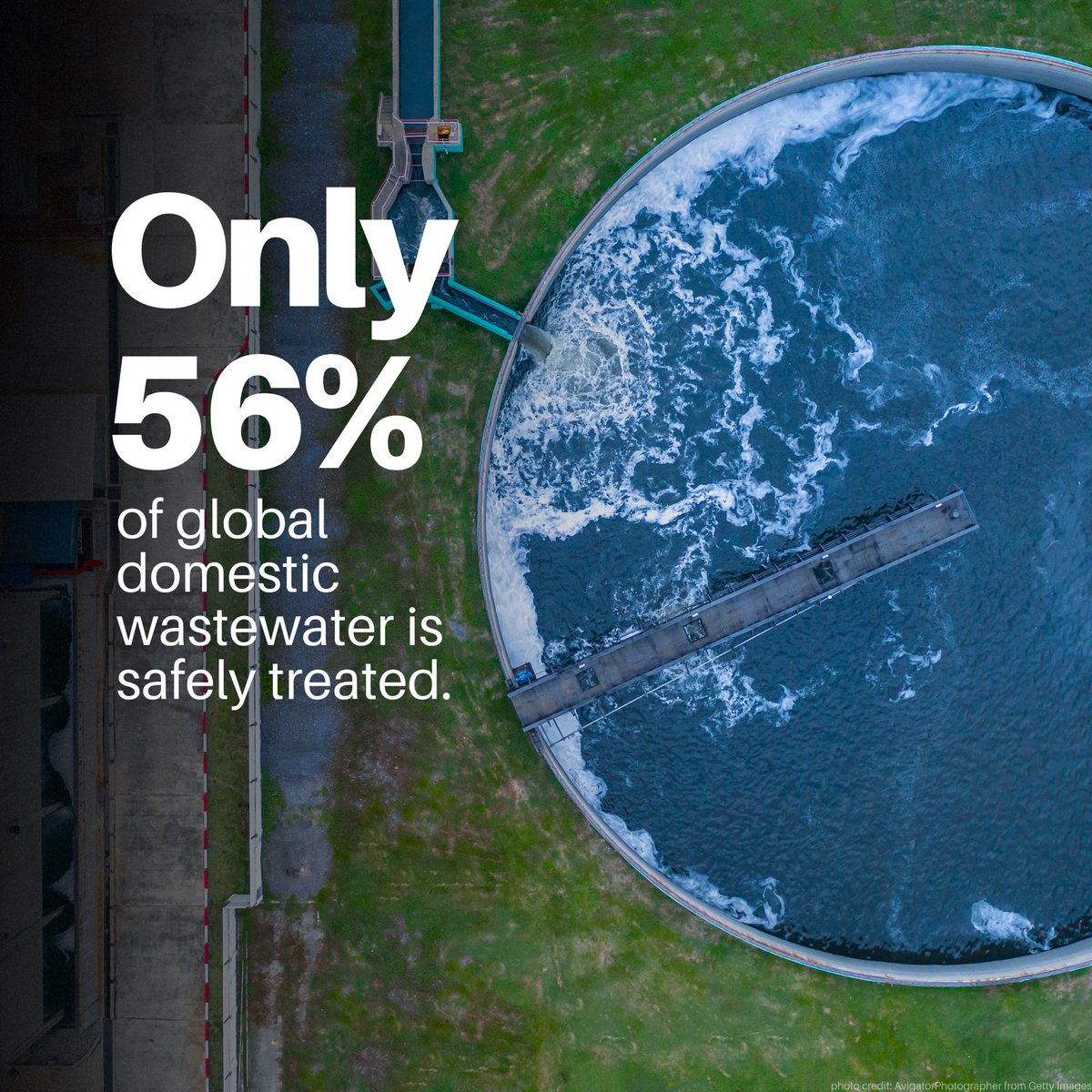
Untreated wastewater remains one of the world's biggest sources of water pollution.
As populations grow and water demand rises, progress in wastewater treatment isn't keeping pace.
A new report reveals the state of global wastewater and highlights practical solutions for a more resilient future: https://t.co/hRELCXy0Sn
उर्वरकों और कीटनाशकों पर अत्यधिक निर्भरता ने जैव विविधता के नुक़सान, मिट्टी के क्षरण और जल प्रदूषण को प्रेरित किया है। इस पुस्तक के अध्याय में, लेखक एक अधिक टिकाऊ समाधान की सिफारिश करते हैं - स्थानीय कृषि और परिदृश्य स्थितियों के अनुरूप सीमा सह-फसल को अपनाना।
MSSRF के लेखकों Pakkirisamy, M., Girija, D.S., Saravanaraman, Rengallakshmi Raj (@Rengalakshmi10) ने संयुक्त रूप से इस अध्याय को सह-लेखकों M., Willcox, और B.K., Senapathy, D के साथ University of Reading, के साथ लिखा,