if you flipped a coin n times, whats the prob that you get at least x heads
P(233, 137)=0.00432
P(143, 87)=0.00593
P(42, 29)=0.00976
P(27, 19)=0.02612
P(52, 33)=0.0352
Mike is the least likely to have just gotten lucky
next question is how do you balance this and hit rate
Fun Bayesian problem here.
Suppose these records are all legitimate and all at -110. You have to pick one based on these records alone and tail their next bet. Who do you pick and why?
@Sam_Vecenie Different systems would equal different outcomes of shots and looks. All the teams hunt the same looks. Paint touches. Three point attempts. That's it.
Pretty sure there’s models for expected make percentage that factor in distance, site, weather, etc
Would be interesting to see this same chart as “Opponent Made FG % Above Expected” to see who got relatively lucky/unlucky with opponent kickers
the Josh Allen discourse is baffling
for the record i think Stafford is MVP
but Allen is clearly the best player in the NFL
this effort to discredit Allen can only be explained by 2 things
1) Irrational hate for Allen
2) Irrational investment in who wins MVP
Passing out of heavy formations (12p, 13p, etc.) is the current NFL meta right now, spearheaded by teams like the Seahawks, Patriots, Chiefs, and Rams (post bye).
I wanted to dig more into this through 10 weeks of the 2025 season, and I found some interesting data points:
Starting with efficiency out of these various formations, I grouped them by 1 TE (11, 01), 2 TE/FB (12, 21), and 3+ TE/FB (13, 22, 23) sets. Here are the results:
Yards per pass attempt:
+ 1 TE: 6.96
+ 2 TE/FB: 7.41
+ 3+ TE/FB: 7.67
Completion Percentage:
+ 1 TE: 64.2%
+ 2 TE/FB: 68.6%
+ 3+ TE/FB: 66.0%
A notable uptick in efficiency when passing out of heavier sets.
On the same note, I ran the correlation between running heavy personnel and team passing efficiency as a whole. I was pretty surprised when the R-squared (correlation) was just 0.052, indicating that passing efficiency was not really influenced by formation.
Just to experiment, I decided to remove three teams from the dataset. Those 3 teams were the ones above a 50% rate of heavy personnel, which were the Browns, Steelers, and Ravens. I deemed a greater than 50% rate to be the benchmark for where teams switch from running heavy personnel by choice to running heavy personnel out of necessity (lack of WR talent).
When removing these 3 teams, the R-squared shot up to 0.316, increasing the correlation between heavy personnel and total passing efficiency by over 6x. This 0.316 number is a VERY strong correlation for a non-descriptive stat (ie: total yards, TDs, etc.). For reference, this would be just slightly less effective in terms of predictiveness of offensive passing efficiency than a team's adjusted completion percentage, and more predictive than catchable throw rate.
Passing out of heavy personnel, therefore forcing defenses into more base sets with less capable pass-defenders on the field, has unlocked high-end passing efficiency for offenses. Look no further than the most efficient passing game in the NFL this year in the Seattle Seahawks (leading in EPA and yards per attempt) to see the perfect example of this, who is running heavy personnel at the 5th highest rate in the NFL.
All data here is of course per the @FantasyPtsData data suite.
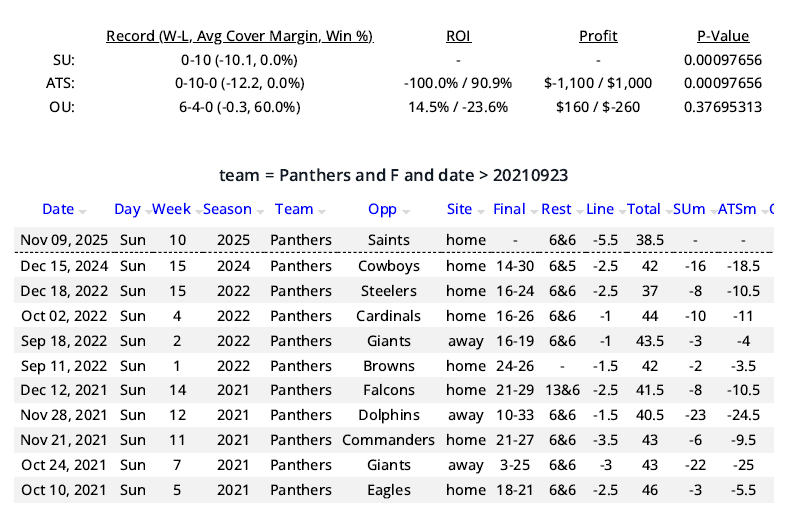
Kind of a crazy stat from @Brentley12 on @minakimes show
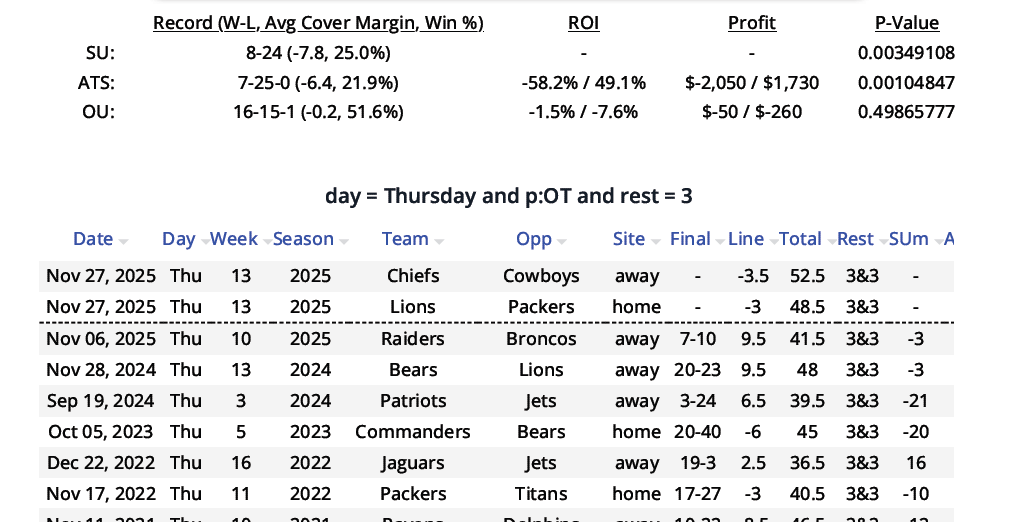
The last time the Panthers won as a favorite was Week 3 2021
Since then they are 0-10 as a favorite
@knechthedots@BillSimmons Totally agree. The problem is the ceiling of a team like that is very limited IMO, add in the off court stuff and you can see why the market for him is not really there
How do you open your pod with a Ja to Miami trade idea without mentioning that Miami has been running the same low-frequency pick and roll offense that Ja hated in Memphis last year? @BillSimmons
BREAKING: ESPN and Penn Entertainment are ending their sports betting partnership.
After signing a 10-year, $2 billion deal in 2023, ESPN Bet will officially shut down next month (with eight years left of the initial agreement).
It's been almost 40 years since I created Offensive Ratings for teams. I was a college kid. I don't know if I dreamed it would be used so much. My lens was that it helped *me*. Am very happy that the sport embraced the metrics and hope that it helps others as much as it did me.