ECCC's final regulatory analysis for the EV Availability Standard shows the policy will yield:
✅ 362 megatonnes of cumulative GHG emission reductions over 2026-2050, peaking at 28 Mt/yr in late 2040s
✅ $78.6 billion in net benefits for 🇨🇦 (excluding unmonetized health benefits)
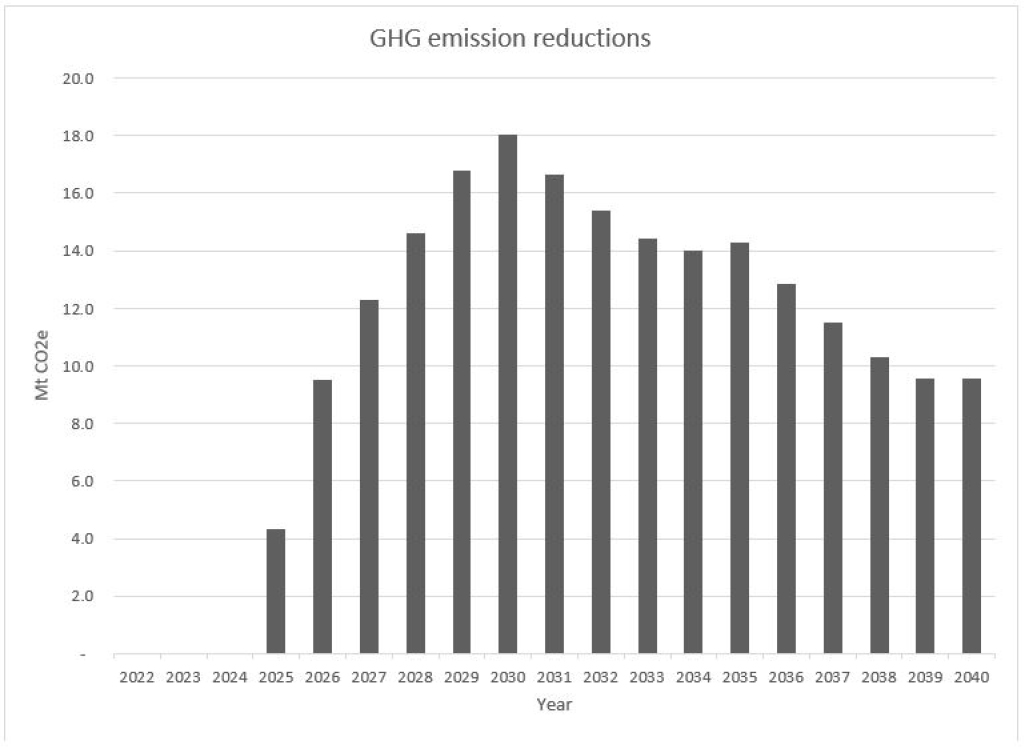
@PJPartington struck by his reference to GHG impact of CFR in 2030, a figure which (at 27 Mt) is 50% higher than what ECCC estimated (18 Mt) with the release of final regs. A wide discrepancy btwn the CG2 RIAS and the 5th Biennial Report, published 6 months apart! @ProfKHarrison
@ProfKHarrison @bataille_chris@enviroeconomics@andrew_leach@ClimateInstit For sure, there've been a wide range of estimates of CFR additionality & there's ample reason for skepticism re. ECCC's June 2022 figure (18 MT). As you note, policy design also changed over time, so most estimates I've seen are not 🍎🍎 to 🍎🍎. Good hunting!
@ProfKHarrison @bataille_chris@enviroeconomics@andrew_leach ERP doesn't contain a standalone estimate, but the final RIAS for the CFR estimates 18 Mt from that policy in 2030 (Fig. 2 - https://t.co/uoELdTlz1f). Admittedly back-of-napkin, but deducting this from @ClimateInstit's combined estimate = 31 Mt from c-pricing.
"L'avenir des transports passe par l'électrification... si il y a [mille deux cents milliards de dollares investis par le secteur privé dans le monde], c’est tout sauf une chimère."
https://t.co/jePP8Y6scr
merci de nous ancrer dans la réalité @DBretonEMC_MEC
@S_HastingsSimon for conventional subsidy via state spending, I agree, but to regulate via policies like the fed clean fuel regs and prov LCFSs is also arguably just to enforce (cross)-subsidization from high- to low-carbon in the fuel sector... and regressivity is maybe not so clear-cut here?
—> on June 15, intake will halt (pending new funding) on BC's EV charging rebates for:
- EV-readiness plans + electrical infra.
- chargers in single-family 🏡
—> provincial incentives for workplace + MURB chargers remain available
details: https://t.co/wWai9u3bKW
2/2
good reasons for Minister @Josie_Osborne to consider renewing the popular #CleanBC ⚡️ Go Electric ⚡️ rebates, some important components of which will end this week
1/2
Investing in EV charging is a high-return way to reduce emissions because it makes EV ownership possible for people who live where it’s hard to charge (eg apartments) & helps overcome range anxiety for others.
h/t @jimstockmetrics; @KnittelMIT etc...
https://t.co/si69eVGa2q
@DanWoy last week in the @ResourcefulCity for the 2023 #BEVinDepth conference, after a full day, I ventured out at random
the land (and amusingly apt @Rotary signage) delivered a salve for my EV- and battery-minerals-saturated brain
not only is mode-shifting to active/assisted transportation smart policy, but applying an equity lens via means-testing will help ensure funding sustainability, program durability, and effectiveness in terms of displaced fossil vehicle-kms and incremental GHG reductions.
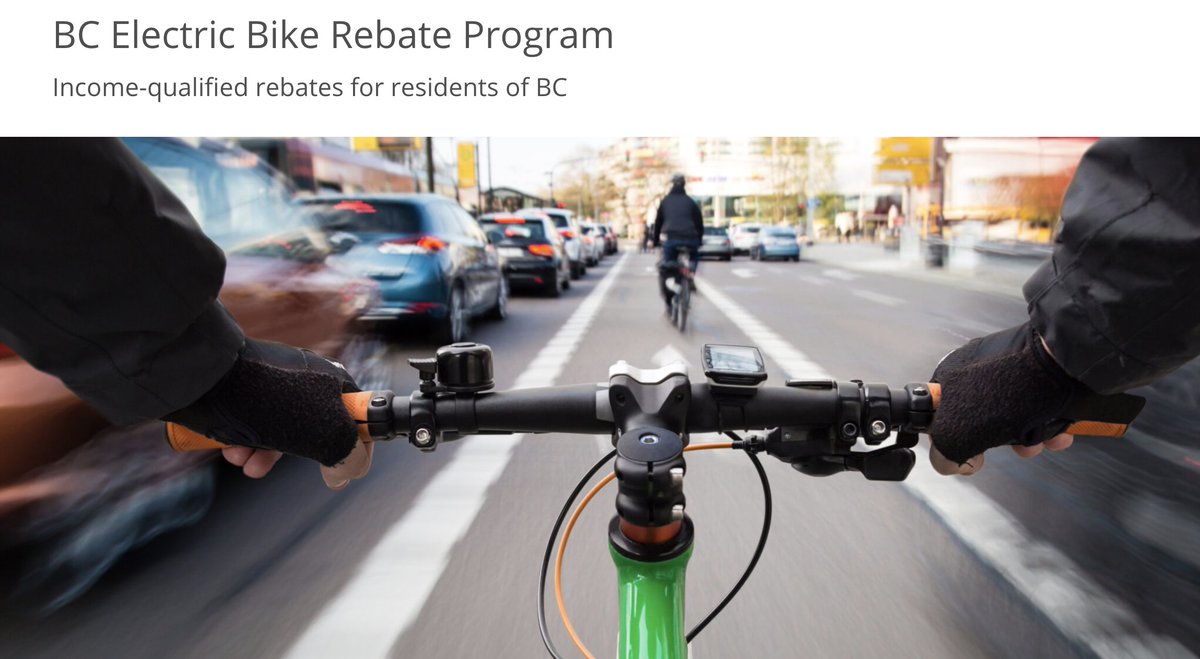
e-bike incentive boosters for low-income residents show BC to be once again at the leading edge of climate and transportation policy. well done, Minister @Rob_Fleming, and may this action set an example for other governments across 🇨🇦
British Columbia is now the latest jurisdiction to offer e-bike rebates.
As of today, residents can claim a voucher for a rebate of $350 CAD; low-income residents can get $1,400 CAD.
https://t.co/TZxJoeJkj6
We’re seeing new climate policy analysis today from @PBO_DPB that paints an inaccurate picture. We’ve been here before for federal carbon pricing, as we explain in this thread from last month: https://t.co/w74ZLpZNOf
@HarrisBerton@PDBateman hope it works out🤞surely alternative HPWH designs are possible, if not available?
meantime, too bad tankless/instantaneous heating isn't eligible under the Greener Homes Grant.. but maybe technology-prescriptiveness is the right approach here?
cc: @FernandoLeft@br_haley
@FernandoLeft@joannakyriazis your good q sent me on a regulatory treasure (regulatreasure?) hunt 🙂 ...but yes it seems there is already some (arguably overly generous) vintaging going on via ss. 10(6) & (7) of the amendments
@joannakyriazis@FernandoLeft so, in theory, given new credit use/time limits for MY 2019 and later (-3/+5 yrs from date of creation), 'credit inflation' (in sense of credits not corresponding 1:1 to deployed vehicles) could persist in the system through 2029... I think?
@joannakyriazis@FernandoLeft agreed! small qualifier: per ss. 7(4) & 10(6) of the proposed amendments—modifying ss. 18.1(4) & 20(4), respectively, of PALTGGER—the multipliers will persist through 2024 (as you said!) *and* can also be applied to the optional recalculation of credits for model years 2017–2021.
fascinating 🧵on how electricity⚡️crediting in a clean fuel standard can be adjusted to preserve accuracy of quantified GHG benefits from going electric—important consideration for 🇨🇦 as it brings in a new ZEV sales reg & considers policy interactions through the #midtransition
Just released! New work on the #LCFS, a little light reading on mathematical representations of emissions impacts from fuel displacement, perfect for curling up with over the holidays. Here's the short version (long version @ end of thread): https://t.co/7aXdcPVScv 1/
@aradwanski Hey Adam, quibbling here, but 20x2026 and the revised 2030 target were both included in the ERP from last March—so not that new! But, for sure, it's significant (and laudable) that the trajectory of the proposed rule has grown stronger over time.