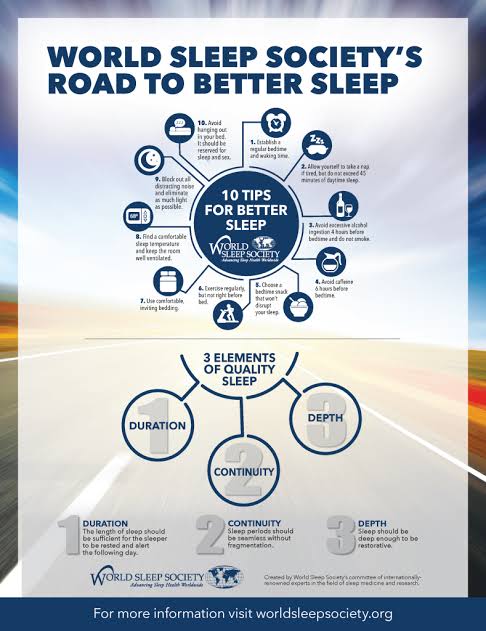
I was humbled by the opportunity to feature on this podcast episode by the KPI Institute. Our conversation focused on equipping parents with tips on how to manage their children's sleep problems. I hope parents will find this discussion helpful.
https://t.co/nlZcoHZEzz
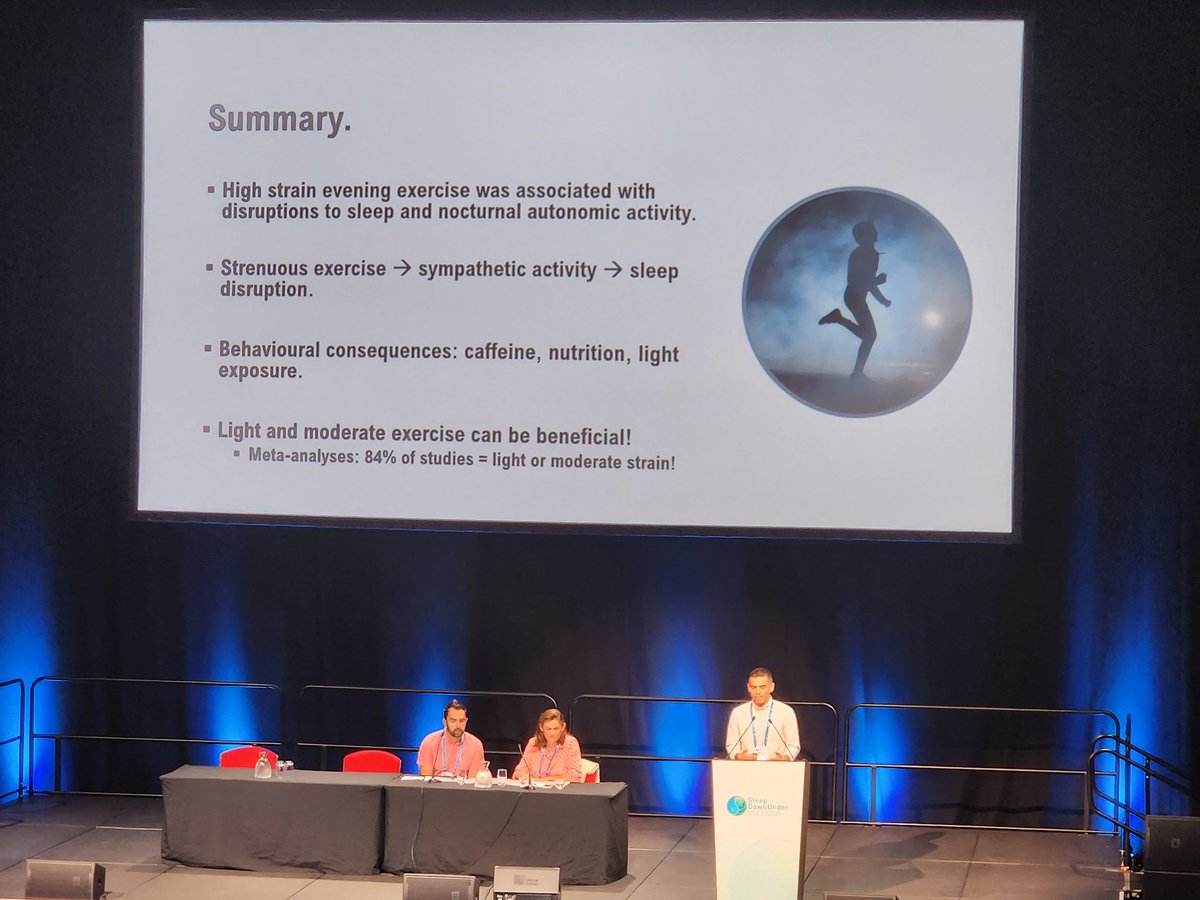
Happy to share our new paper in Nature Communications examining the link between strenuous evening exercise and sleep. In ~4 million nights across ~15,000 individuals, we found:
1. Later exercise timing and higher exercise strain are dose-dependently associated with delayed sleep onset, shorter and worse quality sleep, higher resting heart rate, and lower HRV.
2. For example, maximal vs light strain exercise ending ≤ 2 hours before sleep is associated with a 36–60-minute later sleep onset and a 22–41-minute shorter sleep duration!
3. Regardless of strain level, exercise bouts ending ≥4 hours before sleep are not associated with changes in sleep.
Key takeaway: Individuals aiming to improve sleep health may benefit from ending strenuous exercise at least 4 hours before sleep onset or electing lighter strain exercises within this window.
Article link: https://t.co/onqt6cC0YJ
Immensely proud of this collaboration with @WHOOP Research and @MonashUni, and grateful to everyone involved, especially incredible co-authors Dr David Presby, Flora Le, Dr Mark Czeisler, Dr Luis Mascaro, Emily Capodilupo, Dr Joshua Wiley, Prof Sean Drummond, Prof Shantha Rajaratnam, and Dr Elise Facer-Childs.
@DavidPresby@MarkCzeisler@luismascaro_@EmilyBreslow@WileyResearch@smwrajaratnam@FacerChilds@MonashSleepLab@NatureComms
😴 Calling Australians aged 55+ seeking better sleep! Join this world-first study on a digital mindfulness and CBTi insomnia program for better sleep and wellbeing.
More details: https://t.co/graCEFVyFp
#insomnia#sleephealth#research#volunteerforresearch
4/4
This underscores the complex emotional profile of this subgroup and the need for assessment, analysis, and treatment methods that target a range of symptoms rather than relying on single-diagnostic protocols.
In this latest work, we used cluster analysis to identify emotional distress symptom clusters in young adults with child TBI, focusing on symptoms of depression, anxiety, and stress.
https://t.co/x5W7MI2OTa
🥂to our terrific team @Nicholas_P_Ryan@bivianoanders & Prof Catroppa
3/4
Membership in this elevated distress group was associated with:
- sustaining TBI at a younger age, supporting the early vulnerability hypothesis
- tobacco use
- poor sleep quality and
- poorer health-related quality of life
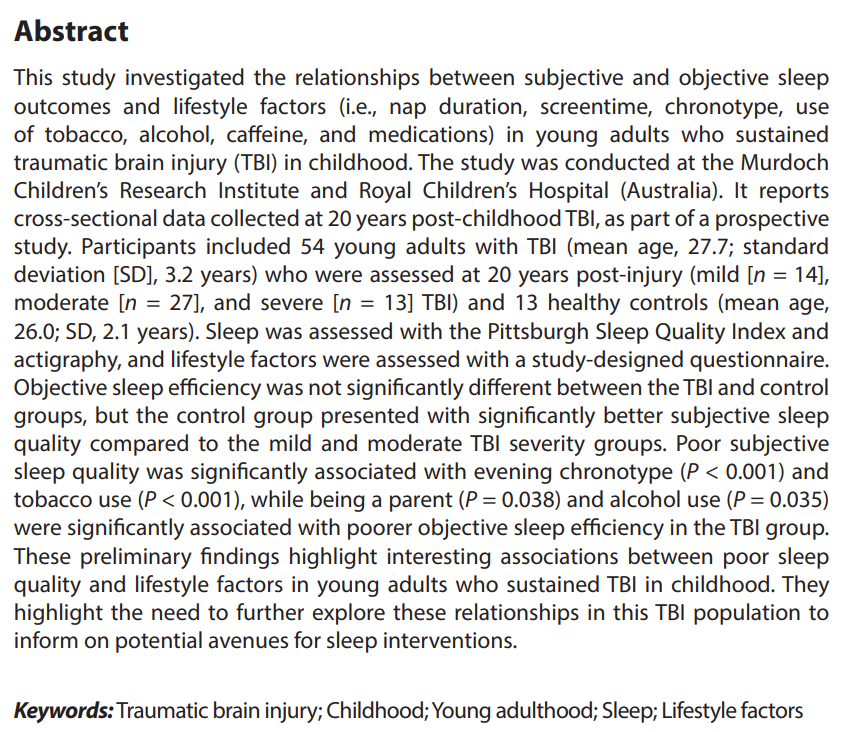
🌟New #Research: Relationship between #sleep outcomes and lifestyle factors in young adults who sustained traumatic #brain injury in childhood
By Edith Botchway-Commey et al. @botchway_edith
DOI: https://t.co/rIGPpBAA4e
📣 Attention NEST members! We want to hear from you.
Please complete our brief (5 minute) survey via the link below to tell us about your needs and priorities. Your responses will help us to better support you.
🔗https://t.co/cpJISQw18k
Have you filled in our survey yet? 🫶
We’re looking to see how we can best support our members in 2024 so that we can give you the best 🦵 to stand on in your NEST 🪺 journey!
Thrilled to see our recent work published in @JPedPsych
Led by @sangs_sangeetha as part of her PhD exploring unmet supportive care needs in children with various chronic health conditions. Congratulations Sangeetha 🥳 🎉