As PurposeFinder, TrueStoryteller, Sybil, SoulCaller, DreamSeer, GaiaDaughter & AnamCara I help She-Her-They remember the life they were born to live & share.
We exist and only flourish together... wing, limb, root, fin, river, shore, air, mud, lotus, stars all one, all sentient, all, as Thich Nhat Hanh says, Interbeing. All come from the same Womb... reverence Her in all Form and Firmament and Face.
I learned the word valley before I learned thirst.
In school they told us a valley is a place where water gathers, where land bends to receive life. I believed this because children believe words when they are spoken calmly.
They took us there once, to Wadi Gaza.
The land did not argue with the word. It simply failed it. It lay open and dry, hollowed out, as if something vital had been removed with intention. There was no water, no trace of it, only weeds hardened by survival and thorns that grow where hope has already been disciplined into silence. Even the wind carried dust instead of moisture.
We asked the teacher where the water was. It was not defiance. It was confusion, the quiet shock of realizing that reality did not match what we had memorized.
She said dams had been built. That the water no longer came.
I accepted this. One accepts what is presented as inevitable, especially when one is young and has no other framework for understanding the world.
Years later, I heard farmers speak of the valley. I come from people who know land, and I recognized their tone immediately. It was not anger. Anger still hopes. This was resignation. They said the dryness ruined their crops. They said the soil no longer answered their labor. They said what once sustained life now exhausted it. No one raised their voice. Facts, repeated long enough, stop sounding like accusations.
From then on, the valley existed only as a name.
Yesterday, the weather turned.
Wind tore at the tents where people live now, because there are no houses left to resist it. Fabric strained. Ropes tightened. Rain followed, heavy and cold. Inside the tents, blankets were pulled closer around children. Shoes were placed carefully, as if order still mattered. People stayed awake, listening, not for help, but for morning.
Then the water came.
Not gradually, not as rain returns to land, but all at once. The sound arrived first, low and spreading, then undeniable. The dams were opened. The water moved with force and direction. It did not go to fields. It went to what lay lowest, tents, paths, sleeping bodies.
It entered fabric, then bedding, then skin. Blankets grew heavy. Clothes clung. Children were lifted first. Possessions were gathered, then abandoned. The ground softened and gave way. There was nowhere higher to stand.
The valley, denied water until it ceased to be land, received it only when water had become harm.
This must be stated precisely: the same water that was withheld for years was released in a single moment.
Those who survived hunger now stood soaked. Those who endured bombardment now waded through flood. Those who fled destruction found the ground itself unreliable.
First, the water was stopped. Then, the water was released. The timing was exact.
We have learned many forms of suffering. Hunger. Displacement. Cold. Fear. And now drowning, on land that once begged for water.
#WoundedGaza
Today, while a family was trying to pitch a tent just to survive,
they came face to face with death.
The decomposing bodies of an entire family (including a child)
lay beneath their feet, in the very place that was meant to be shelter.
They posted the images on Facebook,
not to tell a story,
but to ask a single question:
Does anyone know who these people were?
This is how people die in this country:
without names, without graves, without witnesses.
This time, I will not comment further.
I will not describe it more.
That’s all.
#WoundedGaza
The wind has been howling for hours without mercy, beating against the night as if it means to erase what little remains of us. A few moments ago, screams rose from the street below, raw, unfiltered, the kind of sound that reaches you before you understand it.
I went to the window.
What I heard was not anger, not protest, not even fear, it was surrender.
“God, we’re drowning.”
“God, we’ve been destroyed.”
Nothing else followed.
No explanation.
No demand.
No hope.
Just voices announcing their collapse to the sky, as if the earth itself had already stopped listening.
And that was all.
#WoundedGaza
Follow-up update:
The child attended the clinic on a daily basis. I provided her mother with my contact number to allow communication after working hours in case of emergency. The child was followed closely until full clinical recovery. In addition, a donor contacted me to sponsor the child and her family.
I facilitated the connection, and the mother visited the clinic Today and confirmed receipt of the first month of sponsorship.
At times I feel discouraged from writing, but if this effort resulted only in securing support for this child, it was sufficient.
#WoundedGaza
I was standing at the threshold of the clinic, suspended in that brief, empty moment between one human pain and the next, when a child entered. She did not come forward as children usually do; instead, she walked backward, as though retreating from the world and gently pulling it behind her. Her small hand clutched the hand of an old man. He followed her with cautious steps, obedient, fragile, and trusting.
“Here is the door,” she said softly. “Be careful.”
At that moment, I understood that the man was blind.
There was something unbearable in the way he entrusted his entire existence to that child, his body leaning into her voice, his steps measured by her breath. We helped him slowly and reverently, as one might help a wounded soul rather than a body, and seated him on the chair. He spoke to me of his illness in a calm, almost apologetic voice, as if asking forgiveness for needing help at all. I gave him what treatment I could, though even as I did, I felt the absurdity of it. How small medicine becomes when the world itself is diseased.
When it was over, when there was nothing left to prescribe or pretend, he spoke again. Not as a patient, but as a witness.
“By God,” he said, “every day I walk through the streets of Gaza, and I weep for what has become of her.”
I felt my breath catch.
This man could not see.
A tremor passed through me, not of fear, but of recognition, that most terrible of sensations. He repeated himself, as if the truth were too heavy to be spoken only once.
“Every day I walk through the streets of Gaza and I cry over what she has become.”
I said nothing. Words deserted me, ashamed of their uselessness. For if a man who lives in darkness, who has never seen the ruins, the shattered walls, the streets reduced to dust and memory, weeps for the city, then what are we to do? We who see. We whose eyes are forced open to the horror and whose vision is not spared. What excuse remains for us?
Perhaps sight is not in the eyes at all. Perhaps true blindness belongs to those who see everything and feel nothing.
Our tragedy is not merely vast; it is obscene in its vastness. It is larger than language dares to approach. No writer can contain it, no artist can draw its boundaries, no photograph can imprison it within a frame. It escapes all attempts at testimony because it is not an event. It is a collapse of meaning itself.
And yet, the blind man sees it.
He sees the city with his heart, with that inner vision that burns when the outer world has already been extinguished. He walks through streets he cannot behold and mourns a devastation he knows more intimately than those who stare directly at it.
What then is left to say?
If the blind weep for Gaza and the seeing remain silent, then judgment has already been passed. Not on the city, but on us.
This is not merely a tragedy witnessed by the blind.
It is a tragedy that condemns the sighted.
And here, truly, the story ends.
Not because there is nothing more to tell,
but because what remains is too terrible to endure.
#WoundedGaza
There is a physician among us, a specialist of admirable training, whose name I shall not utter, for even names have become too fragile to touch. In the brief time I have worked beside him, I have watched something terrible unfold: a man dismantled from within, piece by piece, like a great instrument whose strings snap one after another until only a faint, trembling sound remains.
His behavior is no longer governed by the disciplined mind that once guided his hands. His thoughts shatter before they reach the light. His attention slips away like a frightened child hiding in a corner. At moments, he seems to drift out of his own body, as though he were watching his life from across a threshold, a witness to his own disintegration.
Yesterday, tormented by the mystery of his decline, I asked another colleague about him.
He closed his eyes, exhaled deeply, and replied, “He was brilliant… sharp, warm, quick-witted, one of the finest doctors we had.”
Then, with the quiet resignation of someone who has lost faith in the world’s fairness, he added:
“They took him at the beginning of the war. They arrested him from the hospital. And when he returned, he was… someone else.”
Since that day, the man walks among us bearing the unmistakable signs of a soul violated beyond repair.
He forgets the simplest fragments of his own days, as though memory itself has refused to inhabit the mind that can no longer protect it.
His mannerisms have regressed into something childlike, as if the psyche, unable to withstand the agony of adulthood, has retreated to its earliest defenses.
And he speaks, again and again, in broken sequences, of what he endured in detention, flashes of torment erupting through the thin membrane of consciousness, because the human mind can never bury what the human body has endured in terror.
They say, with astonishing audacity, that the war is over.
But for him, and for his family, and for tens of thousands bearing invisible wounds, the war has only shifted battlegrounds.
The shells have ceased, yes, but the devastation carved into the nervous system, the moral injuries imprinted onto the soul, the psychic ruptures that no surgeon can suture, these recognize no ceasefire.
This war has rewritten us. It has rearranged our inner architecture.
It has stolen from us our trust, our clarity, our innocence, our ability to believe in mornings.
What was taken will not return, for certain wounds do not heal; they become the very shape of the life that remains.
And here, in the quiet corners where the world refuses to look, lies the truth:
Wars do not end when the bombs stop falling. They end when the last shattered mind finds its way back into itself, and for Gaza, that long pilgrimage toward healing has not even begun.
#WoundedGaza
At exactly eleven in the morning, they burst through the clinic door, four men whose hands were trembling, whose faces were pale with that particular terror known only to those who have just carried death in their arms. Their clothes were soaked in blood, and in their arms lay a boy, fifteen years old, his head limp, his breath shallow, his life fleeing him with every convulsion of his chest.
Just minutes before, he had been standing at the entrance of his tent,
a child among the ruins of childhood,
beside this very clinic where I sit now, writing with hands still sticky with his blood.
More than half a mile away from the so-called “yellow line,” where armored machines squat like iron beasts watching for movements they no longer distinguish, man or child, danger or breath.
And then, a shot. Not aimed. Not justified. Not needed. A single pointless eruption of metal from a soldier’s weapon, as casual as flicking ash from a cigarette.
The bullet entered the boy’s back.
Tore through muscle, ribs, and soft lung tissue. Burrowed into the lower lobe of his right lung and nested there like a cold, uninvited parasite.
Inside him bloomed a dark crimson flower: a hemothorax, a drowning from within.
He arrived to me suffocating, gasping like a fish thrown onto sand, his breaths desperate, uneven, and filled with the rattle of blood. Each cough spat out fragments of his own life.
His right chest was silent, no air entered. Only the thick, suffocating weight of blood collecting around the torn lung, crushing it, crushing him.
“Doctor,” someone whispered, “save him.”
As if salvation were something I could command.
Still, we tried. Oh, how we tried.
With the pitiful remains of what once was a medical system, a few oxygen masks, trembling hands, gauze that runs out too quickly, medicines that arrive too late, we worked.
We secured what we could of his airway. Cleared blood from his mouth.
Gave oxygen through a mask that hissed like a dying animal. Pressed on wounds. Stopped the bleeding we could reach. Stabilized his pressure with what little fluid we had.
And then, with the urgency of men fighting the tide itself, we sent him in the ambulance to the nearest hospital, the kind of place where, under normal conditions, a child like him could be saved.
But nothing here is normal. Not anymore. Perhaps not ever.
And I swear on whatever remains of my soul: this did not happen at a frontline. Not during battle.
Not in crossfire.
No, this happened during what the world, in its infinite appetite for illusion, calls a “ceasefire.”
A ceasefire in which a child can be shot in broad daylight for standing at the doorway of his shelter.
A ceasefire where safety is not a promise, only a rumor.
A ceasefire where life and death depend not on rules or agreements but on the idle whim of a man holding a rifle.
And yet, the boy, that poor boy, looked at me before we sent him away. He tried to speak, but blood filled his throat. His eyes said everything.
“Why?” The eternal question.
The question that has no answer, because the world that should answer it long ago sold its conscience for comfort.
I do not know if he survived the journey. But I know this:
A civilization that permits this, that accepts this, that grows accustomed to this, is a civilization already standing at the edge of the abyss.
#WoundedGaza
There are moments in a man’s life when the world ceases to be a place of logic and becomes instead a courtroom for the soul. Two days ago, in the dim light of our small clinic, such a moment stepped toward me on tired feet.
A woman entered, slight as a shadow, carrying an infant wrapped in cloth that tried but failed to keep the cold from her bones. Beside her stood another child, four years old, with eyes already older than mine. The mother sat, and with hands that did not tremble only because they had long forgotten how, she uncovered the baby.
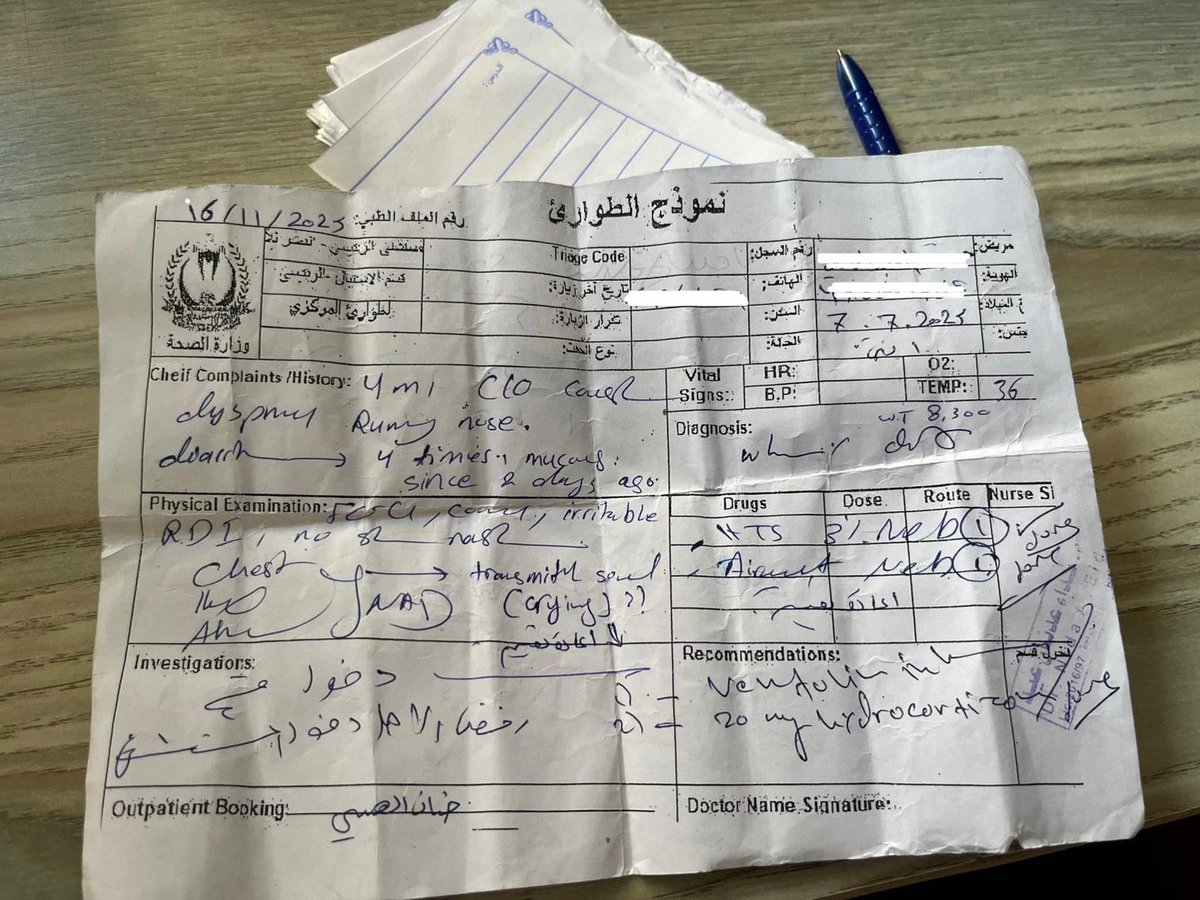
“She is four months old,” she said quietly. And then, with the voice of someone who has outlived both fear and hope, she added, “I know she cannot breathe.”
I had not yet spoken, yet somehow she knew my diagnosis before my fingers touched the child’s tiny ribs. The baby was drowning in her own breath. Severe respiratory distress. A life hanging by the thinnest thread God ever spun.
“They told me she must stay in the hospital,” the mother whispered. “But I refused. Do not send me back there. I cannot stay. I cannot leave my other children alone.”
She spoke with no accusation, no plea, only the exhausted humility of someone who has been crushed long enough to accept the crushing as fate.
At first, like any reasonable man, I assumed it was money. Poverty has become the universal language here. Every cry translates into it. But when I examined the child, I felt the terrible truth in my palms: she needed hour-by-hour care, the kind that only a hospital can provide, the kind that decides in silence who will live to see the morning.
I told her gently that I could call the ambulance, arrange the medications, do everything possible, but the baby must be watched for at least two days, perhaps more.
And then she told me the rest.
Her husband had been killed.
She lives in a tent.
Three orphaned children depend on her.
If she enters the hospital, she must abandon the other two to the night.
And suddenly I felt the language fall out of the world.
For what could I say to such a sentence of existence? What argument, what theology, what science, what morality could I offer to a woman standing between her infant’s breath and her children’s loneliness? In that moment, I, doctor, man, believer, thinker, became nothing. A witness only.
I understood then that our tragedy is not written in stories, but in the silent corners of rooms where mothers confess the impossible choices forced upon them by history.
Even now, as I write, I cannot find words large enough to contain what I saw. Perhaps there are no such words. Perhaps they were never made for human tongues.
It feels as though suffering has been sown into the soil of this land, a seed that grows without season, without mercy, without end. And I caught myself thinking, terribly and honestly, that we no longer need clinics or hospitals or schools or homes. These are things built for people who still remember the shape of life.
What we need is creation itself to begin anew.
A rebirth of the world.
A chance to be remade into beings capable of living, not merely surviving.
For here, in this ruined corner of humanity, a mother’s whispered confession has revealed a truth older than scripture: that sometimes the earth becomes so wounded, so soaked in innocent blood, that it can no longer hold life unless God Himself recreates it.
And maybe, that is why her voice still echoes inside me.
#WoundedGaza
Tell me, reader, have you ever encountered a human being so stripped of illusions, so emptied of promises, that even hope becomes an insult to him?
Do you know what the ordinary man of Gaza dreams of today?
He does not dream of victory. He does not dream of grandiose calls for steadfastness. He does not dream of those intoxicating slogans chanted by strangers who sacrifice nothing while demanding everything.
No. Today he dreams only of escape.
Escape from a land that devours its children without remorse. Escape from a fate that has tightened around his throat like an ancient hand refusing to release its grip.
And is it not a simple human right to choose life, to choose dignity, to choose safety? Yet even this most basic and God-given right has been turned into treason by those who thrive on our suffering.
But let me tell you about a lie. A lie so polished and so sanctified that people worship it as if it were divine truth.
A few days ago, Al Jazeera, the very network that proclaims to the world that the people of Gaza choose to stay, that we prefer death to leaving, quietly evacuated several of its own staff and their families to Qatar.
Among them was the family of Anas Al-Sharif. Among them was the sister of a cameraman, the same sister whose videos and stories of agony raised torrents of money online under the holy banners of resistance and steadfastness. And when the hour came, when a hidden doorway finally opened for her, she did not hesitate.
She left, and she took her family with her, as any human being would when presented with salvation.
Here is the part no one wants to confront. Their evacuation was coordinated directly with the Israeli government.
Yes, with the very same government that Al Jazeera publicly warns the world not to engage with, not to normalize with, not to recognize.
And yet behind the smoke of declarations, behind the righteous sermons and the moral thunder, they negotiated quietly and efficiently.
When it comes to their own, all the doors of heaven and earth suddenly open.
And as for us, we are left to rot beneath the weight of narratives crafted by people who have already fled or who were never here at all.
The loudest voices that shout of triumph and eternal resistance speak from Turkey, from Qatar, from Egypt.
They speak from warm apartments where electricity never fails and where children are not buried under concrete. They command us to stay in our land while they themselves left their own long ago.
And so the true people of Gaza, the crushed and the exhausted and the invisible, remain trapped.
They do not speak in slogans.
They do not appear on screens.
They do not raise millions.
They bear their suffering quietly, with a dignity so terrible that even angels would avert their gaze.
I stand among them. I am trying, desperately and feverishly, to build something real for those who have nothing left.
For those who have no microphones, no cameras, no platforms, only wounds.
So tell me, reader.
If you truly wish to do something meaningful, if you seek truth rather than spectacle, then help these people.
Help those who cannot escape through secret corridors.
Help those who will sleep tonight beneath torn tents.
Help those whose future is written not in ink but in dust and ash.
Help the forgotten ones. Help the real Gaza. Not the Gaza of your screens, but the Gaza that bleeds in the silence after the cameras turn away.
#WoundedGaza
Amid all the noise and conflicting news,
here’s a piece of good news I want to share, and you are part of it.
Today, our clinic signed an agreement with Doctors Without Borders – France @MSF
who will now provide nurses and full wound care supplies
two days a week inside our clinic.
This achievement isn’t ours alone…
it belongs to everyone who supported, shared, donated, or prayed for this clinic.
Thank you for being part of every step forward.
In times like these, this is a real achievement and a small reminder that hope can still grow, even here.
#WoundedGaza
Since the beginning of the war, the Palestinian Authority, the body the world recognizes as the official representative of the Palestinian people, has done almost nothing to support the civilians of Gaza.
It has not hired a single medical worker in any hospital.
It has not strengthened a single municipality.
It has not sent a single tent to a displaced family.
It has not helped any family pay the cost of fleeing their homes.
It has not made any formal procedures easier for anyone.
But two days ago, when a handful of families managed, by sheer will and through illegal routes, to escape the fire of Gaza and reach South Africa, the Authority and its embassies sprang into action. They contacted the host country to stop the journey, warning that these routes “illegally relocate Palestinians,” and arguing that the travelers’ passports carried no Israeli exit stamp and therefore could prevent their return. Even if this claim is correct, the families already knew it. They accepted the risk in order to save their lives and search for a dignified future. Why then does the Palestinian Authority deny them the basic right to travel and find a country that will treat them with respect?
This is not a new pattern. During my own attempts to leave Gaza, I received a scholarship in Indonesia. Before my visa was even issued, the Palestinian Embassy sent a letter urging the Indonesian government not to grant it, claiming the process amounted to “displacement.”
In this war, the Authority has played only one consistent role: blocking every attempt by the people of Gaza to escape danger and reach safety. It has shown no concern for the collapse of the health system. No concern for families living in torn tents that flooded at the first rainfall. No concern for children who have not attended school for three years. No concern for widespread poverty and the lack of work. No concern for a generation of young people who have lost their years and their future.
Its only concern is that no one should say “the Palestinians are being displaced.”
This is what happens when the image of the state becomes more important than the life of the citizen. When the state becomes an illusion, people inevitably begin to resent the homeland that has abandoned them.
And when the Rafah crossing finally opens, you will see an exodus unlike anything the modern world has witnessed.
#WoundedGaza
Just one day of rain was enough to expose Gaza’s naked truth.
It tore open the fragile illusion that media narratives and political rhetoric have tried so desperately to maintain.
For two years, billions of dollars were raised in the name of Gaza and its people.
Billions, not millions, collected by charities, organizations, political movements, and self-appointed representatives of our suffering.
Khaled Meshaal himself stood on a stage and publicly boasted about a “financial flood.”
I have confirmed reports of enormous sums gathered across Islamic countries, funds raised in our name, in the name of our dead, in the name of our hunger.
So where is it?
Where is this “flood” now that a single night of rain threatens to submerge children in tents that cannot withstand even minimal weather conditions?
Why must we prepare tomorrow in the hospital to receive cases of near drowning, hypothermia, acute respiratory distress, aspiration of contaminated water, and environmental suffocation?
Why must we treat children who inhale rainwater as it seeps into their bedding?
Why is no entity assuming responsibility for the destruction, displacement, and public health collapse imposed on us?
Why does Israel, while claiming its conflict is only with Hamas, refuse to allow civilians to construct safe temporary shelters in the designated “yellow zone,” refuse to permit construction materials and essential infrastructure supplies into Gaza even under direct supervision, and refuse to allow civilians, whom they insist are not the target, to enter with identification and live in secure areas?
And why can Hamas establish a Ministry of Economy overnight to impose commercial taxation, yet cannot establish a single functional body responsible for civil protection, disaster preparedness, emergency shelter, or flood response infrastructure?
Why have we been condemned to be crushed between two forces:
one obsessed with clinging to power,
and the other obsessed with perfecting the machinery of our death?
Oh, what misery. What a relentless fate that refuses to loosen its grip from our throats.
#WoundedGaza
Yesterday, Alrahma Medical Center reopened its doors. We were able to help many people in desperate need, patients, families, and refugees who had nowhere else to turn. Every small act of care means hope, and every patient reminds us why we keep rebuilding.
Everything we are doing is possible because of your help and your donations. I’m deeply grateful to every one of you who made this happen. This clinic is ours, our shared work, our shared achievement.
Without your support, we wouldn’t be able to continue. You always can be a partner by helping us keep the clinic running and provide free medical care to those who need it most, by donating through the link here :
https://t.co/rOgGjIyztw
#WoundedGaza
The day had begun with hope, a fragile, trembling hope, like the first flame that flickers in a storm.
We were preparing to open the medical point, four walls of wood, a roof of plastic, a table, and a chair.
Nothing more.
And yet, to us, it was a cathedral.
For in lands where hospitals are rubble, a single room where mercy breathes becomes a temple of the living God.
I had locked the door and begun to walk away when I heard a cry behind me.
“Doctor! Don’t go! Doctor!”
There are words that split the air like a lightning bolt; this was one of them.
I turned and saw men running, barefoot, carrying a child whose body was too still, too light.
They were running as if chased by the very angels of death.
And there, beneath the open sky, I saw the horror that words cannot hold.
The child’s hand was gone, devoured by the fire of man.
His bones gleamed white, obscene, like the laughter of war itself.
His face, oh his face, was burned into a mask of innocence and agony.
He did not cry; he looked, and that look will haunt eternity.
I pressed my hands to the wound, my useless trembling hands, and I thought:
What have we done, O Lord, that the earth itself explodes beneath the feet of children?
The nearest clinic was thirty minutes away, thirty minutes between a wound and salvation.
His name was Adham.
He was nine years old.
He had been playing before his family’s tent, holding a thin copper wire in his hand. He pressed it into the ground, not knowing that the soil of Gaza hides the fragments of war. The wire touched what men had left behind, and the earth exploded beneath him. In that single instant, the world was unmade.
That day, I understood: the universe is smaller than the distance between a wound and a doctor.
And in Gaza, that distance is infinite.
But even among the ruins, something greater than despair stirs.
The child was carried away, and I stood there alone, the blood of innocence on my hands, yet I felt that same blood beating in my own veins.
In that moment, I knew that as long as one man bends down to save another, God has not abandoned the world.
Tomorrow, the medical point will open.
It will not be a hospital; it will be a whisper against the storm.
But every whisper of compassion is stronger than the roar of cannons.
I will open the doors again,
because mercy is an act of defiance,
because healing is resistance,
because one small lamp of kindness lit in a night like this
is enough to shame the darkness of a century.
#WoundedGaza
This is Rama Duwaji. A Syrian illustrator and animator, and a freaking cool human being. She's also married to Zohran Mamdani.
"Using art as a tool to speak up against oppression and fight for liberation" 👏👏👏
A journalist asked me what message I would like to leave for my readers, and I thought of sharing it here as well.
I want to thank everyone who stood with us, everyone who supported us, and everyone who helped carry our voices to the world.
But I need people to understand something. The war is not over. Our daily reality has not returned to normal. We are still walking a long road toward a just peace, toward dignity, toward the stability our people have long been denied.
This is why I wrote my book, to record the pain, the resilience, and the moments the world never sees, so that one day no one can say they did not know, they did not see, they did not hear.
And I want to say this clearly: the people of Gaza are not heroes, they are human beings. They are mothers, fathers, sons, and daughters who have simply reached their limit. They are tired, tired of loss, tired of burying their loved ones, tired of starting over again and again.
My message is simple: do not look away.
Keep speaking. Keep sharing. Keep standing with Gaza.
Because our struggle is not a headline to move past.
It is still happening, right now, every single day.
#WoundedGaza
Does a man ever truly hate his own homeland? His house? His parents who bore him?
I had thought such hatred impossible.
Until the day I stood where my home once stood.
When I returned, I could not recognize the earth that had once carried my childhood.
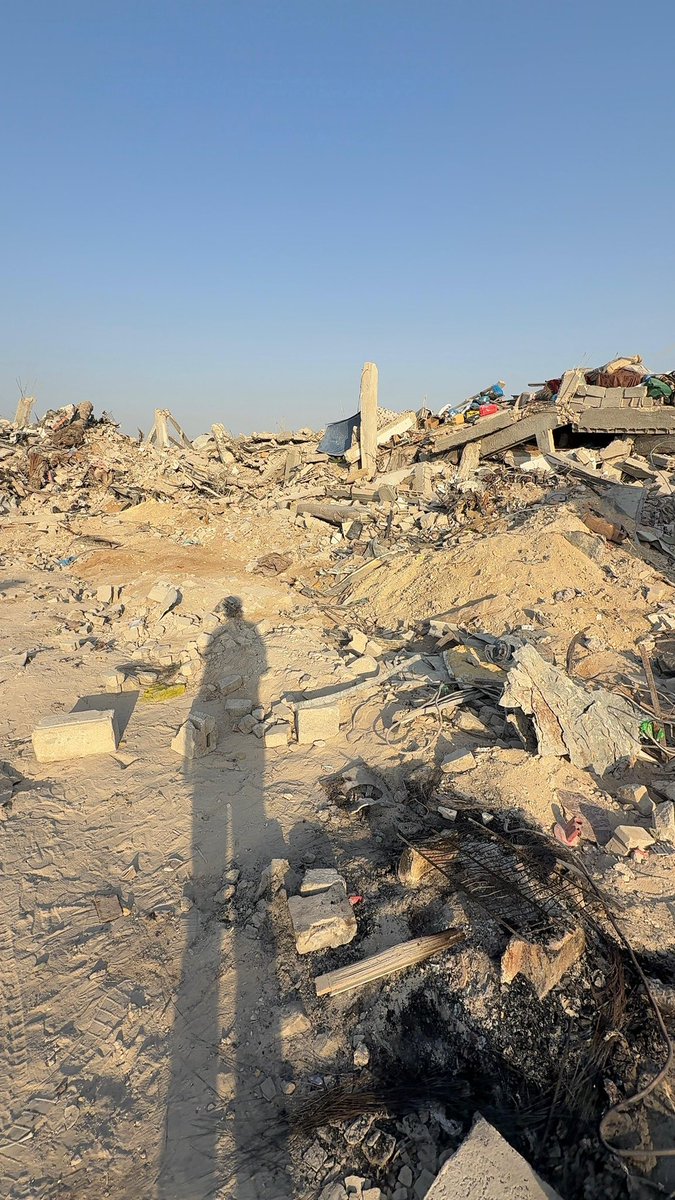
The street was gone. The walls were gone. The air itself was gone, filled now with the dull silence of ashes.
I wandered in circles, like a ghost among ghosts, unable to find the spot where my father once planted the olive tree, where my mother once called my name from the doorway.
The place knew me no more. Even the dust refused to remember us.
It was as though the very earth had spat us out, as though it had grown weary of our footsteps, our blood, our prayers.
The clinic, my small temple of mercy, lay beneath the rubble of neighboring homes.
No sign, no remnant, no sound. Only the smell of iron and the strange, choking sweetness of decay.
I did not feel grief then. No. What I felt was something darker, more obscene: betrayal.
It was as though God Himself had turned His face away, and in His silence I saw not absence but rejection.
In that moment I understood what it means to hate the ground one walks upon.
I thought, perhaps this land is tired of us.
Perhaps it never wanted us at all.
Since that day, I have forbidden my parents to return.
What could they see there but the carcass of their life’s work, a home that cost them forty years of hunger and sweat, now pulverized into memory?
They have seen the photographs, yes, but a photograph cannot show you silence.
It cannot show you how silence hums after the bombs, how your footsteps echo where no walls remain to echo them back.
For weeks I went back there, unable to stay away, standing before the ruins as one stands before a grave that refuses to speak.
I waited for the stones to answer me, to tell me it had all been a mistake,
to ask my forgiveness for abandoning me.
But they said nothing.
And I began to hate them.
Yes, I hated the house, the street, the land, even the people.
Because here, love is not the opposite of hate.
Here, love begets hate.
Every tenderness is a wound. Every attachment is a sentence to loss.
And yet, even hatred grows tired.
It withers into exhaustion, into that numbness where one no longer cries or prays or curses, but merely exists, waiting for the next calamity.
A few days ago, my brother came to me with news.
A neighbor had been struck by a stray bullet in the camp nearby.
He bled for half an hour before finding help.
The nearest clinic was thirty minutes away, and the roads to the north were clogged with ruin and despair.
My brother did not ask the question outright, but I heard it all the same:
“When will you rebuild?”
But I said nothing.
Because what could I rebuild on cursed soil?
What mercy could grow from ashes?
I felt emptied of everything, not out of weakness but out of sheer fatigue with existence itself.
I wanted only for the road to open, for a chance to flee this cemetery that insists on calling itself home.
But three nights ago, I saw a video,
displaced families in the north pleading for a small clinic,
for someone, anyone, to treat their wounded children.
I watched them cry into the dark, and suddenly I understood.
My silence was the worst betrayal of all.
If there remains breath in me, then I am still responsible.
If the world has turned its back, then we, the remnants, must face one another.
For what is a homeland, if not the last cry of those who refuse to stop loving,
even when love itself has become unbearable?
And so I will rebuild.
Not because I forgive the land, nor because I have hope left, but because despair itself demands it.
Because a man must either act or drown in his own hatred.
And perhaps, in rebuilding, I might find again a fragment of faith, not in the world, which is cruel, but in the simple, stubborn mercy that still beats somewhere inside the ruined chest of humankind.
#RebuildTheClinic
#GazaWounded
Women in Gaza have shown the world a truth it should have known long ago. Strength does not wait for approval. When everything falls apart, women begin again.
They opened homes when no walls were left standing. They became mother and father at the same time, holding families together with courage and love. They cleared the rubble with their own hands. They raised tents where houses once stood. They built makeshift bathrooms because dignity still matters, even when the world forgets you.
They cooked from almost nothing. They created fire out of scraps. They walked long distances every single day, carrying heavy water tanks as if they were carrying entire futures on their backs. They pushed through desperate crowds to secure the right to stay alive. And when night came, when tired bodies needed rest, they sat with their children and taught them, refusing to allow their minds to fall behind.
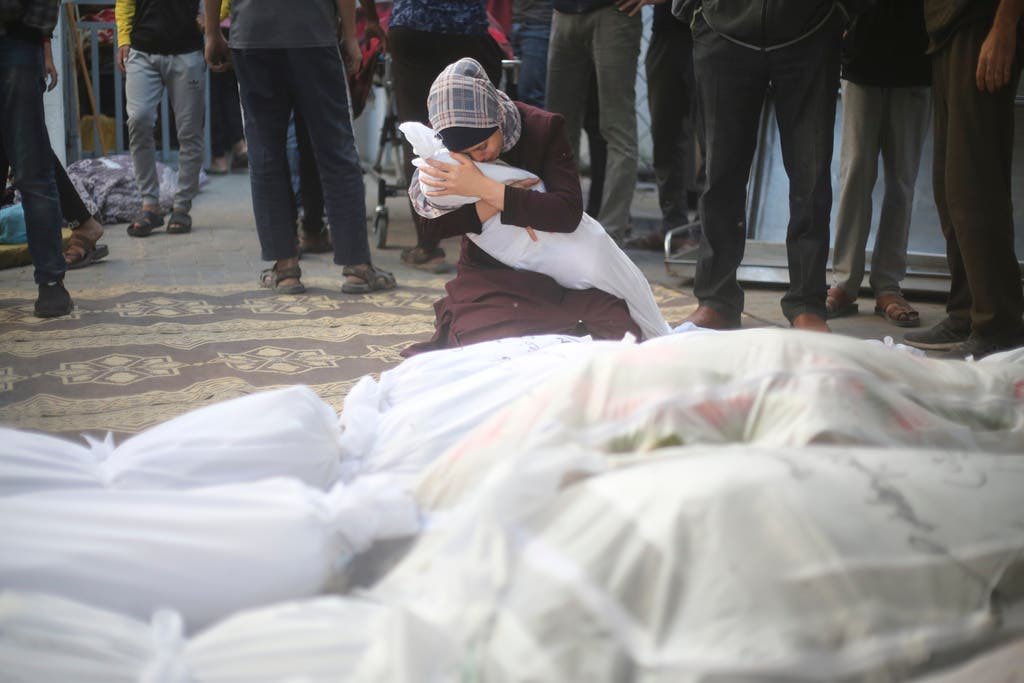
And there were moments that no heart should ever know. A child wrapped in cloth. A goodbye whispered into silence. A mother burying her child with her own hands, then rising again because the living still needed her strength.
Women are not heroes because they suffer. They are heroes because they turn suffering into survival. They take what is left and make life out of it.
Any job is a woman’s job. Not because she is expected to do everything. But because she is capable of doing anything.
#WoundedGaza